Connect with us

Politics

North Central Youths Mobilise 100-Man Delegation to Lobby Akpabio for Sani Musa’s Emergence as APC National Chairman

Published

on

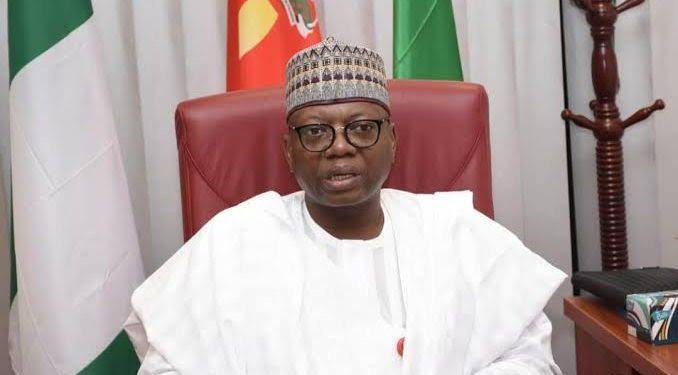
A coalition of youth groups drawn from over 1,000 All Progressives Congress (APC) support organisations in Nigeria’s North Central region has announced plans to dispatch a 100-man delegation to Senate President Godswill Akpabio, urging him to back Senator Mohammed Sani Musa for the position of APC National Chairman.

The decision was reached during an emergency meeting held in Lafia, the Nasarawa state capital, on Thursday, where the youth leaders gathered to discuss the political future of the North Central geopolitical zone and the need for strategic positioning ahead of the 2027 general elections.

In a communiqué issued at the end of the meeting and signed by Comrade Dan Okwa, the convener of the North Central APC Youth Vanguard, the groups reaffirmed their commitment to the re-election bid of President Bola Ahmed Tinubu and declared that delivering on that objective would require a strong, pragmatic, and politically astute party leadership.

“We believe that the North Central must not only be heard but must be seen at the table of power. As we prepare for 2027, it is imperative that we reorganise our internal political architecture and present one of our most credible and tested hands to lead the APC,” the group said.

According to the coalition, Senator Sani Musa, who currently represents Niger East in the National Assembly and chairs the Senate Committee on Finance, has over the years demonstrated the type of loyalty, foresight, and grassroots understanding necessary to stabilise and reposition the ruling party for electoral success.

“He is a man who understands the inner workings of the APC, appreciates its vision, and has shown unwavering commitment to President Bola Tinubu’s Renewed Hope Agenda,” Okwa added.

“This is why we are sending a 100-man delegation to visit the Senate President, Senator Godswill Akpabio, within the week, to present our case and solicit his support for this important mission.”

While the youth coalition acknowledged that other prominent aspirants from the North Central, including former Nasarawa governor Senator Tanko Al-Makura, have shown interest in leading the party, it said Sani Musa represents a generational bridge who combines experience with a forward-looking perspective.

“We respect all aspirants, especially Senator Al-Makura, who is a respected elder and party builder. But we strongly believe that at this critical point in our national life, the APC needs a younger, dynamic, and unifying figure who can galvanise the party base, particularly the youth. That person is Senator Sani Musa,” the communiqué stated.

The groups also used the opportunity to call on elders and political stakeholders within the APC, especially from the North Central region, to prevail on Senator Sani Musa to officially declare interest in the national chairmanship position and lead the effort to consolidate the region’s influence in national politics.

According to Okwa, the delegation to Akpabio will present a detailed petition containing resolutions from the youth summit and a breakdown of the strategic role the North Central zone has played in sustaining the APC since its inception.

“From massive voter mobilisation to defending the party during difficult times, the North Central has always stood by the APC. We believe now is the time for the party to reward loyalty and capacity,” he said.

The youth coalition also vowed to intensify mobilisation across the North Central states and the FCT ahead of the APC National Convention, while reiterating that their campaign is not just about regional inclusion, but about strengthening party discipline, rebuilding trust, and preparing the APC for future victories.

“We will engage key leaders across the zones, not just in the North Central. This is about the future of the APC, and we believe Senator Sani Musa is the man to lead us into that future,” Okwa concluded.

The delegation is expected to meet with Senate President Akpabio later this week in Abuja.

Continue Reading
Click to comment

Leave a Reply

Your email address will not be published. Required fields are marked *

Politics

BREAKING: Electoral Violence Erupts in Wakama Ward as APC Campaign DG, 12 Party Members Attacked

Published

on


A wave of electoral violence has reportedly rocked Wakama Ward, where the Director-General of the APC campaign organisation and 12 members of the All Progressives Congress (APC) were allegedly attacked by suspected ethnic militia believed to be loyal to Labour Party candidate, Labaran Maku.

Sources from the area disclosed that the attackers, armed with machetes and axes, inflicted serious injuries on several victims during the assault. Many of those attacked sustained varying degrees of injuries, while two victims are currently receiving treatment in hospital for severe wounds.

One of the victims, Ezekiel Baba, was initially declared missing in the aftermath of the attack, raising fears about his safety. However, following a swift response by personnel of the Nigerian Security and Civil Defence Corps (NSCDC), he was rescued and taken to hospital for medical attention.

Sources further alleged that operatives of the NSCDC apprehended one of the suspected attackers, identified as Peter Assi, a former Councillor of Wakama Ward and a known political associate of Labour Party candidate, Labaran Maku. Security authorities are yet to issue an official statement on the arrest and the circumstances surrounding the incident.

The incident has heightened tensions in the area and raised serious concerns about voter safety and the conduct of the ongoing Nasarawa North Senatorial Bye-Election. Residents and political stakeholders have called on security agencies to swiftly investigate the attack, bring the perpetrators to justice, and ensure adequate security for voters and election officials.

The APC has strongly condemned the incident, describing it as a dangerous act of political violence capable of undermining the credibility of the electoral process.

Security authorities are yet to issue a comprehensive official statement on the incident, while efforts to obtain a response from the Labour Party candidate and other relevant stakeholders were ongoing at the time of filing this report.

Continue Reading

Cover

Judicial Battle Reboots Kwara ADC’s 2027 Election Machinery

Published

on

The Kwara State chapter of the African Democratic Congress (ADC) has converted a recent legal threat into a political launchpad. Following an appellate court victory that halted an attempt to deregister the party, the Kwara ADC has declared its full readiness to contest the 2027 general elections.

A Federal High Court judgment by Justice Peter Lifu originally ordered the Independent National Electoral Commission (INEC) to deregister the ADC along with four other opposition parties.

The decision was met with an outcry by opposition coalition who alleged the judicial action was another manipulative scheme to cripple opposition politics in the nation and give an unearned leap to ruling parties for the 2027 election cycle.

The “threat however, disappeared into thin air as the Court of Appeal in Abuja swung into action and delivered a strong rebuff on the lower court. A stay of execution of the deregistration order was issued by the Court of Appeal.

Experts and political leaders in opposition said the lower court’s ruling had contravened judicial hierarchy as courts above had already issued a stay of proceedings. It has returned to status quo, following the successful legal defence as the Kwara State chapter of the ADC has called an emergency State Executive Committee meeting at its State Secretariat, Ilorin.

Party stakeholders have already turned the page from the legal battle to an intensive grassroots mobilisation as party structures have been instructed to get set for the next election cycle.

“This issue, while appearing like a setback, has only united us more than before,” said the Kwara State Chairman of ADC, Babatunde Muhammed, who assured that “

The Court of Appeal intervention in our case has revived my confidence in the country’s judicial system, and that you cannot simply rubbish an existing political movement because you have access to some judges.

We remain unruffled” he added. Consequently, all ADC Candidates and ward executives in Kwara State have been tasked to commence voter outreach immediately with a unit-by-unit grassroots mobilisation plan that aims to put the current ruling party on the defensive by articulating how the ADC platform and agenda contrast with the performance of the incumbent administration.

The new approach of Kwara ADC will focus primarily on local security issues, fiscal and economic management and ensuring a free and fair electoral system in 2027 election.

Continue Reading

Cover

Voter Apathy and Money Politics Threaten Democratic Future

Published

on

Nigeria’s democracy faces mounting pressure from two persistent threats: voter apathy and the dominance of money in politics. The Institute for Peace and Conflict Resolution (IPCR), alongside Search for Common Ground, has warned that these forces are eroding citizen participation and weakening democratic institutions.

At a joint press conference in Abuja marking Democracy Day 2026, IPCR Director-General Dr. Joseph Ochogwu stressed that Nigeria’s democratic challenges stem not from the system itself but from declining civic engagement. He argued that democracy thrives only when citizens actively participate, hold leaders accountable, and reject manipulation.

Ochogwu identified several drivers of voter apathy: declining trust in institutions, fear of electoral violence, unmet governance expectations, and the widespread belief that individual votes do not matter. These factors, he said, discourage citizens from voting and weaken the legitimacy of elected governments.

When citizens withdraw from democratic processes, space opens for manipulation, misinformation, and electoral malpractice. Ochogwu warned that disengagement undermines accountability and allows narrow interests to capture democratic institutions. He urged Nigerians, especially young people, to see elections not as routine events but as the primary means of exercising sovereignty.

Beyond apathy, the monetisation of politics poses another grave danger. Ochogwu described money politics as a systemic driver of disenfranchisement. Wealthy elites dominate political participation, while ordinary citizens are excluded from meaningful influence. Within parties, financial considerations often determine outcomes, sidelining merit and ideas.

Exclusion and Inequality
The dominance of money in politics widens inequality, restricting opportunities for citizens without financial power to contest or participate. Ochogwu warned that this distortion undermines democratic fairness and entrenches a system where governance is shaped by wealth rather than public interest.

Ochogwu also highlighted terrorism, banditry, and violent extremism as enemies of democracy. These threats erode public confidence in institutions and hinder development. He stressed that insecurity compounds the challenges of apathy and money politics, creating a fragile democratic environment.

Gift Omoniwa, Director of Programmes at Search for Common Ground, raised concern about Nigerian youth being vulnerable to recruitment by extremist groups. She warned that without meaningful engagement, young people could be drawn into violence, further destabilising democracy.

Omoniwa outlined efforts to counter these risks, including a reality television programme showcasing youth resilience and alternatives to extremism. She reaffirmed her organisation’s commitment to working with government, civil society, and communities to promote peace and democratic governance.

Ochogwu closed his remarks by reminding Nigerians that democracy requires collective responsibility. He echoed President Bola Tinubu’s Democracy Day appeal, stressing that democracy is bigger than any individual and depends on shared commitment and continuous engagement.

Since 1999, Nigeria has maintained uninterrupted civilian rule, the longest stretch in its post-independence history. Yet this achievement remains shadowed by low voter turnout, political violence, and the outsized influence of money. The warnings from IPCR and Search for Common Ground underscore the urgent need for reforms that strengthen civic participation and reduce the grip of money on politics.

Nigeria’s democratic survival depends on citizens rejecting apathy and resisting money politics. Without active participation and fair competition, democracy risks becoming hollow, vulnerable to manipulation and exclusion. The call from IPCR and Search for Common Ground is clear: Nigerians must reclaim their democracy by engaging, voting, and demanding accountability.

Continue Reading

Trending

Copyright © 2023 - 2025 DailyMirror Nigeria. Design by AspireWeb.ng, powered by WordPress.