Connect with us

Cover

Insecurity: Group Scores Defence Minister Badaru Low on Performance

Published

on

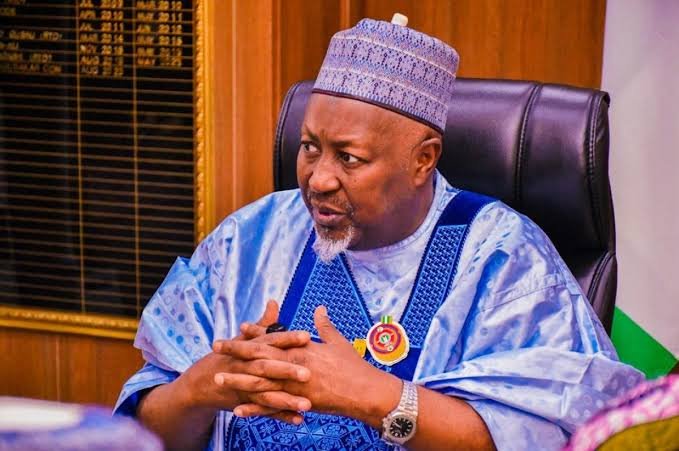
The Arewa Action Group (AAG), a civil advocacy coalition based in Kaduna, has issued a damning assessment of Nigeria’s Minister of Defence, Mohammed Badaru Abubakar, accusing him of gross incompetence and declaring his office “technically vacant” in the face of worsening insecurity in the northern region.

In a strongly worded press statement on Sunday signed by the group’s president, Comrade Ibrahim Adamu Bature, the AAG expressed deep frustration over what it described as Badaru’s “utter cluelessness, lack of coordination, and commercial mindset” in handling one of the most sensitive roles in the nation’s security architecture.

“For all practical purposes, the office of the Minister of Defence is vacant. Mr. Badaru has not shown any intellectual capacity, strategic seriousness, or political coordination required to confront the scale of insecurity Nigeria is currently facing. His continued stay in office is a grave disservice to the country and especially to northern communities being slaughtered daily without response,” Bature said.

The group lamented that despite occupying such a critical post, Badaru has failed to provide any concrete roadmap or vision for strengthening Nigeria’s defence posture or synchronising efforts across the armed forces, intelligence services, and the political leadership.

“This is a Minister who behaves more like a merchant of contracts than a custodian of national security. His background in procurement and state-level politics does not qualify him to lead a ministry that should be defining the strategic and operational directions of our military in a time of war,” Bature declared.

According to the Arewa Action Group, the Defence Minister’s lacklustre performance has coincided with a sharp deterioration of security across the north, from Sokoto to Kaduna, Zamfara, Niger, Plateau, and Borno states.

The group said the absence of firm civilian oversight of military operations has created a vacuum being exploited by terrorists, bandits, and insurgents.

“Insecurity has worsened because there is no political leadership at the top of the Defence Ministry. Service chiefs are left to operate in silos. No one is setting a clear agenda or holding anyone accountable. What we are seeing is a Ministry of Defence reduced to the execution of fencing contracts and furniture procurement, not one fit for the battlefield,” the statement added.

The group said while President Tinubu has demonstrated commitment by enhancing military funding and initiating new security collaborations with regional partners, these efforts are being undermined by the “absence of competent civilian leadership” at the Ministry of Defence.

“President Tinubu must act now to rescue the Defence Ministry from the grip of passivity. He needs a serious-minded person who understands strategy, who can liaise with service chiefs, brief the President candidly, engage the National Assembly robustly, and reassure Nigerians that this government is in charge,” Bature urged.

The AAG further warned that with the security architecture failing in the north and morale among soldiers and citizens alike wearing thin, the stakes are too high for mediocrity and political appointments that prioritise loyalty over performance.

“This is not a ceremonial post. Nigerians need a Defence Minister who is present, proactive, and politically mature to align the military’s efforts with civilian expectations,” the group insisted.

In conclusion, group passed a vote of no confidence on Minister Badaru and called on President Tinubu to immediately appoint a more qualified and serious individual with the competence and will to lead the Ministry of Defence.

“Nigeria is at war. This is not the time for trial-and-error leadership. We call on Mr. President to put the interest of Nigerians above politics,” Bature said.

Continue Reading
Click to comment

Leave a Reply

Your email address will not be published. Required fields are marked *

Cover

Protest Rocks Health Ministry, Calls Grow for NAFDAC Boss’ Removal

Published

on

Tension heightened in Abuja on Thursday as members of Concerned Citizen for Change staged a protest at the Federal Ministry of Health, demanding the immediate removal of the Director-General of the National Agency for Food and Drug Administration and Control (NAFDAC), Mojisola Christianah Adeyeye, over what they described as gross incompetence and abuse of public office.

The protesters, who laid siege to the ministry’s headquarters, accused the NAFDAC boss of unlawfully enforcing a ban on sachet alcohol and 200ml PET bottle alcoholic products, which they claimed contravenes existing national policy and directives.

Addressing journalists during the protest, the group’s Director, Kingsley Nwanze, described the enforcement as “hasty, obscure, and illegal,” alleging that it violates the National Alcohol Policy already approved by the Federal Ministry of Health.

According to him, the action also disregards a presidential directive restraining NAFDAC from disrupting affected businesses pending the outcome of deliberations by a joint committee of stakeholders.

“The decision is capable of triggering civil unrest, especially given the current economic climate,” Nwanze said. “It undermines the Renewed Hope agenda of President Bola Ahmed Tinubu and paints the government in a negative light.”

The group further argued that the ban contradicts resolutions of the House of Representatives, which had previously advised against such enforcement following consultations with industry stakeholders.

They warned that the policy could lead to massive job losses, disrupt livelihoods across the value chain, and open the market to illicit and unregulated alcoholic products, thereby reducing government revenue.

The protesters also dismissed claims that sachet alcohol promotes abuse among minors, insisting that smaller packaging discourages excessive consumption and that producers comply with regulatory standards.

They added that industry players have invested heavily in campaigns promoting responsible alcohol consumption, particularly to curb underage drinking.

While acknowledging the need to eliminate unsafe products from the market, the group maintained that regulatory actions must be guided by empirical evidence rather than sentiment.

The protest ended with a strong call on President Tinubu to “wield the big stick” by immediately removing Adeyeye from office, insisting that her continued stay is no longer in the public interest.

Security personnel were observed monitoring the situation to ensure order, as activities at the ministry were temporarily disrupted during the demonstration.

Continue Reading

Cover

NMDPRA’s Fresh Import Licences Will Encourage Dumping of Low-Quality Petrol, Undermine Local Refineries — Energy Transparency Group

Published

on

The decision by the Nigerian Midstream and Downstream Petroleum Regulatory Authority (NMDPRA) to resume the issuance of petrol import licences has drawn sharp criticism from industry advocates, who warn that the move risks undermining domestic refining efforts and exposing the market to substandard fuel products.

In a statement issued on Wednesday, the Energy Transparency and Market Justice Initiative (ETMJI) condemned the regulator’s action, describing it as a policy reversal that could weaken recent gains in local supply while encouraging the inflow of lower-quality petroleum products.

The regulator had earlier maintained that domestic refining capacity was sufficient to meet national demand, suspending the issuance of import licences in February. However, following supply disruptions linked to the Middle East crisis, the agency granted fresh licences to six marketers to import about 180,000 metric tonnes of petrol in a bid to stabilise supply.

While the NMDPRA has framed the move as a temporary intervention, ETMJI said the decision reflects deeper inconsistencies in regulatory direction and raises concerns about quality control in Nigeria’s downstream sector.

Dr Salako Kareem, who signed the statement, said the reintroduction of petrol imports under emergency conditions risks opening the floodgates to products that may not meet required specifications.

“What we are witnessing is a deeply flawed response to a complex problem. Attempting to resolve supply shortages by reintroducing large-scale fuel imports, without watertight quality assurance, is comparable to using poison to cure a disease. It may appear to offer immediate relief, but in reality, it introduces far more dangerous consequences for consumers, the market, and the integrity of the regulatory system,” he said.

Kareem argued that rather than reverting to import dependence, the regulator should have prioritised strengthening domestic supply chains and addressing distribution inefficiencies that often create artificial scarcity.

According to him, the decision sends conflicting signals to investors in local refining, particularly at a time when Nigeria is seeking to reduce its reliance on imported petroleum products.

“This policy direction undermines the confidence of investors who have committed resources to building domestic refining capacity. When the regulator oscillates between import substitution and import expansion without a clear framework, it creates uncertainty that discourages long-term investment and planning in the sector. You cannot, on one hand, advocate self-sufficiency and, on the other, reopen the gates to imports at the slightest disruption,” Kareem said.

The group also raised concerns about the potential economic implications of renewed import activity, noting that increased reliance on imports could exert pressure on foreign exchange and contribute to higher landing costs, which are often passed on to consumers.

ETMJI insisted that external shocks should not justify what it described as a “regulatory backslide” in Nigeria’s fuel supply strategy.

Kareem said the focus should instead be on building resilience within the domestic market by improving logistics, enforcing quality standards and supporting local refiners to operate at optimal capacity.

“Short-term fixes that rely on imports may offer temporary relief, but they do not address the structural weaknesses in Nigeria’s petroleum supply chain. What is required is a disciplined commitment to strengthening local production, enhancing regulatory oversight and ensuring that every litre of fuel consumed in this country meets strict quality benchmarks,” Kareem declared.

He further warned that the reintroduction of imports without stringent monitoring mechanisms could revive long-standing issues of product adulteration and regulatory arbitrage, where market players exploit loopholes for profit.

The advocacy group called on the NMDPRA to provide full transparency on the criteria used in issuing the new licences, including safeguards put in place to prevent the entry of substandard products into the Nigerian market.

It also urged the federal government to align regulatory actions with its broader energy transition and economic diversification goals, stressing that inconsistent policies could erode public trust and delay progress in the sector.

As Nigeria continues to navigate a complex energy landscape shaped by both domestic constraints and global uncertainties, stakeholders say the balance between ensuring supply and maintaining standards will remain a critical test of regulatory credibility.

Continue Reading

Cover

Zamfara 2027: Northern APC Peace Agenda applauds Matawalle, Dauda Lawal’s reconciliation

Published

on

…commends Matawalle’s large heart, love for President Tinubu’s success above personal interest

The Northern APC Peace Agenda has commended the political reconciliation between Zamfara State governor, Dauda Lawal, and his predecessor, Bello Matawalle, describing their alliance under the All Progressives Congress (APC) as a stabilising development ahead of the 2027 elections.

In a press statement issued on Wednesday in Kaduna and signed by its president, Alhaji Rabiu Ahmad, the group said Matawalle’s decision to forgo any governorship ambition and back Lawal reflects political maturity and a broader commitment to unity within the ruling party.

Matawalle, who currently serves as minister of state for defence, had publicly declared that he would not contest the 2027 governorship election, throwing his weight behind Lawal during a high-profile reception marking the governor’s defection to the APC in Gusau.

Lawal’s move from the Peoples Democratic Party (PDP) to the APC effectively realigns Zamfara’s political landscape, bringing both the incumbent and former governors into the same political fold.

The reception, attended by top party figures including Vice-President Kashim Shettima, underscored the significance of the development for the APC’s electoral calculations in the north-west region.

Reacting to the development, Ahmad said the reconciliation signals a rare moment of political responsibility and strategic foresight in a region often defined by intense rivalries.

“The coming together of Governor Dauda Lawal and former Governor Bello Matawalle under one political platform represents a turning point for Zamfara State,” Ahmad said.

“This is not just a political alignment; it is a demonstration of maturity, restraint, and a shared commitment to the stability and progress of the state. At a time when political divisions often undermine governance, this reconciliation sends a powerful message that unity can be prioritised over personal ambition.”

He added that Matawalle’s decision to step aside for Lawal underscores the “large heart” and a clear prioritisation of national interest and party cohesion.

“We commend former governor Matawalle for placing the success of President Bola Tinubu’s administration above personal political considerations,” the statement reads.

“Such a decision reflects loyalty, discipline, and an understanding that the strength of the party and the country must come before individual aspirations. This is the kind of leadership that inspires confidence and strengthens democratic institutions.”

The Northern APC Peace Agenda further noted that the development could reshape political dynamics in Zamfara and the wider north-west region if sustained.

“This alignment has the potential to reset the political trajectory of Zamfara State. With both past and present leadership working together, there is now an opportunity to deepen governance, strengthen grassroots mobilisation, and deliver meaningful development to the people. We believe this unity, if maintained, will not only benefit Zamfara but also contribute to broader stability within the region,” Ahmad said.

The group also described Lawal’s defection as a pragmatic move that aligns the state more closely with the centre, potentially improving policy coordination and access to federal support.

Top APC figures have similarly welcomed the development. The party’s national chairman, Nentawe Yilwatda, said the APC continues to attract leaders committed to governance and national development.

Continue Reading

Trending

Copyright © 2023 - 2025 DailyMirror Nigeria. Design by AspireWeb.ng, powered by WordPress.