

Headlines
BUK to honour English Professor Tsiga after 45 years of service

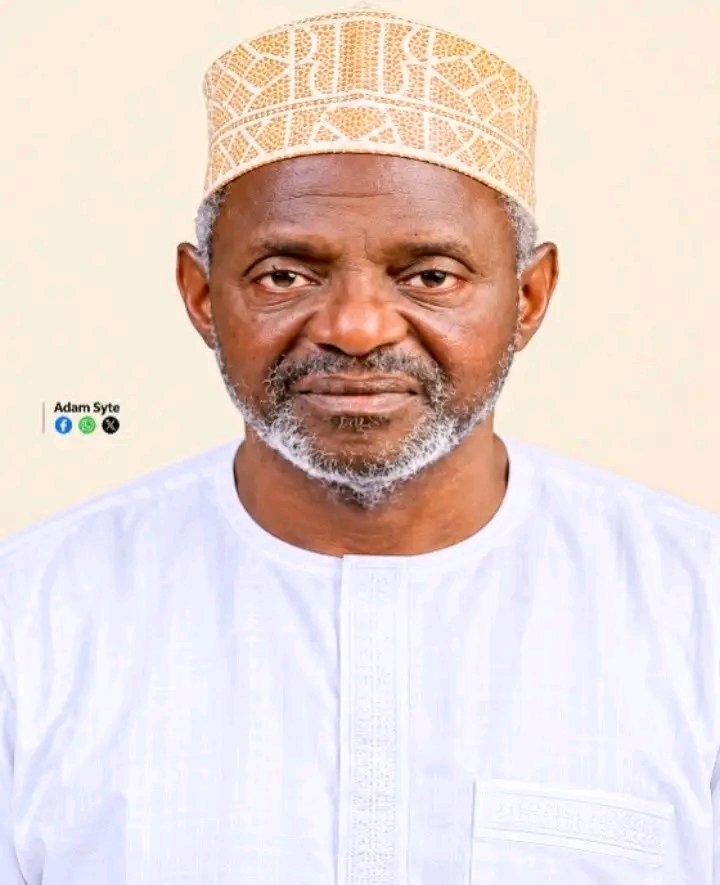
Bayero University, Kano (BUK), has celebrated the contributions of Professor Ismaila Abubakar Tsiga to literary scholarship and academic development, describing his 45 years of service as a legacy of mentorship, intellectual commitment and dedication to humanity.
The Vice-Chancellor of the university, Professor Haruna Musa, said Tsiga, who retired in 2024, deserved the recognition for his contributions to the development of the Department of English and Literary Studies and the university at large.
He spoke at a two-day academic conference organised by the department in honour of the retired professor in Kano on Monday.
- EPL: I’m Sorry – Liverpool’s Rio Ngumoha Apologises To Owen For Breaking His Record
- 2027: Tinubu’s Northern Votes Will Shock Critics – Dalori
Musa said the conference was particularly significant as it celebrated not only Tsiga’s academic achievements but also his resilience in the face of health challenges.
He described the retired professor as a distinguished scholar, teacher, mentor and educational administrator who had played important roles in repositioning the department and producing generations of graduates.
According to him, Tsiga joined the university in 1979 and served in various capacities, including level coordinator, departmental examinations officer, head of department, Senate member and member of several university committees.
He also served as pioneer director of the university’s Nigeria Centre for Indian Research and Development between 2017 and 2021.
The vice-chancellor urged participants to use the conference to examine emerging developments in life writing, literature, popular culture and digital humanities, while generating new perspectives on interpreting society and its cultural experiences.
Earlier, the Head of the Department of English and Literary Studies and wife of the celebrant, Dr Aishat Umar, said the conference was organised to recognise Tsiga’s outstanding contributions to teaching, research, mentorship and the advancement of life writing.
She said the professor was instrumental in introducing life writing as a course in the department, exposing generations of students to the relationship between personal narratives, literature, history and society.
Umar noted that his publications, including Autobiography and Social History: Apartheid and the Rise of Black Autobiography Tradition in South Africa, had contributed to scholarly discussions on the relationship between individual experiences and broader historical developments.
She also highlighted his role in documenting the life of the late Sheikh Abubakar Mahmoud Gumi through the book “Where I Stand: The Autobiography of the Late Sheikh Abubakar Mahmoud Gumi”.
According to her, Tsiga’s contributions extended beyond his publications to editing the works of other scholars and mentoring younger academics.
“His contribution is not limited to his own writing. It is also found in the students he has supervised patiently and challenged kindly, as well as in the younger colleagues he mentored,” she said.
Umar, who disclosed that she was among those who benefited from his mentorship, recalled how he carefully corrected students’ written expressions, sometimes rewriting entire sentences to improve their writing.
She said the experience taught his students that writing was not complete until it communicated the intended meaning accurately.
The chairman of the occasion, Minister of Information and National Orientation, Mohammed Idris, represented by the Director-General of the Nigerian Television Authority (NTA), Salihu A. Dembos, said the conference underscored the importance of documenting personal experiences as part of preserving Nigeria’s history and cultural heritage.
In an address delivered on his behalf, the minister said autobiographies, memoirs and other forms of life writing provided valuable insights into the experiences that shaped individuals and their communities.
He said Nigeria’s national history should reflect not only major political events but also the contributions and experiences of ordinary citizens, writers, scholars and community leaders.
Idris also stressed the importance of the humanities, including literature, history and languages, to national development, saying education should go beyond technical and professional training to promote critical thinking, creativity and historical awareness.
He commended the university and the organisers for bringing scholars together to examine the relationship between memory, identity and literature.
The minister congratulated Tsiga, describing the conference as a fitting recognition of his contributions to literary studies, culture and identity, particularly in Northern Nigeria.
The conference, themed “Directing the Self: Life-Writing, Memory and Identity in Literature,” brought together scholars, writers, academics, family members and friends of the celebrant.
The discussions are expected to examine how autobiographies, memoirs and other personal narratives shape individual and collective identities while preserving historical and cultural experiences.



Ondo: Chemist allegedly swallows abortion drugs to evade arrest

BUK to honour English Professor Tsiga after 45 years of service

LaLiga: Diego Simeone Makes History After 345 Wins, More Than Any Coach Ever

Now Hiring: Academic and Technical Staff at a Leading Private University in Gombe State

LAUTECH 18th Convocation: EEE Class ’05 Alumni Celebrate as Electronic and Electrical Engineering Department Produced the School’s Overall Best Graduating Student

NMS 95 Reunion Ends in Tragedy as 2 Members Die, 3 Injured in Road Crash


