Headlines
NNPC, NLNG, suppliers sign landmark gas supply deals
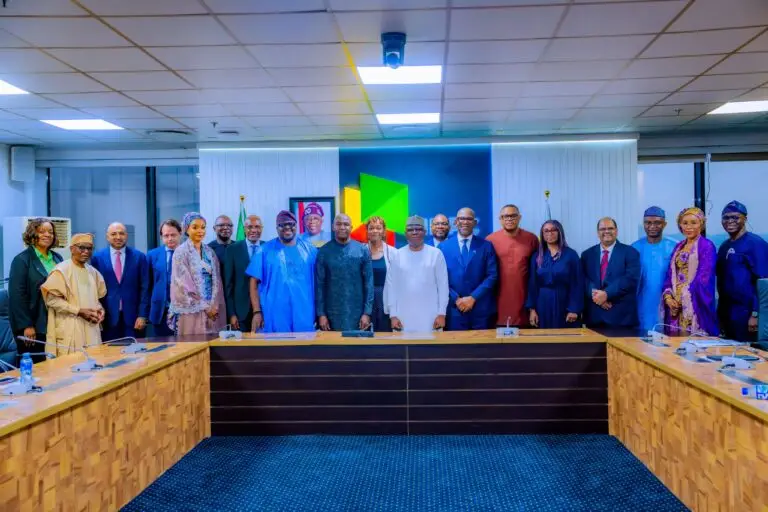
The Nigerian National Petroleum Company Limited (NNPC Ltd.), Nigerian Liquefied Natural Gas (NLNG), and other Joint Venture (JV) partners have signed agreements to supply 1.3 billion standard cubic feet per day (mmscf/d) of feedgas.
This move aims to ensure sustainability and strengthen gas supply for ongoing and future operations.
The long-term Gas Supply Agreements (GSAs), with options for extension, were signed on Friday at the NNPC Towers in Abuja to boost gas supply to NLNG’s Bonny Plant.
The third-party suppliers include Shell Nigeria Exploration and Production Company Ltd. – Sunlink Energies and Resources Ltd. project, and TotalEnergies E&P Nigeria Ltd. – Amni International Petroleum Development Company Ltd. JV IMA project.
Other suppliers include NNPC Ltd. – First Exploration and Petroleum Development Company Ltd. JV; Shell Nigeria Gas Solutions Ltd. – NNPC Gas Marketing Ltd. JV; OANDO – NNPC E&P JV; and TotalEnergies E&P Nigeria Limited JV Ubeta.
Speaking on the agreements, Dr Philip Mshelbila, Managing Director and CEO of NLNG, described the development as a strategic move to strengthen feedgas supply to its existing trains on Bonny Island and support the company’s expansion drive.
“The suppliers will deliver an estimated 1,290 million standard cubic feet per day (mmscf/d), or 13.3 billion cubic meters per year (bcm/yr), of feedgas to NLNG, which will be scaled up gradually over time.
“These new GSAs represent a significant boost to feedgas availability, enhancing NLNG’s capacity to meet its commercial commitments while laying the groundwork for expansion.
“This development aligns with the Federal Government’s Decade of Gas initiative, which places natural gas at the center of Nigeria’s industrialisation and energy transition agenda,” Mshelbila said.
He described the milestone as the culmination of sustained efforts by shareholders and stakeholders to address long-standing gas supply constraints.
In recent years, NLNG’s operations had been significantly impacted by pipeline disruptions, including vandalism and sabotage, which affected upstream gas availability.
“NLNG recognises the challenges the insufficient gas supply has caused to its long-term buyers, customers, shareholders, and the Nigerian economy at large.
“With the new GSAs, NLNG is optimistic about sustainable gas supply for the future and remains grateful for the continued support of its buyers and other stakeholders,” he added.
Mshelbila explained that the new GSAs marked a historic shift for NLNG, which since inception had relied primarily on legacy shareholder joint venture affiliates for gas supply.
With the recent divestment of onshore assets by International Oil Companies (IOCs) to non-shareholder entities, NLNG can now procure feedgas from diverse third-party suppliers to meet its growing needs for both LNG and Natural Gas Liquids production.
In his remarks, Mr Bashir Ojulari, Group CEO of NNPC Ltd., said the NLNG concept had been on the table for two decades before the Federal Government allowed partners and critical enablers to commence and sanction the project.
Ojulari lauded the founders and partners for their resilience through all the challenges from NLNG Train One to Train Six, describing it as a demonstration of global commitment and Nigeria’s readiness to operate a world-class business.
“In spite of the challenges in the Niger Delta, where much of our supply comes from onshore and shallow water, we have faced both technical and non-technical hurdles.
“Technically, we needed to continue developing new gas resources,” he said.
Ojulari noted that persistent pipeline attacks affected oil production and exposed vulnerabilities in gas supply.
He added, “There is still much to be done to unlock gas exploration. Some third parties have ready gas, but the structure and framework to bring the gas to market and maximize capacity utilisation and profitability have been lacking.
“That is why this agreement is a dream come true for Nigeria’s energy sector and a proud moment for the founding partners, who welcomed other parties into this venture,” he said.
Ojulari reaffirmed the commitment to realising the Presidential Executive Orders for the industry while working with partners to unlock opportunities for collective prosperity, in line with national gas development targets for incremental production.
“The landmark GSAs are a game-changer for Nigeria’s gas industry, enhancing local gas production capacity and improving supply, both critical to the country’s energy security, industrialisation goals, and economic growth.”
Headlines
SSCE Fee Hike: Government Must Balance Cost Recovery with Access to Education
Headlines
Can Nigeria’s drone industry deliver Africa’s defence sovereignty
Military manufacturing may be growing, but defence sovereignty depends on far more than production.
Across Africa, the ability to defend borders, monitor territory and protect critical infrastructure remains heavily dependent on foreign suppliers. Turkish drones patrol borders, Chinese surveillance systems monitor cities and Russian fighter jets form the backbone of several air forces.
For decades, African militaries have turned abroad for critical defence technologies, leaving the continent largely positioned as a buyer rather than a producer.
An Abuja-based start-up is attempting to change that equation.
Terra Industries, founded in 2024 by Nathan Nwachuku and Maxwell Maduka, both in their early twenties, designs and manufactures drones, autonomous surveillance towers and unmanned ground vehicles from facilities in Abuja and Accra.
Unlike companies that primarily assemble imported components, Terra says it develops its own software, airframes, propellers and lithium-ion battery packs, with more than 70 percent of its inputs sourced locally.
The company says its systems are currently used to protect infrastructure valued at approximately $11bn, including power plants, lithium and gold mines, oil refineries and other strategic assets across eight African countries and Canada.
Building capability
The shift from importing security technology to producing it locally has become an increasingly important debate across Africa. Governments facing armed groups, porous borders, maritime insecurity and attacks on critical infrastructure are searching for faster and more adaptable solutions.
Terra’s move from private infrastructure security into engagements with Nigeria’s defence institutions reflects that changing environment. The company says its systems are designed to address challenges ranging from maritime surveillance and border monitoring to the protection of energy and mining assets.
![The Archer drone, developed by Terra Industries, is part of a new generation of locally manufactured military technology emerging across Africa [Terra Industries]](https://www.aljazeera.com/wp-content/uploads/2026/07/IMG_4128-1-1783618110.jpeg?w=770&resize=770%2C580&quality=80)
“Coastal states in West Africa are focused on maritime surveillance because of piracy and illegal fishing in the Gulf of Guinea,” chief executive Nathan Nwachuku told Al Jazeera. “States dealing with insurgency and porous borders want persistent aerial surveillance and a rapid-response capability. Others are looking at protection for pipelines, power and energy infrastructure, and mining assets, the same problems we started solving in Nigeria.”
The company is now preparing for a larger regional footprint. Nwachuku confirmed that Terra’s second production facility in Ghana will become Africa’s largest drone manufacturing hub, with an annual production capacity of 50,000 units by 2028.
“Our long-term ambition goes beyond the continent because the threats our systems are designed to address exist across the Global South,” he said. “Governments in South Asia and South America face them too, and they face the same dependency on foreign suppliers. We intend to serve them as we grow.”
Investor confidence
The scale of investment behind Terra reflects growing interest in Africa’s emerging defence technology sector. The company has raised $34m in seed funding, which it describes as one of the largest early-stage funding rounds in African technology.
The investment was led by 8VC, the venture capital firm founded by Palantir Technologies co-founder Joe Lonsdale, alongside Lux Capital and Valor Equity Partners, investors behind companies such as Anduril and SpaceX.
“The round closed in under two weeks, which is rare even by global standards,” Tage Kene-Okafor, Terra Industries’ director of communications, told Al Jazeera. “But what has been more exciting is our cap table, where we have the likes of 8VC, Lux Capital and Valor Equity Partners, investors that have backed companies shaping the future of defence and advanced manufacturing globally.”
Security imperative
The interest in companies like Terra comes as drones become increasingly central to conflicts across Africa. In the Sahel, inexpensive commercial drones have moved from surveillance tools to weapons used on the battlefield, creating new challenges for militaries that often lack effective counter-drone capabilities.
According to the Armed Conflict Location and Event Data (ACLED), Jama’at Nusrat al-Islam wal-Muslimin (JNIM), the al-Qaeda-linked coalition operating in Mali and Burkina Faso, has carried out more than 100 drone attacks since 2023, with 2025 recording the highest number to date.
Terra says its Kama interceptor drone was developed in response to this changing threat environment. The company says the system can reach speeds of up to 300kph and is designed to counter hostile drones in environments where traditional air defence systems may be unavailable or too expensive.
Building defence technology, however, is not the same as achieving defence sovereignty.
Sovereignty question
While a country can build manufacturing capacity through investment, engineering talent and industrial policy, defence sovereignty requires institutions capable of managing procurement, ensuring accountability and sustaining strategic industries over the long term.
Janice Greaver, director at the Pan African Sustainable, Innovation and Development Associates (PASIDA), argues that local production alone cannot answer those questions.
“Seventy percent local sourcing means little until we know who controls the intellectual property, who is employed and who is left out,” she told Al Jazeera. “And when private capital arms the state with no visible civil society oversight, we are simply trading one dependency (on foreign suppliers) for another (on unaccountable domestic capital).”
Terra Industries has demonstrated that sophisticated defence technologies can be designed and manufactured in Africa. Its rapid rise reflects both growing technical capability on the continent and the pressure created by worsening security challenges.
Whether that becomes genuine defence sovereignty will depend on what happens beyond the factory floor: how governments buy, regulate and oversee the technologies they increasingly seek to build themselves.
As Greaver cautions: “Its manufacturing capacity is being built, sovereignty requires the accountability structures that do not yet exist”.
Source: https://www.aljazeera.com/news/2026/7/13/can-nigerias-drone-industry-deliver-africas-defence-sovereignty
Headlines
Major General Mutkut Applauds 4 Brigade’s Proactive Security Operations During Edo Assessment Visit
The Commander Infantry Corps (CIC), Major General Godwin Mutkut, has commended the operational readiness and administrative achievements of the Headquarters 4 Brigade, Nigerian Army, during an operational assessment visit to the formation in Benin City, Edo State.
During the visit on Saturday, July 11, Major General Mutkut commissioned several completed infrastructure projects and praised the Brigade for maintaining a proactive security posture that has contributed to peace and stability across Edo State.
Addressing officers and soldiers, the Infantry Corps Commander conveyed the goodwill message of the Chief of Army Staff (COAS), Lieutenant General Waidi Shaibu, and applauded the troops for their loyalty, discipline, professionalism, resilience and commitment to duty.
He urged personnel to remain focused on their constitutional responsibilities while upholding the core values, ethics and traditions of the Nigerian Army.
Major General Mutkut also stressed the importance of maintaining strong family relationships, noting that a stable home environment plays a vital role in enhancing the effectiveness and wellbeing of military personnel.
As part of the assessment visit, the Commander commissioned a series of projects completed under the leadership of the Commander 4 Brigade, Brigadier General Ahmed Balogun. The projects include the remodelled Brigade Conference Room, a new Brigade Operations Room, Brigade Sick Bay, an ultra-modern Fire Point, Quarter Guard, and the newly constructed 4 Brigade Mascot and Fountain.
He described the projects as significant investments that would enhance operational efficiency, improve troop welfare and provide a more conducive working environment for personnel.
Major General Mutkut commended Brigadier General Balogun for his leadership and commitment to implementing the Chief of Army Staff’s Command Philosophy through infrastructure development and effective command administration.
Earlier, Brigadier General Balogun welcomed the Commander Infantry Corps and expressed appreciation for the operational assessment visit, describing it as a morale booster for officers and soldiers of the Brigade.
He reaffirmed the Brigade’s commitment to protecting lives and property across its area of responsibility while sustaining the high standards of professionalism, discipline and operational excellence associated with the Nigerian Army and the Infantry Corps.
The visit also featured a tour of facilities within the Nigerian Army Cantonment, Ekehuan, Benin City, an interactive session with officers and soldiers, and the presentation of souvenirs.
-
Branded Content3 weeks agoNow Hiring: Academic and Technical Staff at a Leading Private University in Gombe State
-
Headlines11 months agoNRC to reposition train services nationwide.. Kayode Opeifa
-
Entertainment9 years agoThe final 6 ‘Game of Thrones’ episodes might feel like a full season
-
Fashion9 years agoThese ’90s fashion trends are making a comeback in 2017
-
Politics3 months agoNNPP Diaspora Stakeholder and Key Kwankwaso Ally, Dr. Usman Tijjani Shehu, Rejoins APC
-
Opinion2 years agoBureaucratic Soldier, Kana Ibrahim heads Ministry of Aviation and Aerospace After Transformative Tenure at Defence
-
Opinion1 year agoHon. Daniel Amos Shatters Records, Surpasses Predecessor’s Achievements in Just Two Years
-
Opinion7 months agoBarrister Somayina Chigbue, Esq: A rising legal leader shaping institutioal excellence in Nigeria