Connect with us

Opinion

Who is Afraid of Peace and Stability In Kebbi State ?

Published

on

By Imam Talba

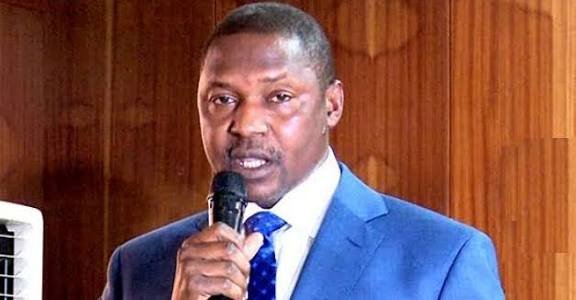
It is always an eyesore and very troubling to watch how once-powerful men descend into the abyss of desperation, clutching at straws of irrelevance while disgracefully weaponizing the very insecurities they once ignored. The latest petition authored by Abubakar Malami, who many Nigerians know as the former Attorney General of the Federation and Minister of Justice, is an interesting case study of what we can term political recklessness, hypocrisy, and the dangerous misuse of national security rhetoric for personal gain.

The petition which was dated 10th September 2025 and addressed to the National Security Adviser, Director General of the Department of State Services, Inspector General of Police, and the Comptroller-Generals of Immigration and Civil Defence, Malami’s letter purportedly raises alarm about alleged plans to destabilize Kebbi State through the importation of political thugs, mercenaries from Niger Republic, and the trafficking of arms. He had the effrontery to further accuse the sitting governor of Kebbi of complicity, even going as far as linking the state government to terrorist networks.

At the surface, such a petition ought to be taken seriously and treated with gravity. But when scrutinized closely, one would discover that its authorship by the person of Malami evidently questions its credibility. This letter reeks of desperation, vindictiveness, and opportunism, being qualities that are far from the noble intervention of a patriotic elder statesman. Indeed, it exposes not the state institution, not the state governor, but the cunny Malami himself as a political clown who sought to create relevance for himself.

The timing of Malami’s petition raises suspicion. It can be recalled that under former President Muhammadu Buhari, he occupied one of the most powerful offices in Nigeria: Attorney General of the Federation and Minister of Justice for eight years (2015–2023). During that period, Kebbi State and much of the North West suffered under the ceaseless assault of kidnappers, bandits, and terrorists. Hundreds were killed, villages were sacked, and thousands were displaced. Yet, not once was the now-concerned Malami heard publicly condemning the atrocities in his very home state, nor visit bereaved families, nor even send a perfunctory condolence letter.

This was a man who had the ears of the President, the authority of the office, and the instruments of justice at his disposal. But he chose the path of silence. He embraced complicity, and he chose political convenience over the lives of his people.

Now, after wandering around for a while, he suddenly found solace among the “IDPs” – internal displaced politicians – a coalition of rejected, rebellious, serial losers, and failed politicians, he suddenly discovered a newfound passion for Kebbi’s security. He now forces himself into our view, painting himself as a whistle-blower, screaming about foreign mercenaries, clandestine arms deals, and terrorist networks. I am surprised to ask, where was this fiery patriotism when the bodies of innocent farmers littered the fields of Danko-Wasagu? Where was his sense of urgency when schools in Zuru were shut down due to insecurity? Where was his letter-writing zeal when women were abducted on highways in Argungu?

At this point, we won’t be deceived by all his shenanigans. The hypocrisy is glaring for all to see. His action isn’t genuine patriotism, but of desperation for political recognition. Having failed to carve out relevance within mainstream politics, he now weaponizes the pain of Kebbi people for selfish aggrandizement.

The great people of Nigeria won’t forget so soon how Malami’s record as Attorney General was so scandalous. We still remember how his tenure remains one of the most controversial in Nigeria’s democratic history, characterized by allegations of corruption, abuse of office, and the shielding of politically exposed persons from justice. Nigerians still remember the suspicious deals around recovered loot, the brazen attempts to frustrate anti-graft prosecutions, the and the blatant personalization of the office of the AGF. During his dictatorial era in office, Malami’s name became synonymous with political manipulation. Even within his home state of Kebbi, his aloofness to the plight of ordinary citizens during the years of banditry has not been forgotten.

Therefore, when such a man pens a petition alleging that the governor of Kebbi is colluding with terrorists, Nigerians must interrogate not the content but the intent. Is this the voice of a patriot? Or is it the cry of a desperate politician, eager to blackmail his opponents and stage-manage insecurity as a bargaining chip? The answer is self-evident.

Malami alleges that foreign mercenaries from Niger Republic are being armed and deployed to Kebbi. He claims thugs roam freely, attacking citizens without fear of law enforcement. He insists that Governor Nasir Idris and his allies are complicit, and he even mentions links to a terrorist network.

But pause for a moment. Who, just days ago, was accused of facilitating the importation of bandits into Kebbi? Who, according to reports, has been fingered in clandestine arrangements with violent actors for political advantage? None other than Abubakar Malami himself.

Indeed, the timing of his petition betrays him. Less than 48 hours after attempting to silence the media from reporting his alleged connections to bandit importation, he suddenly leapt forward with this so-called petition. What clearer evidence of deflection can there be? A guilty man projects his sins on others. By rushing to accuse Governor Nasir Idris, Malami merely seeks to distract attention from his own alleged complicity.

The petition Is not a patriotic document; it is a smokescreen. It is not a warning; it is a confession disguised as accusation.

Let it be said clearly: Governor Nasir Idris has no complicity in the allegations leveled by Malami. On the contrary, the governor has demonstrated commendable commitment to the security of the Kebbi people. Since assuming office, he has taken proactive measures like working hand-in-glove with federal security agencies, providing logistic support to the armed forces, and creating grassroots security initiatives across local governments. He has built synergy with community leaders and vigilantes to restore peace in rural areas. Most importantly, he has consistently reaffirmed his government’s zero tolerance for banditry, terrorism, and thuggery.

For Malami to tarnish the name of such a proactive leader is not only mischievous but malicious. It is a calculated attempt at blackmail. Nigerians must not be deceived. Governor Idris remains innocent of these wild allegations, and the people of Kebbi know his commitment firsthand.

At a time when Nigeria battles multiple security fronts – terrorism in the North East, banditry in the North West, separatist violence in the South East, and oil theft in the South South – the last thing the nation needs right now is a reckless politician whose joblessness has positioned him as a sower of confusion for personal gain. Malami’s petition, if left unchecked, could incite violence, inflame tensions, and weaken the morale of security agencies that are daily sacrificing their lives. This is all the more reason why his actions must be condemned in the strongest terms.

I would urge the international community, particularly democratic partners, not to be swayed by his antics. They must recognize him for what he is: a desperate man seeking to launder his image through false alarms. For the record, I’m convinced that it is Malami, not Governor Idris, who ought to be placed on international watchlists for destabilization attempts and reckless political conduct.

Abubakar Malami’s petition is not the voice of conscience but the cry for recognition. It is the rant of a desperate man who is willing to drag his state and his country into turmoil for selfish ends. His record as Attorney General is littered with corruption and complicity; his silence during years of banditry speaks volumes; his sudden alarmism exposes hypocrisy; and his baseless attack on Governor Nasir Idris reveals malice.

Nigeria cannot afford to indulge such recklessness. The security agencies must treat his petition not as intelligence but as evidence of desperation from a selfish individual. The international community must place him under scrutiny. And the Nigerian people must consign him to the dustbin of political history.

In a conclusive analysis, Malami is a traitor and not a savior to Kebbi. He should be seen as a political clown, a liability, and a threat to the very peace he pretends to defend. Nigerians must see through Malami’s games and rally behind legitimate individuals, not political failures attempting to reinvent themselves as prophets of doom.

Talba wrote this piece from Birnin- Kebbi.

Continue Reading
Click to comment

Leave a Reply

Your email address will not be published. Required fields are marked *

Opinion

No More Pipeline Vandalism in The Niger Delta, But…

Published

on

APPRAISING MILITARY RESOLVE AND THE PATH TO SUSTAINABLE OIL SECURITY

By Aaron Mike Odeh

On a recent media assessment visit by the Director, Defence Media Operations, Major General Michael E Onoja on the 20 January 2026, the General Officer Commanding (GOC), 6 Division of the Nigerian Army and Commander Land Component Operation DELTA SAFE, Major General Emmanuel Emeka, stated that there will be “no more pipeline vandalism in the Niger Delta” indicating a strong affirmation of military resolve and institutional confidence in the ongoing operations within Nigeria’s most economically strategic region.
Far from being a casual statement, the pronouncement reflects the operational posture, command clarity, and renewed determination of the Nigerian Armed Forces (AFN) under the leadership of General Olufemi Oluyede. It signals a clear message: the era of unchecked sabotage of national economic assets is being decisively confronted.

CONTEXTUALISING THE GOC’S DECLARATION
Statements of this magnitude from a serving GOC carry both symbolic and operational weight. They are rooted in firsthand command experience, intelligence assessments, and measurable gains on the ground. In this regard, Major General Emmanuel Emeka’s assertion should be understood as a projection of confidence derived from sustained military engagement, improved coordination with sister security agencies, and enhanced operational discipline within the 6 Division’s area of responsibility.
The Niger Delta has long posed complex security challenges due to its difficult terrain, extensive pipeline networks, and the activities of organised criminal syndicates. Against this backdrop, the GOC’s declaration underscores a belief that the Nigerian Armed Forces has reached a level of operational advantage sufficient to deter, disrupt, and dismantle pipeline vandalism networks.
OPERATIONAL GAINS AND MILITARY PROFESSIONALISM
Under Major General Emmanuel Emeka’s command, the 6 Division has intensified patrols, improved intelligence-led operations, and sustained pressure on illegal refining camps and crude oil theft routes. These efforts align with the Federal Government’s strategic objective of securing oil infrastructure as a matter of national economic security.
The GOC’s statement therefore reflects not mere optimism, but a professional assessment of the division’s growing capacity to dominate the operational environment. It also reinforces the Nigerian Armed Forces constitutional role as a stabilising force, committed to safeguarding national assets in support of economic recovery and investor confidence.

THE “BUT”: BEYOND KINETIC SUCCESS
While commending the resolve and achievements of the 6 Division, it is equally important to situate the declaration within a broader national framework. The “but” in the statement should not be interpreted as doubt or contradiction; rather, it represents an acknowledgment of the multifaceted nature of pipeline security in the Niger Delta.
Pipeline vandalism has historically been sustained not only by criminal intent, but also by socioeconomic pressures, environmental degradation, and the absence of alternative livelihoods in some host communities. Military success, while indispensable, achieves greater durability when complemented by effective civil governance, economic inclusion, and community trust-building.

COMMUNITY ENGAGEMENT AS A FORCE MULTIPLIER
One of the strengths of recent military operations in the Niger Delta has been improved civil-military relations. The success of the Armed Forces is closely tied to cooperation from local communities, traditional institutions, and credible stakeholders.
Sustainable pipeline security is most effective when host communities become partners in protection rather than passive observers. The GOC’s declaration implicitly places responsibility on all stakeholders—government agencies, oil companies, community leaders, and youths—to consolidate the gains made by the Armed Forces.

INSTITUTIONAL SYNERGY AND NATIONAL RESPONSIBILITY
The efforts of the 6 Division do not exist in isolation. They form part of a wider national security ecosystem involving regulatory agencies, intelligence services, law enforcement bodies, and policy institutions. The GOC’s confidence should therefore inspire complementary actions across these sectors.
Oil companies must uphold environmental standards and transparent community engagement. Regulatory bodies must enforce accountability. Development agencies must deliver visible dividends of peace. These non-military actions reinforce the security umbrella provided by the Nigerian Armed Forces.

LEADERSHIP AND STRATEGIC MESSAGING
Major General Emmanuel Emeka’s statement also serves as strategic communication—boosting troop morale, reassuring investors, and reinforcing public confidence in the Armed Forces of Nigeria. Such leadership messaging is essential in shaping national narratives around security, discipline, and state authority.
By articulating a firm stance against pipeline vandalism, the GOC is not only commanding troops, but shaping expectations and setting benchmarks for operational success.

CONCLUSION
The declaration that there will be “no more pipeline vandalism in the Niger Delta” should be seen as a reflection of strengthened military capacity, improved leadership focus, and renewed institutional confidence under Major General Emmanuel Emeka, GOC 6 Division of the Armed Forces.
The Nigerian Armed Forces has demonstrated readiness to secure critical national assets. The task ahead is to consolidate these gains through sustained operations, inter-agency synergy, and socio-economic interventions that address underlying vulnerabilities.
In this context, the GOC’s statement stands as both an assurance and a call to collective national responsibility—one that deserves commendation, support, and strategic follow-through.

Aaron Mike Odeh, a Public Affairs Analyst Media Consultant and Community Development Advocator wrote from Post Army Housing Estate Kurudu Abuja

Continue Reading

Opinion

Appraising NUPRC’s New Tempo

Published

on

By Grace Ameh

As a woman who has spent years admiring the quiet strength of sisters carving paths in Nigeria’s demanding energy sector, my heart swelled with genuine joy the moment Chief Mrs. Oritsemeyiwa Eyesan’s appointment as Commission Chief Executive of the Nigerian Upstream Petroleum Regulatory Commission was announced.

Here stands a remarkable daughter of the Niger Delta, graceful yet fiercely determined, becoming the first woman to lead our nation’s upstream regulator. Her rise feels deeply personal, like watching a beloved sister finally claim the spotlight she has long deserved.  

The NUPRC, as a young agency born from the transformative Petroleum Industry Act of 2021, has shouldered enormous responsibilities in a complex and evolving landscape—navigating fluctuating production levels amid global energy shifts, addressing delays in data dissemination that can affect investor planning, tackling the persistent menace of crude oil theft that impacts national revenue, and working to enhance transparency in licensing rounds and asset management for greater stakeholder confidence.

This institution emerged with bold ambitions to modernise regulation, attract investment, and optimise Nigeria’s hydrocarbon resources, yet it has operated in an environment marked by inherited challenges and the need for continuous adaptation to deliver on its mandate.

Then, in December 2025, President Bola Tinubu nominated Chief Mrs Eyesan as the first woman to lead NUPRC, a move swiftly confirmed by the Senate.

My spirit lifted immediately. Chief Eyesan’s journey inspires every woman dreaming big in this field. She holds a Bachelor of Education in Economics from the prestigious University of Benin, graduating in 1986 with a solid foundation in economic theory, market analysis, and project evaluation—skills that would prove invaluable in the complex world of energy finance and strategy.

Her academic grounding equipped her to navigate large-scale investments and regulatory frameworks with precision. Early in her career, she honed her financial acumen in banking, serving as Branch Manager at People’s Bank of Nigeria and later as Treasury Officer at Gulf Bank, before joining NNPC in 1992.

Over nearly 33 years, she rose steadily through roles in planning, procurement, corporate strategy, and sustainability, culminating as Executive Vice President, Upstream, until her retirement in November 2024. In that position, she oversaw strategic management of Nigeria’s upstream operations, led sustainability initiatives, strengthened financial discipline, and guided critical reforms aligned with the PIA.

Since assuming office, Chief Eyesan has brought a refreshing wave of purpose and collaboration to NUPRC. Her patriotic commitment shines brightly as she aligns the Commission’s work with President Tinubu’s Renewed Hope Agenda, emphasising increased crude oil production to enhance energy security and revenue, accelerated gas monetisation to advance the Decade of Gas vision, and robust transparency measures to rebuild investor trust.

I admire her focus on digitisation; she is thoughtfully integrating digital tools to improve operational efficiency, accountability, and ease of business, cutting through layers of bureaucracy that once slowed progress. Her leadership style feels deeply relatable—inclusive and engaging. With an open-door policy and regular town halls, she encourages staff input while forging stronger ties with stakeholders, labour unions, and professional bodies.

She champions environmentally sustainable practices, ensuring growth does not come at the cost of our land and waters. Her strategic vision unfolds organically: boosting crude reserves and output for economic stability, scaling gas utilisation for power generation and exports, fortifying regulations to attract long-term investments, nurturing technical expertise through partnerships and capacity building, and embedding digitisation hand-in-hand with transparency to foster dynamic, confidence-inspiring growth.

In these early weeks of January 2026, tangible steps are emerging. She has advanced the 2025 licensing round, scheduling a key pre-bid conference for January 14 in Lagos to draw fresh capital into exploration and development. Partnerships, such as deepened synergy with the Nigerian Midstream and Downstream Petroleum Regulatory Authority, highlight her collaborative spirit.

What touches me profoundly is how Chief Eyesan views challenges as opportunities. She inherited an agency needing revitalisation but approaches it with grace, strategy, and unyielding diligence—that workaholic patriotism we so admire in trailblazing women. Her experience positions her uniquely to resolve legacy issues, unlock stranded assets, and position NUPRC as Africa’s premier regulator.

Reflecting on this new era, sisterly pride overwhelms me. Chief Mrs. Oritsemeyiwa Eyesan is truly an Amazon—resilient, visionary, and devoted to Nigeria’s progress. In her capable hands, the upstream sector is not just recovering; it is poised to soar, delivering sustainable wealth for generations.

Dear sister, you embody the hope we renew daily. The light of your leadership illuminates our path forward, proving once again that when a woman of substance rises, the nation rises with her.

*Ameh an Oil and gas expert writes from Kaduna.

Continue Reading

Opinion

FIFA World Cup: Counting the costs of Super Eagles missed opportunities

Published

on

By Victor Okoye

As the football world prepares for the expanded 48-team 2026 FIFA World Cup, Nigeria is facing the prospect of missing the global showpiece for the eighth time since its inception in 1930, a development that has drawn concern from football stakeholders and sports administrators in the country.

The Super Eagles, who made their World Cup debut at USA 1994, have qualified for the finals six times but failed to reach the tournament on seven previous occasions.

Should Nigeria fail to qualify for the 2026 edition, it would mark the eight miss and a second consecutive absence, further highlighting the rising cost of non-participation in an era of unprecedented financial rewards.

Historically, missing the World Cup was largely a sporting setback. Financial incentives were modest in earlier tournaments.

In USA 1994, FIFA’s total prize money stood at about 62 million dollars, with champions Brazil earning roughly four million dollars.

France 1998 offered about 131 million dollars in total prize money, while winners received around six million dollars.

The figures rose steadily to 300 million dollars at Brazil 2014 and 440 million dollars at Russia 2018 and Qatar 2022.

However, FIFA’s recent review has significantly raised the stakes.

The FIFA Council has approved a record 727 million dollars financial package for the 2026 World Cup, to be co-hosted by the United States, Canada and Mexico.

At an estimated exchange rate of 1,500 naira to the dollar, the total sum translates to about 1.09 trillion naira.

Of this amount, 655 million dollars (approximately 982.5 billion naira) will be shared as prize money among the 48 participating teams.

Champions will earn 50 million dollars, runners-up 33 million dollars, third place 29 million dollars and fourth place 27 million dollars.

Teams finishing between fifth and eighth will receive 19 million dollars, ninth to 16th are to receive 15 million dollars, 17th to 32nd will pocket 11 million dollars, while teams ranked 33rd to 48th will earn nine million dollars.

Each qualified nation will also receive 1.5 million dollars as preparation funds.

This guarantees every participating team a minimum of 10.5 million dollars — about 15.75 billion naira — before the tournament begins.

Nigeria’s 2026 qualification campaign ended in disappointment after the Super Eagles finished second behind South Africa in their group and lost the African playoff final to the Democratic Republic of Congo (DR Congo) on penalties.

To date, no public official report has broken down the total operational costs or expenditure to prosecute the 2026 World Cup qualifying campaign (travel, allowances, camps, logistics) but there are concerns and scrutiny over Nigeria Football Federation (NFF) finances.

The scrutiny includes how funds received from FIFA and CAF have been used over the years following the House of Representatives move to probe more than 25 million dollars in FIFA/CAF grants given to the NFF between 2015 and 2025, citing accountability questions.

However, the NFF has petitioned FIFA over alleged player-eligibility breaches by DR Congo, a move that has reopened debate within the football community.

Reacting to the situation, former Super Eagles captain and 1994 AFCON winner, Mutiu Adepoju, described the possibility of another World Cup absence as “a huge setback”.

“Missing one World Cup is painful, but missing two in a row is unacceptable for a country like Nigeria. Beyond pride, the financial loss is enormous and affects football development at all levels,” Adepoju said.

Former NFF Technical Director, Austin Eguavoen, said qualification had become more critical than ever due to the new prize structure.

“In the past, the World Cup was more about exposure. Now, the money involved can change the entire football ecosystem. Missing out means missing an opportunity to invest in grassroots and infrastructure,” Eguavoen said.

Chairman of the Nigeria Premier Football League (NPFL), Gbenga Elegbeleye, said the impact would also be felt in the domestic league.

“When the national team is at the World Cup, it attracts attention to our league and players. Absence reduces visibility, sponsorship interest and confidence in the system,” Elegbeleye said.

Similarly, former Minister of Sports, Solomon Dalung, said Nigeria must treat World Cup qualification as a national project.

“The Super Eagles missing the World Cup repeatedly shows deeper administrative and structural issues. The financial consequences alone should force stakeholders to rethink planning and accountability,” Dalung said.

On the legal challenge before FIFA, NFF Secretary-General, Dr Mohammed Sanusi, confirmed that the matter was under review.

“We have submitted our petition and we are waiting for FIFA’s decision. The rules are clear on nationality and eligibility, and we believe the issues raised deserve careful consideration,” Sanusi said.

If FIFA rules in Nigeria’s favour, the Super Eagles could be reinstated into the intercontinental playoffs, restoring a pathway to qualification and access to guaranteed earnings of at least 15.75 billion naira.

Failure would confirm Nigeria’s eighth World Cup absence, with consequences ranging from lost revenue and reduced global visibility to diminished influence in international football.

With the 2026 World Cup set to deliver the highest financial rewards in FIFA history, stakeholders agree that Nigeria can no longer afford repeated absences from football’s biggest stage. 

Continue Reading

Trending

Copyright © 2023 - 2025 DailyMirror Nigeria. Design by AspireWeb.ng, powered by WordPress.