Headlines
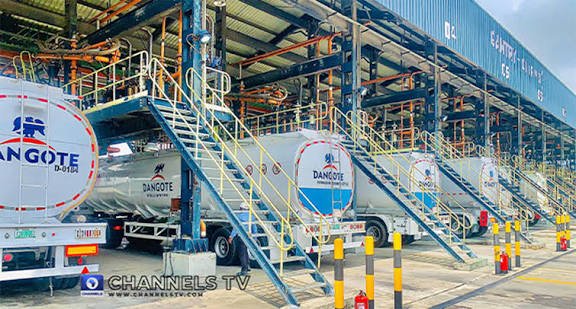
UK-Based Independent Investigators Clear Dangote Refinery of Importing Substandard Fuel
A United Kingdom–based energy watchdog, Impact Investigators Platform (IIP), has dismissed allegations that the Dangote Petroleum Refinery imported substandard petrol into Nigeria, describing the claims as “technically inaccurate, commercially implausible, and unsupported by verifiable evidence”.
In an investigative report signed on Friday by its lead investigator, Raymond Neil, the IIP said its independent assessment of shipping data, customs declarations, and refinery process documentation found no indication that the refinery imported or sold finished Premium Motor Spirit (PMS) with sulphur levels above Nigeria’s approved limit of 50 parts per million (ppm).
Neil said the IIP launched its own investigation after media reports claimed that a vessel had delivered high-sulphur petrol to the Dangote Refinery under the guise of locally refined products.
The investigator, however, noted that the cargo in question was an intermediate feedstock; a raw material commonly traded among refineries worldwide for further processing, not a finished fuel for retail.
“Our analysis confirms that the shipment being referenced was a blending component, not a finished petrol product,” Neil said.
“It was imported within the context of refinery optimisation and was never intended for direct distribution or public sale. The claim that Dangote Refinery imported dirty fuel into Nigeria is therefore misleading and inconsistent with both technical and commercial realities.”
He emphasized that global refinery complexes, including those in Europe and Asia, regularly import intermediate streams such as high-sulphur catalytic gasoline (HSCG) or straight-run naphtha to balance their production yields.
“This is normal industry practice and it does not in any way imply that substandard or harmful fuel is being sold to consumers,” the expert said.
According to the IIP report, the Dangote Refinery’s import documentation and regulatory clearances were consistent with the rules of the Nigeria Customs Service (NCS) and the Nigerian Midstream and Downstream Petroleum Regulatory Authority (NMDPRA), which oversee feedstock imports and quality assurance.
The refinery, it said, also operates under a free trade zone licence, meaning that all materials brought in are subject to internal refining before entering the domestic fuel market.
Neil noted that his organisation’s review included a verification of laboratory test results, refinery capacity utilisation records, and inspection certificates filed with port authorities in both the United Kingdom and Nigeria.
He said none of the reviewed documents supported the claim that the refinery imported petrol ready for local consumption.
“The sulphur levels cited in the reports were associated with intermediate-grade gasoline used as a processing input, not finished fuel. To suggest otherwise is to misunderstand how refineries work. The Dangote complex is designed to upgrade such feedstocks into ultra-low-sulphur petrol through hydrodesulphurisation and other advanced refining processes,” Neil clarified.
He stressed that misreporting such technical details could erode public confidence in the refinery at a time when Nigeria is seeking to strengthen domestic refining capacity and reduce dependence on imported fuel.
“The Dangote project remains a strategic national asset. Public debate around it must be grounded in fact, not conjecture,” Neil said.
The IIP also urged Nigerian authorities to establish a rapid-response mechanism for verifying refinery operations and product quality claims to prevent misinformation from spreading unchecked.
“Transparency is key. But transparency also requires responsible reporting and technical understanding of what the data means,” Neil said.
The IIP report further commended the refinery for what it described as its “proactive compliance culture,” noting that its internal audit systems mirror the standards applied by the European Refining Association and the American Petroleum Institute.
“Our review shows that every product stream leaving the Dangote Refinery is accompanied by a certificate of quality issued by an ISO-certified laboratory,” Neil said.
“We also found evidence that these certificates are regularly submitted to NMDPRA before any local dispatch. This is the kind of governance structure that should be encouraged, not vilified.”
He concluded by reaffirming the group’s readiness to share its findings with relevant Nigerian institutions and civil society organisations to foster evidence-based discourse around the refinery’s operations.
“The energy transition requires accuracy, not alarmism. Our findings clear the Dangote Refinery of the claims of importing dirty fuel. What we found instead is a refinery engaged in legitimate global trade practice, subject to regulation, and committed to delivering cleaner fuels that meet international standards,” Neil said.

Headlines
FCT Security Failure: Byazhin Demands Action as Locals Forced to Fund Own Defence
In order to address the rising level of insecurity in their community, residents of Byazhin in the Federal Capital Territory’s (FCT) Bwari Area Council have demanded immediate government action.
During a visit to the village on Monday, they made the request in separate interviews with the News Agency of Nigeria (NAN).
According to NAN, some locals were observed removing overgrown plants from residential areas in an attempt to increase visibility and get rid of potential criminal hiding places.
They noted that the security situation had changed their daily routines, with their movement being restricted, especially at night, and that the exercise was intended to supplement current security efforts and make the community safer. Some locals have temporarily moved to safer areas with their family.
One of the impacted residents, Mrs. Christiana Ugo, claimed that she and her family were compelled to leave their house as they no longer felt safe.
“We fled our house because we were worried about what would occur. Until things get better, my kids and I are staying at my sister’s house.
“We hope we can go back home soon and live fearlessly,” she stated.
Ugo stated that while leaving their house was a tough choice, her family’s safety could not be compromised.
Another local, Stephen, also referred to as Papa Elijah, recalled a recent kidnapping and claimed that the victim was freed following the payment of a ransom.
In order to discourage criminal activity, Stephen further claimed that suspected kidnappers operate out of a big rock behind the neighbourhood and urged the authorities to set up a permanent security presence there.
He claims that by planning night patrols, the community has increased local security operations.
Speaking as well, resident Mr. Oluwa Deji stated that many homeowners had opted to stay in the neighbourhood despite security worries because it was not an option for them to forsake buildings they had spent years creating.
Deji observed that locals had decided to continue cooperating and supporting neighbourhood vigilante organisations in the hopes of long-term government action.
According to Mr. Adekunle Adewale, the community’s leader, there have been a few security-related events in the region, such as attempted invasions by suspected herders.
He said that residents had increased internal security by hiring security guards and setting up vigilante patrols three times a week. He also mentioned that monthly security meetings were held to discuss security tactics and examine developments.
When situations surpassed the capabilities of local volunteers, Adewale observed that the community continued to work closely with the police.
However, he voiced concerns about what he called an insufficient government presence, pointing out that the Byazhin Development Association was primarily responsible for funding security measures, infrastructure for energy, and other development projects.
He urged the government to bolster community security and upgrade access routes, arguing that improved infrastructure and ongoing security measures will further improve property and life safety.
The Federal Capital Territory Administration (FCTA) and pertinent security agencies were urged by the locals to improve surveillance, step up routine patrols, and take aggressive steps to safeguard people and property. (NAN)
Headlines
SSCE Fee Hike: Government Must Balance Cost Recovery with Access to Education
Headlines
Can Nigeria’s drone industry deliver Africa’s defence sovereignty
Military manufacturing may be growing, but defence sovereignty depends on far more than production.
Across Africa, the ability to defend borders, monitor territory and protect critical infrastructure remains heavily dependent on foreign suppliers. Turkish drones patrol borders, Chinese surveillance systems monitor cities and Russian fighter jets form the backbone of several air forces.
For decades, African militaries have turned abroad for critical defence technologies, leaving the continent largely positioned as a buyer rather than a producer.
An Abuja-based start-up is attempting to change that equation.
Terra Industries, founded in 2024 by Nathan Nwachuku and Maxwell Maduka, both in their early twenties, designs and manufactures drones, autonomous surveillance towers and unmanned ground vehicles from facilities in Abuja and Accra.
Unlike companies that primarily assemble imported components, Terra says it develops its own software, airframes, propellers and lithium-ion battery packs, with more than 70 percent of its inputs sourced locally.
The company says its systems are currently used to protect infrastructure valued at approximately $11bn, including power plants, lithium and gold mines, oil refineries and other strategic assets across eight African countries and Canada.
Building capability
The shift from importing security technology to producing it locally has become an increasingly important debate across Africa. Governments facing armed groups, porous borders, maritime insecurity and attacks on critical infrastructure are searching for faster and more adaptable solutions.
Terra’s move from private infrastructure security into engagements with Nigeria’s defence institutions reflects that changing environment. The company says its systems are designed to address challenges ranging from maritime surveillance and border monitoring to the protection of energy and mining assets.
![The Archer drone, developed by Terra Industries, is part of a new generation of locally manufactured military technology emerging across Africa [Terra Industries]](https://www.aljazeera.com/wp-content/uploads/2026/07/IMG_4128-1-1783618110.jpeg?w=770&resize=770%2C580&quality=80)
“Coastal states in West Africa are focused on maritime surveillance because of piracy and illegal fishing in the Gulf of Guinea,” chief executive Nathan Nwachuku told Al Jazeera. “States dealing with insurgency and porous borders want persistent aerial surveillance and a rapid-response capability. Others are looking at protection for pipelines, power and energy infrastructure, and mining assets, the same problems we started solving in Nigeria.”
The company is now preparing for a larger regional footprint. Nwachuku confirmed that Terra’s second production facility in Ghana will become Africa’s largest drone manufacturing hub, with an annual production capacity of 50,000 units by 2028.
“Our long-term ambition goes beyond the continent because the threats our systems are designed to address exist across the Global South,” he said. “Governments in South Asia and South America face them too, and they face the same dependency on foreign suppliers. We intend to serve them as we grow.”
Investor confidence
The scale of investment behind Terra reflects growing interest in Africa’s emerging defence technology sector. The company has raised $34m in seed funding, which it describes as one of the largest early-stage funding rounds in African technology.
The investment was led by 8VC, the venture capital firm founded by Palantir Technologies co-founder Joe Lonsdale, alongside Lux Capital and Valor Equity Partners, investors behind companies such as Anduril and SpaceX.
“The round closed in under two weeks, which is rare even by global standards,” Tage Kene-Okafor, Terra Industries’ director of communications, told Al Jazeera. “But what has been more exciting is our cap table, where we have the likes of 8VC, Lux Capital and Valor Equity Partners, investors that have backed companies shaping the future of defence and advanced manufacturing globally.”
Security imperative
The interest in companies like Terra comes as drones become increasingly central to conflicts across Africa. In the Sahel, inexpensive commercial drones have moved from surveillance tools to weapons used on the battlefield, creating new challenges for militaries that often lack effective counter-drone capabilities.
According to the Armed Conflict Location and Event Data (ACLED), Jama’at Nusrat al-Islam wal-Muslimin (JNIM), the al-Qaeda-linked coalition operating in Mali and Burkina Faso, has carried out more than 100 drone attacks since 2023, with 2025 recording the highest number to date.
Terra says its Kama interceptor drone was developed in response to this changing threat environment. The company says the system can reach speeds of up to 300kph and is designed to counter hostile drones in environments where traditional air defence systems may be unavailable or too expensive.
Building defence technology, however, is not the same as achieving defence sovereignty.
Sovereignty question
While a country can build manufacturing capacity through investment, engineering talent and industrial policy, defence sovereignty requires institutions capable of managing procurement, ensuring accountability and sustaining strategic industries over the long term.
Janice Greaver, director at the Pan African Sustainable, Innovation and Development Associates (PASIDA), argues that local production alone cannot answer those questions.
“Seventy percent local sourcing means little until we know who controls the intellectual property, who is employed and who is left out,” she told Al Jazeera. “And when private capital arms the state with no visible civil society oversight, we are simply trading one dependency (on foreign suppliers) for another (on unaccountable domestic capital).”
Terra Industries has demonstrated that sophisticated defence technologies can be designed and manufactured in Africa. Its rapid rise reflects both growing technical capability on the continent and the pressure created by worsening security challenges.
Whether that becomes genuine defence sovereignty will depend on what happens beyond the factory floor: how governments buy, regulate and oversee the technologies they increasingly seek to build themselves.
As Greaver cautions: “Its manufacturing capacity is being built, sovereignty requires the accountability structures that do not yet exist”.
Source: https://www.aljazeera.com/news/2026/7/13/can-nigerias-drone-industry-deliver-africas-defence-sovereignty
-
Branded Content3 weeks agoNow Hiring: Academic and Technical Staff at a Leading Private University in Gombe State
-
Headlines11 months agoNRC to reposition train services nationwide.. Kayode Opeifa
-
Entertainment9 years agoThe final 6 ‘Game of Thrones’ episodes might feel like a full season
-
Fashion9 years agoThese ’90s fashion trends are making a comeback in 2017
-
Politics3 months agoNNPP Diaspora Stakeholder and Key Kwankwaso Ally, Dr. Usman Tijjani Shehu, Rejoins APC
-
Opinion2 years agoBureaucratic Soldier, Kana Ibrahim heads Ministry of Aviation and Aerospace After Transformative Tenure at Defence
-
Opinion1 year agoHon. Daniel Amos Shatters Records, Surpasses Predecessor’s Achievements in Just Two Years
-
Opinion7 months agoBarrister Somayina Chigbue, Esq: A rising legal leader shaping institutioal excellence in Nigeria