Connect with us

News

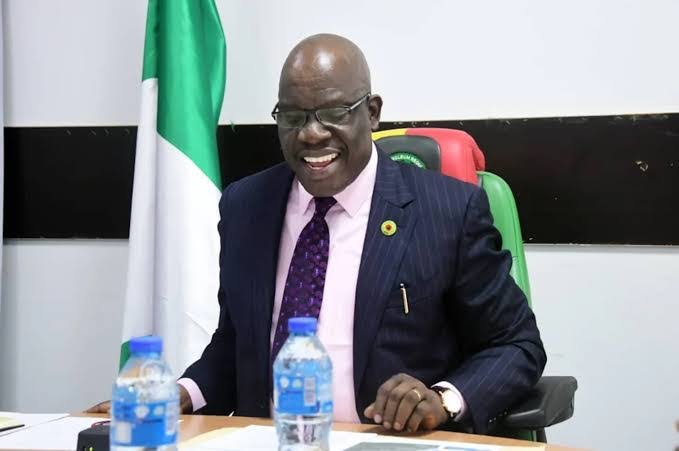
Niger Delta Citizens Alliance Hails NUPRC at Four, Commends Komolafe’s Transformative Leadership

Published

on

The Niger Delta Citizens Alliance (NDCA) has commended the Nigerian Upstream Petroleum Regulatory Commission (NUPRC) for its transformative achievements in improving the welfare of host communities across the oil-producing region over the last four years.

In a statement issued on Tuesday in Port Harcourt by its President, Kingsley Charles, and Secretary-General, Ogbobetta Nelli, the group said the Commission, under the leadership of Engr. Gbenga Komolafe, has given new meaning to resource justice through the transparent implementation of the Host Community Development Trusts (HCDTs).

“For decades, oil-producing communities were left with promises that never translated into tangible progress. But since the creation of NUPRC in 2021, and under Engr. Komolafe’s stewardship, we have witnessed a genuine transformation. The Host Community Development Trust has restored hope by ensuring that oil wealth is finally reaching the people,” the statement reads.

The group praised the Commission’s supervision of the ₦373 billion Host Community Development Fund and the over 500 ongoing projects across the Niger Delta, describing it as “the most inclusive community intervention in the nation’s oil history”.

“These projects are not political billboards, they are real. From hospitals and schools in Rivers and Bayelsa to water projects and skill centres in Delta and Akwa Ibom, the impact is visible. NUPRC has bridged the gap between communities and corporations, replacing years of conflict with structured collaboration and accountability,” the group observed.

According to NDCA, the digital HostComply dashboard introduced by NUPRC has ensured that community funds are tracked transparently, preventing diversion and ensuring every naira is tied to measurable outcomes.

“Through technology, the Commission has empowered host communities to take ownership of their development. For the first time, people can monitor how funds are used and what projects are delivered. This level of openness has drastically reduced community tensions and fostered trust between oil operators and residents,” they said.

The NDCA also applauded the Commission’s insistence that project execution must prioritise local labour and suppliers, thereby creating thousands of jobs for young people in host areas.

“This model of development is what the Niger Delta has always demanded; a process where the people are participants, not spectators. The success of the Host Community Trust is a testament to what visionary leadership can achieve when transparency meets compassion,” the statement added.

The group also urged oil companies operating in the Niger Delta to remain faithful to their statutory obligations under the Petroleum Industry Act (PIA), particularly the three percent annual contribution to the Host Community Development Trust Fund.

It said sustained compliance by operators would ensure the continuity of critical infrastructure projects, deepen trust with host communities, and consolidate the gains already recorded under NUPRC’s supervision.

The group congratulated NUPRC on its fourth anniversary, describing it as a new era of fairness, inclusion, and shared prosperity in the oil-rich region.

Continue Reading
Click to comment

Leave a Reply

Your email address will not be published. Required fields are marked *

News

South-South Development Act Amendment: Pondi Hailed As New Champion Of Development

Published

on

The New Agenda for South-South Development (NASSD) has hailed Hon. Julius Gbabojor Pondi, Chairman of the House of Representatives Committee on the South-South Development Commission, as the new champion of development in the region for his leadership in sponsoring and advancing the amendment to the South-South Development Commission (Establishment) Act, 2025.

In a statement signed by its National Coordinator, Comrade Kufre Thomas, the socio-political group praised Pondi’s dedication to strengthening the Commission through enhanced funding and better capacity to deliver on its mandate.

Comrade Thomas said: “We are pleased to hail Hon. Julius Gbabojor Pondi as the new champion of development in the South-South. His tireless efforts in driving the amendment bill demonstrate a clear commitment to the progress of our region.

“Pondi has shown that he understands the needs of the people and is willing to take concrete legislative steps to address them.”

The group specifically commended Pondi’s role in HB 2674, the bill seeking to amend the 2025 Act by providing additional funding sources for the South-South Development Commission (SSDC).

The amendment aims to enable the Commission to more effectively tackle infrastructure deficits, environmental challenges, and socio-economic issues across Akwa Ibom, Bayelsa, Cross River, Delta, Edo, and Rivers states.

“Hon. Pondi has led the process with focus and determination. By pushing for this amendment, he is helping to ensure that the SSDC has the financial strength required to implement meaningful projects in roads, health, education, agriculture, and environmental protection. This is exactly the kind of leadership our region needs,” Comrade Thomas added.

“The Chairman ensured that stakeholders could make inputs during the hearing. This approach shows transparency and a desire to produce legislation that truly serves the people. We commend him for that inclusive method.”

The New Agenda for South-South Development highlighted Pondi’s consistent advocacy for South-South issues over the years.

Comrade Thomas stated: “Hon. Julius Gbabojor Pondi has a solid history in the National Assembly as a strong voice for the Niger Delta. He has supported motions and contributions on environmental protection, resource management, and community development.

“His current position as Committee Chairman has allowed him to build on that foundation and deliver even more impact. “Pondi’s legislative journey reflects dedication and experience.

“He has consistently worked across party lines to advance bills and oversight activities that benefit the South-South zone. Whether addressing the concerns of oil-producing communities or pushing for better infrastructure, his record shows a lawmaker who stays focused on results.

“We believe this amendment to the SSDC Act is another milestone in his commitment to the region.”

NASSD used the statement to outline its full support for the amendment bill and to call for its speedy passage.

“We fully back the amendment because it will give the South-South Development Commission the tools it needs to succeed. The original 2025 Act was an important first step.

“Hon. Pondi’s bill builds on it by addressing funding gaps so the Commission can deliver on its responsibilities to the six states,” the statement read.

“The South-South has contributed greatly to Nigeria’s economy. It is only fair that institutions like the SSDC receive adequate support to reverse decades of infrastructural neglect and environmental damage.

“Pondi’s leadership on this issue aligns with that demand for equity and development. We urge the House of Representatives to move the bill forward without delay.

“We also appeal to our Senators and other National Assembly members from the zone to lend their support. With Hon. Pondi at the forefront, we are confident that the amendment will become law and begin to make a real difference in the lives of our people.

“The New Agenda for South-South Development will continue to monitor the progress of this amendment. We pledge to mobilise support and work with Hon. Pondi and the Committee to ensure effective implementation.

“His history in the National Assembly gives us confidence that he will see this through to success,” Comrade Thomas said.

Continue Reading

Headlines

FCT Security Failure: Byazhin Demands Action as Locals Forced to Fund Own Defence

Published

on

FCT Community Demands Immediate Security Boost

In order to address the rising level of insecurity in their community, residents of Byazhin in the Federal Capital Territory’s (FCT) Bwari Area Council have demanded immediate government action.

During a visit to the village on Monday, they made the request in separate interviews with the News Agency of Nigeria (NAN).

According to NAN, some locals were observed removing overgrown plants from residential areas in an attempt to increase visibility and get rid of potential criminal hiding places.

They noted that the security situation had changed their daily routines, with their movement being restricted, especially at night, and that the exercise was intended to supplement current security efforts and make the community safer. Some locals have temporarily moved to safer areas with their family.

One of the impacted residents, Mrs. Christiana Ugo, claimed that she and her family were compelled to leave their house as they no longer felt safe.

“We fled our house because we were worried about what would occur. Until things get better, my kids and I are staying at my sister’s house.

“We hope we can go back home soon and live fearlessly,” she stated.

Ugo stated that while leaving their house was a tough choice, her family’s safety could not be compromised.

Another local, Stephen, also referred to as Papa Elijah, recalled a recent kidnapping and claimed that the victim was freed following the payment of a ransom.

In order to discourage criminal activity, Stephen further claimed that suspected kidnappers operate out of a big rock behind the neighbourhood and urged the authorities to set up a permanent security presence there.

He claims that by planning night patrols, the community has increased local security operations.

Speaking as well, resident Mr. Oluwa Deji stated that many homeowners had opted to stay in the neighbourhood despite security worries because it was not an option for them to forsake buildings they had spent years creating.

Deji observed that locals had decided to continue cooperating and supporting neighbourhood vigilante organisations in the hopes of long-term government action.

According to Mr. Adekunle Adewale, the community’s leader, there have been a few security-related events in the region, such as attempted invasions by suspected herders.

He said that residents had increased internal security by hiring security guards and setting up vigilante patrols three times a week. He also mentioned that monthly security meetings were held to discuss security tactics and examine developments.

When situations surpassed the capabilities of local volunteers, Adewale observed that the community continued to work closely with the police.

However, he voiced concerns about what he called an insufficient government presence, pointing out that the Byazhin Development Association was primarily responsible for funding security measures, infrastructure for energy, and other development projects.

He urged the government to bolster community security and upgrade access routes, arguing that improved infrastructure and ongoing security measures will further improve property and life safety.

The Federal Capital Territory Administration (FCTA) and pertinent security agencies were urged by the locals to improve surveillance, step up routine patrols, and take aggressive steps to safeguard people and property. (NAN)

Continue Reading

Headlines

Can Nigeria’s drone industry deliver Africa’s defence sovereignty

Published

on

Military manufacturing may be growing, but defence sovereignty depends on far more than production.

Across Africa, the ability to defend borders, monitor territory and protect critical infrastructure remains heavily dependent on foreign suppliers. Turkish drones patrol borders, Chinese surveillance systems monitor cities and Russian fighter jets form the backbone of several air forces.

For decades, African militaries have turned abroad for critical defence technologies, leaving the continent largely positioned as a buyer rather than a producer.

An Abuja-based start-up is attempting to change that equation.

Terra Industries, founded in 2024 by Nathan Nwachuku and Maxwell Maduka, both in their early twenties, designs and manufactures drones, autonomous surveillance towers and unmanned ground vehicles from facilities in Abuja and Accra.

Unlike companies that primarily assemble imported components, Terra says it develops its own software, airframes, propellers and lithium-ion battery packs, with more than 70 percent of its inputs sourced locally.

The company says its systems are currently used to protect infrastructure valued at approximately $11bn, including power plants, lithium and gold mines, oil refineries and other strategic assets across eight African countries and Canada.

Building capability

The shift from importing security technology to producing it locally has become an increasingly important debate across Africa. Governments facing armed groups, porous borders, maritime insecurity and attacks on critical infrastructure are searching for faster and more adaptable solutions.

Terra’s move from private infrastructure security into engagements with Nigeria’s defence institutions reflects that changing environment. The company says its systems are designed to address challenges ranging from maritime surveillance and border monitoring to the protection of energy and mining assets.

The Archer drone, developed by Terra Industries, is part of a new generation of locally manufactured military technology emerging across Africa [Terra Industries]
The Archer drone, developed by Terra Industries, is part of a new generation of locally manufactured military technology emerging across Africa [File: Terra Industries]

“Coastal states in West Africa are focused on maritime surveillance because of piracy and illegal fishing in the Gulf of Guinea,” chief executive Nathan Nwachuku told Al Jazeera. “States dealing with insurgency and porous borders want persistent aerial surveillance and a rapid-response capability. Others are looking at protection for pipelines, power and energy infrastructure, and mining assets, the same problems we started solving in Nigeria.”

The company is now preparing for a larger regional footprint. Nwachuku confirmed that Terra’s second production facility in Ghana will become Africa’s largest drone manufacturing hub, with an annual production capacity of 50,000 units by 2028.

“Our long-term ambition goes beyond the continent because the threats our systems are designed to address exist across the Global South,” he said. “Governments in South Asia and South America face them too, and they face the same dependency on foreign suppliers. We intend to serve them as we grow.”

Investor confidence

The scale of investment behind Terra reflects growing interest in Africa’s emerging defence technology sector. The company has raised $34m in seed funding, which it describes as one of the largest early-stage funding rounds in African technology.

The investment was led by 8VC, the venture capital firm founded by Palantir Technologies co-founder Joe Lonsdale, alongside Lux Capital and Valor Equity Partners, investors behind companies such as Anduril and SpaceX.

“The round closed in under two weeks, which is rare even by global standards,” Tage Kene-Okafor, Terra Industries’ director of communications, told Al Jazeera. “But what has been more exciting is our cap table, where we have the likes of 8VC, Lux Capital and Valor Equity Partners, investors that have backed companies shaping the future of defence and advanced manufacturing globally.”

Security imperative

The interest in companies like Terra comes as drones become increasingly central to conflicts across Africa. In the Sahel, inexpensive commercial drones have moved from surveillance tools to weapons used on the battlefield, creating new challenges for militaries that often lack effective counter-drone capabilities.

According to the Armed Conflict Location and Event Data (ACLED), Jama’at Nusrat al-Islam wal-Muslimin (JNIM), the al-Qaeda-linked coalition operating in Mali and Burkina Faso, has carried out more than 100 drone attacks since 2023, with 2025 recording the highest number to date.

Terra says its Kama interceptor drone was developed in response to this changing threat environment. The company says the system can reach speeds of up to 300kph and is designed to counter hostile drones in environments where traditional air defence systems may be unavailable or too expensive.

Building defence technology, however, is not the same as achieving defence sovereignty.

Sovereignty question

While a country can build manufacturing capacity through investment, engineering talent and industrial policy, defence sovereignty requires institutions capable of managing procurement, ensuring accountability and sustaining strategic industries over the long term.

Janice Greaver, director at the Pan African Sustainable, Innovation and Development Associates (PASIDA), argues that local production alone cannot answer those questions.

“Seventy percent local sourcing means little until we know who controls the intellectual property, who is employed and who is left out,” she told Al Jazeera. “And when private capital arms the state with no visible civil society oversight, we are simply trading one dependency (on foreign suppliers) for another (on unaccountable domestic capital).”

Terra Industries has demonstrated that sophisticated defence technologies can be designed and manufactured in Africa. Its rapid rise reflects both growing technical capability on the continent and the pressure created by worsening security challenges.

Whether that becomes genuine defence sovereignty will depend on what happens beyond the factory floor: how governments buy, regulate and oversee the technologies they increasingly seek to build themselves.

As Greaver cautions: “Its manufacturing capacity is being built, sovereignty requires the accountability structures that do not yet exist”.

Source: https://www.aljazeera.com/news/2026/7/13/can-nigerias-drone-industry-deliver-africas-defence-sovereignty

Continue Reading

Trending

Copyright © 2023 - 2026 DailyMirror Nigeria. Design by AspireWeb.ng, powered by WordPress.