Connect with us

Opinion

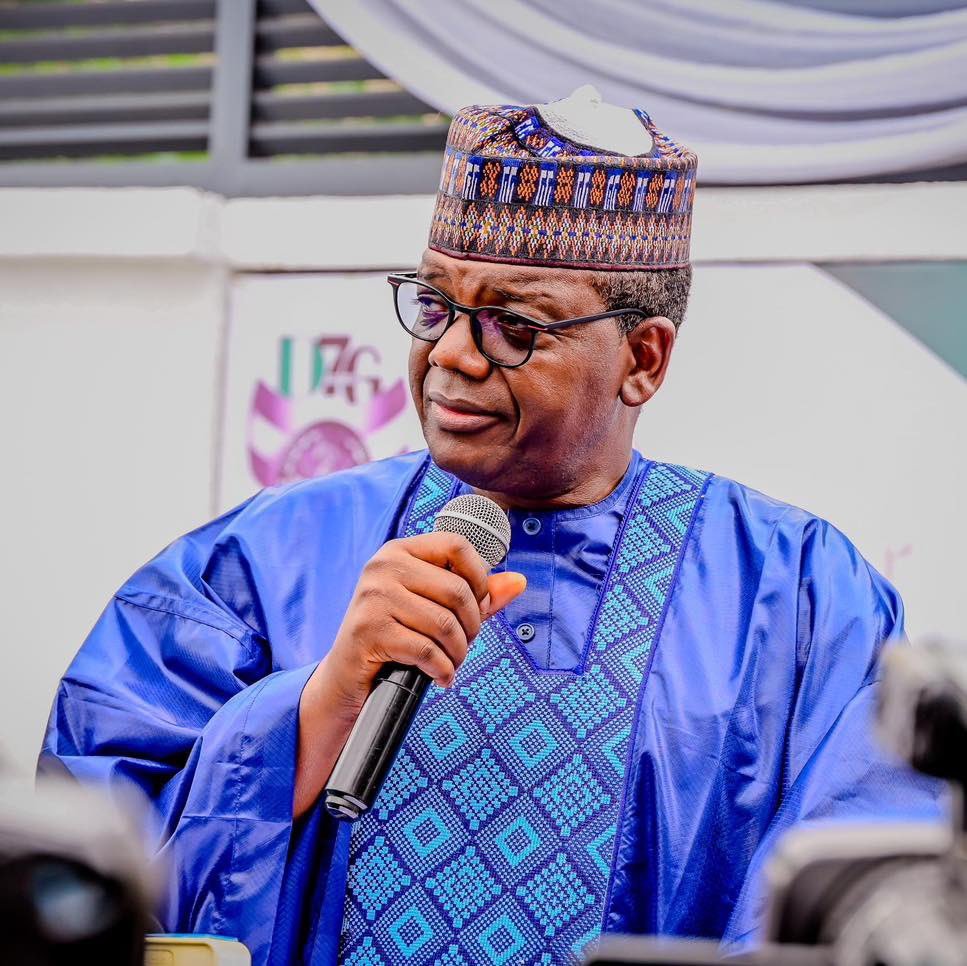
MATAWALLE AND HIS WIZARDRY ON SECURITY ISSUES

Published

on

By Alhassan Dantani

On the night of 17 November 2025, the people of Danko-Wasagu in Kebbi State went to bed with dread in their hearts. By dawn, 25 schoolgirls had been dragged from their hostels by armed bandits. One escaped into the bush; the remaining 24 vanished into a forest that had swallowed too many before them. Phones rang in Birnin Kebbi, then in Abuja. Mothers collapsed. The nation watched, helpless—again.

Then came the call from the President. Dr Bello Matawalle did not send a delegation. He did not issue a statement from a conference room. He packed a small bag, boarded a military aircraft, and relocated to the epicentre of the crisis. Within hours he was in the field, coordinating air and ground units, speaking directly to community leaders who trusted him because they had known him for decades, and pressing every intelligence lever he had built across the North-West.

Four days later—on 25 November—24 girls walked out of the forest alive, handed over without a single ransom paid. Their release was not luck. It was the direct result of a man who refused to fight yesterday’s war and instead brought the full weight of his experience, networks, and relentless will to bear in real time. That is the measure of Dr Matawalle: when the President says “fix it,” he moves himself to the battlefield and fixes it.

Matawalle is no stranger to the theatre of war. Long before he became Honourable Minister of State for Defence, he had already confronted the monster of banditry head-on as Governor of Zamfara. He orchestrated the ransom-free rescue of over 300 schoolgirls from Jangebe in 2021 and turned a state once written off as ungovernable into a laboratory of innovative security.

When President Tinubu needed someone who knew the terrain, the people, and the enemy intimately—someone who could fuse dialogue with decisive force—the choice was obvious. From the moment he assumed national office, Dr Matawalle hit the ground running.

Over 8,000 terrorists neutralised, more than 16,000 captured or surrendered, 10,000 weapons recovered, notorious kingpins like Kachallah Buzu permanently removed from the equation. These are not abstract statistics; they are nights when villages slept without posting guards, roads that traders now travel without paying “tolls” to criminals, and—most recently—24 little girls returned to their classrooms instead of their graves.

A devoted student of Sun Tzu and Clausewitz, he fights on ten integrated fronts: blistering intelligence, rapid-reaction mobility, psychological operations, logistical strangulation, technological dominance, community ownership, diplomatic isolation of the enemy, precision strikes, troop welfare, and the strategic blend of carrot and stick.

Matawalle anticipates because he understands the bandit’s mind; he strikes because he knows every ravine and cattle track they once called sanctuary. Drones now own the sky. AI parses chatter in seconds. Community Protection Guards—local sons trained and armed—watch over 19 emirate councils in Zamfara.

Three new forward operating bases in Isa, Sabon Birni, and Goronyo have slashed response times to minutes. Eighty CNG-powered gun trucks and over 200 Hilux vans have turned pursuit into inevitability. Turkish-built long-range patrol vessels secure the Gulf of Guinea. A landmark MoU with Chinese manufacturers has jump-started local production of small arms, drones, and protective gear at DICON.

These are not projects on paper; they are tools already saving Nigerian lives. But hardware is only half the battle. Through deft psychological operations and genuine community programmes, thousands who once carried rifles for bandits have laid them down and taken up new lives.

Over 700 civil society organisations and the North-West Youth Movement Forum have publicly hailed a leader who rescues first and punishes only when necessary. Victim rescue rates have soared by over 66 %. Kidnapping in the North-West is down 27 %.

Nationwide security incidents fell 32 % in 2024, with a projected 66 % drop by the end of 2025. Oil theft losses have been cut by more than ₦120 billion, with ₦5 billion ploughed back into host communities. When history records how Nigeria finally broke the back of banditry and insurgency, it will linger on moments like the morning of 25 November 2025 in Kebbi—when 24 schoolgirls, barefoot and dusty but gloriously alive, ran into the arms of parents who had begun to lose hope.

In that embrace was the vindication of a President who picks the right man for the hardest job, and of a Minister who treats every abduction as personal.
Under Dr Matawalle’s command, Nigeria is no longer managing crises or praying for miracles.

We are ending nightmares—one rescued child, one neutralised camp, one surrendered fighter at a time. The storm that once raged unchecked across the North-West is meeting a man who walks straight into it… and makes it change direction. That is not wizardry. That is leadership delivered.

*Dantani writes from Birnin-Kebbi

Continue Reading
Click to comment

Leave a Reply

Your email address will not be published. Required fields are marked *

Opinion

Gov Otu: Rewriting Cross River’s Healthcare Story With Historic 100% Pay Rise for Doctors

Published

on

By Linus Obogo

In the quiet town of Ogoja, where the red earth stretches endlessly beneath the tropical sun and communities rise each morning to the rhythms of resilience and hope, a weary doctor named Dr. Monjok once wrestled with a difficult question: should he remain in public service or seek greener pastures elsewhere?

For years, his calling had kept him at the bedside of children battling malaria, expectant mothers navigating the uncertainties of childbirth, and elderly patients confronting the frailties of age. Through long nights, limited resources and mounting pressures, he remained steadfast. Yet the burden of inadequate remuneration and persistent manpower shortages often weighed heavily on his spirit. Today, however, Dr. Monjok stands taller, buoyed by renewed optimism, as Governor Bassey Otu’s administration ushers in a new era with a landmark 100 per cent salary increase for doctors across Cross River State.

This historic intervention is far more than a financial adjustment. It is a powerful declaration that those who dedicate their lives to preserving the health and dignity of others deserve to be honoured, valued and rewarded. It is a recognition of countless sacrifices made in consulting rooms, emergency wards and rural health centres where doctors often labour quietly, driven not by wealth but by duty. In one bold stroke, Governor Otu has infused fresh hope into a profession that forms the backbone of every thriving society.

For many healthcare professionals, the announcement represents a turning point, a breath of fresh air. It signals the emergence of a government that understands that healthcare is not merely a social service but a sacred obligation. It is an affirmation that those entrusted with saving lives should not themselves be left to struggle under the weight of neglect. By doubling doctors’ salaries, Governor Otu has not only boosted morale but has also strengthened the state’s capacity to retain talent and attract skilled professionals who might otherwise seek opportunities beyond its borders.

Yet the salary increase is only one chapter in a broader and exhilarating story of transformation unfolding across the health sector. Since assuming office, Governor Otu has increased funding to healthcare by more than 100 per cent, reflecting a deliberate and strategic commitment to rebuilding a sector that lies at the heart of human development.

It is a demonstration of leadership that recognizes that healthy citizens are the foundation upon which prosperous economies and stable societies are built.
This commitment is equally evident in the lifting of the long-standing embargo on employment within the health sector and the approval of the recruitment of 2,000 additional healthcare workers. Across urban centres and rural communities alike, this decision is expected to bridge critical manpower gaps, improve access to medical services and bring relief to overstretched facilities.
For many communities that have long endured shortages of healthcare personnel, the development represents a long-awaited answer to years of yearning.

In the creekside settlements, riverine communities and bustling townships of Cross River, the echoes of this transformation are already reverberating. At General Hospital, Ukem, where years of wear had dulled the promise of quality care, a new chapter is unfolding. The release of funds for its renovation, alongside the rehabilitation of Cottage Hospital, Oban, and the revival of the once-abandoned General Hospital complex in Akpabuyo, reflects a government determined to restore healthcare institutions to their rightful place as sanctuaries of healing and hope.

These projects are more than bricks and mortar. They are monuments to purposeful governance and symbols of a future in which quality healthcare is not a privilege reserved for a few but a right accessible to all. Each renovated ward, restored facility and upgraded theatre represents another step towards a healthier and more resilient Cross River.
Dr. Monjok’s story is mirrored in the experiences of countless citizens whose lives intersect daily with the healthcare system. It is reflected in the expectant mother who no longer has to travel great distances in search of prenatal care. It is evident in the child whose access to treatment is no longer determined by geography. It is seen in families who can now look towards public health facilities with renewed confidence and expectation.
Governor Otu’s reforms have also embraced nurses, pharmacists, laboratory scientists, community health officers and other critical healthcare personnel through enhanced allowances and improved welfare packages.

The establishment of the Cross River State Hospital Management Board further underscores a commitment to accountability, efficiency and institutional excellence. Together, these measures will lay the foundation for a healthcare system that is modern, responsive and sustainable.

As Dr. Monjok now gazes across the rolling landscapes of Cross River, he sees more than familiar hills and valleys. He sees the dawning of a new possibility. What has begun as a bold policy decision will sooner than later, rapidly evolve into a healthcare renaissance capable of touching every corner of the state. In that unfolding story, every doctor is valued, every healthcare worker is empowered and every citizen is placed at the heart of governance.

Indeed, Governor Otu’s historic intervention is much more than increasing salaries; it is about restoring confidence, rekindling aspirations and rewriting the healthcare story of Cross River State with uncommon vision, courage and purpose.

Obogo is Chief Press Secretary and Special Adviser on Media and Publicity to Governor Bassey Otu

Continue Reading

Opinion

General Olufemi Oluyede: The Man Steering Nigeria’s Defence into A New Era

Published

on

By Sambo Sule

In the crucible of a nation forged by resilience, where shadows of uncertainty stretch long across savannah and coast, General Olufemi Olatubosun Oluyede emerges as a beacon of unyielding resolve. Like the ancient warriors of Ekiti soil—steadfast sentinels against tempests—he now stands at the helm of Nigeria’s Armed Forces as Chief of Defence Staff.

His appointment marks not merely a change of guard, but the dawn of a transformative epoch. It is one where discipline meets destiny, strategy dances with synergy, and the military reclaims its sacred covenant to shield the motherland.

Oluyede’s career has been defined by excellence and resilience. Rising through the ranks of the Nigerian Army, he has commanded troops in some of the most difficult operational theatres, earning respect for his tactical ingenuity and his ability to inspire confidence among soldiers and civilians alike.

Since assuming office, General Oluyede has prioritized jointness—the seamless integration of the Army, Navy, and Air Force into a unified fighting force. He believes that Nigeria’s security challenges require synergy, not fragmentation, and under his leadership, joint operations have become the hallmark of military campaigns.

This approach has already yielded results: in May 2026 alone, Nigerian troops neutralized over 317 terrorists, arrested 314 suspects, and rescued 221 kidnapped civilians, while recovering 93 assorted arms and dismantling illegal refining sites. These achievements reflect his insistence on coordination, precision, and professionalism.

Another defining feature of his leadership is the push for indigenous defence production. General Oluyede has championed the revitalization of the Defence Industries Corporation of Nigeria (DICON), ensuring that Nigeria reduces dependence on foreign suppliers and builds local capacity.

The CDS’ vision is to see Nigeria emerge as a regional hub for defence technology, capable of sustaining its own military requirements and contributing to African security. By encouraging local innovation, he is laying the foundation for a self-reliant Armed Forces that can adapt to evolving threats.

Civil-military relations are also central to his philosophy. General Oluyede has consistently emphasized that the Armed Forces exist to protect the people, not to intimidate them.

He has directed troops to uphold professionalism and respect for human rights in all operations, reinforcing trust between the military and civilians. His swift responses to crises—deploying reinforcements, ordering aerial surveillance, and ensuring humanitarian support—demonstrate his people-centric approach.

For him, threats against civilian peace are intolerable affronts to national sovereignty. Beyond operations, General Oluyede has invested in the intellectual and doctrinal development of the Armed Forces.

He has positioned the Joint Doctrine and Warfare Centre (JDWC) as the intellectual hub of Nigeria’s defence establishment, advancing doctrine, innovation, and technology to keep the Armed Forces adaptive to evolving threats. This institution ensures that Nigeria’s military remains aligned with global best practices while developing strategies tailored to local realities.

General Oluyede’s leadership style blends firmness with empathy. He commends troops for gallantry and tactical ingenuity, reinforcing morale across operational theatres.

At the same time, he insists on accountability, ensuring that discipline remains the bedrock of military service. His ability to balance operational demands with welfare considerations has strengthened the Armed Forces as an institution.

General Oluyede’s legacy is already taking shape. He is positioning Nigeria’s Armed Forces as a modern, self-reliant, and highly professional military. His emphasis on jointness, indigenous production, and civilian protection ensures that the Armed Forces remain not only a guarantor of sovereignty but also a trusted institution in the eyes of the people.

The CDS tenure is redefining Nigeria’s defence posture, positioning the country as a regional leader in security and stability. In the broader context of national development, his leadership underscores the critical role of the military in creating an environment of peace and stability.

By securing communities, protecting borders, and dismantling criminal networks, the Armed Forces under his command are enabling economic growth, social development, and national unity. His vision is not limited to the battlefield; it extends to the future of Nigeria as a secure, prosperous, and respected nation.

General Olufemi Oluyede is, indeed, the man steering Nigeria’s defence into a new era. His story is one of discipline, vision, and service—a reminder that leadership in uniform is not about power, but about responsibility, sacrifice, and the unwavering commitment to protect the nation and its people.

Sule is a public affairs analyst writing from Kaduna.

Continue Reading

Opinion

The Man Behind the Rebuilding of Nigeria’s North-East

Published

on

By Musa Sule

Alhaji Mohammed Goni Alkali, the Managing Director and Chief Executive Officer of the North-East Development Commission (NEDC), has become a defining figure in Nigeria’s quest to restore dignity, rebuild infrastructure, and rekindle hope in a region long scarred by insurgency and underdevelopment. His leadership is not only about projects and policies; it is about people, about lives transformed, and about a vision that sees beyond the ruins of conflict to the promise of renewal.

From the very beginning of his career, Alkali distinguished himself as a man of intellect and discipline. Graduating with a First-Class degree in Accounting from Bayero University, Kano, and later earning a Master’s in Accounting and Finance from the London School of Economics, he laid a foundation of excellence that would guide his professional journey. His nearly three decades in banking, culminating in his role as Executive Director of Operations at the Bank of Industry (BOI), gave him the tools to manage complex financial systems and design interventions that empower communities. At BOI, he was instrumental in national schemes such as the ₦10 billion Rice Processing Fund and the ₦100 billion Cotton, Textile, and Garment Development Scheme, initiatives that revitalized industries and created jobs across Nigeria.

When Alkali was appointed to lead the NEDC in 2019, the North-East was at a crossroads. Years of insurgency had displaced millions, destroyed schools and hospitals, and left communities struggling to survive. His reappointment in 2023 was a testament to the confidence placed in his vision and his ability to deliver results. Under his stewardship, the Commission has become a beacon of hope, rolling out projects that directly touch lives. More than 3,500 housing units have been built across six states, providing shelter for families who had lost everything. Eighteen mega schools have been established, restoring education to children whose futures had been interrupted by conflict. Strategic roads such as Gombe-Abba-Kirfi and Alkaleri-Futuk have been developed, opening up trade corridors and reconnecting communities. Healthcare facilities have been equipped, and agricultural communities have been revived, ensuring that livelihoods are restored and dignity is returned.

Alkali’s leadership is marked by integrity and transparency. He has consistently emphasized that the NEDC is not a contract-dispensing agency but a humanitarian interventionist body. Every naira allocated to the Commission is judiciously used, reflecting his discipline and accountability. His grassroots approach—personally visiting communities, listening to their needs, and ensuring projects are executed faithfully—has earned him recognition as an Ambassador of Peace. Groups such as the North-East Elders and Youths Peoples Forum have praised his dedication to fostering unity and reconciliation, acknowledging that his leadership is not only rebuilding infrastructure but also healing wounds and restoring trust.

The impact of his work is visible everywhere. Children are returning to classrooms, families are moving into new homes, farmers are cultivating their land once more, and traders are reconnecting with markets through newly built roads. These are not abstract achievements; they are tangible transformations that speak to the power of visionary leadership. Alkali’s legacy will be remembered not just in the structures built but in the lives rebuilt, in the dignity restored, and in the hope rekindled across the region.

His story is ultimately one of transformation—of a man who has taken on the monumental task of rebuilding a region scarred by conflict and has done so with integrity, vision, and humanity. He is more than a technocrat; he is a bridge between government and grassroots realities, between policy and people, between despair and hope. His leadership at the NEDC is a testament to what is possible when competence meets compassion, and it offers a powerful reminder that even in the most challenging circumstances, visionary leadership can light the path toward a brighter future.

Alhaji Mohammed Goni Alkali’s leadership also underscores the importance of continuity and consistency in governance. By being reappointed in 2023, he has been able to sustain the momentum of NEDC’s projects, ensuring that initiatives are not abandoned midway but are carried through to completion. This continuity has allowed communities to trust the Commission’s work, knowing that promises made will be promises kept. His ability to balance immediate humanitarian needs with long-term development goals has created a framework that not only addresses the present but also secures the future.

In the broader context of Nigeria’s development, Alkali’s work at NEDC serves as a model for how interventionist agencies can function effectively. His insistence on transparency, his grassroots engagement, and his humanitarian focus are qualities that should inspire leaders across the country. He has shown that leadership is not about titles or positions, but about service, accountability, and impact. His legacy will endure not just in the North-East, but in the lessons his leadership offers to the entire nation.

Alkali’s leadership has also been about restoring confidence in governance. In a region where mistrust of institutions had grown due to years of neglect and conflict, his hands-on approach has reassured communities that government can indeed be a force for good. His presence in villages, his willingness to listen, and his determination to deliver have created a bond of trust between the Commission and the people it serves. This trust is invaluable, for it is the foundation upon which peace and progress are built.

Beyond infrastructure, Alkali has focused on human capital development. He understands that rebuilding the North-East is not just about bricks and mortar, but about investing in people. His emphasis on education, healthcare, and agriculture reflects a holistic vision of development. By equipping schools, training teachers, supporting farmers, and strengthening healthcare systems, he is laying the groundwork for a future where the North-East can thrive independently, resilient against future challenges.

His leadership has also had a symbolic impact. In a region often portrayed through the lens of conflict and despair, Alkali’s work has shifted the narrative to one of resilience and renewal. The stories emerging from the North-East today are not just about destruction, but about reconstruction; not just about displacement, but about resettlement; not just about despair, but about hope. This shift in narrative is powerful, for it changes how the region is perceived both within Nigeria and internationally, opening doors to investment, collaboration, and growth.

Alhaji Mohammed Goni Alkali is, indeed, the man behind the rebuilding of Nigeria’s North-East. His name will be remembered as one of the architects of hope, a leader who turned challenges into opportunities, despair into resilience, and destruction into reconstruction. His work is not just about today—it is about laying the foundation for generations to come, ensuring that the North-East is defined not by its past struggles but by its future promise.

Sule is a public affairs analyst based in Yola.

Continue Reading

Trending

Copyright © 2023 - 2025 DailyMirror Nigeria. Design by AspireWeb.ng, powered by WordPress.