Cover
Energy governance group faults ADC, says Tinubu’s approval of NNPC legacy balance reconciliation restores fiscal transparency, not revenue loss
The Centre for Energy Governance and Public Finance Accountability (CEGPFA) has dismissed claims by the African Democratic Congress (ADC) that President Bola Ahmed Tinubu’s approval of the reconciliation and removal of certain Nigerian National Petroleum Company Limited (NNPC Ltd) legacy balances from the Federation Account was unconstitutional or financially harmful to states and local governments.
Speaking on Friday at a press conference held at the Transcorp Hilton, Abuja, the centre said the allegations ignored the historical, legal and fiscal realities surrounding the disputed balances, describing them as “unfounded” and “misleading”.
Dr Julius Osagie Eromonsele, executive director of the centre, said the balances in question were not fresh revenues generated under the current administration but long-standing legacy entries accumulated over several decades, many of which predated the Petroleum Industry Act (PIA).
“It is crucial to note that the balances in question are not recent revenues generated under the current administration. They are long-standing legacy entries accumulated over decades, many of them arising before the enactment of the Petroleum Industry Act,” Eromonsele said.
He explained that the disputed figures stemmed from unresolved production sharing contract disputes, domestic crude supply obligations under the former fuel subsidy regime, royalty assessment disagreements and reconciliation gaps between NNPC, regulators and revenue agencies.
According to him, these balances had remained on the Federation Account books for years despite repeated audits that questioned their accuracy, legal enforceability and collectability, creating a distorted picture of public finances across all tiers of government.
Countering claims that the balances were arbitrarily written off by presidential fiat, Eromonsele said the approval followed a formal reconciliation process involving relevant fiscal and regulatory institutions, with presentations made to the Federation Account Allocation Committee (FAAC).
“Official records show that approximately $1.42 billion and N5.57 trillion were removed from the Federation Account books after reconciliation established that these figures were either duplicated, overstated, unsupported by verifiable documentation, or no longer legally recoverable,” he said.
He stressed that the directive applied strictly to legacy balances accumulated up to December 31, 2024, adding that reconciliation should not be confused with the cancellation of valid revenue.
“Reconciliation is a recognised public finance practice. It is not the same as cancelling valid revenues. Rather, it is the process of aligning records to reflect economic and legal reality,” Eromonsele said.
He also clarified that no cash was removed from the Federation Account and that no allocations to states or local governments were reversed.
“The funds in question were not sitting as cash in the Federation Account. What occurred was the correction of inherited accounting distortions that had long outlived their practical relevance,” he added.
Addressing constitutional concerns raised by the ADC, the centre said Section 162 of the Constitution applies only to revenues that are lawfully due and payable, not to disputed or extinguished claims.
“Public finance administration requires constant reconciliation to ensure that only valid, auditable and legally enforceable revenues are presented for distribution,” Eromonsele said.
He argued that sustaining false receivables undermines budgeting, fiscal discipline and revenue predictability for subnational governments, noting that credible and realistic revenue flows are more beneficial than inflated figures that never materialise.
The centre said the reconciliation aligns with reforms introduced by the PIA, which repositioned NNPC Ltd as a commercial entity operating under international accounting standards.
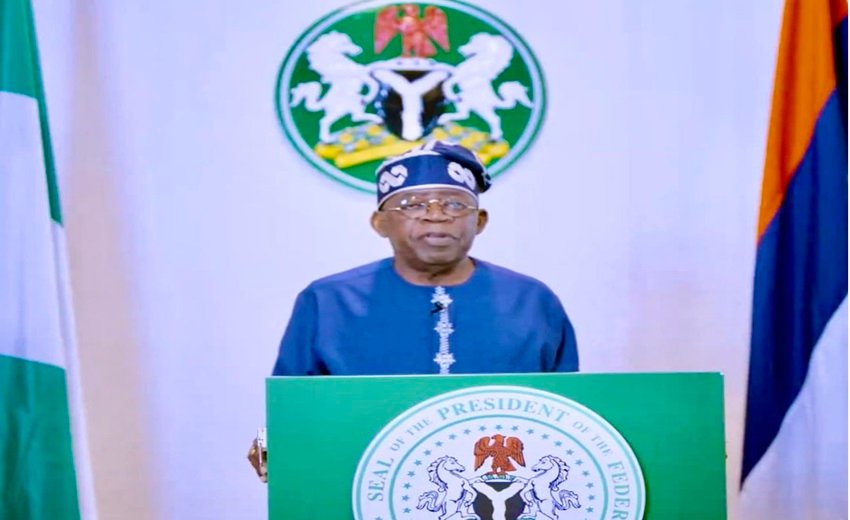
Concluding, the centre commended President Tinubu for approving what it described as a difficult but necessary decision.
“Writing off long-standing, unverifiable legacy balances required political will and a commitment to fiscal honesty over convenience. It sends a clear signal that Nigeria is prepared to confront the structural weaknesses of its energy revenue system rather than perpetuate them,” Eromonsele said.
He urged politicians and stakeholders to approach the issue responsibly and support reforms that strengthen transparency and accountability in Nigeria’s public finance system.
Full speech attached
BEING FULL TEXT AT A PRESS CONFERENCE ORGANISED BY THE CENTRE FOR ENERGY GOVERNANCE AND PUBLIC FINANCE ACCOUNTABILITY ON THE RECONCILIATION OF NNPC LTD LEGACY BALANCES AND THE FEDERATION ACCOUNT HELD AT TRANSCORP HILTON, ABUJA, ON FRIDAY, JANUARY 10, 2025
Ladies and gentlemen of the press, distinguished stakeholders, and fellow Nigerians, the Centre for Energy Governance and Public Finance Accountability has convened this important press conference to respond to unfounded claims by the African Democratic Congress (ADC) concerning President Bola Ahmed Tinubu’s approval of the reconciliation and removal of certain legacy balances attributed to the Nigerian National Petroleum Company Limited (NNPC Ltd) from the Federation Account.
The debate has been framed as a constitutional crisis and a deliberate deprivation of revenue due to states and local governments. Given the gravity of such allegations, it is important to ground this conversation in facts, law, and the historical context of Nigeria’s petroleum revenue administration.
BACKGROUND
It is crucial to note that the balances in question are not recent revenues generated under the current administration. They are long-standing legacy entries accumulated over decades, many of them arising before the enactment of the Petroleum Industry Act (PIA). These entries stem from unresolved production sharing contract disputes, domestic crude supply obligations under the fuel subsidy regime, royalty assessment disagreements, and persistent reconciliation gaps between NNPC, regulators, and revenue agencies.
For years, these balances remained on the Federation Account books despite repeated audits and reviews that questioned their accuracy, legal enforceability, and collectability. Treating such disputed figures as assured income created a distorted picture of public finances and fostered unrealistic revenue expectations across all tiers of government.
WHAT THE PRESIDENTIAL APPROVAL ACTUALLY MEANS
Contrary to claims of an arbitrary executive write-off, the President’s approval followed a formal reconciliation process involving relevant fiscal and regulatory institutions, including presentations made to the Federation Account Allocation Committee (FAAC).
Official records show that approximately $1.42 billion and N5.57 trillion were removed from the Federation Account books after reconciliation established that these figures were either duplicated, overstated, unsupported by verifiable documentation, or no longer legally recoverable. The directive applied strictly to legacy balances accumulated up to December 31, 2024.
Reconciliation is a recognised public finance practice. It is not the same as cancelling valid revenues. Rather, it is the process of aligning records to reflect economic and legal reality. Revenues that are not collectible cannot be distributed, and carrying them indefinitely on public accounts does not create wealth—it merely postpones fiscal clarity.
It is also critical to note that the funds in question were not sitting as cash in the Federation Account. No existing allocations to states or local governments were reversed or withdrawn. What occurred was the correction of inherited accounting distortions that had long outlived their practical relevance.
CONSTITUTIONAL AND FISCAL IMPLICATIONS
The ADC has cited Section 162 of the Constitution to argue that the President lacks authority to approve the removal of these balances. However, Section 162 applies to revenues that are lawfully due and payable to the Federation. It does not compel the perpetuation of disputed or legally extinguished claims as revenue.
Public finance administration requires constant reconciliation to ensure that only valid, auditable, and legally enforceable revenues are presented for distribution. Without this, the Federation Account would become a repository for accounting fiction rather than a transparent reflection of national income.
Furthermore, the Federation Account is administered collectively through FAAC, which includes representatives of the federal, state, and local governments. The reconciliation process was not unilateral, secretive, or detached from institutional oversight.
From a fiscal standpoint, sustaining false receivables undermines planning, budgeting, and fiscal discipline. States and local governments are better served by predictable, credible revenue flows than by inflated figures that repeatedly fail verification and never materialise in cash form.
This reconciliation also aligns with the reforms introduced by the Petroleum Industry Act, which repositioned NNPC Ltd as a commercial entity subject to international accounting standards. Legacy balances accumulated under a fundamentally different governance structure cannot be allowed to distort the post-PIA fiscal framework indefinitely.
CONCLUSION
In conclusion, the Centre for Energy Governance and Public Finance Accountability affirms that the reconciliation and removal of NNPC Ltd’s legacy balances from the Federation Account does not constitute a constitutional violation, nor does it deprive states and local governments of legitimate revenue.
Rather, it represents a necessary and responsible step toward restoring transparency, credibility, and realism to Nigeria’s public finance system—particularly in the oil and gas sector, which has long suffered from opaque accounting and inherited distortions.
The Centre acknowledges and commends President Bola Ahmed Tinubu for approving this difficult but necessary decision. Writing off long-standing, unverifiable legacy balances required political will and a commitment to fiscal honesty over convenience. It sends a clear signal that Nigeria is prepared to confront the structural weaknesses of its energy revenue system rather than perpetuate them.
True fiscal federalism cannot be built on numbers that exist only on paper. It must rest on transparent accounts, enforceable obligations, and a shared commitment to accuracy and accountability.
We urge all politicians and stakeholders to approach this issue with responsibility and restraint, and to support reforms that strengthen, not weaken, the integrity of Nigeria’s public finances.

Cover
Citizen Network Condemns NAFDAC’s Enforcement of Sachet Alcohol Ban, Warns of Mass Action
The Citizen Network has strongly criticized the National Agency for Food and Drug Administration and Control (NAFDAC) over its decision to commence the enforcement of a ban on sachet alcoholic beverages, describing the action as arbitrary, anti-people, and detrimental to the nation’s economy.
Speaking in Abuja on Tuesday, the group’s representative, Comrade Johnson Kolawole Michael, expressed concern that the enforcement, announced under the leadership of NAFDAC Director-General, Professor Mojisola Christianah Adeyeye, is disrupting the livelihoods of workers and operators in the wines and spirits sector, a segment the group said contributes significantly to Nigeria’s Gross Domestic Product (GDP).
According to the Citizen Network, the decision contradicts an earlier directive issued by the Office of the Secretary to the Government of the Federation (SGF) on December 15, 2025, which instructed that enforcement of the ban be suspended.
The group also noted that the action runs contrary to resolutions of the House of Representatives contained in document NAS/10/HR/CT.33/77c of March 14, 2024, where lawmakers, following public hearings and consultations with stakeholders, restrained NAFDAC from implementing the ban, describing it as unacceptable and anti-people.
The group accused NAFDAC of selectively relying on a Senate resolution that, it claimed, excluded critical stakeholders and failed to reflect public opinion. It disclosed that it has formally approached the Senate, expressing confidence that lawmakers would reconsider the matter after further consultations.
Comrade Michael said the conflicting directives from different arms of government have created confusion among industry operators, leaving them uncertain about which authority to comply with.
He further argued that sachet and small PET bottle alcohol products were introduced to cater to adult consumers with limited purchasing power and that banning them would deny such consumers their fundamental right of choice. He dismissed claims that sachet alcohol encourages abuse, stating instead that smaller portions help discourage excessive consumption typically associated with larger containers.
The Citizen Network also maintained that sachet alcoholic beverages produced locally meet hygienic standards and are duly certified by regulatory bodies, including NAFDAC. It added that allegations of underage abuse have been countered by independent empirical research, while industry players have invested over ₦1 billion in nationwide campaigns promoting responsible alcohol consumption and discouraging underage drinking.
While reaffirming its support for the removal of unsafe products from the market, the group insisted that regulatory decisions must be guided by empirical evidence rather than sentiment. It warned that the ban could lead to factory closures, job losses, and the influx of illicit, substandard, and smuggled alcoholic products, thereby depriving government of revenue and consumers of regulated options.
The Citizen Network called on President Bola Ahmed Tinubu, members of the National Assembly, and concerned Nigerians to intervene and urge the NAFDAC Director-General to halt the enforcement of the ban and comply with existing directives suspending it.
The group warned that failure to heed the call could leave it with no alternative but to embark on a nationwide mass action.
Cover
How Army, DSS, DIA foiled coup to topple, kill Tinubu
A covert intelligence operation coordinated by the Army Headquarters, the State Security Service (SSS), and the Defence Intelligence Agency (DIA), helped thwart a deadly plot to overthrow President Bola Tinubu’s government and assassinate key political figures, PREMIUM TIMES can authoritatively report.
Multiple senior administration insiders said the plot began to unravel in late September 2025 after an unnamed military officer with direct knowledge of the coup contacted the then Chief of Army Staff, Olufemi Oluyede. The officer reportedly disclosed the scheme, saying he feared being implicated as an accessory to treason if he failed to alert authorities.
Our sources said around the same time, the SSS independently gathered intelligence indicating that some serving army officers were plotting to “destabilise the government and undermine Nigeria’s democracy.” An official familiar with the matter said the Director-General of the SSS, Oluwatosin Ajayi, personally briefed Mr Oluyede on the findings.
Faced with converging intelligence from multiple sources, the two security chiefs agreed to act swiftly. A wide-ranging but discreet joint operation was launched by the army and the SSS, with coordinated arrests planned across different parts of the country to neutralise the coup’s masterminds and other collaborators.
On 30 September 2025, as President Tinubu travelled to Imo State for an official visit, unaware of the plot to depose and possibly assassinate him, the joint operation went into effect. The sweep led to the arrest of the alleged principal architects of the coup, alongside other military and civilian suspects.
The Chief of Defence Intelligence (CDI), Emmanuel Undiandeye, and the then Chief of Defence Staff, General Christopher Musa, were subsequently briefed. Mr Undiandeye was then requested to detain the suspects in the underground holding facility of the Defence Intelligence Agency.
Following the initial arrests, President Tinubu was formally informed of the foiled plot. A visibly shaken president immediately ordered the cancellation of the 1 October National Independence Day parade. He also approved the constitution of a special investigative panel, which later led to additional arrests. The investigative panel was led by General Undiandeye.
One of the detained soldiers later escaped custody but was rearrested by SSS operatives in Bauchi, a military insider said. Meanwhile, a retired officer identified as General Adamu and a former governor, Timipre Sylva, accused of bankrolling the coup plotters, remained at large.
Mr Tinubu later fired and retired the then Chief of Defence Staff, General Musa as well as the chiefs of the navy and airforce. Mr Oluyede was appointed CDS and promoted to the rank of General. Weeks later, Mr Musa returned to government as minister of defence.
In a statement issued on 4 October, the Defence Headquarters said the arrested officers were being investigate for “indiscipline and breach of service regulations.” It added that preliminary findings suggested the officers’ grievances were linked to “career stagnation and failure in promotion examinations.”
Despite mounting evidence and a series of detailed reports by PREMIUM TIMES and other media outlets, the military repeatedly denied that a coup plot existed.
In an 18 October statement the Defence Headquarters described the probe involving the 16 arrested officers as a routine internal investigation aimed at maintaining discipline and professionalism within the armed forces.
However, on 26 January, the military publicly acknowledged for the first time that officers had indeed plotted to illegally overthrow President Tinubu’s administration. It announced that those indicted would be arraigned before a military judicial panel.
According to the Defence Headquarters, the investigation was “comprehensive” and conducted in line with established procedures, examining “all circumstances surrounding the conduct of the affected personnel.”
It said the findings revealed “a number of officers with allegations of “plotting to overthrow the government,” describing such conduct as “inconsistent with the ethics, values and professional standards required of members of the Armed Forces of Nigeria.”
“Accordingly, those with cases to answer will be formally arraigned before an appropriate military judicial panel to face trial in accordance with the Armed Forces Act and other applicable service regulations,” the statement added.
The plot to oust, kill Tinubu and others
In an earlier report, PREMIUM TIMES quoted sources with direct knowledge of the investigation as identifying top officials allegedly marked for assassination. They include President Tinubu, Vice President Kashim Shettima, Senate President Godswill Akpabio, and Speaker of the House of Representatives, Tajudeen Abbas.
“There are other people targeted,” one source said. “But those are the key targets.”
The plotters also planned to detain senior military officers, including the service chiefs. “They did not want to kill them,” the source added.
According to the sources, the conspirators intended to assassinate the political leaders simultaneously. “They were waiting for a day when all of them would be in the country,” one official said. “Wherever they were, they would be assassinated.”
The sources said the plotters relied on informants within the Presidential Villa and around the officials slated for elimination.
“They have people inside the Villa who monitor the movements of these officials,” the source said. “The plan was to kill them at the same time and install a military government.”- PREMIUM TIMES
Cover
Workplace Safety and Health: Today’s Choices Determine the Future – NSITF Boss
As the NSITF-NECA Safe Workplace Intervention Project kicks off in Lagos, Managing Director of the Nigeria Social Insurance Trust Fund, (NSITF) Barrister Oluwaseun Falaye, has enjoined employers of labour in Nigeria to be intentional about compliance with workplace safety and health regulations as he said that the future is determined by today’s choices.
In his welcome address at the Lagos Stakeholders’ Interactive Enlightenment Forum and Awards Ceremony on Tuesday, Barrister Faleye said, “the future of work in Nigeria will be defined by how much we protect our workforce while driving productivity and growth.”
“At the core of the Employees’ Compensation Act 2010 is a simple but profound truth: every worker matters. No job is worth a life. And no organization can sustainably thrive when safety is treated as an afterthought,’ he stated.
Barrister Faleye urged organizations that are yet to fully align with safety compliance to avail themselves of the event to do so.
He stressed that no job is worth a life, and no organisation can sustainably thrive when safety is treated as an afterthought.
Speaking on the theme of the program: ‘Enhancing Workplace Safety, Strengthening Compliance, Celebrating Excellence’, the NSITF MD said “the theme captures the full spectrum of our engagement today. Compliance must be seen not as a regulatory obligation alone, but as a strategic business decision that safeguards human capital, reduces operational risk, and enhances organisational reputation”.
According to him, SWIP has, over the years, evolved into a strategic platform for driving awareness, strengthening compliance, and fostering collaboration around occupational safety and health, adding that the forum represents a critical interface between policy, practice, and performance, where employers, workers, regulators, and partners engage constructively on how to build safer and more productive workplaces.
“Today’s gathering is not merely an information session; it is a shared commitment. It reflects our collective resolve to ensure that economic growth does not come at the expense of worker safety, and that productivity is anchored on environments that protect lives, dignity, and livelihoods,” he stated.
Speaking on the awards, Faleye said, “today, we also take time to celebrate organisations that have distinguished themselves through demonstrable commitment to occupational safety and health. These awards are not just acknowledgements; they are benchmarks. They signal that compliance is achievable, that safety delivers value, and that excellence in worker protection deserves recognition”.
The NSITF boss thanked the parent Ministry of Labour and Employment, NECA, participating organizations, and other partners for the success of the event and reiterated the Fund’s commitment to “deepen collaborations, strengthen compliance, and promote a culture where every workplace is a safe workplace.”
Explaining the SWIP forum, Director General , NECA, Mr Adewale-Smatt Oyerinde, said safety in the work place should be taken as a fundamental issue and core responsibility of employers.
He said while employers are pursuing maximum or optimum profit, safety of their workers should also be priorities.
He described workplace safety as a life-and-death matter that is still treated with dangerous nonchalance by both employers and employees, despite its far-reaching consequences.
The NECA DG expressed confidence that the initiative would not only reward excellence but also reset the national conversation on workplace safety
The Minister of Labour and Employment , Alhaji Maigari Dingyadi, in a keynote address at the 2025 SWIP kick-off, said the Safe Workplace Intervention Project is a collaborative occupational health and safety initiative designed to enhance workplace safety across Nigeria through structured audits, engagement and recognition.
He said the occupational health and safety is everyone’s responsibility, adding that the ministry cannot do it alone.
He commended NECA and NSITF for sustaining SWIP, describing it as a model of effective collaboration between government and the private sector.
.
In a presentation titled “Employees’ Compensation Act, 2010: The Journey so Far,” the Executive Director Operations at NSITF, Honourable Mojisola Ali-Macauley said that Section 3 of the ECA 2010 makes provisions for Occupational Safety and Health as part of NSITF’s mandate.
She revealed that Scheme has a little less than two hundred thousands organizations translating to around eight million employees under its cover. She further stated that 142,745 persons have so far benefited in one form or another from the Scheme.
Seven companies in the Lagos Region received award for maintaining a high standard of Occupational Health and Safety in their workplaces. While Chivita and Nigeria Breweries received an ambulance each, five others received infrastructure OSH awards of first aid kits, PPEs and other safety gadgets for the workplace.
The SWIP, a partnership project between the Nigeria Social Insurance Trust Fund and Nigeria Employers’ Consultative Association, was designed to promote voluntary compliance with workplace safety standards and regulations by organizations through creation of awareness, safety audit and motivation in form of awards to exemplary organisations. It adopts a method that downplays enforcement.
The NSITF-NECA SWIP Awards 2025 is scheduled for Lagos, Enugu, and Abuja for the grand final.
-
Cover5 months agoNRC to reposition train services nationwide.. Kayode Opeifa
-
Fashion9 years agoThese ’90s fashion trends are making a comeback in 2017
-
Entertainment9 years agoThe final 6 ‘Game of Thrones’ episodes might feel like a full season
-
Opinion1 year agoBureaucratic Soldier, Kana Ibrahim heads Ministry of Aviation and Aerospace After Transformative Tenure at Defence
-
Opinion1 year agoHon. Daniel Amos Shatters Records, Surpasses Predecessor’s Achievements in Just Two Years
-
Opinion2 months agoBarrister Somayina Chigbue, Esq: A rising legal leader shaping institutioal excellence in Nigeria
-
News6 months agoNigerian Nafisa defeats 69 Countries at UK Global Final English Competition
-
Special Report1 year agoGolden Jubilee: Celebrating Tein Jack-Rich’s Life of Purpose and Impact