Connect with us

Cover

Alcohol Ban Firestorm: CSO Demands NAFDAC DG’s Immediate Sack Over ‘Illegal Policy’

Published

on

The Centre for Leadership and Creative Entrepreneurs in Africa has called for the immediate removal of the Director-General of the National Agency for Food and Drug Administration and Control (NAFDAC), Prof. Mojisola Christianah Adeyeye, over what it described as “gross incompetence and abuse of public office.”


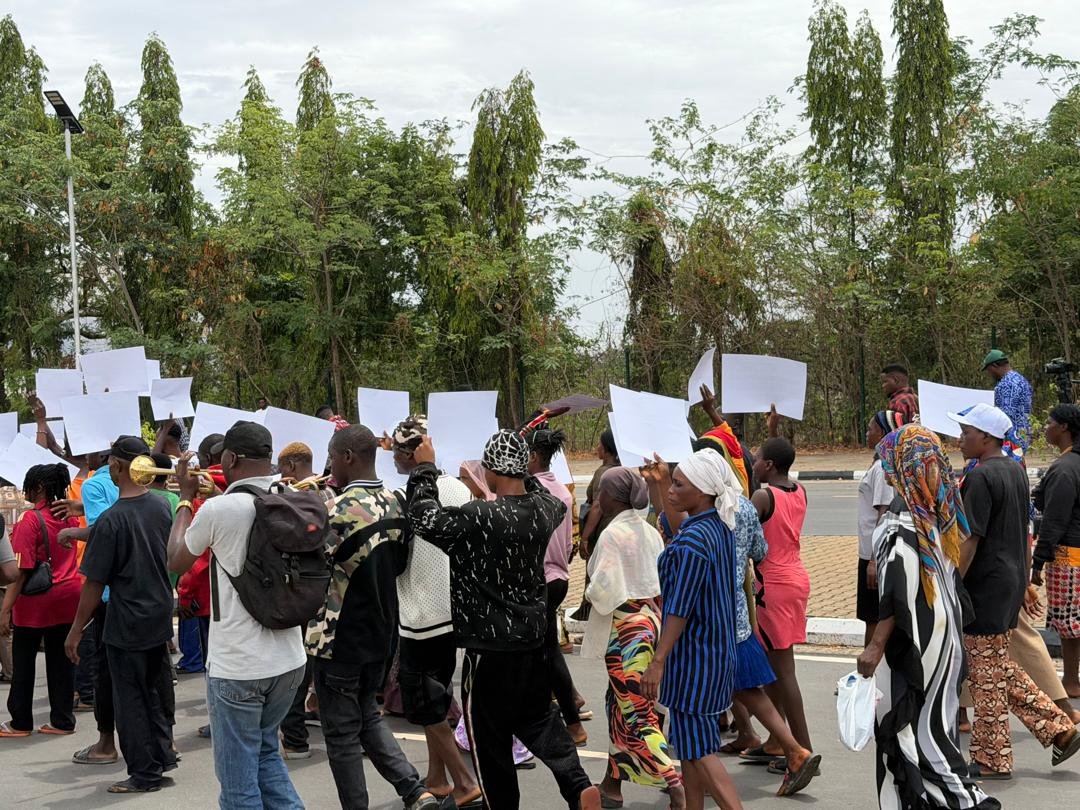
Addressing journalists in Abuja on Tuesday, the group’s Executive Director, Amb. Kingsley Enwelim Nwanze, strongly criticised NAFDAC’s enforcement of a ban on sachet alcohol and 200ml PET bottle alcoholic products, describing the move as “illegal, arbitrary, and economically dangerous.”


The group argued that the enforcement violates the existing National Alcohol Policy approved by the Federal Ministry of Health and contradicts a presidential directive restraining the agency from disrupting affected businesses pending the outcome of a joint committee review.


According to Nwanze, the decision also disregards resolutions of the House of Representatives, which had earlier asked NAFDAC to halt the ban after consultations with stakeholders, describing the policy as anti-people.


He warned that the action could trigger widespread economic disruption and social unrest, noting that thousands of jobs and livelihoods across the alcohol production value chain are at risk.


“The timing of this policy is not only insensitive but also counterproductive to the economic reform agenda of President Bola Ahmed Tinubu. It threatens businesses, undermines investor confidence, and paints the government in a negative light,” he said.


The group further dismissed claims that sachet alcohol promotes abuse, arguing instead that smaller packaging discourages excessive consumption compared to larger bottles. It added that products in the category are produced under regulated and hygienic conditions, with certification from relevant authorities, including NAFDAC.


It also questioned the basis of the ban, describing claims of widespread abuse by minors as “unsubstantiated and unsupported by credible empirical evidence.” The group noted that industry players have invested heavily in campaigns promoting responsible alcohol consumption and restricting underage access.


While expressing support for policies aimed at eliminating unsafe products from the market, the organisation insisted that such measures must be evidence-based and not driven by sentiment.


The group further warned that enforcing the ban could lead to unintended consequences, including the proliferation of illicit and unregulated alcoholic products, increased smuggling, and significant revenue losses for the government.


“This decision will open the floodgates for substandard products, weaken regulatory control, and deny the government critical revenue streams, while also limiting consumer choice, particularly for low-income earners,” Nwanze stated.


He, therefore, urged President Bola Ahmed Tinubu to “wield the big stick” by removing the NAFDAC DG without delay, insisting that her continued stay in office is no longer in the public interest.


The group maintained that reversing the policy and ensuring regulatory alignment with existing laws and directives would better serve both economic stability and public welfare.

Continue Reading
Click to comment

Leave a Reply

Your email address will not be published. Required fields are marked *

Cover

NUJ FCT, Chinese Centre Build Bridges Through Culture, Dialogue

Published

on

The Chinese Cultural Centre in Nigeria has reaffirmed its commitment to fostering stronger ties with the media following a dinner hosted by its Director, Yang Jianxing, for the Executive Members of the Nigeria Union of Journalists FCT Council.

The NUJ delegation was led by its Chairman, Grace Ike, in what was described as a warm and engaging evening aimed at strengthening collaboration and mutual understanding.

Speaking during the event, both parties emphasized the importance of sustained dialogue and cultural exchange in building productive relationships between institutions. The gathering provided a platform to explore opportunities for enhanced cooperation between the Centre and the media in the Federal Capital Territory.

The dinner featured moments of interaction, shared experiences, and discussions centered on promoting cultural diplomacy and responsible journalism.

Participants described the event as a night of meaningful engagement, noting that it reinforced a renewed commitment to partnership and collaboration.

The initiative forms part of broader efforts to strengthen strategic bilateral relations between the Chinese mission in Nigeria and the media community in the FCT.

Continue Reading

Cover

Nigerian Army Honours 18 Retired Generals with Pulling-Out Parade, Gala Night in Benin

Published

on

The Nigerian Army Corps of Supply and Transport has honoured 18 retired generals with a Pulling-Out Parade (POP) and a special Gala Night held on Thursday, March 26, 2026, in Benin City, Edo State.

The ceremony took place at the AWO Idowu Igbinoba Parade Ground and the Muhammadu Buhari Auditorium of the Nigerian Army School of Supply and Transport, bringing together senior military officers, dignitaries, and guests to celebrate the distinguished careers of the retired officers.

In his farewell address, the Reviewing Officer, Olaniyi Michael Dare, commended the Corps for organising what he described as a dignified and symbolic ceremony. He noted that the Pulling-Out Parade represents the formal conclusion of active military service and offers an opportunity to reflect on years of dedication, sacrifice, and commitment to national defence.

He highlighted the critical role played by the retired generals in ensuring effective logistics support for troops across various operations, including training exercises, peacekeeping missions, and internal security engagements nationwide. He also acknowledged the support of their families, describing them as vital to the success of the officers’ careers.

Speaking at the Gala Night, the Commander, Corps of Supply and Transport, Nansak Danjuma Shagaya, expressed appreciation to the leadership of the Nigerian Army and all contributors to the success of the event. He said the gathering not only honoured the retirees but also celebrated the institution they served with distinction.

In a goodwill message delivered on behalf of the Chief of Army Staff, Lieutenant General Waidi Shaibu, the Commander Corps of Ordnance, Abdullahi Garba Ibrahim, commended the NACST for its consistent excellence in logistics and administrative support. He noted that the Corps has remained pivotal in sustaining operational efficiency within the Nigerian Army.

Also speaking, the Governor of Edo State, Monday Okpebholo, represented by his Chief of Staff, Yakubu Musa, praised the retired generals for their dedication and service.

He stated that their contributions had strengthened the Nigerian Army and ensured operational effectiveness in the field. He added that retirement marks a transition into continued service through mentorship and the sharing of experience.

The retired officers honoured include Major Generals O.M. Dare, E.A. Anaryu, U.T. Otaru, and E. Akerejola, alongside Brigadier Generals B.O. Ogubunmi, P.K. Yayock, C.S. Okafor, F.C. Onyeari, A.M. Ameh, I. Ahmed, G.C. Nkenke, S.M. Dagari, S.T. Er, A.Y. Mbafung, J.D. Bambur, L.A. Jimoh, Sarkin-Fulani, and E.E. Etim.

The event attracted top military officials, including past commanders of the Corps, General Officers Commanding 2 and 82 Divisions, corps commanders, the President of NAOWA, commandants of training institutions, brigade commanders, and heads of paramilitary agencies.

Highlights of the ceremony included a march-past in slow and quick time, the ceremonial pulling-out of the retired generals, cultural dance performances, comedy presentations, and the presentation of gifts and souvenirs.

The event underscored the Nigerian Army’s tradition of honouring service, sacrifice, and excellence among its personnel.

Continue Reading

Cover

Beyond Arrests: Stakeholders Push Media to Expose Systemic Corruption

Published

on

Stakeholders in Nigeria’s anti-corruption space have called for stronger collaboration between the media, civil society, and government institutions to enhance the implementation of the National Anti-Corruption Strategy (NACS) 2022–2026.

This was the outcome of a one-day workshop themed “Reinvigorating the National Anti-Corruption Strategy (NACS) 2022–2026: A Post-Assessment Roadmap for the Fourth Estate,” which brought together representatives of anti-corruption agencies, civil society organisations, and leadership of the Nigeria Union of Journalists from across the federation and the FCT.

The workshop focused on assessing progress at the midpoint of the NACS and developing a strategic framework to strengthen the role of the media as a watchdog in preventing corruption.

Participants noted that corruption cannot be tackled solely through prosecution, but requires systemic reforms, ethical conduct, and transparency across institutions and society.

They acknowledged that while the NACS provides a robust framework for combating corruption through preventive measures, its impact has been weakened by gaps in coordination among agencies, low public awareness, limited media engagement, political interference, and slow judicial processes.

The workshop further observed that the media, often described as the Fourth Estate, remains underutilised in the prevention pillar of the strategy, with a tendency to focus more on reporting arrests rather than exposing systemic loopholes.

Participants also highlighted the untapped potential of digital forensic tools and artificial intelligence in advancing investigative journalism, stressing that these innovations are yet to be fully integrated into anti-corruption efforts.

Additionally, the need for institutional protection and incentives for whistleblowers and investigative journalists was described as urgent to ensure sustained accountability.

The workshop resolved that anti-corruption agencies should establish dedicated “media desks” to improve real-time access to non-classified information for journalists, thereby promoting transparency and evidence-based reporting.

It also emphasised that the media should be recognised not just as observers but as active drivers of reform, deserving of legal protection and institutional support.

Participants recommended the introduction of specialised training programmes to equip journalists with the skills to better interpret the pillars of the NACS, particularly in areas such as public financial management and ethics compliance.

They urged the media to shift focus from prosecution-driven narratives to preventive advocacy by promoting solution journalism and highlighting institutional reforms that reduce corruption risks.

The workshop also called for expedited legislative action on whistleblower protection to safeguard sources and strengthen investigative reporting.

To ensure sustainability, participants proposed the establishment of a tripartite monitoring committee comprising government, media, and civil society organisations to conduct quarterly reviews of the strategy’s progress up to 2026.

Participants commended the Independent Corrupt Practices and Other Related Offences Commission (ICPC) and other stakeholders for their commitment to advancing anti-corruption efforts, while urging the Federal Government to provide adequate funding to prevent operational constraints.

The workshop reaffirmed that a revitalised and empowered media sector is critical to the success of the National Anti-Corruption Strategy, stressing that journalists must investigate fearlessly, report responsibly, educate citizens, and hold leaders accountable.


The communiqué was jointly signed by Musa Adamu Aliyu, Chairman of ICPC, and Alhassan Yahya Abdullahi, President of the Nigeria Union of Journalists, on behalf of participants.

Continue Reading

Trending

Copyright © 2023 - 2025 DailyMirror Nigeria. Design by AspireWeb.ng, powered by WordPress.