Connect with us

Cover

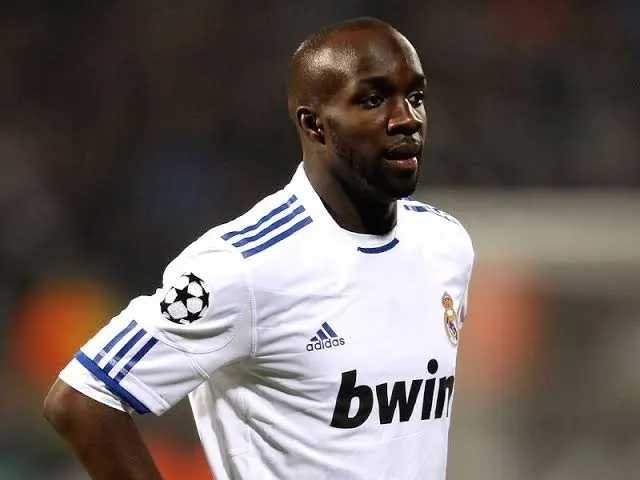
Lassana Diarra Finally Settles His 11-Year Legal Battle With FIFA

Published

on

It began with a salary dispute at a Moscow club and ended with FIFA rewriting the rules that govern how every professional footballer on earth can move between clubs.
Lassana Diarra’s legal battle against FIFA is over. The former France international has settled with world football’s governing body and the Belgian Football Association, a source close to the case confirmed to AFP on Monday. The settlement closes a case valued at 65 million euros — one of the most consequential legal challenges in the sport’s modern history.

What Started It All
The origin of this case is both specific and instructive.
In 2014, Diarra left Lokomotiv Moscow after the Russian club dramatically reduced his salary. The club contested the departure as wrongful termination and demanded 20 million euros in compensation — a figure later reduced to 10.5 million euros. Under FIFA’s existing transfer regulations at the time, any club that signed Diarra risked being held jointly liable for that compensation.

Belgian club Charleroi was prepared to sign the midfielder. When their legal team assessed the regulatory risk, they walked away. Not because Diarra lacked quality. Not because the deal did not make football sense. But because FIFA’s rules made the financial exposure for the signing club potentially catastrophic.
That decision — one club’s rational response to an irrational regulatory framework — became the seed of a legal challenge that would eventually reach the highest court in the European Union.

The Landmark CJEU Ruling
In October 2024, the Court of Justice of the European Union delivered what is now known in football law circles as the “Diarra ruling” — a decision that found FIFA’s transfer regulations incompatible with European law.
The CJEU concluded that FIFA’s rules imposed “considerable legal risks, unforeseeable and potentially very high financial risks as well as major sporting risks” on players and clubs engaged in transfers. In plain terms: the system was rigged against player movement, stifled legitimate commercial transactions, and contradicted the EU’s foundational principle of free movement.
FIFA, faced with a binding ruling from the continent’s highest court, had no choice but to act. The governing body amended its transfer regulations in response — a structural concession that will affect how player contracts and transfers are governed for years to come.

The Settlement and What It Means
Despite the legal victory in the CJEU, Diarra was unable to immediately translate the ruling into a concluded settlement. He announced in October 2024 that he was turning to Belgian courts to enforce the judgment — a further step in a process that had already consumed a decade of his life.
On Monday, that process finally concluded.

FIFA confirmed the settlement in a statement to AFP, acknowledging that “Mr. Lassana Diarra and FIFA have settled all legal proceedings between them.” The governing body added, with characteristic institutional caution, that it “does not acknowledge any wrongdoing and has not made any compensation payments.”
The precise financial terms of the settlement have not been disclosed. What is clear is that the case is closed — and that its impact on the sport extends far beyond any figure agreed in private.

The Wider Consequences: A System Forced to Change
Diarra’s case did not just win him a settlement. It cracked open one of football’s most entrenched regulatory frameworks and forced a global governing body to acknowledge that its rules were legally indefensible.

The Justice for Players Foundation has since launched a class action lawsuit building directly on the Diarra precedent, seeking broader structural reform of the transfer system. National players’ unions — including France’s UNFP — have joined the action, expanding its scope from a single player’s grievance into a collective challenge to the balance of power between clubs, governing bodies, and players.

For professional footballers globally, the Diarra ruling represents something genuinely significant: evidence that the legal system can be used to challenge a governing body with vastly greater institutional resources, and that patient, principled legal pursuit can produce outcomes that protect players’ fundamental rights.

What This Means for African and Nigerian Footballers
From a Nigerian perspective — and for the African football community more broadly — the Diarra case carries direct and practical relevance.
Nigerian players in European leagues, players moving from African domestic competitions to European clubs, and agents navigating transfer disputes have long operated within a system that FIFA’s rules made deliberately complex and financially punishing for the less powerful parties.

The regulatory changes that Diarra’s legal battle compelled FIFA to make apply globally. A Nigerian midfielder facing a disputed contract termination in Europe now operates within a framework that has been legally tested and partially reformed. The rules that once allowed clubs to weaponise transfer regulations against mobile players have been weakened — not eliminated but weakened.
The class action lawsuit now in progress could weaken them further.

Diarra: A Player Who Fought When Others Walked Away
Lassana Diarra won 35 caps for France. He played for Arsenal, Chelsea, Real Madrid, and Lokomotiv Moscow. His playing career took him to the summit of European club football.
His legal career took him somewhere equally significant: the European Union’s highest court, a judgment that rewrote FIFA’s rulebook, and a settlement that closes a chapter that began when a Russian club cut his salary and a Belgian club walked away rather than risk the consequences.

He spent eleven years pursuing this. He did not give up when FIFA’s institutional weight made settlement difficult. He took the fight to the CJEU, won there, and then continued until the settlement was finally in his hands.
That persistence is the story. The 65 million euro figure is the headline. The changed transfer regulations are the legacy.

Continue Reading
Click to comment

Leave a Reply

Your email address will not be published. Required fields are marked *

Cover

Labour Party Drags INEC To Court Over Enugu By-Election Exclusion

Published

on

The Labour Party has taken its battle for political recognition to the courts, filing a suit against the Independent National Electoral Commission (INEC) over its exclusion from the forthcoming Enugu North Senatorial District by-election.

The by-election, scheduled for June 20, 2026, follows the death of Senator Okey Ezea in November 2025. For the Labour Party, the contest represents not only a chance to reclaim political ground but also a test of Nigeria’s electoral integrity.

The Dispute
According to the party, it duly notified INEC of its plan to conduct primaries on May 11, 2026. The exercise was held on May 25 and produced Ambassador Simon Ejike Eze as its candidate. However, when the party attempted to upload Eze’s details on INEC’s nomination portal, it was denied access.

Repeated efforts to resolve the issue before the June 2 deadline failed. The party insists it met all legal obligations under the Electoral Act and INEC guidelines but was excluded due to administrative lapses.

Allegations Against INEC
The Labour Party specifically faulted INEC officials in Enugu State, alleging they failed to transmit the primary report because no designated officer was present during the exercise. This, the party argues, undermined its right to participate in the by-election.

National Publicity Secretary Ken Asogwa described the exclusion as unjust, stressing that the party has a legitimate stake in the contest. He added that electoral rights should not be compromised by procedural failures.

Legal Action
The suit filed at the Federal High Court in Abuja seeks to compel INEC to recognise the Labour Party’s candidate and update its records accordingly. The party is asking the judiciary to enforce compliance with electoral laws and ensure fairness in the process.

By turning to the courts, the Labour Party has signalled its determination to challenge what it sees as systemic obstacles to opposition participation. The case also places INEC under scrutiny, raising questions about its internal processes and accountability.

Party’s Position
Despite its frustration, the Labour Party expressed confidence in INEC’s national leadership, calling for an investigation into the conduct of its Enugu officials. It urged that sanctions be applied where negligence is proven.

The party also appealed to its supporters to remain calm, assuring them that the judiciary would provide redress. This measured response reflects an effort to avoid escalating tensions while pursuing legal remedies.

Broader Implications
The case highlights recurring challenges in Nigeria’s electoral system, particularly the role of technology and administrative efficiency in candidate nomination. For opposition parties, access to INEC’s systems is critical to ensuring fair competition.

The Labour Party’s exclusion, if left unresolved, could set a precedent that undermines confidence in electoral fairness. Conversely, a court ruling in its favour would reinforce the principle that compliance with electoral law must be respected by all institutions.

As the June 20 by-election approaches, the Labour Party’s lawsuit adds another layer of uncertainty to the contest. The judiciary’s decision will not only determine whether Ambassador Simon Ejike Eze appears on the ballot but also signal how Nigeria’s democracy handles disputes over electoral participation.

For now, the party’s message is clear: it will not accept exclusion from a process it believes it has lawfully earned the right to join.

Continue Reading

Cover

Trump Wanted A Peace Deal Before The World Cup Kickoff, Iran And Israel Have Other Plans.

Published

on

trump-iran-peace-deal-world-cup-ceasefire-jeopardized-2026

Donald Trump had a timeline. Sign a Memorandum of Understanding with Iran before June 11. Welcome the world to a North American World Cup free from the shadow of active conflict. Arrive at the midterm elections in November with a foreign policy win to show an increasingly impatient electorate.
That timeline is now under serious pressure — and the men most responsible for disrupting it are not sitting at any negotiating table.

The Plan and the Problem
In a Fox News interview on June 7, Trump stated that negotiations with Iran were progressing toward an agreement that could be concluded between June 8 and 10 — the final days before the 2026 World Cup opens on June 11. The implication was unmistakable: Trump was pushing for a peace deal signed before the first ball was kicked.

The political logic is clean. Seventy-five per cent of all World Cup matches — including the final at MetLife Stadium in New Jersey — will be played on American soil. A concluded Iran agreement would allow Trump to host the tournament as a president who ended a war, not one still fighting it. With midterm elections arriving in November, the optics of global football arriving in an America at peace would be worth considerably more than any campaign advertisement.
Then came June 8.

Iran Strikes Israel. Israel Strikes Back.
On the 100th day of the war, Iran fired 11 ballistic missiles at northern Israel. The Israeli military activated its air defence systems and intercepted all of them. Iran described the attack as retaliation for Israel’s continued strikes against Hezbollah, the Iran-backed armed group operating in southern Lebanon. It was the first direct Iranian strike on Israeli territory since the ceasefire was announced on April 8.

The Houthis in Yemen compounded the picture. The Iran-aligned group claimed a simultaneous missile attack targeting the Tel Aviv area and declared a complete ban on Israeli maritime navigation in the Red Sea — framing every Israeli vessel in the waterway as a legitimate military target.
Israel did not absorb the attack silently. Within hours, Iranian state television reported explosions in Tehran, the northwestern city of Tabriz, and central Isfahan. An Israeli drone strike damaged a petrochemical plant in southwestern Iran. The Israeli military confirmed a “large-scale airstrike targeting Iran’s air defence systems,” stating that dozens of fighter jets had struck strategic defence infrastructure deep inside Iranian territory.
The ceasefire that had been officially in place since April 8 was, in practical terms, over.

Trump Intervenes — and Iran Pauses
Trump moved quickly. On June 8 he posted on social media demanding that “Israel and Iran must immediately stop ‘firing.'” A second post followed, striking a more optimistic tone: “Both Israel and Iran are seeking an immediate ceasefire. Final negotiations for peace will proceed as long as they are not hindered by ignorance and folly.”
Approximately one hour after Trump’s posts, Iran’s military issued a statement declaring it had “inflicted a painful response on the Zionist regime” and was announcing “the cessation of our military operations.” The caveat was pointed: “If the enemies’ aggression and atrocities continue, we will take much stronger and overwhelming measures.”
Trump also spoke by phone with Israeli Prime Minister Benjamin Netanyahu — a call widely interpreted as the president urging restraint and expressing concern about the pace of Israeli retaliation threatening his pre-World Cup diplomatic window.

The Nuclear Clause Trump Is Claiming
Despite the military exchanges, Trump insisted in an NBC interview that negotiations had reached their final stages. He revealed that the MOU currently under discussion contains a clause stating that Iran will not develop nuclear weapons — and that, at his personal request, a further clause prohibiting Iran from purchasing nuclear weapons had been added and accepted by Tehran.
If accurate, these are significant concessions from a country that has consistently framed its nuclear programme as a sovereign right beyond external negotiation. The question — as with every claim made in the middle of active conflict negotiations — is whether the language agreed in a draft document will survive contact with the political and military realities on the ground.

Iran’s Calculation: Why Rushing May Not Serve Tehran
From Iran’s perspective, Trump’s urgency is a negotiating asset, not an obligation.
Iran is not hosting the World Cup. Iran does not face midterm elections in November. Iran does not have 75 per cent of the world’s most watched sporting event unfolding on its territory in three days’ time.
What Iran does have is a conflict narrative that has strengthened domestic unity and projected an image of resistance to both its own population and the wider Muslim world. Supreme Leader Mojtaba Khamenei has publicly declared the American era in the Middle East over. Signing a deal on Washington’s timeline — before a sporting event that America is using as a diplomatic backdrop — risks undermining that narrative at the precise moment it carries the most domestic value.
There are also analysts who argue that maintaining the current state of managed conflict — active enough to preserve the resistance image, controlled enough to avoid catastrophic escalation — serves Iran’s strategic interests better than any agreement Trump is currently offering.

The World Cup Match That Could Define the Tournament
Amid the geopolitics, football’s own scheduling has produced a scenario that no tournament director could have invented.
Iran have arrived in Tijuana, Mexico, their designated base camp, to prepare for the 2026 World Cup. They are drawn in Group G alongside Belgium, Egypt, and New Zealand. The United States are in Group D.
If Iran finish second in Group G and the United States finish second in Group D, the two countries will meet in the Round of 32.
A football match between the United States and Iran — two nations technically still at war, connected by an unresolved conflict, a fragile ceasefire, and a peace deal hanging in the balance — would be the most politically charged sporting fixture since the Cold War era. The phrase already circulating is “a war without gunfire on the football field.”
The Iranian national team has arrived. The draw has been made. The bracket is set.
Whether Trump’s peace deal arrives before June 11 will determine the political context. The football fixture, if it happens, will exist regardless.

What This Means for Nigeria and the World
For Nigeria — participating in a World Cup while the host nation is simultaneously navigating an active military conflict — the tournament opens in circumstances unlike any in modern football history.
Nigerian fans travelling to or watching from home will experience a competition that blurs the boundary between sport and geopolitics in ways that no amount of FIFA ceremony can fully paper over. The Strait of Hormuz remains disrupted. Global energy prices remain elevated. And the ceasefire that was supposed to hold until a peace deal was signed is currently being tested by ballistic missiles and Israeli airstrikes.

Trump wanted a World Cup moment. He may still get one — either a signed agreement that transforms the tournament’s opening into a diplomatic triumph, or a United States vs Iran knockout fixture that makes every other match on the schedule feel secondary.
Either way, the 2026 World Cup is no longer just about football.

Continue Reading

Cover

Bellingham Is Not Guaranteed His England Shirt — And Tuchel Wants Him to Know It

Published

on

Bellingham-Is-Not-Guaranteed-His -England-Shirt

Jude Bellingham is one of the best footballers in the world. He plays for Real Madrid. He was England’s most important player at Euro 2024. He wears the captain’s armband when given the chance.
None of that guarantees him a starting place at the 2026 World Cup.
Thomas Tuchel has made that clear — publicly, deliberately, and with the kind of tactical honesty that England managers have not always been willing to deploy with their most celebrated players.

The “14 or 15 Starters” Message
When asked directly whether Bellingham has to fight for his place in the starting XI, Tuchel did not protect the player’s ego with a diplomatic non-answer.
“Yes, he has,” the England manager told reporters. “He is one of the starters, he knows he is one of the starters, but we have 14 or 15 potential starters. These roles can always change, but at the moment I think there are 14 or 15 proper starters and Jude is one of them.”

That framing is deliberate. Bellingham is not told he is not starting. He is told he is one of many who could start — and that the distinction between those options is live, not settled. For a 22-year-old who was practically untouchable under Gareth Southgate, it is a significant recalibration of expectations.

Rogers: The Man Applying the Pressure
The challenge to Bellingham’s starting role has a name and a club: Morgan Rogers, Aston Villa.
Rogers has become Tuchel’s most trusted attacking midfield option since the German took charge in January 2025. He has featured in 12 of Tuchel’s 13 matches in charge. More significantly, he was the only player to appear in every one of England’s eight World Cup qualifying matches — a record of involvement that reflects more than availability. It reflects trust.

Rogers offers Tuchel something specific: consistency within the system, tactical discipline, and the kind of pressing intensity that the manager’s preferred structure demands. He is not Bellingham in terms of individual brilliance. But in Tuchel’s framework, that may currently be beside the point.

Bellingham’s Interrupted Rhythm
The numbers under Tuchel tell a different story from the Euro 2024 narrative.
Bellingham has started just four times under the new manager. Three further appearances have come from the bench. For context, under Gareth Southgate at Euro 2024, he missed just 29 minutes of football across seven matches — practically irreplaceable in a tournament where he scored decisive goals and carried England’s attacking threat almost single-handedly.

Injuries have disrupted his continuity. A shoulder problem kept him out of qualifying matches and saw him omitted from the October international camp entirely. His Real Madrid season was also interrupted at a critical stage — during the Champions League run and the title race in Spain — which affected both his club form and his international momentum.

The Tuchel-Bellingham Tension
The relationship between manager and player has not been frictionless.
Tuchel described Bellingham’s on-field behaviour during a defeat against Senegal as “repulsive” — a word that, however accurate the criticism, represented an unusual public escalation toward a player of his standing. Tuchel later apologised. The tension did not entirely disappear.

In November, Tuchel stated he would “review” Bellingham’s behaviour after the player visibly reacted to being substituted during a qualifier against Albania. It was the kind of incident that, handled privately, would not become a story. Handled publicly, it framed the relationship as one with edges.
Both men appear to have moved past those moments. But the pattern matters — Tuchel is clearly not managing Bellingham with the deference some England managers have extended to their biggest names.

The Sweet Spot Argument
Tuchel’s most recent assessment of Bellingham was notably warmer — and timed to coincide with a visible return to form.
After Bellingham came on at half-time in England’s 1-0 warm-up win over New Zealand in Tampa — wearing the captain’s armband — Tuchel offered an encouraging read of where the player currently stands.
“You can see Jude has for sure the decisiveness and bite,” he said. “This is his key characteristic. You can see he comes from an injury and is full of energy and happy to be back on the pitch.” He added: “You can see now that he is actually in a sweet spot. He comes back, he’s fresh, he wants to play and he’s in top shape.”
The “sweet spot” framing is significant. Tuchel is not walking back his competitive pressure message — Bellingham still has to earn his place. But he is signalling that the player is arriving at the tournament in the right physical and mental condition to make that case convincingly.

What This Means for England
The Bellingham-Rogers competition is not a problem for England. It is an advantage.
A manager with genuine options at the number ten position — both capable of starting, both in form — is in a stronger position than one who has no choice but to pick the same player regardless of form or fitness.

Tuchel is managing that competition openly. He is telling Bellingham the truth rather than flattering him into complacency. He is giving Rogers the minutes that justify the selection pressure he is applying.
Whether Bellingham responds to that challenge with the decisive performances that defined his Euro 2024 campaign will shape England’s tournament as much as any tactical decision Tuchel makes.
The Real Madrid superstar has the quality. He has the motivation. He now has the clearest possible signal from his manager: the shirt is available. Go and take it.

Continue Reading

Trending

Copyright © 2023 - 2025 DailyMirror Nigeria. Design by AspireWeb.ng, powered by WordPress.