Opinion
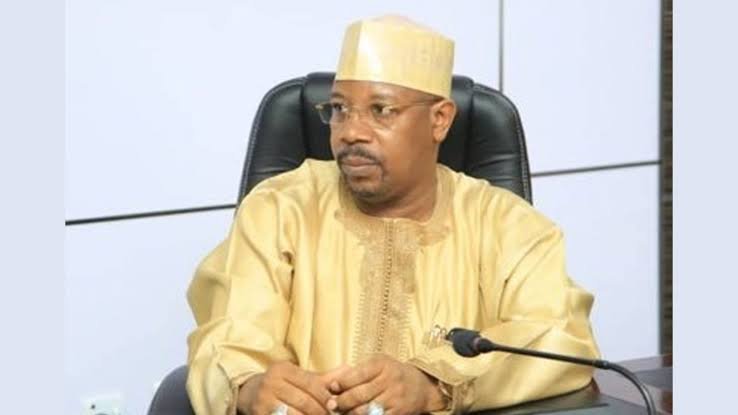
Danzaria And The Re-Engineering Of NASS Bureaucracy
By Samson Idoko
Within the heart of Nigeria’s parliamentary governance, where decisions are crafted, power is deliberated and future of millions is shaped, there exist an unseen distinguished figure whose dedication ensures the seamless operation of the legislative machinery. This man is Dr. Yahaya Danzaria, the indefatigable Clerk of the 10th House of Representatives. His professionalism, acceptability, transparency, and sheer commitment to excellence have positioned him as the cornerstone of the parliament.
Hailing from Yelwa-Yauri in Kebbi State, a region well known for its rich cultural heritage and agricultural prowess, Danzari’s journey is a tale of perseverance, self-control and a deep-seated dedication to public service. Born into a humble home in Yelwa-Yauri, he imbibed values of hard work, integrity, and service from an early age. His early schooling at Yelwa-Yauri prepared him for a life devoted to both professional excellence and intellectual advancement. Today, as the unseen engine of the House of Representatives, he represents the ideals of good governance that prioritize the collective good of the people of Nigeria over individual gain.
Dr. Danzaria’s role as Clerk of the House of Representatives is one which extends far beyond the ceremonial. He is the backbone of the parliamentary bureaucracy, ensuring that the institution operates with precision and efficiency in all mannerisms. Right behind the scenes, his daily efforts to coordinate clerks, prepare for plenary sessions, and oversee legislative processes reflect a rare blend of technical expertise and his administrative acumen.
In the House of Representatives, a place known for its complex administrative system where lawmakers, committees and administrative staff are expected to function harmoniously, Danzaria has proven to be skillful in bridging the gaps, engineering cooperation among various stakeholders, and maintaining an environment where legislative duties are executed with professionalism. He is the unseen architect who makes sure the wheels of the House turn smoothly, though not always appearing in the picture, but never unappreciated by those who truly understand the level of intricacies of parliamentary governance.
In this present time where allegations of corruption and inefficiency erode the public trust in governance, Dr. Danzaria’s leadership holds its hallmark for transparency and accountability in high esteem. His insistence on adherence to ethical conduct, due process, and the highest standards of professionalism has set a new benchmark for the House of Representatives’ bureaucracy.
Not only did this sheer dedication manifest itself, but his training and educational background also instilled in him a deep respect for the principles of good governance. He gained the skills and information necessary to handle the challenges of parliamentary administration from his academic endeavours and political experiences, and the moral compass from his background guided his decision making.
Undeniably, with Danzaria as the clerk, the 10th House of Representatives has witnessed significant strides in institutional re-engineering. His approach to bureaucratic reform is grounded in a clear vision for a more efficient, responsive, and citizen-centric parliament, and he has helped to foster an environment where lawmakers can focus on their primary mandate: legislating for the progress and development of Nigeria, rather than a self-service ambition.
A critical aspect of this re-engineering effort that is worthy of note is Dr. Danzaria’s ability to anticipate challenges and proactively addressing them swiftly. His foresight in supporting bills that enhance national progress and development reflects a deep understanding of the legislative agenda’s long-term implications. By aligning the House’s administrative functions with its legislative priorities, he has ensured that the bureaucracy serves as a catalyst for meaningful change rather than an impediment.
Danzaria’s contributions extend beyond the confines of the House of Representatives. His love for the youth and commitment to their growth as future leaders are evident in his actions and initiatives. He believes in the transformative power of education, mentorship, and empowerment, and he has consistently supported programs that provide young Nigerians with the tools they need to succeed.
However, his vision for youth development is rooted in the belief that the strength of a nation lies in its people. By investing in the next generation, he is laying the foundation for a brighter future where young leaders can drive innovation, create unity, and champion the ideals of democracy. His efforts resonate deeply with the aspirations of millions of Nigerian youths who look up to him as a source of inspiration and guidance.
Being a man of the people, Dr. Danzaria maintains his integrity despite his onerous obligations and professional achievements. His dedication to humanitarian work is so strong that he frequently goes above and beyond to help his community meet their needs. He has been instrumental in various development projects, ensuring that the needs of the people are met. His dedication to humanitarian causes has earned him the respect and admiration of his people, who see him as a true representative of their interests. Many people have come to love him because of his accessibility and humility, and his actions constantly demonstrate his conviction that serving others is both a privilege and a duty of leadership.
His support of policies and programs that address pressing societal issues is one example of his commitment to service. Whether advocating for legislation that advances social welfare, healthcare, education, or economic growth, Dr. Danzaria’s work is driven by a deep desire to make the lives of ordinary Nigerians better.
Dr. Yahaya Danzaria’s role in 10th House of Representatives can be likened to the case of an engine powering a sophisticated machine. While we see the lawmakers as the visible faces of the parliament, it is his behind-the-scenes work that ensures the effective function of the institution. The respect and admiration he earned from his colleagues and the broader legislative community, was through his strategic thinking, meticulous planning, and tireless dedication.
He played a huge part in the remarkable digitization of parliamentary documents and procedures. This move has increased administrative work efficiency in addition to accessibility and transparency. Legislators now have quicker access to information, and the public is better informed about parliamentary proceedings through the advent of digital channels for communication and documentation.
Being the clerk of the House , Dr. Danzaria is an epitome of what public service truly stands for. His personality is a reminder that true leadership is not about seeking recognition, but making an impactful difference. His contribution may not always make headlines, but his impact is undeniably breaking headlines, and shaping the trajectory of the House of Representatives, and by extension, the nation at large. He has fully demonstrated that effective governance begins with a strong and efficient bureaucracy.
Dr. Yahaya DanZaria is truly without a doubt, the unseen engine of the parliament. He is a true representative of the people, one who gives his all behind the scene, ensuring that our legislative institution remains a channel of hope and progress for the country. Individuals like him, whose quiet but impactful contributions lay the foundation for a more prosperous and equitable society are very rare to come by in the lapses of time. Nigeria is greatly honoured to have this priceless gift.
*Idoko, a former National Assembly staff, writes from Makurdi Benue State

Opinion
Gov Otu: Rewriting Cross River’s Healthcare Story With Historic 100% Pay Rise for Doctors
By Linus Obogo
In the quiet town of Ogoja, where the red earth stretches endlessly beneath the tropical sun and communities rise each morning to the rhythms of resilience and hope, a weary doctor named Dr. Monjok once wrestled with a difficult question: should he remain in public service or seek greener pastures elsewhere?
For years, his calling had kept him at the bedside of children battling malaria, expectant mothers navigating the uncertainties of childbirth, and elderly patients confronting the frailties of age. Through long nights, limited resources and mounting pressures, he remained steadfast. Yet the burden of inadequate remuneration and persistent manpower shortages often weighed heavily on his spirit. Today, however, Dr. Monjok stands taller, buoyed by renewed optimism, as Governor Bassey Otu’s administration ushers in a new era with a landmark 100 per cent salary increase for doctors across Cross River State.
This historic intervention is far more than a financial adjustment. It is a powerful declaration that those who dedicate their lives to preserving the health and dignity of others deserve to be honoured, valued and rewarded. It is a recognition of countless sacrifices made in consulting rooms, emergency wards and rural health centres where doctors often labour quietly, driven not by wealth but by duty. In one bold stroke, Governor Otu has infused fresh hope into a profession that forms the backbone of every thriving society.
For many healthcare professionals, the announcement represents a turning point, a breath of fresh air. It signals the emergence of a government that understands that healthcare is not merely a social service but a sacred obligation. It is an affirmation that those entrusted with saving lives should not themselves be left to struggle under the weight of neglect. By doubling doctors’ salaries, Governor Otu has not only boosted morale but has also strengthened the state’s capacity to retain talent and attract skilled professionals who might otherwise seek opportunities beyond its borders.
Yet the salary increase is only one chapter in a broader and exhilarating story of transformation unfolding across the health sector. Since assuming office, Governor Otu has increased funding to healthcare by more than 100 per cent, reflecting a deliberate and strategic commitment to rebuilding a sector that lies at the heart of human development.
It is a demonstration of leadership that recognizes that healthy citizens are the foundation upon which prosperous economies and stable societies are built.
This commitment is equally evident in the lifting of the long-standing embargo on employment within the health sector and the approval of the recruitment of 2,000 additional healthcare workers. Across urban centres and rural communities alike, this decision is expected to bridge critical manpower gaps, improve access to medical services and bring relief to overstretched facilities.
For many communities that have long endured shortages of healthcare personnel, the development represents a long-awaited answer to years of yearning.
In the creekside settlements, riverine communities and bustling townships of Cross River, the echoes of this transformation are already reverberating. At General Hospital, Ukem, where years of wear had dulled the promise of quality care, a new chapter is unfolding. The release of funds for its renovation, alongside the rehabilitation of Cottage Hospital, Oban, and the revival of the once-abandoned General Hospital complex in Akpabuyo, reflects a government determined to restore healthcare institutions to their rightful place as sanctuaries of healing and hope.
These projects are more than bricks and mortar. They are monuments to purposeful governance and symbols of a future in which quality healthcare is not a privilege reserved for a few but a right accessible to all. Each renovated ward, restored facility and upgraded theatre represents another step towards a healthier and more resilient Cross River.
Dr. Monjok’s story is mirrored in the experiences of countless citizens whose lives intersect daily with the healthcare system. It is reflected in the expectant mother who no longer has to travel great distances in search of prenatal care. It is evident in the child whose access to treatment is no longer determined by geography. It is seen in families who can now look towards public health facilities with renewed confidence and expectation.
Governor Otu’s reforms have also embraced nurses, pharmacists, laboratory scientists, community health officers and other critical healthcare personnel through enhanced allowances and improved welfare packages.
The establishment of the Cross River State Hospital Management Board further underscores a commitment to accountability, efficiency and institutional excellence. Together, these measures will lay the foundation for a healthcare system that is modern, responsive and sustainable.
As Dr. Monjok now gazes across the rolling landscapes of Cross River, he sees more than familiar hills and valleys. He sees the dawning of a new possibility. What has begun as a bold policy decision will sooner than later, rapidly evolve into a healthcare renaissance capable of touching every corner of the state. In that unfolding story, every doctor is valued, every healthcare worker is empowered and every citizen is placed at the heart of governance.
Indeed, Governor Otu’s historic intervention is much more than increasing salaries; it is about restoring confidence, rekindling aspirations and rewriting the healthcare story of Cross River State with uncommon vision, courage and purpose.
Obogo is Chief Press Secretary and Special Adviser on Media and Publicity to Governor Bassey Otu
Opinion
General Olufemi Oluyede: The Man Steering Nigeria’s Defence into A New Era
By Sambo Sule
In the crucible of a nation forged by resilience, where shadows of uncertainty stretch long across savannah and coast, General Olufemi Olatubosun Oluyede emerges as a beacon of unyielding resolve. Like the ancient warriors of Ekiti soil—steadfast sentinels against tempests—he now stands at the helm of Nigeria’s Armed Forces as Chief of Defence Staff.
His appointment marks not merely a change of guard, but the dawn of a transformative epoch. It is one where discipline meets destiny, strategy dances with synergy, and the military reclaims its sacred covenant to shield the motherland.
Oluyede’s career has been defined by excellence and resilience. Rising through the ranks of the Nigerian Army, he has commanded troops in some of the most difficult operational theatres, earning respect for his tactical ingenuity and his ability to inspire confidence among soldiers and civilians alike.
Since assuming office, General Oluyede has prioritized jointness—the seamless integration of the Army, Navy, and Air Force into a unified fighting force. He believes that Nigeria’s security challenges require synergy, not fragmentation, and under his leadership, joint operations have become the hallmark of military campaigns.
This approach has already yielded results: in May 2026 alone, Nigerian troops neutralized over 317 terrorists, arrested 314 suspects, and rescued 221 kidnapped civilians, while recovering 93 assorted arms and dismantling illegal refining sites. These achievements reflect his insistence on coordination, precision, and professionalism.
Another defining feature of his leadership is the push for indigenous defence production. General Oluyede has championed the revitalization of the Defence Industries Corporation of Nigeria (DICON), ensuring that Nigeria reduces dependence on foreign suppliers and builds local capacity.
The CDS’ vision is to see Nigeria emerge as a regional hub for defence technology, capable of sustaining its own military requirements and contributing to African security. By encouraging local innovation, he is laying the foundation for a self-reliant Armed Forces that can adapt to evolving threats.
Civil-military relations are also central to his philosophy. General Oluyede has consistently emphasized that the Armed Forces exist to protect the people, not to intimidate them.
He has directed troops to uphold professionalism and respect for human rights in all operations, reinforcing trust between the military and civilians. His swift responses to crises—deploying reinforcements, ordering aerial surveillance, and ensuring humanitarian support—demonstrate his people-centric approach.
For him, threats against civilian peace are intolerable affronts to national sovereignty. Beyond operations, General Oluyede has invested in the intellectual and doctrinal development of the Armed Forces.
He has positioned the Joint Doctrine and Warfare Centre (JDWC) as the intellectual hub of Nigeria’s defence establishment, advancing doctrine, innovation, and technology to keep the Armed Forces adaptive to evolving threats. This institution ensures that Nigeria’s military remains aligned with global best practices while developing strategies tailored to local realities.
General Oluyede’s leadership style blends firmness with empathy. He commends troops for gallantry and tactical ingenuity, reinforcing morale across operational theatres.
At the same time, he insists on accountability, ensuring that discipline remains the bedrock of military service. His ability to balance operational demands with welfare considerations has strengthened the Armed Forces as an institution.
General Oluyede’s legacy is already taking shape. He is positioning Nigeria’s Armed Forces as a modern, self-reliant, and highly professional military. His emphasis on jointness, indigenous production, and civilian protection ensures that the Armed Forces remain not only a guarantor of sovereignty but also a trusted institution in the eyes of the people.
The CDS tenure is redefining Nigeria’s defence posture, positioning the country as a regional leader in security and stability. In the broader context of national development, his leadership underscores the critical role of the military in creating an environment of peace and stability.
By securing communities, protecting borders, and dismantling criminal networks, the Armed Forces under his command are enabling economic growth, social development, and national unity. His vision is not limited to the battlefield; it extends to the future of Nigeria as a secure, prosperous, and respected nation.
General Olufemi Oluyede is, indeed, the man steering Nigeria’s defence into a new era. His story is one of discipline, vision, and service—a reminder that leadership in uniform is not about power, but about responsibility, sacrifice, and the unwavering commitment to protect the nation and its people.
Sule is a public affairs analyst writing from Kaduna.
Opinion
The Man Behind the Rebuilding of Nigeria’s North-East
By Musa Sule
Alhaji Mohammed Goni Alkali, the Managing Director and Chief Executive Officer of the North-East Development Commission (NEDC), has become a defining figure in Nigeria’s quest to restore dignity, rebuild infrastructure, and rekindle hope in a region long scarred by insurgency and underdevelopment. His leadership is not only about projects and policies; it is about people, about lives transformed, and about a vision that sees beyond the ruins of conflict to the promise of renewal.
From the very beginning of his career, Alkali distinguished himself as a man of intellect and discipline. Graduating with a First-Class degree in Accounting from Bayero University, Kano, and later earning a Master’s in Accounting and Finance from the London School of Economics, he laid a foundation of excellence that would guide his professional journey. His nearly three decades in banking, culminating in his role as Executive Director of Operations at the Bank of Industry (BOI), gave him the tools to manage complex financial systems and design interventions that empower communities. At BOI, he was instrumental in national schemes such as the ₦10 billion Rice Processing Fund and the ₦100 billion Cotton, Textile, and Garment Development Scheme, initiatives that revitalized industries and created jobs across Nigeria.
When Alkali was appointed to lead the NEDC in 2019, the North-East was at a crossroads. Years of insurgency had displaced millions, destroyed schools and hospitals, and left communities struggling to survive. His reappointment in 2023 was a testament to the confidence placed in his vision and his ability to deliver results. Under his stewardship, the Commission has become a beacon of hope, rolling out projects that directly touch lives. More than 3,500 housing units have been built across six states, providing shelter for families who had lost everything. Eighteen mega schools have been established, restoring education to children whose futures had been interrupted by conflict. Strategic roads such as Gombe-Abba-Kirfi and Alkaleri-Futuk have been developed, opening up trade corridors and reconnecting communities. Healthcare facilities have been equipped, and agricultural communities have been revived, ensuring that livelihoods are restored and dignity is returned.
Alkali’s leadership is marked by integrity and transparency. He has consistently emphasized that the NEDC is not a contract-dispensing agency but a humanitarian interventionist body. Every naira allocated to the Commission is judiciously used, reflecting his discipline and accountability. His grassroots approach—personally visiting communities, listening to their needs, and ensuring projects are executed faithfully—has earned him recognition as an Ambassador of Peace. Groups such as the North-East Elders and Youths Peoples Forum have praised his dedication to fostering unity and reconciliation, acknowledging that his leadership is not only rebuilding infrastructure but also healing wounds and restoring trust.
The impact of his work is visible everywhere. Children are returning to classrooms, families are moving into new homes, farmers are cultivating their land once more, and traders are reconnecting with markets through newly built roads. These are not abstract achievements; they are tangible transformations that speak to the power of visionary leadership. Alkali’s legacy will be remembered not just in the structures built but in the lives rebuilt, in the dignity restored, and in the hope rekindled across the region.
His story is ultimately one of transformation—of a man who has taken on the monumental task of rebuilding a region scarred by conflict and has done so with integrity, vision, and humanity. He is more than a technocrat; he is a bridge between government and grassroots realities, between policy and people, between despair and hope. His leadership at the NEDC is a testament to what is possible when competence meets compassion, and it offers a powerful reminder that even in the most challenging circumstances, visionary leadership can light the path toward a brighter future.
Alhaji Mohammed Goni Alkali’s leadership also underscores the importance of continuity and consistency in governance. By being reappointed in 2023, he has been able to sustain the momentum of NEDC’s projects, ensuring that initiatives are not abandoned midway but are carried through to completion. This continuity has allowed communities to trust the Commission’s work, knowing that promises made will be promises kept. His ability to balance immediate humanitarian needs with long-term development goals has created a framework that not only addresses the present but also secures the future.
In the broader context of Nigeria’s development, Alkali’s work at NEDC serves as a model for how interventionist agencies can function effectively. His insistence on transparency, his grassroots engagement, and his humanitarian focus are qualities that should inspire leaders across the country. He has shown that leadership is not about titles or positions, but about service, accountability, and impact. His legacy will endure not just in the North-East, but in the lessons his leadership offers to the entire nation.
Alkali’s leadership has also been about restoring confidence in governance. In a region where mistrust of institutions had grown due to years of neglect and conflict, his hands-on approach has reassured communities that government can indeed be a force for good. His presence in villages, his willingness to listen, and his determination to deliver have created a bond of trust between the Commission and the people it serves. This trust is invaluable, for it is the foundation upon which peace and progress are built.
Beyond infrastructure, Alkali has focused on human capital development. He understands that rebuilding the North-East is not just about bricks and mortar, but about investing in people. His emphasis on education, healthcare, and agriculture reflects a holistic vision of development. By equipping schools, training teachers, supporting farmers, and strengthening healthcare systems, he is laying the groundwork for a future where the North-East can thrive independently, resilient against future challenges.
His leadership has also had a symbolic impact. In a region often portrayed through the lens of conflict and despair, Alkali’s work has shifted the narrative to one of resilience and renewal. The stories emerging from the North-East today are not just about destruction, but about reconstruction; not just about displacement, but about resettlement; not just about despair, but about hope. This shift in narrative is powerful, for it changes how the region is perceived both within Nigeria and internationally, opening doors to investment, collaboration, and growth.
Alhaji Mohammed Goni Alkali is, indeed, the man behind the rebuilding of Nigeria’s North-East. His name will be remembered as one of the architects of hope, a leader who turned challenges into opportunities, despair into resilience, and destruction into reconstruction. His work is not just about today—it is about laying the foundation for generations to come, ensuring that the North-East is defined not by its past struggles but by its future promise.
Sule is a public affairs analyst based in Yola.
-
Cover10 months agoNRC to reposition train services nationwide.. Kayode Opeifa
-
Fashion9 years agoThese ’90s fashion trends are making a comeback in 2017
-
Entertainment9 years agoThe final 6 ‘Game of Thrones’ episodes might feel like a full season
-
Politics2 months agoNNPP Diaspora Stakeholder and Key Kwankwaso Ally, Dr. Usman Tijjani Shehu, Rejoins APC
-
Opinion1 year agoBureaucratic Soldier, Kana Ibrahim heads Ministry of Aviation and Aerospace After Transformative Tenure at Defence
-
Opinion1 year agoHon. Daniel Amos Shatters Records, Surpasses Predecessor’s Achievements in Just Two Years
-
Opinion7 months agoBarrister Somayina Chigbue, Esq: A rising legal leader shaping institutioal excellence in Nigeria
-
News11 months agoNigerian Nafisa defeats 69 Countries at UK Global Final English Competition