Cover
Senate in Tensions as Oshiomhole Challenges Akpabio
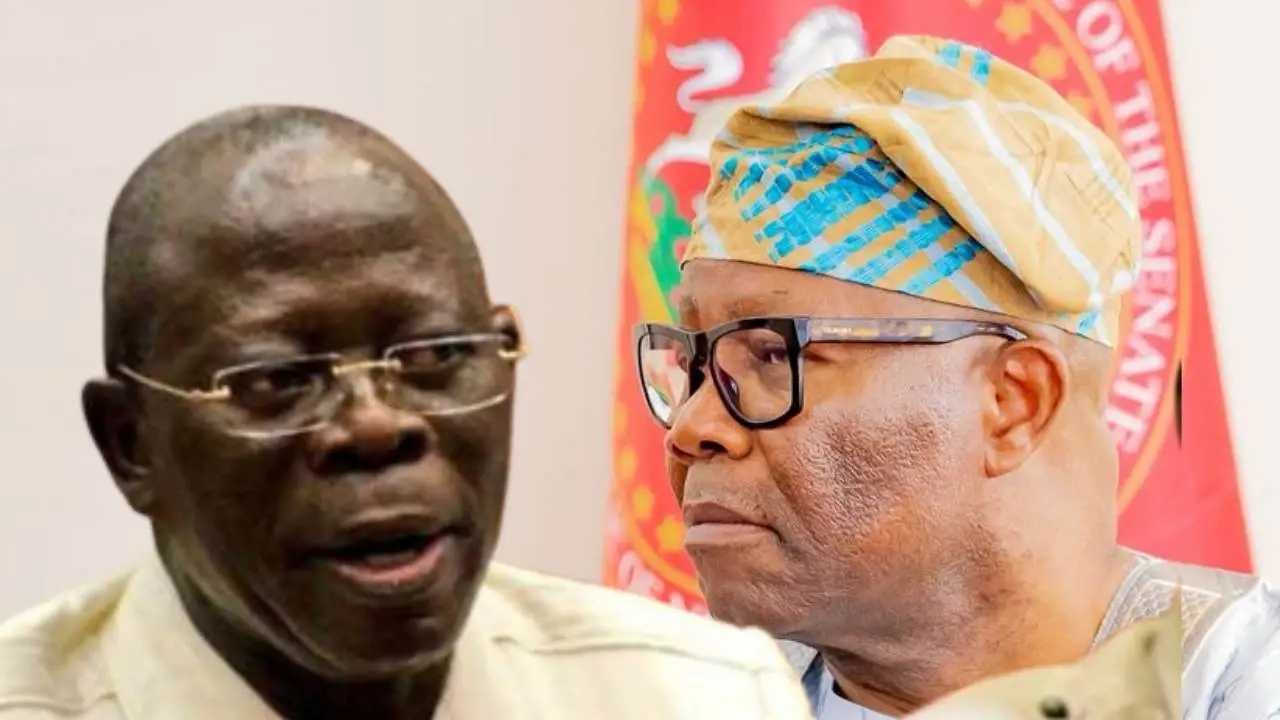
The Nigerian Senate is facing renewed turbulence following remarks by Senator Adams Oshiomhole, who accused Senate President Godswill Akpabio of harboring deep suspicion against him. Oshiomhole’s comments, made during a podcast appearance, have intensified debates about leadership style and internal cohesion within the upper chamber.
Oshiomhole’s Allegations
Oshiomhole, representing Edo North, claimed Akpabio views him as a threat. He suggested that the Senate President interprets his interactions with colleagues as plots against the leadership. According to Oshiomhole, Akpabio’s bias is widely known among senators and has created unnecessary tension.
He cited an incident involving Senator Abdulaziz Yari, who sought a committee position. Akpabio allegedly dismissed the request, suggesting it was part of a plan with Oshiomhole to undermine him. Oshiomhole described the exchange as evidence of paranoia within the Senate’s leadership.
Discontent Among Senators
Beyond personal grievances, Oshiomhole pointed to broader dissatisfaction among lawmakers. He predicted that the next Senate would differ significantly from the current one, citing growing frustration with Akpabio’s leadership style. “The 11th Senate will not be like the 10th,” he said, stressing that senators are already grumbling about the way the chamber is managed.
Senate President as “First Among Equals”
Oshiomhole reminded his colleagues that the Senate President is not above the institution. He emphasized that the position depends on the collective will of senators, not personal authority. “If Senator Yari had got the majority, he could have become the Senate President. It is about who the senators want,” he noted.
Fallout from NNPCL Comments
The controversy follows Oshiomhole’s sharp criticism of the Nigerian National Petroleum Company Limited (NNPCL), which he described as corrupt. The Senate quickly distanced itself from his remarks, clarifying that his views did not represent the chamber. A motion sponsored by Senate Leader Opeyemi Bamidele reinforced that committees cannot issue warrants of arrest without Senate approval, highlighting the sensitivity of Oshiomhole’s comments.
Leadership Disputes and Party Politics
The clash between Oshiomhole and Akpabio reflects deeper divisions within the ruling All Progressives Congress (APC). Oshiomhole, a former governor and key figure in President Bola Tinubu’s campaign, insists his loyalty to the party is unquestionable. Yet his strained relationship with Akpabio underscores the challenges of balancing personal influence with collective governance in the Senate.
Silence from Akpabio’s Camp
Efforts to obtain a response from Akpabio’s media aide, Hon Eseme Eyiboh, were unsuccessful. The silence leaves Oshiomhole’s claims uncontested for now, further fueling speculation about the depth of the rift.
Implications for Senate Stability
The dispute raises questions about the Senate’s ability to function smoothly. With senators openly expressing dissatisfaction, the chamber risks becoming divided at a time when Nigeria faces pressing economic and security challenges. Oshiomhole’s insistence that Akpabio views him as “the devil he knows” adds a dramatic dimension to the conflict, but the underlying issue remains one of trust and leadership.
The tension between Oshiomhole and Akpabio highlights the fragile balance of power in Nigeria’s Senate. While Oshiomhole frames the dispute as a matter of bias and paranoia, the broader picture reveals a chamber struggling with unity and credibility. As lawmakers prepare for future sessions, the ability of Senate leadership to manage dissent will determine whether the institution strengthens or fractures further.
Cover
Cabo Verde Hold Spain To Shock Goalless Draw
Cabo Verde stunned the football world by holding Spain to a 0–0 draw in their opening World Cup fixture, delivering one of the tournament’s early surprises. The result showcased the resilience and tactical discipline of the island nation, who frustrated Spain’s attacking stars throughout the encounter.
Spain’s Frustrated Attack
Spain dominated possession from the start, stringing passes across midfield and probing for openings. Yet, despite their control, they struggled to break down Cabo Verde’s compact defensive structure. Alvaro Morata and Ferran Torres both missed clear chances, while Pedri’s long-range effort was parried away by the inspired Cabo Verde goalkeeper.
The Spanish side grew increasingly frustrated as the match wore on, with their usual fluidity disrupted by Cabo Verde’s disciplined pressing and quick recovery runs.
Cabo Verde’s Defensive Masterclass
Cabo Verde entered the match as underdogs but executed their game plan with precision. Their backline remained organized, cutting off passing lanes and forcing Spain into wide areas. Goalkeeper Vozinha delivered a standout performance, making crucial saves and commanding his box with authority.
The team’s defensive resilience was matched by their composure in possession. Though chances were limited, Cabo Verde managed to relieve pressure with quick counterattacks, keeping Spain wary of committing too many players forward.
- Key Moments
In the 34th minute, Morata’s header from a Dani Carvajal cross was tipped over the bar. - Early in the second half, Pedri’s curling shot forced another save from Vozinha.
- Cabo Verde’s best chance came in the 72nd minute when Garry Rodrigues broke free on the counter, but his shot drifted wide.
- Each moment reinforced the narrative of Spain’s frustration and Cabo Verde’s determination.
Tactical Discipline and Spirit
Coach Bubista’s tactical approach proved decisive. By maintaining a compact shape and encouraging disciplined pressing, Cabo Verde neutralized Spain’s creativity. The players’ commitment to the plan reflected a collective spirit that resonated with fans watching across Africa and beyond.
Implications for the Group
The draw leaves Spain with work to do in their next fixtures, as dropped points could complicate their path to the knockout stages. For Cabo Verde, the result is historic. Securing a point against a global powerhouse boosts their confidence and strengthens their chances of advancing.
Cabo Verde’s goalless draw against Spain will be remembered as one of the standout moments of the World Cup’s early stages. Their defensive organization, goalkeeping heroics, and tactical discipline combined to frustrate a Spanish side expected to dominate. For Cabo Verde, the result is more than a point—it is a statement of intent and proof that even the smallest nations can challenge football’s giants.
Cover
Soludo’s Ebonyi Rally Endorsement Signals Igbo Political Unity
Governor Chukwuma Soludo of Anambra State has stirred fresh debate in Nigeria’s political circles after openly endorsing President Bola Tinubu during a rally in Ebonyi State. His remarks, delivered in Abakaliki alongside Governor Francis Nwifuru, emphasized solidarity among progressive leaders and a call for unity within the Igbo political bloc.
A Message of Solidarity
Soludo described his presence at the rally as a “solidarity visit,” stressing that progressive leaders must work together to strengthen national unity. He praised Governor Nwifuru as a brother and pledged support for Tinubu’s administration, noting that cooperation across party lines is essential for Nigeria’s stability.
Igbo Political Strategy
In a pointed message to the Igbo community, Soludo urged a shift from grievance-driven politics to pragmatic engagement. He argued that repeated protest voting had left the region politically disadvantaged and called for a new approach focused on partnership and progress.
“Enough of the politics of lamentations. We must now move from the alliance of protest to the alliance for progress,” Soludo said, urging Ndigbo to embrace a strategy that ensures their votes translate into tangible influence.
APGA’s Position
Although Soludo leads the All Progressives Grand Alliance (APGA), he hinted that the party would soon take a formal stance to align with broader progressive coalitions. His comments suggest APGA may seek closer collaboration with Tinubu’s ruling All Progressives Congress (APC), a move that could reshape alliances ahead of future elections.
National Context
Soludo’s endorsement comes at a time when Nigeria faces economic and social challenges. He expressed optimism in Tinubu’s efforts to address these issues, framing his support as part of a collective drive to stabilize governance. The rally reinforced Tinubu’s push to consolidate backing across regions, particularly in the South-East, where political alignment has often been fragmented.
Implications for Igbo Politics
The governor’s remarks highlight an emerging debate within Igbo political circles: whether continued opposition to ruling parties serves the region’s interests or whether pragmatic alliances could yield greater benefits. Soludo’s call for unity and strategic engagement may influence future political calculations in the South-East.
Governor Soludo’s endorsement of President Tinubu at the Ebonyi rally signals more than a gesture of solidarity—it reflects a broader push for political realignment among progressives and within the Igbo bloc. His appeal for pragmatic engagement underscores the urgency of redefining strategies to secure influence in national politics.
Cover
Reps Aspirant Drags NDC to Court Over N5bn Claim
The Nigeria Democratic Congress (NDC) faces a major legal challenge after Sheriff Mulade, an aspirant for the Warri Federal Constituency seat, filed a N5 billion lawsuit against the party. Mulade, a Niger Delta environmental activist and traditional leader in Gbaramatu Kingdom, accused the NDC of discarding the outcome of its primary election in favor of what he described as an “unknown selection process.”
Disputed Primary Election
Mulade alleged that the party abandoned the democratic process by sidelining aspirants who contested in the primaries. He claimed the leadership instead adopted a candidate-selection method influenced by financial contributions and nomination form sales. According to him, this undermined the credibility of the party, which had been presented to Nigerians as a reformist platform.
“We were taken aback by the newly registered party, the Nigeria Democratic Congress, which many Nigerians considered a saviour capable of addressing challenges confronting our nation,” Mulade said. He added that the party’s actions resembled gambling with Nigeria’s future.
Legal Action
Mulade confirmed he is proceeding to court with a N5 billion damages claim. He argued that the party’s decision violated his rights as a candidate and betrayed the trust of members who believed in the NDC’s promise of transparency. His suit seeks compensation for what he described as an infringement on his political aspirations and reputation.
Allegations Against Leadership
While acknowledging respect for the party’s national leader, Senator Henry Seriake Dickson, Mulade alleged that the leadership had been overwhelmed by financial influence. He claimed donations and contributions from wealthy individuals shaped decisions, sidelining genuine aspirants.
Mulade’s accusations highlight growing concerns about internal democracy in Nigeria’s political parties, where aspirants often complain about manipulation of primaries and imposition of candidates.
Implications for NDC
The lawsuit poses a significant test for the NDC, which is still building its identity as a new political force. The party had positioned itself as an alternative to the dominant All Progressives Congress (APC) and Peoples Democratic Party (PDP). However, Mulade’s claims risk damaging its credibility among supporters who expected a transparent process.
Political observers note that the case could set a precedent for how emerging parties handle internal disputes. If the court rules in Mulade’s favor, it may force stricter adherence to democratic procedures in party primaries.
Mulade’s Profile
Sheriff Mulade is widely known in the Niger Delta for his activism on environmental and human rights issues. As the Ibe-Sorimowei of Gbaramatu Kingdom, he has consistently advocated for sustainable development and accountability in the oil-rich region. His decision to contest for the Warri Federal Constituency seat reflects his ambition to translate activism into legislative influence.
The dispute underscores the recurring challenge of internal democracy in Nigerian politics. Across parties, aspirants often accuse leadership of prioritizing financial power over merit. Mulade’s lawsuit against the NDC adds to the growing debate about whether new parties can truly break away from entrenched practices.
Sheriff Mulade’s N5 billion lawsuit against the NDC marks a critical moment for the party and Nigeria’s political system. His allegations of financial manipulation and disregard for primary results raise questions about transparency and fairness in candidate selection. As the case unfolds, it will test the NDC’s commitment to democratic values and could influence how Nigerians perceive emerging political movements.
-
Cover10 months agoNRC to reposition train services nationwide.. Kayode Opeifa
-
Fashion9 years agoThese ’90s fashion trends are making a comeback in 2017
-
Entertainment9 years agoThe final 6 ‘Game of Thrones’ episodes might feel like a full season
-
Politics2 months agoNNPP Diaspora Stakeholder and Key Kwankwaso Ally, Dr. Usman Tijjani Shehu, Rejoins APC
-
Opinion1 year agoBureaucratic Soldier, Kana Ibrahim heads Ministry of Aviation and Aerospace After Transformative Tenure at Defence
-
Opinion1 year agoHon. Daniel Amos Shatters Records, Surpasses Predecessor’s Achievements in Just Two Years
-
Opinion6 months agoBarrister Somayina Chigbue, Esq: A rising legal leader shaping institutioal excellence in Nigeria
-
News11 months agoNigerian Nafisa defeats 69 Countries at UK Global Final English Competition