
News
Tinubu Defends Economic Policies, tackles Atiku

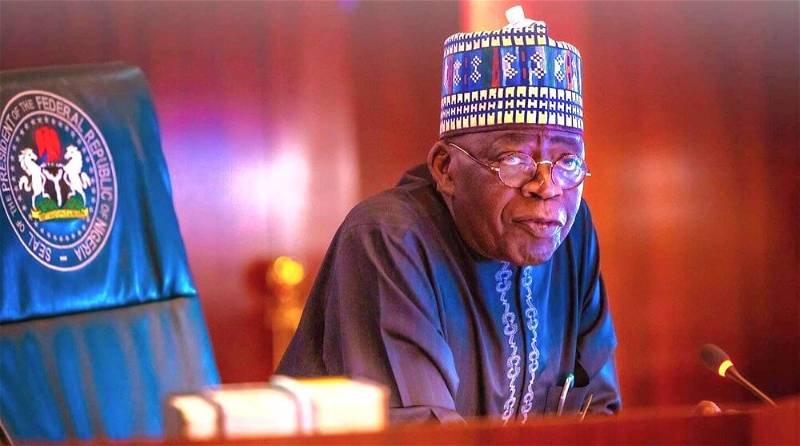
The Presidency on Sunday defended President Bola Ahmed Tinubu’s economic reforms, dismissing former Vice President Atiku Abubakar’s criticisms as outdated, misleading and politically motivated.
In a detailed statement titled, “Facts, Not Fear: A Point-by-Point Response to Atiku Abubakar on Nigeria’s Reform Journey,” the Presidency said Atiku’s assessment of the administration’s economic policies was based on 2024 data and failed to reflect developments recorded over the past two years.
The statement accused the former vice president of portraying “yesterday’s data as today’s reality” and argued that economic reforms should be judged over time rather than by their initial pains.
It said, “The Nigerian economy that underwent painful adjustment in 2024 has evolved considerably,” adding that Nigeria’s dollar-denominated Gross Domestic Product (GDP) had recovered from about $253 billion after the exchange rate adjustment to approximately $377 billion, while naira GDP rose from about ₦314 trillion to around ₦530 trillion.
- ‘They Stole A Lot Of Phones At My Wedding, I Don Pay Tire’ – Peller Laments
- Police Arrest Umuahia Barber After Pot Filled With Human Hair Was Found In His Home
Responding to Atiku’s allegations of fiscal recklessness and excessive borrowing, the Presidency maintained that borrowing should be assessed alongside the country’s economic capacity and the purpose for which loans are obtained.
It argued that Nigeria’s debt-to-GDP ratio remained “barely 40 per cent,” which it described as relatively modest compared to several African and developed economies. The statement also said the country’s debt service-to-revenue ratio had declined from nearly 100 per cent in December 2022 to less than 60 per cent under the Tinubu administration.
On the removal of fuel subsidy, the Presidency insisted the policy had significantly improved revenues accruing to states and local governments through the Federation Account Allocation Committee (FAAC), enabling subnational governments to invest more in infrastructure, healthcare, education and social programmes.
It said previous administrations, including the one in which Atiku served as vice president, failed to end the subsidy regime despite acknowledging its fiscal burden.
The statement also defended the administration’s tax reforms, rejecting claims that the government was imposing heavier taxes on Nigerians.
According to the Presidency, the reforms were designed to ease the tax burden on low-income earners and small businesses while ensuring wealthier individuals and profitable enterprises contributed more through improved tax compliance.
Highlighting achievements in the social sector, the Presidency said more than 3,000 primary healthcare centres had been upgraded, over 78,000 frontline health workers retrained, and more than 100 facilities now provide free caesarean sections for indigent mothers. It also cited investments in education, including the Nigerian Education Loan Fund (NELFUND), which it said had benefited over 1.64 million students with more than ₦303 billion disbursed.
The Presidency further rejected Atiku’s claim that the government had failed to account for an alleged ₦7.98 trillion oil windfall, describing the figure as analytically flawed.
It explained that although global oil prices exceeded budget benchmarks, crude oil production remained below projections, while factors such as production costs, revenue-sharing arrangements and forward crude sale contracts affected actual government earnings.
The statement acknowledged that the reforms had imposed hardships on Nigerians but argued that they were necessary to correct longstanding structural distortions in the economy.
It said the administration remained focused on improving macroeconomic stability, expanding opportunities and strengthening institutions, insisting that “the worst is over” as inflation was projected to continue declining after temporary disruptions caused by the Middle East conflict









PAN Lauds Oluyede, Troops For Improved Security Nationwide, Calls For Stronger Citizen Support

NAICOM Boss Olusegun Ayo Omosehin Must Go Immediately — Group Demands Suspension Over Explosive EFCC Petition, Warns Insurance Sector Collapse

2026 Ballon D’Or: Best Player At World Cup – De Paul Names Footballer To Win

Now Hiring: Academic and Technical Staff at a Leading Private University in Gombe State

LAUTECH 18th Convocation: EEE Class ’05 Alumni Celebrate as Electronic and Electrical Engineering Department Produced the School’s Overall Best Graduating Student


