
Opinion
A 12-POINT LETTER TO NDIGBO, BY VALENTINE OZIGBO

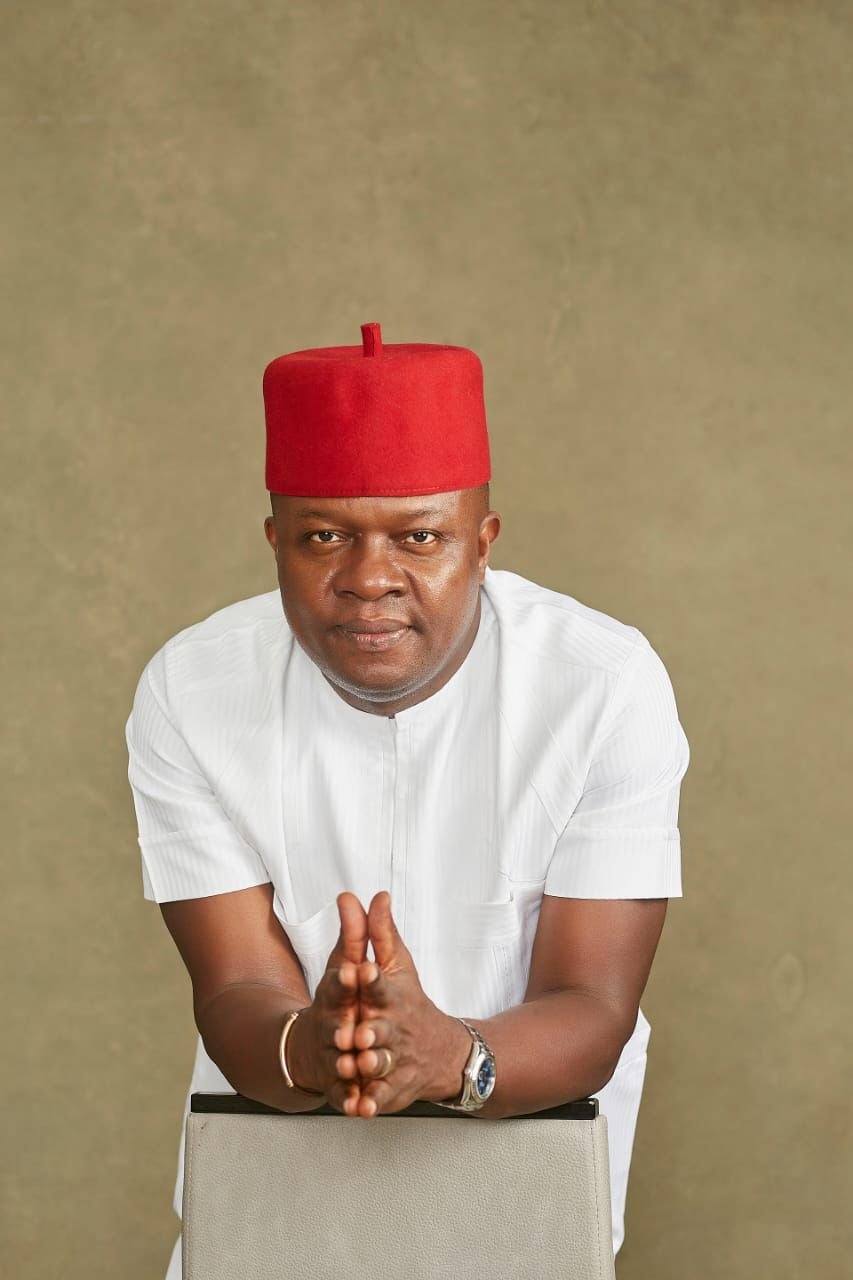
My beloved Ndigbo,
I write to you today with a sober heart and a renewed conviction. In the last few weeks, the Lord has taken me on a deep journey, a journey of reflection, rediscovery, and spiritual awakening.
Three profound moments have stirred my spirit and compelled me to speak now.
- My visit to our brother, Mazi Nnamdi Kanu, the thoughtful and far-reaching conversations we held, some of which I hope to share in due course, and the reactions that followed the court’s pronouncements concerning him.
- The deepening insecurity across our nation, which has placed Nigeria in international headlines for reasons that trouble every conscientious citizen.
- A series of deep engagements with respected leaders, one of which prompted me to pick up and begin reading the remarkable book, The Interesting Narrative by Olaudah Equiano. The opening chapters alone shook me in a way I did not expect.
All these encounters, along with the deep stirrings within my spirit, have made it clear to me that we have entered a very consequential season in our collective story.
Before I go further, let me state clearly:
I do not come to you as one who claims perfect knowledge, nor as a man seeking to speak from a lofty place. I speak as your brother — an Igbo man, a Nigerian, and a citizen who longs to see our story redeemed in our own lifetime because I believe, unshakably, in the possibility of our collective renewal. I write because the burden within me has grown too heavy to keep unspoken, and if these words strengthen even one soul or awaken one conscience, then they have served their purpose.
My people, these are not ordinary days. We have stepped into a prophetic hour, a sacred season in which heaven begins to reorder the destiny of a people who have carried pain with dignity, endured hardship with courage, and yet, by the mercy of God, remained standing when many expected them to fall.
*1. Understanding God’s Seasons
The Holy Scriptures remind us that God moves with purpose through times and seasons. When Israel wandered in the wilderness for forty years, even the intercession of Moses could not shorten that appointed journey. God may comfort us within a process, but He never acts outside His own timing.
This is why Jeremiah 29 speaks with unusual relevance in this moment.
Jeremiah addressed a nation living in exile, a people wounded and confused, surrounded by voices that promised instant deliverance. Yet God’s message through him was unmistakable: Their season had a divinely established duration of seventy years.
No rebellion, no emotion, and no impatience could alter what heaven had ordained.
But restoration was assured. Their pain was not abandonment. It was preparation.
Jeremiah 29 teaches us a profound truth: Nations also move on divine calendars, and when the appointed hour arrives, no empire and no opposition can stand in the way of God’s redemption.
*2. Who Are God’s People in This Hour?
God’s covenant people are all who believe in Him and choose to walk in His truth. They include both the natural heirs and those adopted into grace, united not by ancestry alone but by faith, obedience, and alignment with His will.
Yet when one studies our history with spiritual clarity, a pattern becomes unmistakable. Through years of migration, resilience, hardship, and remarkable preservation, the Igbo story carries the imprint of a people with a distinct covenant identity.
A people scattered but never shattered.
A people wounded but never defeated.
A people misunderstood but continually preserved.
Our journey echoes that of ancient Israel in ways too profound to ignore. We resemble the prodigal son, still heirs, still loved, still destined, finding our way back to identity, responsibility, and purpose. Every renaissance begins with such rediscovery.
*3. Our Prophetic Timeline
From independence until this very moment, we have lived through cycles of promise and heartbreak. Many have discerned that we are travelling through a prophetic season, a time of refining, awakening, and quiet preparation for something greater than we have yet seen — a new chapter in our national story.
I cannot claim certainty about the moment of God’s intervention. But in my spirit, I sense that Nigeria, and especially the Igbo nation, is at the threshold of a divine realignment, a sacred turning point.
My own journey, marked by trials, moments of miraculous deliverances, profound spiritual awakenings, and the steady hand of providence, has taught me one enduring truth: when we align spiritually, morally, politically, and culturally, we create the conditions for a new era of healing and national renewal.
*4. Prophetic Witnesses Confirming This Season
God has never left His people without a witness. Across generations and across nations, He raises voices that help us discern the moment.
In this season, several respected spiritual leaders have spoken words that echo with unusual clarity.
Pastor Paul Adefarasin, before the 2023 elections, declared, “Saul came before David. Saul will come, and David will come after.”
Pastor David Ibiyeomie, speaking directly to the Igbo question, affirmed, “What is happening to the Igbo man in Nigeria is not normal… it is spiritual… but the Igbo will soon see the light.”
Bishop David Oyedepo, calling our nation back to unity, reminded us, “No tribe owns this country. We own this nation together.”
Prophet Tomi Arayomi, speaking on divine timing, announced, “Nigeria has five years until the next divine visitation.” And in a personal conversation with him, he reiterated something that resonated deeply in my spirit: that the Igbo carry a strategic part in God’s unfolding plan for Nigeria at this moment in history.
President Olusegun Obasanjo, Cardinal John Onaiyekan, and Professor PLO Lumumba have each, in their own distinct voice, acknowledged the remarkable contribution of the Igbo to African civilisation. Their affirmations echo what history already records: the Igbo spirit of enterprise, resilience, creativity, and moral courage is one of the great gifts God has placed within the African story.
Recently, I had a deeply enriching conversation with Reverend Ladi Thompson, who spoke with clarity about the continental responsibility carried by the Igbo. This responsibility becomes visible whenever we rise to our highest selves. Our discussion stirred something within me, and it was through his counsel that I returned to the extraordinary story of Olaudah Equiano.
These affirmations point us to one truth:
The Igbo are not merely an ethnic group.
We are a civilisational force, creative, unbreakable, resilient, and essential to the rebirth of Africa.
And running through all these voices is one divine whisper:
“Ndi Igbo, you are seen.
You are valued.
Your sacrifices are known.
Your contributions are undeniable.
But your future must be reclaimed with humility, purity, and wisdom.
Rise to the responsibility of destiny.”
*5. Lessons from Olaudah Equiano
Born in 1745, kidnapped from his home at 11, sold into slavery, and later freed at 21, Equiano rose to become one of the most influential abolitionists the world has ever known. Yet beyond the arc of his achievements, what moved me most was his grasp of divine providence.
He saw God’s hand guiding every chapter. Each hardship was a classroom. Each season of pain was preparation. Through the seasons of his life, he believed that he was always exactly where God needed him to be. He understood that his journey was never about personal triumph, but about divine purpose unfolding through him.
One of his most powerful reflections reads, “Trials and disappointments are sometimes for our good. God might have permitted this to teach me wisdom and resignation; for He had hitherto shadowed me with the wings of His mercy, and by His invisible hand brought me by a way I knew not.”
Equiano’s life offers a prophetic echo of who we are as a people: Kidnapped yet preserved. Oppressed yet unbroken. Dismissed yet essential to history’s unfolding. Scarred yet lifted by God to shape the destiny of nations.
His life teaches us that adversity is not the end of purpose. Often, it is the very soil in which destiny takes root, and those who endure the night with faith are often the ones trusted with the dawn.
*6. We Are the Judea People of Today
The arc of our history bears a striking resemblance to the ancient Judeans. We have walked through seasons marked by pogroms, war, displacement, misunderstanding, and astonishing resilience. We have been scattered yet productive, wounded yet unstoppable, diminished yet never erased.
And just as Judea rediscovered itself when its prophetic time was fulfilled, so too are the Igbo approaching a moment where our identity, our history, and our divine assignment converge. What looked like loss becomes preparation, and what felt like exile becomes the pathway home.
*7. Davids and Samuels — A Generation, Not One Man
It is essential to understand that the David we await is not a single heroic figure, nor is the Samuel of this time a lone prophet with exclusive access to God. Heaven is summoning a generation that carries both courage and discernment.
He is raising Davids who are courageous, humble, pure in intention, and ready to serve. He is raising Samuels who discern with accuracy, speak with truth, correct with love, and carry the fire of the Spirit without fear.
God does not recruit through lineage or privilege. He looks for purity.
Whoever purifies the heart can become an instrument of change in this hour.
*8. God’s Formula for National Healing — 2 Chronicles 7:14
Nations do not stumble into renewal. God has already revealed the pathway:
“If My people who are called by My name shall humble themselves, and pray, and seek My face, and turn from their wicked ways; then will I hear from heaven, forgive their sins, and heal their land.”
This is not a poetic flourish. It is an instruction, a covenant, Heaven’s contract with Earth. If we embrace humility, repentance, righteousness, and purity of heart, God Himself promises to step into our story, cleanse our wounds, and heal our land. It is guaranteed by the One who cannot lie.
*9. Destiny Requires Purity and Responsibility
Umunnem, ihe na-eme anyi si anyi na aka. (Our hands determine our destiny.)
Our greatest need today is to return to our Chi — our God — as the centre of our individual and collective lives.
Our wealth is not the problem.
Our creativity is not the problem.
Our ambition is not the problem.
The problem begins when these blessings start to substitute for God, becoming idols of pride, excess, or vanity.
Prosperity is not a sin. Idolatry is.
Wealth with purpose is God’s desire.
A blessed Igbo nation is needed for Africa’s renewal. Our influence becomes spiritual power only when it is surrendered to God.
*10. A Word to Fellow Nigerians from Our Sister Ethnic Nationalities— You Too Are Special
Every tribe in Nigeria carries a unique grace. Each tribe, each region, each culture brings its own brilliance to the national story.
My message to Ndigbo is not a declaration of superiority, but a reminder of a sacred responsibility, to call us back to our highest selves. The renaissance of the Igbo nation should be a gift to Nigeria’s common good, not a cause for anxiety. When Ndigbo flourish, we strengthen the federation we all share.
Unity in diversity must become our collective strength.
*11. Returning to Our Source
Let us return to God our Father; Jesus Christ our Redeemer; the Holy Spirit, our Guide.
And let us continually seek the covering of the Blessed Virgin Mary.
Nothing can stop a people anchored on God. To them who believe, nothing shall be impossible.
*12. A Call to Ndigbo
My people, we are closer to restoration than we realise. But destiny does not come to a divided or impure people.
The hour calls for CUSP: Courage. Unity. Strategy. Purity.
And a rising generation of Valiant men and women
This is our moment, and we must embrace it.
*CLOSING PRAYER
I urge every ezigbo nwafo Igbo reading this letter to kneel and pray:
Heavenly Father,
We thank You for Your mercy, Your timing, and Your plans for Ndigbo.
Purify our hearts.
Cleanse our land.
Raise Davids.
Raise Samuels.
Make us a people You can trust with destiny.
Through Christ our Lord.
Amen.
Daalu nu, Umunne m.
With deep respect and in service,
*Valentine Ozigbo
2025 Anambra Governorship Aspirant
Founder, VCO Foundation
Founder, The Valiant Movement
Immediate Past President & Group CEO, Transcorp Plc
Recipient of Seven Stars Leadership & Governance Excellence Medal 2025
By Gambo Jagindi
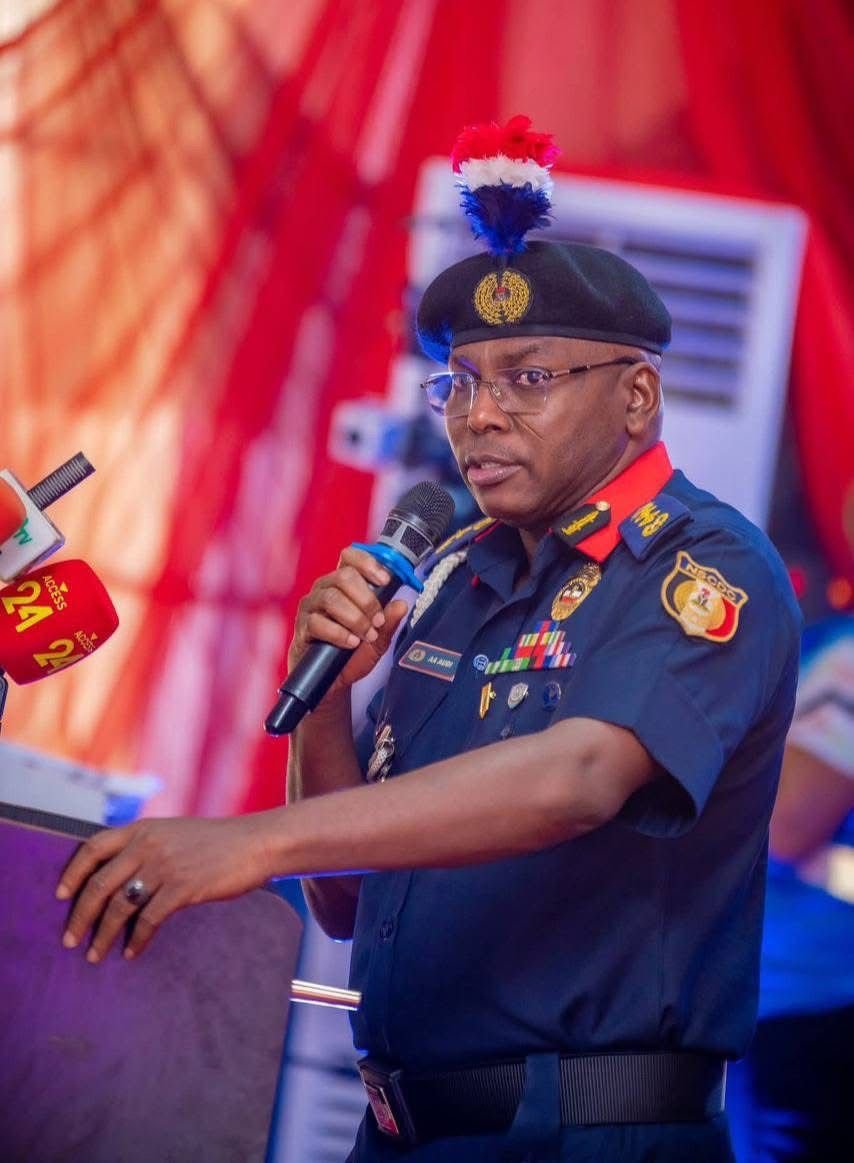
Nigeria’s security landscape has been indelibly marked by the tenure of Professor Ahmed Abubakar Audi as Commander General of the Nigerian Security and Civil Defense Corps (NSCDC). As he completes his five-year term, stakeholders are lauding his unwavering commitment to excellence and visionary leadership that has transformed the corps into a world-class security agency.
Born on September 30, 1967, in Laminga, Nasarawa State, Professor Audi’s rise to the top is a testament to his unrelenting pursuit of excellence. With a PhD in Public Administration, a Master’s in Law Enforcement and Criminal Justice, and a Bachelor’s degree in Physical and Health Education, he joined the NSCDC in 1996 as a volunteer and steadily climbed the ranks, earning several professional merit awards, including the Distinguished Merit Award for Excellence in Administration and Security Operations. He is a member of the National Institute (mni) and a Fellow of the Institute of Security and Forensic Studies, Nigeria.
Under Professor Ahmed Abubakar Audi’s stewardship, the NSCDC has achieved remarkable milestones, including notable apprehensions and improved security measures, while significantly boosting staff morale and inspiring a new generation of security personnel, cementing his reputation as a visionary leader in the security sector, and leaving an indelible mark on Nigeria’s security landscape .
Audi’s five-year tenure has been marked by a steady commitment to fairness and inclusivity. By ensuring federal character in appointments and promotions, he has addressed longstanding disparities and boosted staff morale. The payment of backlog promotions and arrears has put smiles on the faces of deserving officers, reflecting positively on the corps’ leadership. This emphasis on equity has created a more motivated workforce, positioning the NSCDC for continued success under Professor Audi’s leadership, which stakeholders are urging to be extended
Marking the completion of his five-year tenure, the NSCDC boss recently commissioned five strategic projects to boost the corps’ operational capacity, showcasing his visionary leadership. The projects include a Standard Mini Fire Fighting Station, a VIP Protection Unit Office Complex, the Hydrocarbon and Maritime Security Command and Control Centre, and a 24-Unit Staff Quarters. As Professor Audi concludes his first term, stakeholders are calling on President Bola Ahmed Tinubu to extend his service, citing his dedication, patriotism, and excellence. With his continued service, Nigeria’s security architecture stands to gain significantly, and his leadership would remain a driving force for progress and stability. The nation would benefit from his expertise and experience, making a strong case for his tenure extension
Also as Nigeria hurtles towards the 2027 election, the need for seasoned security leadership has never been more pressing. Professor Ahmed Abubakar Audi, the outgoing Commander General of the Nigerian Security and Civil Defense Corps (NSCDC), is uniquely positioned to provide the steady hand required to ensure a peaceful and secure electoral process. With his proven track record of collaboration with sister security agencies, Professor Audi is well-equipped to lead the charge in protecting critical national assets and providing the desired security cover for the election.
Some Nigerians are advocating for the extension of Professor Ahmed Abubakar Audi’s tenure as NSCDC head, citing his proven expertise and strong relationships with other security agencies. Retaining him for at least two more years, they argue, would ensure a secure environment for the 2027 election, with critical infrastructure protected, election-related violence prevented, and law and order maintained. This, they believe, would bolster Nigerians’ confidence in the electoral process, making a strong case for President Bola Ahmed Tinubu to consider retaining Professor Audi’s services, given his wealth of experience and demonstrated patriotism.
Jagindi is a digital media publisher who writes from Abuja via jagindi2016@gmail.com
By Philip Agbese
Nigeria’s democracy has gotten to a point where the resilience of our noble institutions is constantly tested by the intensity of agreement and disagreement in parliamentary Chambers. It is precisely in such moments we see ideas collide, voices of opposition rise, and passions sometimes threaten to overwhelm procedure that shows leadership should be seen beyond just title.
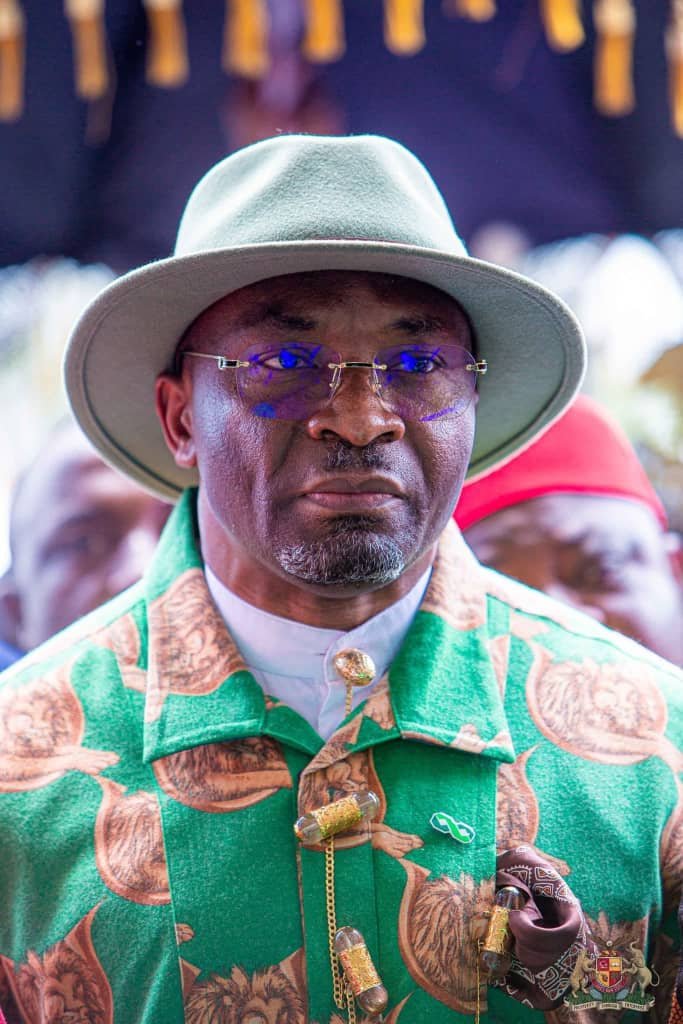
The recent deliberations surrounding the amended Electoral Act 2026 has further revealed Rt. Hon. Benjamin Kalu, who is the Deputy Speaker, to be an outstanding leader in the Nigerian House of Representatives. His conduct has undoubtedly express emotional intelligence, institutional fidelity, and democratic maturity. Kalu’s capacity to read the room without being ruled by it, and to act decisively without becoming dismissive, has in truth become a far more demanding attribute that is worthy of emulation. It was this quality that defined Benjamin Kalu’s leadership during one of the most contentious legislative exercises in the House.
However, the atmosphere recently felt inside the chamber during the clause-by-clause consideration of the Electoral Act amendment was electric in the sense that tempers frayed, tensions flared, and opposition lawmakers staged protests over the removal of the “real-time” transmission clause. It is well understood that the phrase itself; “real-time transmission,” had over time, assumed a symbolic weight which goes beyond its technical meaning. Within the House and in the imagination of the public, it has become a shorthand for electoral credibility, transparency, and the collective yearning by Nigerians for a system they could trust. At this point, it was, in essence, what Nigerians wanted.
Yet, while many lawmakers were understandably engrossed on the symbolic power of real-time transmission, an essential question which was barely asked by anyone amidst the echoes of protest is: what will happen when the imperfect realities of technology, and human systems occur during electoral exercise?
The debatable controversy surrounding real-time transmission reveals a deep philosophical divide that exist in governance. On one side, we have those who viewed the provision as non-negotiable electoral reform, while on the other side were lawmakers who support the electronic transmission in principle and also advocate for a safeguard-manual collation in the event of technological failure. The later was not a rejection of progress but an acknowledgment of contingency.
It is a general knowledge that in a country like Nigeria, server fluctuations, network instability, technological imperfections are not just hypothetical but lived experience. Therefore, the insistence on a single, inflexible method of conduct is a big democratic risk. It was this inconvenience that Hon. Kalu perceived the necessity of the right intervention, even as the opposition chants reverberated through the chamber.
Presiding over proceedings like this is a task that requires more than just the mastery of House rules, one that demands the sensitivity of managing human behaviour under stress. This was the confrontation before the deputy speaker: how would he uphold the rules of the House, protect minority voices, and ensure that dissent was heard, while also preventing the legislature from being held hostage by procedural brinkmanship.
As protests erupted over the removal of the real-time transmission clause, Hon. Kalu didn’t allow frustration to harden into rigidity, he chose a more demanding route. He gave room to the opposition lawmakers to vent their grievances. At the same time, he showed an affirmation of institutional integrity as he remained anchored to the rules governing legislative debate, insisting that the House must proceed, clause by clause, regardless of the volume of objections. His refusal to personalise the conflict along political line was an applaudable move that distinguished the deputy speaker’s conduct as a hallmark of emotional intelligence.
Hon. Kalu’s intervention showed a precise confrontation about idealism and realism. While opposition voices kept hitting on the removal of an absolute real-time clause as betrayal of public trust, the Deputy Speaker stood firm on the realty that rigidity can itself undermine credibility, because he believes that an electoral process that collapses because of issues with server or disruption in network does not serve democracy; but imperils it. His decision to steer the House retaining electronic transmission while permitting manual collation in the event of technological failure, has created a trustworthy legal framework.
It is important to understand that this outcome wasn’t from a place of partisan manoeuvring or one that pits the government against opposition. It is one that cut across party lines, standing as broad agreement on the desirability of electronic transmission. At this point, the law was only left to acknowledge the possibility of technological imperfections. In this sense, the Deputy Speaker’s role was not to advance a party agenda but to reconcile competing anxieties within the same democratic family.
Surprisingly, throughout the proceedings, the Deputy Speaker remained conspicuously focused even amidst the turbulence created by opposition’s protests. His demeanour at that moment conveyed a quiet message that the House would not be distracted from its duty. Hon. Kalu listened, he ruled, and he moved the process forward. He also ensured that that the amended Electoral Act 2026 was eventual passed.
At the end of the session, the law emerged not as the imposition of a dominant faction but as the product of legislative process that has undergone exhaustive and contentious sessions. Through the result of achieving a balanced outcome, the Deputy Speaker demonstrated that emotional intelligence is not opposed to rationality; it enhances it. This dual recognition has proven that the institution itself speaks louder than any individual voice, and this is the essence of responsible lawmaking by intelligent lawmakers.
It is also worthy of note that the true beneficiary of the Deputy Speaker’s display of high intellect is not a party or faction, but the Nigerian democratic project itself. His effort to prevent the House from descending into procedural chaos, has protected the credibility of the legislature, most especially at a time when public trust has become so fragile and precious at the same time.
Moreover, only few leaders who, like Hon. Kalu, can acknowledge the need of agreements in building institutions towards solutions that would create enduring services. He understood that the authority of the chair derives not from force but from fairness. Kalu has always interpret and enforce rules within the house without appearing partisan; and he has been guiding debates without dictating outcomes.
Kalu’s conduct during the passage of the amended Electoral Act embodies the essence of leadership, one that defines it to be much of temperament as it is about intellect. This exemplary action calls for more presence of intellectual leaders like Kalu in Nigeria’s democratic journey, because history would be a good judge of the amended Electoral Act 2026 on its practical outcomes in future elections. However, regardless of how those outcomes would unfold, the process by which the law was passed will always stand as a guide for future leaders.
This is a feat that should indeed be celebrated by all Nigerians rather than being condemned. Without doubt, the Deputy Speaker has demonstrated that emotional intelligence is not an abstract concept but a lived practice that strengthens democracy itself when exercised with integrity.
Agbese, Deputy Spokesperson of the House of Representatives, writes from Apa-Agila.
APPRAISING MILITARY RESOLVE AND THE PATH TO SUSTAINABLE OIL SECURITY
By Aaron Mike Odeh
On a recent media assessment visit by the Director, Defence Media Operations, Major General Michael E Onoja on the 20 January 2026, the General Officer Commanding (GOC), 6 Division of the Nigerian Army and Commander Land Component Operation DELTA SAFE, Major General Emmanuel Emeka, stated that there will be “no more pipeline vandalism in the Niger Delta” indicating a strong affirmation of military resolve and institutional confidence in the ongoing operations within Nigeria’s most economically strategic region.
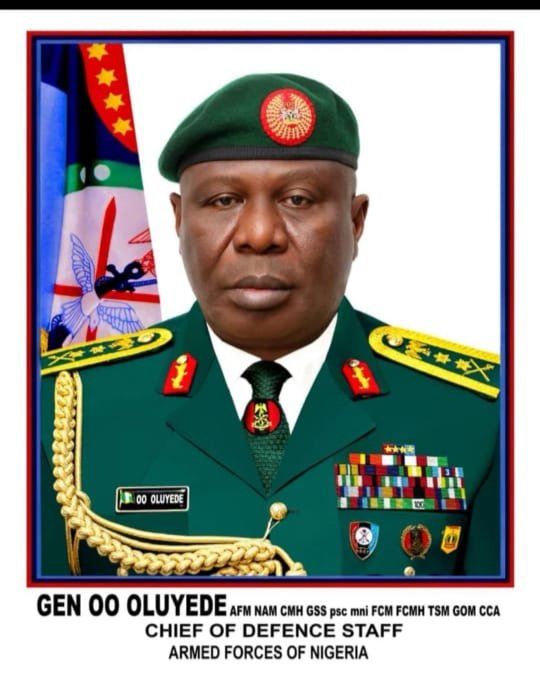
Far from being a casual statement, the pronouncement reflects the operational posture, command clarity, and renewed determination of the Nigerian Armed Forces (AFN) under the leadership of General Olufemi Oluyede. It signals a clear message: the era of unchecked sabotage of national economic assets is being decisively confronted.
CONTEXTUALISING THE GOC’S DECLARATION
Statements of this magnitude from a serving GOC carry both symbolic and operational weight. They are rooted in firsthand command experience, intelligence assessments, and measurable gains on the ground. In this regard, Major General Emmanuel Emeka’s assertion should be understood as a projection of confidence derived from sustained military engagement, improved coordination with sister security agencies, and enhanced operational discipline within the 6 Division’s area of responsibility.
The Niger Delta has long posed complex security challenges due to its difficult terrain, extensive pipeline networks, and the activities of organised criminal syndicates. Against this backdrop, the GOC’s declaration underscores a belief that the Nigerian Armed Forces has reached a level of operational advantage sufficient to deter, disrupt, and dismantle pipeline vandalism networks.
OPERATIONAL GAINS AND MILITARY PROFESSIONALISM
Under Major General Emmanuel Emeka’s command, the 6 Division has intensified patrols, improved intelligence-led operations, and sustained pressure on illegal refining camps and crude oil theft routes. These efforts align with the Federal Government’s strategic objective of securing oil infrastructure as a matter of national economic security.
The GOC’s statement therefore reflects not mere optimism, but a professional assessment of the division’s growing capacity to dominate the operational environment. It also reinforces the Nigerian Armed Forces constitutional role as a stabilising force, committed to safeguarding national assets in support of economic recovery and investor confidence.
THE “BUT”: BEYOND KINETIC SUCCESS
While commending the resolve and achievements of the 6 Division, it is equally important to situate the declaration within a broader national framework. The “but” in the statement should not be interpreted as doubt or contradiction; rather, it represents an acknowledgment of the multifaceted nature of pipeline security in the Niger Delta.
Pipeline vandalism has historically been sustained not only by criminal intent, but also by socioeconomic pressures, environmental degradation, and the absence of alternative livelihoods in some host communities. Military success, while indispensable, achieves greater durability when complemented by effective civil governance, economic inclusion, and community trust-building.
COMMUNITY ENGAGEMENT AS A FORCE MULTIPLIER
One of the strengths of recent military operations in the Niger Delta has been improved civil-military relations. The success of the Armed Forces is closely tied to cooperation from local communities, traditional institutions, and credible stakeholders.
Sustainable pipeline security is most effective when host communities become partners in protection rather than passive observers. The GOC’s declaration implicitly places responsibility on all stakeholders—government agencies, oil companies, community leaders, and youths—to consolidate the gains made by the Armed Forces.
INSTITUTIONAL SYNERGY AND NATIONAL RESPONSIBILITY
The efforts of the 6 Division do not exist in isolation. They form part of a wider national security ecosystem involving regulatory agencies, intelligence services, law enforcement bodies, and policy institutions. The GOC’s confidence should therefore inspire complementary actions across these sectors.
Oil companies must uphold environmental standards and transparent community engagement. Regulatory bodies must enforce accountability. Development agencies must deliver visible dividends of peace. These non-military actions reinforce the security umbrella provided by the Nigerian Armed Forces.
LEADERSHIP AND STRATEGIC MESSAGING
Major General Emmanuel Emeka’s statement also serves as strategic communication—boosting troop morale, reassuring investors, and reinforcing public confidence in the Armed Forces of Nigeria. Such leadership messaging is essential in shaping national narratives around security, discipline, and state authority.
By articulating a firm stance against pipeline vandalism, the GOC is not only commanding troops, but shaping expectations and setting benchmarks for operational success.
CONCLUSION
The declaration that there will be “no more pipeline vandalism in the Niger Delta” should be seen as a reflection of strengthened military capacity, improved leadership focus, and renewed institutional confidence under Major General Emmanuel Emeka, GOC 6 Division of the Armed Forces.
The Nigerian Armed Forces has demonstrated readiness to secure critical national assets. The task ahead is to consolidate these gains through sustained operations, inter-agency synergy, and socio-economic interventions that address underlying vulnerabilities.
In this context, the GOC’s statement stands as both an assurance and a call to collective national responsibility—one that deserves commendation, support, and strategic follow-through.
Aaron Mike Odeh, a Public Affairs Analyst Media Consultant and Community Development Advocator wrote from Post Army Housing Estate Kurudu Abuja


54 Garlands To A Performer: Happy Birthday To Governor Peter Mbah

Nigeria is a Country with Rule of Law Under Renewed Hope Agenda – Military Veterans Caution Nigerian Army Over Land Grabbing
New Petrol Import Permits May Reverse Nigeria’s Push for Domestic Refining and Increase Pressure on Foreign Reserve” — Energy Policy Group Tells President Tinubu
-

 Cover7 months ago
NRC to reposition train services nationwide.. Kayode Opeifa
-

 Fashion9 years ago
These ’90s fashion trends are making a comeback in 2017
-
Entertainment9 years ago
The final 6 ‘Game of Thrones’ episodes might feel like a full season
-
 Opinion1 year ago
Bureaucratic Soldier, Kana Ibrahim heads Ministry of Aviation and Aerospace After Transformative Tenure at Defence
-
 Opinion1 year ago
Hon. Daniel Amos Shatters Records, Surpasses Predecessor’s Achievements in Just Two Years
-
 Opinion4 months ago
Barrister Somayina Chigbue, Esq: A rising legal leader shaping institutioal excellence in Nigeria
-

 News8 months ago
Nigerian Nafisa defeats 69 Countries at UK Global Final English Competition
-
 Special Report1 year ago
Golden Jubilee: Celebrating Tein Jack-Rich’s Life of Purpose and Impact