
Opinion
Benjamin Kalu: Demonstrating Emotional Intelligence In Turbulent Times

By Philip Agbese
Nigeria’s democracy has gotten to a point where the resilience of our noble institutions is constantly tested by the intensity of agreement and disagreement in parliamentary Chambers. It is precisely in such moments we see ideas collide, voices of opposition rise, and passions sometimes threaten to overwhelm procedure that shows leadership should be seen beyond just title.
The recent deliberations surrounding the amended Electoral Act 2026 has further revealed Rt. Hon. Benjamin Kalu, who is the Deputy Speaker, to be an outstanding leader in the Nigerian House of Representatives. His conduct has undoubtedly express emotional intelligence, institutional fidelity, and democratic maturity. Kalu’s capacity to read the room without being ruled by it, and to act decisively without becoming dismissive, has in truth become a far more demanding attribute that is worthy of emulation. It was this quality that defined Benjamin Kalu’s leadership during one of the most contentious legislative exercises in the House.
However, the atmosphere recently felt inside the chamber during the clause-by-clause consideration of the Electoral Act amendment was electric in the sense that tempers frayed, tensions flared, and opposition lawmakers staged protests over the removal of the “real-time” transmission clause. It is well understood that the phrase itself; “real-time transmission,” had over time, assumed a symbolic weight which goes beyond its technical meaning. Within the House and in the imagination of the public, it has become a shorthand for electoral credibility, transparency, and the collective yearning by Nigerians for a system they could trust. At this point, it was, in essence, what Nigerians wanted.
Yet, while many lawmakers were understandably engrossed on the symbolic power of real-time transmission, an essential question which was barely asked by anyone amidst the echoes of protest is: what will happen when the imperfect realities of technology, and human systems occur during electoral exercise?
The debatable controversy surrounding real-time transmission reveals a deep philosophical divide that exist in governance. On one side, we have those who viewed the provision as non-negotiable electoral reform, while on the other side were lawmakers who support the electronic transmission in principle and also advocate for a safeguard-manual collation in the event of technological failure. The later was not a rejection of progress but an acknowledgment of contingency.
It is a general knowledge that in a country like Nigeria, server fluctuations, network instability, technological imperfections are not just hypothetical but lived experience. Therefore, the insistence on a single, inflexible method of conduct is a big democratic risk. It was this inconvenience that Hon. Kalu perceived the necessity of the right intervention, even as the opposition chants reverberated through the chamber.
Presiding over proceedings like this is a task that requires more than just the mastery of House rules, one that demands the sensitivity of managing human behaviour under stress. This was the confrontation before the deputy speaker: how would he uphold the rules of the House, protect minority voices, and ensure that dissent was heard, while also preventing the legislature from being held hostage by procedural brinkmanship.
As protests erupted over the removal of the real-time transmission clause, Hon. Kalu didn’t allow frustration to harden into rigidity, he chose a more demanding route. He gave room to the opposition lawmakers to vent their grievances. At the same time, he showed an affirmation of institutional integrity as he remained anchored to the rules governing legislative debate, insisting that the House must proceed, clause by clause, regardless of the volume of objections. His refusal to personalise the conflict along political line was an applaudable move that distinguished the deputy speaker’s conduct as a hallmark of emotional intelligence.
Hon. Kalu’s intervention showed a precise confrontation about idealism and realism. While opposition voices kept hitting on the removal of an absolute real-time clause as betrayal of public trust, the Deputy Speaker stood firm on the realty that rigidity can itself undermine credibility, because he believes that an electoral process that collapses because of issues with server or disruption in network does not serve democracy; but imperils it. His decision to steer the House retaining electronic transmission while permitting manual collation in the event of technological failure, has created a trustworthy legal framework.
It is important to understand that this outcome wasn’t from a place of partisan manoeuvring or one that pits the government against opposition. It is one that cut across party lines, standing as broad agreement on the desirability of electronic transmission. At this point, the law was only left to acknowledge the possibility of technological imperfections. In this sense, the Deputy Speaker’s role was not to advance a party agenda but to reconcile competing anxieties within the same democratic family.
Surprisingly, throughout the proceedings, the Deputy Speaker remained conspicuously focused even amidst the turbulence created by opposition’s protests. His demeanour at that moment conveyed a quiet message that the House would not be distracted from its duty. Hon. Kalu listened, he ruled, and he moved the process forward. He also ensured that that the amended Electoral Act 2026 was eventual passed.
At the end of the session, the law emerged not as the imposition of a dominant faction but as the product of legislative process that has undergone exhaustive and contentious sessions. Through the result of achieving a balanced outcome, the Deputy Speaker demonstrated that emotional intelligence is not opposed to rationality; it enhances it. This dual recognition has proven that the institution itself speaks louder than any individual voice, and this is the essence of responsible lawmaking by intelligent lawmakers.
It is also worthy of note that the true beneficiary of the Deputy Speaker’s display of high intellect is not a party or faction, but the Nigerian democratic project itself. His effort to prevent the House from descending into procedural chaos, has protected the credibility of the legislature, most especially at a time when public trust has become so fragile and precious at the same time.
Moreover, only few leaders who, like Hon. Kalu, can acknowledge the need of agreements in building institutions towards solutions that would create enduring services. He understood that the authority of the chair derives not from force but from fairness. Kalu has always interpret and enforce rules within the house without appearing partisan; and he has been guiding debates without dictating outcomes.
Kalu’s conduct during the passage of the amended Electoral Act embodies the essence of leadership, one that defines it to be much of temperament as it is about intellect. This exemplary action calls for more presence of intellectual leaders like Kalu in Nigeria’s democratic journey, because history would be a good judge of the amended Electoral Act 2026 on its practical outcomes in future elections. However, regardless of how those outcomes would unfold, the process by which the law was passed will always stand as a guide for future leaders.
This is a feat that should indeed be celebrated by all Nigerians rather than being condemned. Without doubt, the Deputy Speaker has demonstrated that emotional intelligence is not an abstract concept but a lived practice that strengthens democracy itself when exercised with integrity.
Agbese, Deputy Spokesperson of the House of Representatives, writes from Apa-Agila.
APPRAISING MILITARY RESOLVE AND THE PATH TO SUSTAINABLE OIL SECURITY
By Aaron Mike Odeh
On a recent media assessment visit by the Director, Defence Media Operations, Major General Michael E Onoja on the 20 January 2026, the General Officer Commanding (GOC), 6 Division of the Nigerian Army and Commander Land Component Operation DELTA SAFE, Major General Emmanuel Emeka, stated that there will be “no more pipeline vandalism in the Niger Delta” indicating a strong affirmation of military resolve and institutional confidence in the ongoing operations within Nigeria’s most economically strategic region.
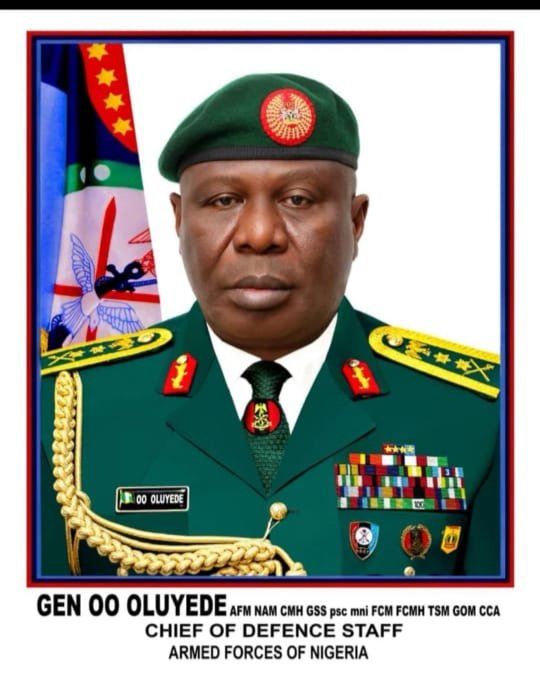
Far from being a casual statement, the pronouncement reflects the operational posture, command clarity, and renewed determination of the Nigerian Armed Forces (AFN) under the leadership of General Olufemi Oluyede. It signals a clear message: the era of unchecked sabotage of national economic assets is being decisively confronted.
CONTEXTUALISING THE GOC’S DECLARATION
Statements of this magnitude from a serving GOC carry both symbolic and operational weight. They are rooted in firsthand command experience, intelligence assessments, and measurable gains on the ground. In this regard, Major General Emmanuel Emeka’s assertion should be understood as a projection of confidence derived from sustained military engagement, improved coordination with sister security agencies, and enhanced operational discipline within the 6 Division’s area of responsibility.
The Niger Delta has long posed complex security challenges due to its difficult terrain, extensive pipeline networks, and the activities of organised criminal syndicates. Against this backdrop, the GOC’s declaration underscores a belief that the Nigerian Armed Forces has reached a level of operational advantage sufficient to deter, disrupt, and dismantle pipeline vandalism networks.
OPERATIONAL GAINS AND MILITARY PROFESSIONALISM
Under Major General Emmanuel Emeka’s command, the 6 Division has intensified patrols, improved intelligence-led operations, and sustained pressure on illegal refining camps and crude oil theft routes. These efforts align with the Federal Government’s strategic objective of securing oil infrastructure as a matter of national economic security.
The GOC’s statement therefore reflects not mere optimism, but a professional assessment of the division’s growing capacity to dominate the operational environment. It also reinforces the Nigerian Armed Forces constitutional role as a stabilising force, committed to safeguarding national assets in support of economic recovery and investor confidence.
THE “BUT”: BEYOND KINETIC SUCCESS
While commending the resolve and achievements of the 6 Division, it is equally important to situate the declaration within a broader national framework. The “but” in the statement should not be interpreted as doubt or contradiction; rather, it represents an acknowledgment of the multifaceted nature of pipeline security in the Niger Delta.
Pipeline vandalism has historically been sustained not only by criminal intent, but also by socioeconomic pressures, environmental degradation, and the absence of alternative livelihoods in some host communities. Military success, while indispensable, achieves greater durability when complemented by effective civil governance, economic inclusion, and community trust-building.
COMMUNITY ENGAGEMENT AS A FORCE MULTIPLIER
One of the strengths of recent military operations in the Niger Delta has been improved civil-military relations. The success of the Armed Forces is closely tied to cooperation from local communities, traditional institutions, and credible stakeholders.
Sustainable pipeline security is most effective when host communities become partners in protection rather than passive observers. The GOC’s declaration implicitly places responsibility on all stakeholders—government agencies, oil companies, community leaders, and youths—to consolidate the gains made by the Armed Forces.
INSTITUTIONAL SYNERGY AND NATIONAL RESPONSIBILITY
The efforts of the 6 Division do not exist in isolation. They form part of a wider national security ecosystem involving regulatory agencies, intelligence services, law enforcement bodies, and policy institutions. The GOC’s confidence should therefore inspire complementary actions across these sectors.
Oil companies must uphold environmental standards and transparent community engagement. Regulatory bodies must enforce accountability. Development agencies must deliver visible dividends of peace. These non-military actions reinforce the security umbrella provided by the Nigerian Armed Forces.
LEADERSHIP AND STRATEGIC MESSAGING
Major General Emmanuel Emeka’s statement also serves as strategic communication—boosting troop morale, reassuring investors, and reinforcing public confidence in the Armed Forces of Nigeria. Such leadership messaging is essential in shaping national narratives around security, discipline, and state authority.
By articulating a firm stance against pipeline vandalism, the GOC is not only commanding troops, but shaping expectations and setting benchmarks for operational success.
CONCLUSION
The declaration that there will be “no more pipeline vandalism in the Niger Delta” should be seen as a reflection of strengthened military capacity, improved leadership focus, and renewed institutional confidence under Major General Emmanuel Emeka, GOC 6 Division of the Armed Forces.
The Nigerian Armed Forces has demonstrated readiness to secure critical national assets. The task ahead is to consolidate these gains through sustained operations, inter-agency synergy, and socio-economic interventions that address underlying vulnerabilities.
In this context, the GOC’s statement stands as both an assurance and a call to collective national responsibility—one that deserves commendation, support, and strategic follow-through.
Aaron Mike Odeh, a Public Affairs Analyst Media Consultant and Community Development Advocator wrote from Post Army Housing Estate Kurudu Abuja
By Grace Ameh
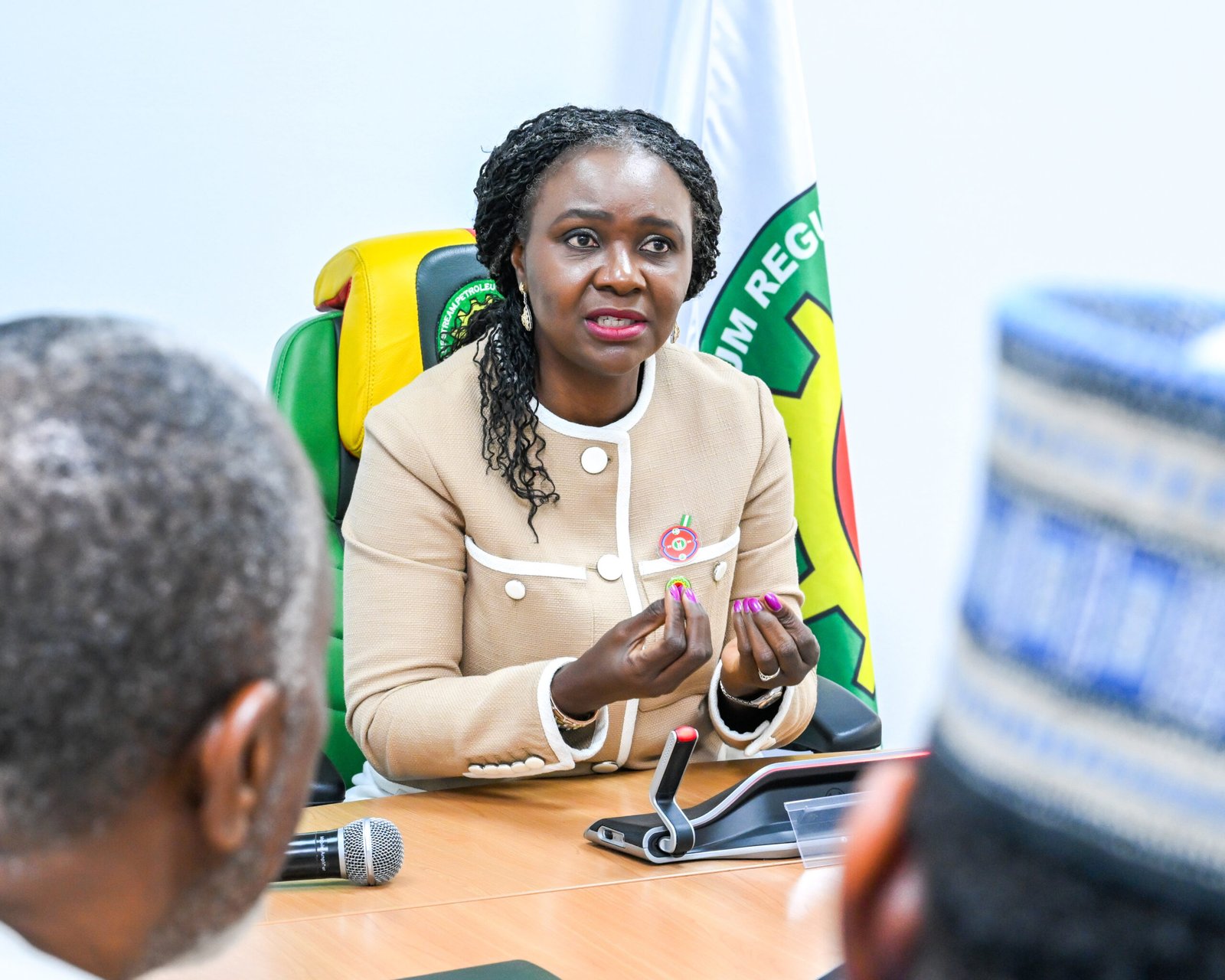
As a woman who has spent years admiring the quiet strength of sisters carving paths in Nigeria’s demanding energy sector, my heart swelled with genuine joy the moment Chief Mrs. Oritsemeyiwa Eyesan’s appointment as Commission Chief Executive of the Nigerian Upstream Petroleum Regulatory Commission was announced.
Here stands a remarkable daughter of the Niger Delta, graceful yet fiercely determined, becoming the first woman to lead our nation’s upstream regulator. Her rise feels deeply personal, like watching a beloved sister finally claim the spotlight she has long deserved.
The NUPRC, as a young agency born from the transformative Petroleum Industry Act of 2021, has shouldered enormous responsibilities in a complex and evolving landscape—navigating fluctuating production levels amid global energy shifts, addressing delays in data dissemination that can affect investor planning, tackling the persistent menace of crude oil theft that impacts national revenue, and working to enhance transparency in licensing rounds and asset management for greater stakeholder confidence.
This institution emerged with bold ambitions to modernise regulation, attract investment, and optimise Nigeria’s hydrocarbon resources, yet it has operated in an environment marked by inherited challenges and the need for continuous adaptation to deliver on its mandate.
Then, in December 2025, President Bola Tinubu nominated Chief Mrs Eyesan as the first woman to lead NUPRC, a move swiftly confirmed by the Senate.
My spirit lifted immediately. Chief Eyesan’s journey inspires every woman dreaming big in this field. She holds a Bachelor of Education in Economics from the prestigious University of Benin, graduating in 1986 with a solid foundation in economic theory, market analysis, and project evaluation—skills that would prove invaluable in the complex world of energy finance and strategy.
Her academic grounding equipped her to navigate large-scale investments and regulatory frameworks with precision. Early in her career, she honed her financial acumen in banking, serving as Branch Manager at People’s Bank of Nigeria and later as Treasury Officer at Gulf Bank, before joining NNPC in 1992.
Over nearly 33 years, she rose steadily through roles in planning, procurement, corporate strategy, and sustainability, culminating as Executive Vice President, Upstream, until her retirement in November 2024. In that position, she oversaw strategic management of Nigeria’s upstream operations, led sustainability initiatives, strengthened financial discipline, and guided critical reforms aligned with the PIA.
Since assuming office, Chief Eyesan has brought a refreshing wave of purpose and collaboration to NUPRC. Her patriotic commitment shines brightly as she aligns the Commission’s work with President Tinubu’s Renewed Hope Agenda, emphasising increased crude oil production to enhance energy security and revenue, accelerated gas monetisation to advance the Decade of Gas vision, and robust transparency measures to rebuild investor trust.
I admire her focus on digitisation; she is thoughtfully integrating digital tools to improve operational efficiency, accountability, and ease of business, cutting through layers of bureaucracy that once slowed progress. Her leadership style feels deeply relatable—inclusive and engaging. With an open-door policy and regular town halls, she encourages staff input while forging stronger ties with stakeholders, labour unions, and professional bodies.
She champions environmentally sustainable practices, ensuring growth does not come at the cost of our land and waters. Her strategic vision unfolds organically: boosting crude reserves and output for economic stability, scaling gas utilisation for power generation and exports, fortifying regulations to attract long-term investments, nurturing technical expertise through partnerships and capacity building, and embedding digitisation hand-in-hand with transparency to foster dynamic, confidence-inspiring growth.
In these early weeks of January 2026, tangible steps are emerging. She has advanced the 2025 licensing round, scheduling a key pre-bid conference for January 14 in Lagos to draw fresh capital into exploration and development. Partnerships, such as deepened synergy with the Nigerian Midstream and Downstream Petroleum Regulatory Authority, highlight her collaborative spirit.
What touches me profoundly is how Chief Eyesan views challenges as opportunities. She inherited an agency needing revitalisation but approaches it with grace, strategy, and unyielding diligence—that workaholic patriotism we so admire in trailblazing women. Her experience positions her uniquely to resolve legacy issues, unlock stranded assets, and position NUPRC as Africa’s premier regulator.
Reflecting on this new era, sisterly pride overwhelms me. Chief Mrs. Oritsemeyiwa Eyesan is truly an Amazon—resilient, visionary, and devoted to Nigeria’s progress. In her capable hands, the upstream sector is not just recovering; it is poised to soar, delivering sustainable wealth for generations.
Dear sister, you embody the hope we renew daily. The light of your leadership illuminates our path forward, proving once again that when a woman of substance rises, the nation rises with her.
*Ameh an Oil and gas expert writes from Kaduna.
By Victor Okoye
As the football world prepares for the expanded 48-team 2026 FIFA World Cup, Nigeria is facing the prospect of missing the global showpiece for the eighth time since its inception in 1930, a development that has drawn concern from football stakeholders and sports administrators in the country.
The Super Eagles, who made their World Cup debut at USA 1994, have qualified for the finals six times but failed to reach the tournament on seven previous occasions.
Should Nigeria fail to qualify for the 2026 edition, it would mark the eight miss and a second consecutive absence, further highlighting the rising cost of non-participation in an era of unprecedented financial rewards.
Historically, missing the World Cup was largely a sporting setback. Financial incentives were modest in earlier tournaments.
In USA 1994, FIFA’s total prize money stood at about 62 million dollars, with champions Brazil earning roughly four million dollars.
France 1998 offered about 131 million dollars in total prize money, while winners received around six million dollars.
The figures rose steadily to 300 million dollars at Brazil 2014 and 440 million dollars at Russia 2018 and Qatar 2022.
However, FIFA’s recent review has significantly raised the stakes.
The FIFA Council has approved a record 727 million dollars financial package for the 2026 World Cup, to be co-hosted by the United States, Canada and Mexico.
At an estimated exchange rate of 1,500 naira to the dollar, the total sum translates to about 1.09 trillion naira.
Of this amount, 655 million dollars (approximately 982.5 billion naira) will be shared as prize money among the 48 participating teams.
Champions will earn 50 million dollars, runners-up 33 million dollars, third place 29 million dollars and fourth place 27 million dollars.
Teams finishing between fifth and eighth will receive 19 million dollars, ninth to 16th are to receive 15 million dollars, 17th to 32nd will pocket 11 million dollars, while teams ranked 33rd to 48th will earn nine million dollars.
Each qualified nation will also receive 1.5 million dollars as preparation funds.
This guarantees every participating team a minimum of 10.5 million dollars — about 15.75 billion naira — before the tournament begins.
Nigeria’s 2026 qualification campaign ended in disappointment after the Super Eagles finished second behind South Africa in their group and lost the African playoff final to the Democratic Republic of Congo (DR Congo) on penalties.
To date, no public official report has broken down the total operational costs or expenditure to prosecute the 2026 World Cup qualifying campaign (travel, allowances, camps, logistics) but there are concerns and scrutiny over Nigeria Football Federation (NFF) finances.
The scrutiny includes how funds received from FIFA and CAF have been used over the years following the House of Representatives move to probe more than 25 million dollars in FIFA/CAF grants given to the NFF between 2015 and 2025, citing accountability questions.
However, the NFF has petitioned FIFA over alleged player-eligibility breaches by DR Congo, a move that has reopened debate within the football community.
Reacting to the situation, former Super Eagles captain and 1994 AFCON winner, Mutiu Adepoju, described the possibility of another World Cup absence as “a huge setback”.
“Missing one World Cup is painful, but missing two in a row is unacceptable for a country like Nigeria. Beyond pride, the financial loss is enormous and affects football development at all levels,” Adepoju said.
Former NFF Technical Director, Austin Eguavoen, said qualification had become more critical than ever due to the new prize structure.
“In the past, the World Cup was more about exposure. Now, the money involved can change the entire football ecosystem. Missing out means missing an opportunity to invest in grassroots and infrastructure,” Eguavoen said.
Chairman of the Nigeria Premier Football League (NPFL), Gbenga Elegbeleye, said the impact would also be felt in the domestic league.
“When the national team is at the World Cup, it attracts attention to our league and players. Absence reduces visibility, sponsorship interest and confidence in the system,” Elegbeleye said.
Similarly, former Minister of Sports, Solomon Dalung, said Nigeria must treat World Cup qualification as a national project.
“The Super Eagles missing the World Cup repeatedly shows deeper administrative and structural issues. The financial consequences alone should force stakeholders to rethink planning and accountability,” Dalung said.
On the legal challenge before FIFA, NFF Secretary-General, Dr Mohammed Sanusi, confirmed that the matter was under review.
“We have submitted our petition and we are waiting for FIFA’s decision. The rules are clear on nationality and eligibility, and we believe the issues raised deserve careful consideration,” Sanusi said.
If FIFA rules in Nigeria’s favour, the Super Eagles could be reinstated into the intercontinental playoffs, restoring a pathway to qualification and access to guaranteed earnings of at least 15.75 billion naira.
Failure would confirm Nigeria’s eighth World Cup absence, with consequences ranging from lost revenue and reduced global visibility to diminished influence in international football.
With the 2026 World Cup set to deliver the highest financial rewards in FIFA history, stakeholders agree that Nigeria can no longer afford repeated absences from football’s biggest stage.


Renewed Hope Group Welcomes Tinubu’s Appointment of Faleke as Deputy Secretary for Party Outreach

Benjamin Kalu: Demonstrating Emotional Intelligence In Turbulent Times

Reps Deputy Spokesperson lauds Nigeria/US partnership on security
-

 Cover6 months ago
NRC to reposition train services nationwide.. Kayode Opeifa
-

 Fashion9 years ago
These ’90s fashion trends are making a comeback in 2017
-
Entertainment9 years ago
The final 6 ‘Game of Thrones’ episodes might feel like a full season
-
 Opinion1 year ago
Bureaucratic Soldier, Kana Ibrahim heads Ministry of Aviation and Aerospace After Transformative Tenure at Defence
-
 Opinion1 year ago
Hon. Daniel Amos Shatters Records, Surpasses Predecessor’s Achievements in Just Two Years
-

 Opinion3 months ago
Barrister Somayina Chigbue, Esq: A rising legal leader shaping institutioal excellence in Nigeria
-

 News7 months ago
Nigerian Nafisa defeats 69 Countries at UK Global Final English Competition
-
 Special Report1 year ago
Golden Jubilee: Celebrating Tein Jack-Rich’s Life of Purpose and Impact