
Cover
Bribery, extortion scandals rock Police constables recruitment


- Candidates forced to pay millions of Naira into private accounts
There are indications that the controversy that dogged the recent attempt by the federal government to recruit 10,000 Constables for the Nigerian Police Force has taken a fresh twist as the Police Service Commission (PSC) is reportedly investigating some officers who abused the recruitment exercise to become millionaires.
One of the officers (name withheld), who has been fingered as the brain box of the syndicate, has reportedly been suspended as the PSC launched an investigation into the matter.
The PSC, it was gathered, is investigating how the syndicate was able to manipulate what they assumed was “the water-tight result” of a CBT test which erstwhile chairman, Dr. Solomon Arase, begged the Joint Admissions and Matriculation Board (JAMB) to conduct for the PSC.
PSC sources revealed that a Supritendent of Police who until recently was in the training department at the Force headquarters, is currently facing investigation for allegedly being the conduit through which huge sums of monies were channelled to insert the names of unqualified applicants into a dedicated police recruitment portal outside the one set up by the PSC.
PSC investigations, it was gathered, uncovered a particular private bank account which members of the syndicate made thousands of candidates pay monies into. The investigators linked the bank account to a certain Abuja-based hotel which the now suspended officer claimed belonged to his brother.
The officer, it was further gathered, is believed to be close to top brass of the police establishment. “He is so confident that his connections would save him, the result of the investigation notwithstanding,” offered a PSC official, who added that “he is so powerful that he even threatened to remove any PSC officer the same way he removed Dr. Solomon Arase as PSC chairman”.
Thr new PSC heiriarchy is reportedly astonished that whereas neither the police nor the PSC engaged the services of consultants to aid in the recruitment, a Sergeant who enjoys the protection of a serving AIG, without any approval, engaged the services of two consultants: Clickers Digital System with a GTBank number and Elite Palace with an FCMB account, through which huge sums of money were collected from prospective applicants.
Sources familiar with the investigation also revealed that the officer who has being transfered out of the headquarters to a North East state to allow for proper investigation by the PSC, may not be working alone.
A high ranking police officer from the Southeast said to have been the architect of the syndicate, PSC sources added, used his position and charm to make several State Governors from his zone, to allegedly part with large sums of money to fill their state’s slots with unqualified candidates into the recruitment list.
Recall that in March, 171,956 candidates drawn from all the 774 local government areas in the country sat for the PSC-CTB examinations conducted by JAMB. The Commission was scouring for 10,000 candidates who passed the CBT for enlistment as Constables into the Nigerian Police Force.
Dr. Arase, as the Chairman of the Police Service Commission (PSC), served as the Inspector- General of Police in 2015. While justifying the need to get JAMB to conduct the examination, he said “Nigeria needs the right police personnel with mental mobility and fertile minds to relate effectively with the public.”
Arase’s insistence on a transparent and professional recruitment process apparently didn’t sit well with some top politicians and police top brass who allegedly wanted to hijack the process and handle the recruitment themselves.
According to sources in the Commission, Arase was convinced that if the problem of the Police was to be tackled on a long term basis, it must be tackled at the recruitment level especially those at the lower and mid cadre of the force,
“As a former Inspector General of Police, he understood the problem and was willing to do his best to solve it. He wanted the recruitment exercise to be based on merit and due process. He wanted those who wrote the computer-based assessment test and made the cutoff mark to be the ones considered for recruitment into the force.
“There were clear criteria outlined for the exercise. In each state of the federation those who made the cutoff marks were to be prioritized. There was also consideration for female candidates to ensure gender balance. This is the first time the Commission was carrying out a recruitment process in line with its mandate, and Dr. Arase wanted to set a standard that was to become the basic minimum,” stated the source.
Arase lost in the intrigues and powerplay between the Commission and the Nigeria Police Force and was in July replaced by Hashim Argungu, a retired deputy Inspector-General of Police.
Not long after the assumption of office of the new PCS chairman, he, like Arase, was confronted with the controversies facing the recruitment process.
Investigation showed that not long after Arase left office, the police heirachy jettisoned the CBT test carried out by the PSC under him and opted to use a different list for the exercise.

The Chairman of the Nigeria Union of Journalists (NUJ), Federal Capital Territory (FCT) Council, Grace Ike, has been described as a transformative leader in the media profession as she marks her birthday.
In a statement issued on Tuesday in Abuja, a former President of the Nigeria Association of Women Journalists (NAWOJ), Evelyn Onyilo, commended Ike for breaking barriers and redefining leadership within the union.
Onyilo noted that Ike made history as the first female chairman of the NUJ FCT Council in over four decades, describing her emergence as a significant milestone for women in journalism.
She said Ike’s tenure had been marked by remarkable achievements, particularly in infrastructural development and the welfare of members, adding that her leadership had also strengthened participation and unity within the union.
“Her tenure has witnessed unprecedented development and effective mobilisation of members to actively participate in the affairs of the union, making her a foremost transformative leader of our era,” Onyilo said.
The publisher of Phenomenal People Magazine further described Ike as a media icon of immense value, praying for greater accomplishments, good health, and continued success in her leadership journey.
Onyilo congratulated Ike on her birthday and wished her many more years of impactful service.

he Chief of Army Staff (COAS), Lieutenant General Waidi Shaibu, on Saturday, March 21, 2026, hosted a special Sallah luncheon for troops of the Forward Operations Base (FOB) Sobe in Owan West Local Government Area of Edo State as part of activities marking the Eid-el-Fitr celebration.
Speaking at the event, the COAS reaffirmed the Nigerian Army’s commitment to improving troop welfare and boosting morale through strategic initiatives. He urged the soldiers to remain resolute in their duty to defend the nation’s peace, unity, and territorial integrity.
Represented by the Commander, 4 Brigade Nigerian Army, Brigadier General Ahmed Balogun, the Army Chief commended the troops for their resilience and professionalism despite operating under challenging conditions. He noted that their sacrifices and dedication embody the true spirit of the Nigerian soldier.
“They serve in difficult and often demanding environments, far from the comfort of their homes, yet remain steadfast in loyalty and professionalism.
Their endurance, sacrifice, and courage represent the true spirit of the Nigerian soldier,” he said, while praying for their safety and success in ongoing operations.
The COAS also lauded the continued collaboration between the Nigerian Army and other security and intelligence agencies, describing inter-agency synergy as critical to sustaining operational success and national stability.
He further expressed appreciation to President Bola Ahmed Tinubu, Commander-in-Chief of the Armed Forces, for his unwavering support and commitment to the welfare and operational effectiveness of the military, noting that the President’s leadership remains a strong source of motivation for the Armed Forces.
In his welcome address, the Commander, FOB Sobe, Lieutenant Colonel Stanley Agboro, described the COAS luncheon as a significant annual tradition held during major festive periods, including Eid-el-Fitr, Eid-el-Kabir, Easter, and Christmas.
He said the initiative is aimed at boosting troop morale, recognising their sacrifices, honouring fallen heroes, and strengthening camaraderie within the ranks.
Agboro appreciated the Brigade Commander and his entourage for visiting the base to celebrate with the troops. He also acknowledged the presence of the Vice Chairman of Owan West Local Government Area, Mr Dele Aleburu, who represented the council chairperson, Madam Joy Ohonyon, as well as the traditional ruler of Sobe, HRH Anthony Ero Aleburu I, and heads of other security agencies in the area.
The event featured a luncheon, cultural dance performances, comedy presentations, and morale-boosting songs by the troops.
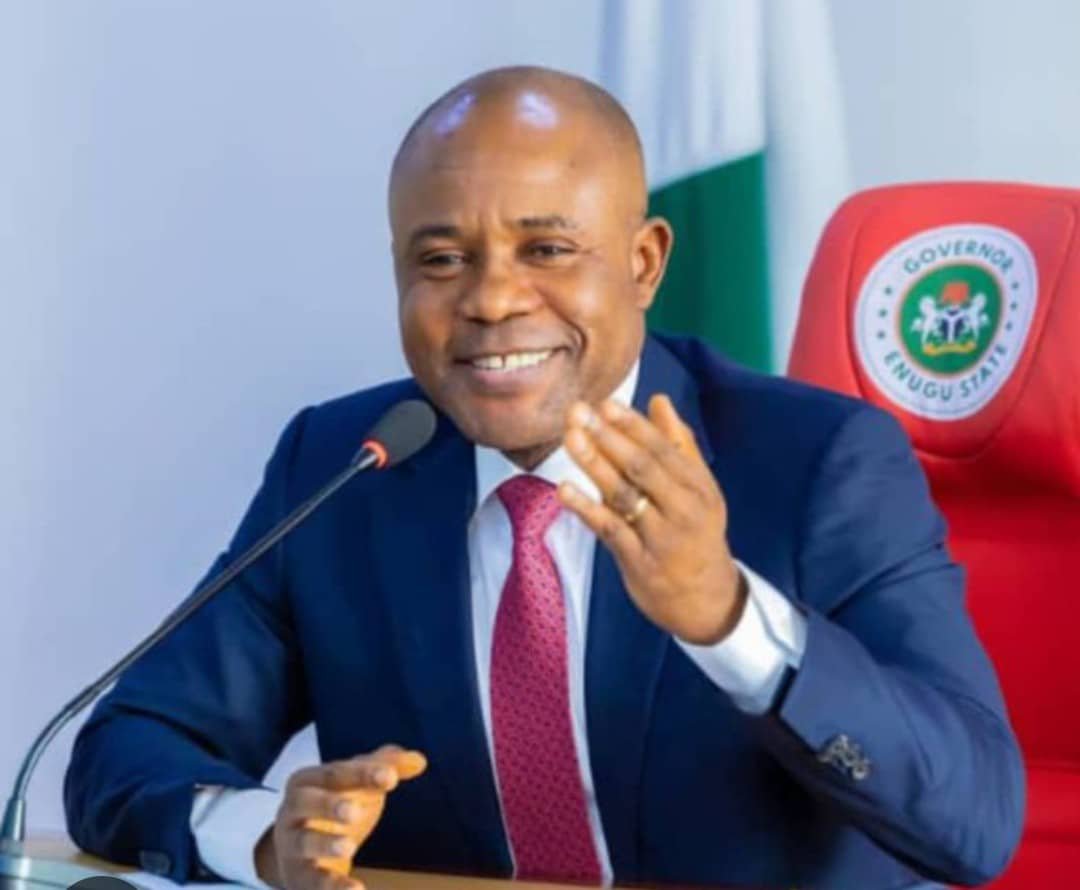
Happy Birthday To An Achiever, History Shall Be kind To You For Your Noble Strides In Leadership.
In the theatre of leadership, where promises often fade into the background of political routine, a few performers step onto the stage with clarity, purpose, and measurable impact. One such figure is Peter Mbah, the Governor of Enugu State, whose journey continues to attract attention for its pace, precision, and ambition.
As he marks his 54th birthday today the 17th of March, it is fitting to string together not just words, but garlands—symbols of appreciation for a man whose governance style has leaned heavily toward results.
Governor Mbah’s leadership narrative is one defined by urgency.
From the outset, he signaled that governance would not be business as usual. His administration set bold targets, particularly in areas such as education, infrastructure, and economic expansion. Rather than dwell in rhetoric, his approach has emphasized timelines, deliverables, and accountability—traits more commonly associated with corporate leadership than traditional politics.
One of the most striking elements of his governance is his focus on education reform. By prioritizing smart schools and digital learning infrastructure, Mbah has demonstrated an understanding that the future of any society lies in how well it prepares its young minds. His policies reflect a belief that education must not only be accessible but also relevant in a rapidly evolving global landscape, little his signature refrain TOMORROW IS HERE resonates not only with Ndi’Enugu and the people of the South East but across the nation.
Infrastructure development under his watch has also taken center stage. Roads, transport systems, and urban renewal projects have been approached not just as physical upgrades, but as economic enablers. The philosophy is simple: when movement becomes easier, commerce thrives, and when commerce thrives, people prosper.
Beyond policy and projects, there is also the intangible quality of leadership presence. Governor Mbah has cultivated an image of a leader constantly in motion—inspecting, engaging, pushing. This has helped shape public perception of a government that is active and responsive, rather than distant and ceremonial.
At 54, the Governor stands at a point where experience meets momentum. There is enough behind him to assess his direction, and enough ahead to determine his legacy. The expectations are high, but so too is the energy he appears to bring to the role.
Birthdays often invite reflection, but they also offer an opportunity to look forward. For the people of Enugu State, this moment is not just about celebrating the man, but also about evaluating the journey so far and anticipating what lies ahead.
Fifty-four garlands, then, are not merely decorative—they represent milestones, challenges overcome, and ambitions still in pursuit. For a performer in the arena of governance, the applause is never final. It is earned, continuously, in the quiet execution of vision.
Happy Birthday, Governor Peter Mbah, indeed under your responsible and responsive watch over Enugu State TOMORROW IS HERE.
Okechukwu Nwafor
Concerned Professionals For Good Governance. (A Good Leadership Advocacy Group).


NUJ FCT Chairman, Grace Ike, Hailed as Transformative Leader on Birthday

It’s Grace Ike’s Day: NUJ FCT Chairman Celebrated Across Board

The Political Economy of Nigeria’s 2027 Elections: APC’s Path to Victory by Olugbesan Idris, Ph.D
-

 Cover7 months ago
NRC to reposition train services nationwide.. Kayode Opeifa
-

 Fashion9 years ago
These ’90s fashion trends are making a comeback in 2017
-
Entertainment9 years ago
The final 6 ‘Game of Thrones’ episodes might feel like a full season
-
 Opinion1 year ago
Bureaucratic Soldier, Kana Ibrahim heads Ministry of Aviation and Aerospace After Transformative Tenure at Defence
-
 Opinion1 year ago
Hon. Daniel Amos Shatters Records, Surpasses Predecessor’s Achievements in Just Two Years
-

 Opinion4 months ago
Barrister Somayina Chigbue, Esq: A rising legal leader shaping institutioal excellence in Nigeria
-

 News8 months ago
Nigerian Nafisa defeats 69 Countries at UK Global Final English Competition
-
 Special Report1 year ago
Golden Jubilee: Celebrating Tein Jack-Rich’s Life of Purpose and Impact