
Cover
Cleric urges unity to tackle insecurity

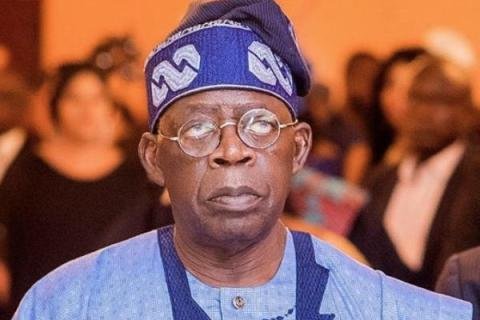
The Senior Pastor of First Baptist Church, Garki, Abuja, Rev. Tom Tampatore, has called for a sincere national effort to address Nigeria’s security challenges.
He urged leaders and citizens to rise above denial and complacency, stressing that insecurity demands honest reflection and coordinated action.
Tampatore spoke on Sunday during the church’s 2025 Annual Thanksgiving service, attended by worshippers, community leaders, and guests from across Abuja.
He reacted to reports that the United States plans to designate Nigeria a “state of particular concern” over alleged killings and human rights concerns.
According to him, Nigerians must look inward for solutions, rather than reacting defensively to foreign assessments or waiting for outside intervention.
He asked the congregation, “Is there trouble in the land? If there is trouble, what can be done?”
The cleric urged the country not to be reactive or dismissive, saying the first step is acknowledging that problems truly exist.
Tampatore said lives and property were being lost to violence, and ignoring those realities would worsen national pain.
He warned that it would be shameful for outsiders to point out issues Nigerians themselves refused to recognise or address.
The pastor said genuine reforms, improved governance, and collective moral responsibility would help restore order, peace, and trust across communities.
He expressed optimism that Nigeria could overcome its difficulties if citizens and leaders embraced truth, justice, and hard work.
According to him, positive actions would eventually reshape global perceptions and bring an end to negative narratives about the country.
Tampatore encouraged worshippers to maintain gratitude and faith, noting that scripture commands thanksgiving even in challenging circumstances.
He assured the congregation that “great things are coming”, and urged them to trust God for national and personal upliftment.
In her remarks, the senior pastor’s wife, Mrs Nike Tampatore, also encouraged Nigerians to focus on blessings rather than difficulties.
She noted that the removal of fuel subsidy created hardship, but said God had protected and sustained many families through the period.
According to her, in spite of economic strain, people continued to experience daily provision, health, and resilience through faith.
She urged Nigerians to remain thankful and hopeful, stressing that gratitude attracts divine favour and future breakthroughs.
Mrs Tampatore prayed for God’s protection over the nation, asking that Nigerians be preserved to see the end of the year in peace.
She expressed confidence that God would continue to support the country, adding that better days were still ahead.
Cover
NMDPRA’s Fresh Import Licences Will Encourage Dumping of Low-Quality Petrol, Undermine Local Refineries — Energy Transparency Group

The decision by the Nigerian Midstream and Downstream Petroleum Regulatory Authority (NMDPRA) to resume the issuance of petrol import licences has drawn sharp criticism from industry advocates, who warn that the move risks undermining domestic refining efforts and exposing the market to substandard fuel products.
In a statement issued on Wednesday, the Energy Transparency and Market Justice Initiative (ETMJI) condemned the regulator’s action, describing it as a policy reversal that could weaken recent gains in local supply while encouraging the inflow of lower-quality petroleum products.
The regulator had earlier maintained that domestic refining capacity was sufficient to meet national demand, suspending the issuance of import licences in February. However, following supply disruptions linked to the Middle East crisis, the agency granted fresh licences to six marketers to import about 180,000 metric tonnes of petrol in a bid to stabilise supply.
While the NMDPRA has framed the move as a temporary intervention, ETMJI said the decision reflects deeper inconsistencies in regulatory direction and raises concerns about quality control in Nigeria’s downstream sector.
Dr Salako Kareem, who signed the statement, said the reintroduction of petrol imports under emergency conditions risks opening the floodgates to products that may not meet required specifications.
“What we are witnessing is a deeply flawed response to a complex problem. Attempting to resolve supply shortages by reintroducing large-scale fuel imports, without watertight quality assurance, is comparable to using poison to cure a disease. It may appear to offer immediate relief, but in reality, it introduces far more dangerous consequences for consumers, the market, and the integrity of the regulatory system,” he said.
Kareem argued that rather than reverting to import dependence, the regulator should have prioritised strengthening domestic supply chains and addressing distribution inefficiencies that often create artificial scarcity.
According to him, the decision sends conflicting signals to investors in local refining, particularly at a time when Nigeria is seeking to reduce its reliance on imported petroleum products.
“This policy direction undermines the confidence of investors who have committed resources to building domestic refining capacity. When the regulator oscillates between import substitution and import expansion without a clear framework, it creates uncertainty that discourages long-term investment and planning in the sector. You cannot, on one hand, advocate self-sufficiency and, on the other, reopen the gates to imports at the slightest disruption,” Kareem said.
The group also raised concerns about the potential economic implications of renewed import activity, noting that increased reliance on imports could exert pressure on foreign exchange and contribute to higher landing costs, which are often passed on to consumers.
ETMJI insisted that external shocks should not justify what it described as a “regulatory backslide” in Nigeria’s fuel supply strategy.
Kareem said the focus should instead be on building resilience within the domestic market by improving logistics, enforcing quality standards and supporting local refiners to operate at optimal capacity.
“Short-term fixes that rely on imports may offer temporary relief, but they do not address the structural weaknesses in Nigeria’s petroleum supply chain. What is required is a disciplined commitment to strengthening local production, enhancing regulatory oversight and ensuring that every litre of fuel consumed in this country meets strict quality benchmarks,” Kareem declared.
He further warned that the reintroduction of imports without stringent monitoring mechanisms could revive long-standing issues of product adulteration and regulatory arbitrage, where market players exploit loopholes for profit.
The advocacy group called on the NMDPRA to provide full transparency on the criteria used in issuing the new licences, including safeguards put in place to prevent the entry of substandard products into the Nigerian market.
It also urged the federal government to align regulatory actions with its broader energy transition and economic diversification goals, stressing that inconsistent policies could erode public trust and delay progress in the sector.
As Nigeria continues to navigate a complex energy landscape shaped by both domestic constraints and global uncertainties, stakeholders say the balance between ensuring supply and maintaining standards will remain a critical test of regulatory credibility.

…commends Matawalle’s large heart, love for President Tinubu’s success above personal interest
The Northern APC Peace Agenda has commended the political reconciliation between Zamfara State governor, Dauda Lawal, and his predecessor, Bello Matawalle, describing their alliance under the All Progressives Congress (APC) as a stabilising development ahead of the 2027 elections.
In a press statement issued on Wednesday in Kaduna and signed by its president, Alhaji Rabiu Ahmad, the group said Matawalle’s decision to forgo any governorship ambition and back Lawal reflects political maturity and a broader commitment to unity within the ruling party.
Matawalle, who currently serves as minister of state for defence, had publicly declared that he would not contest the 2027 governorship election, throwing his weight behind Lawal during a high-profile reception marking the governor’s defection to the APC in Gusau.
Lawal’s move from the Peoples Democratic Party (PDP) to the APC effectively realigns Zamfara’s political landscape, bringing both the incumbent and former governors into the same political fold.
The reception, attended by top party figures including Vice-President Kashim Shettima, underscored the significance of the development for the APC’s electoral calculations in the north-west region.
Reacting to the development, Ahmad said the reconciliation signals a rare moment of political responsibility and strategic foresight in a region often defined by intense rivalries.
“The coming together of Governor Dauda Lawal and former Governor Bello Matawalle under one political platform represents a turning point for Zamfara State,” Ahmad said.
“This is not just a political alignment; it is a demonstration of maturity, restraint, and a shared commitment to the stability and progress of the state. At a time when political divisions often undermine governance, this reconciliation sends a powerful message that unity can be prioritised over personal ambition.”
He added that Matawalle’s decision to step aside for Lawal underscores the “large heart” and a clear prioritisation of national interest and party cohesion.
“We commend former governor Matawalle for placing the success of President Bola Tinubu’s administration above personal political considerations,” the statement reads.
“Such a decision reflects loyalty, discipline, and an understanding that the strength of the party and the country must come before individual aspirations. This is the kind of leadership that inspires confidence and strengthens democratic institutions.”
The Northern APC Peace Agenda further noted that the development could reshape political dynamics in Zamfara and the wider north-west region if sustained.
“This alignment has the potential to reset the political trajectory of Zamfara State. With both past and present leadership working together, there is now an opportunity to deepen governance, strengthen grassroots mobilisation, and deliver meaningful development to the people. We believe this unity, if maintained, will not only benefit Zamfara but also contribute to broader stability within the region,” Ahmad said.
The group also described Lawal’s defection as a pragmatic move that aligns the state more closely with the centre, potentially improving policy coordination and access to federal support.
Top APC figures have similarly welcomed the development. The party’s national chairman, Nentawe Yilwatda, said the APC continues to attract leaders committed to governance and national development.
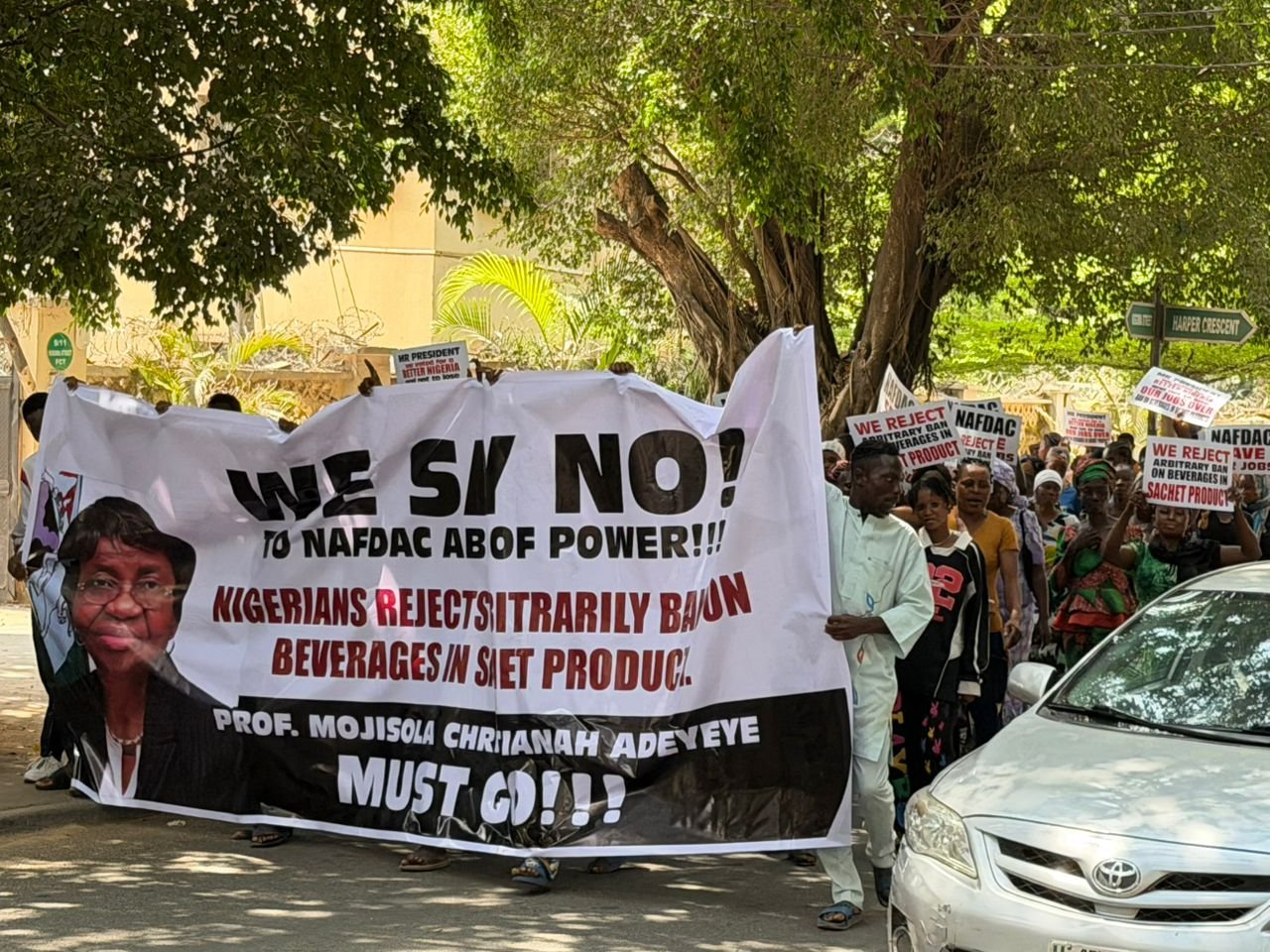
Tension flared in Abuja on Wednesday as a coalition under the aegis of Concerned Citizen for Change staged a protest, calling for the immediate removal of the Director-General of the National Agency for Food and Drug Administration and Control (NAFDAC), Prof. Mojisola Christianah Adeyeye, over what they described as “gross incompetence and abuse of office.”
Addressing journalists during a press conference at the protest ground, the group’s Director, Amb. Kingsley Nwanze, criticised the agency’s enforcement of a ban on sachet alcohol and 200ml PET bottle alcoholic products, describing the move as “illegal, arbitrary and economically damaging.”
Nwanze alleged that the enforcement contravenes existing national alcohol policy provisions approved by the Federal Ministry of Health, as well as a presidential directive halting disruptions of affected businesses pending the outcome of stakeholder consultations.
According to him, the action also disregards resolutions of the House of Representatives, which had earlier advised against the ban following a public hearing involving key industry stakeholders.
“The decision is capable of triggering civil unrest and undermining ongoing economic reforms. It will harm legitimate businesses, lead to job losses, and create room for illicit and unregulated products to thrive,” he said.
The group argued that sachet and small-volume alcoholic beverages serve low-income consumers and provide controlled consumption options, contrary to claims that they encourage abuse, particularly among minors.
They further maintained that industry operators had invested heavily in campaigns promoting responsible drinking and restricting underage access, noting that such efforts have yielded measurable results.
Nwanze warned that sustaining the ban could negatively impact government revenue, disrupt the value chain, and encourage smuggling of substandard alternatives into the country.
He said the group had formally petitioned the Senate and expressed confidence that lawmakers would review the matter based on “empirical evidence and stakeholder engagement.”
The protesters, however, urged President Bola Ahmed Tinubu to take decisive action by removing the NAFDAC DG, insisting that her continued stay in office was no longer in the public interest.
As of the time of filing this report, NAFDAC had not issued an official response to the allegations.
The protest highlights growing tensions between regulators and industry players over public health policies and economic considerations in Nigeria’s beverage sector.


NMDPRA’s Fresh Import Licences Will Encourage Dumping of Low-Quality Petrol, Undermine Local Refineries — Energy Transparency Group

NCC Under Aminu Maida: Driving a Consumer-First Revolution in Nigeria’s Telecom Sector

Zamfara 2027: Northern APC Peace Agenda applauds Matawalle, Dauda Lawal’s reconciliation
-

 Cover7 months ago
NRC to reposition train services nationwide.. Kayode Opeifa
-

 Fashion9 years ago
These ’90s fashion trends are making a comeback in 2017
-
Entertainment9 years ago
The final 6 ‘Game of Thrones’ episodes might feel like a full season
-
 Opinion1 year ago
Bureaucratic Soldier, Kana Ibrahim heads Ministry of Aviation and Aerospace After Transformative Tenure at Defence
-
 Opinion1 year ago
Hon. Daniel Amos Shatters Records, Surpasses Predecessor’s Achievements in Just Two Years
-

 Opinion4 months ago
Barrister Somayina Chigbue, Esq: A rising legal leader shaping institutioal excellence in Nigeria
-

 News8 months ago
Nigerian Nafisa defeats 69 Countries at UK Global Final English Competition
-
 Special Report1 year ago
Golden Jubilee: Celebrating Tein Jack-Rich’s Life of Purpose and Impact