Special Report
Golden Jubilee: Celebrating Tein Jack-Rich’s Life of Purpose and Impact


By Gambo Jagindi
Today marks a significant milestone in the life of Tein Jack-Rich, A former presidential aspirant, businessman, entrepreneur, and philanthropist, as he celebrates his 50th birthday.
This golden jubilee is a testament to his remarkable journey, marked by outstanding achievements, selfless philanthropy, and an unwavering commitment to making a positive impact.
“Tein Jack-Rich’s life is a testament to the power of resilience, faith, and determination. Born on January 28, 1975, in Port Harcourt, Rivers State, Nigeria, he hails from the humble family of Elder and Mrs. Teinbo S. Jack-Rich, of the Kalabari extraction of the Niger Delta.
Tragedy struck at a tender age when Jack-Rich lost his parents, leaving him an orphan at just 10 years old. Undeterred, he persevered, relying on his faith in God and the power of grace, which he embraced through Christianity at the age of 12.
To survive, Jack-Rich spent countless days paddling canoes with elders into the vast oceans, braving the elements from 3 pm to 6 am. These formative experiences forged his unyielding spirit and instilled in him a deep sense of self-motivation.
Jack-Rich distilled his life’s lessons into a powerful ‘Three-Dimensional Formula to Greatness’: the power to create, the power to invent out of creation, and the power of discovery. This mantra guided him through life’s challenges, empowering him to overcome adversity and achieve greatness.”
His life is a shining example of what it means to live with purpose. From his early days to the present, he has consistently demonstrated a passion for excellence, innovation, and progress. As the founder and president of Belemaoil Producing Limited, he has played a pivotal role in shaping Nigeria’s oil and gas industry, creating opportunities, and driving economic growth.
Beyond his impressive business accomplishments, Tein Jack-Rich is a devoted philanthropist, dedicated to giving back to his community and making a meaningful difference in the lives of others. His charitable endeavors have focused on education, healthcare, and community development, transforming countless lives and inspiring a new generation of leaders.
“Among Tein Jack-Rich’s numerous philanthropic endeavors scattered across Nigeria, one project that has particularly caught my attention is his remarkable display of interfaith kindness. Despite being a Christian, Jack-Rich has single-handedly undertaken to finance a massive water project at the revered Sultan Bello Mosque in Kaduna, a gesture estimated to cost over ₦1.5 Billion Naira.
This extraordinary act of generosity not only showcases Jack-Rich’s commitment to humanitarian causes but also underscores his dedication to fostering unity and peaceful coexistence among people of different faiths. By bridging the religious divide and extending a helping hand, Jack-Rich inspires hope and encourages others to emulate his selfless example.
In a world where differences often divide us, Tein Jack-Rich’s remarkable philanthropy serves as a powerful reminder that kindness, compassion, and generosity can transcend boundaries and unite us in our shared humanity.”
As Tein Jack-Rich marks this significant milestone, it is clear that his legacy extends far beyond his business achievements. He has inspired countless individuals, built bridges, and fostered a culture of excellence and generosity. His commitment to Nigeria’s development and his passion for empowering others serve as a beacon of hope for a brighter future.
“I’ve had the privilege of encountering numerous remarkable individuals, but none as exceptionally kind, humble, and genuinely down-to-earth as Tein Jack-Rich. He embodies the true essence of a humanitarian, inspiring countless lives through his selfless acts and compassion.
To me, Jack-Rich is more than an exemplary leader – he’s a shining role model, worthy of admiration and emulation. His remarkable character, coupled with his generosity and empathy, makes him an extraordinary individual.
Thank you, Jack-Rich, for being an outstanding boss, mentor, and inspiration. On your special day, I wish you a Happy Birthday filled with joy, love, and celebration! May this milestone mark the beginning of an even more remarkable chapter in your life.”
Happy 50th birthday, Tein Jack-Rich!
Jagindi is a digital media publisher writes from Abuja Nigeria can be reach via jagindi2016@gmail.com, +2347065466654

Special Report
Chinelo Anohu Named Woman of Impact in Africa 2026, Celebrated as Pillar of Reform and Pan-African Progress
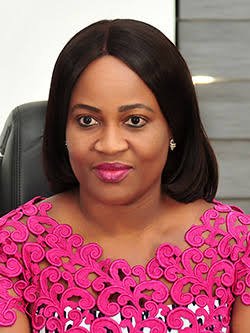
Recognition by ARISE MEDIA GROUP Commemorates International Women’s Month and Honors a Trailblazer in African Development
The Citizens Watch Advocacy Initiative (CWAI) proudly celebrates our own Mme Chinelo Anohu —governance expert, distinguished public servant, development leader, private sector advocate, accomplished entrepreneur, and woman of remarkable substance—following her selection as Woman of Impact in Africa 2026. This prestigious honor, conferred by the ARISE MEDIA GROUP in commemoration of International Women’s Month, recognizes her unwavering dedication to Pan-African development, selfless service to humanity, and transformative contributions across the continent.
From her pivotal roles at the Bureau of Public Enterprise (BPE) National Pension Commission (PENCOM) and the African Development Bank (AfDB) to her current leadership at Mutandis Africa Group, Mme Chinelo Anohu has consistently driven transformational success. Her visionary stewardship has not only shaped the institutions she has led but has also inspired a generation of young Africans, women, and members of the diaspora. Across the continent, she has carved a niche as a beacon of hope and an Amazon to the less privileged—proving that leadership with heart can indeed change lives.
This recognition stands as a powerful affirmation of a life devoted to excellence, service, and uncommon leadership. Anohu’s career reflects a rare synthesis of intellectual depth, professional discipline, moral clarity, and an unwavering commitment to building institutions that matter. Her selection followed a rigorous nomination and vetting process spanning Africa and the global community—a testament to the breadth and depth of her impact.
A Reform-Minded Leader at PENCOM
As former Director General of the National Pension Commission (PENCOM), Mrs. Anohu Chinelo distinguished herself as a highly principled reformer. Steering the affairs of Nigeria’s apex pension regulatory agency, she brought clarity, order, and professionalism to pension administration—instilling investor and stakeholder confidence at levels never before witnessed. Her leadership was marked by transparency, firmness, and a profound sense of responsibility, setting benchmarks for effective public service. Her strong foundations and sustainability pillars endure to this day.
Championing Africa’s Development Agenda
Her influence extended far beyond national borders during her tenure at the helm of the Africa Investment Forum, a flagship initiative of the African Development Bank (AfDB) and seven other members. In that role, she helped structure critical transactions around Africa’s development future, championing African-driven solutions and forging strategic partnerships that elevated the continent’s standing in multinational transactions. She demonstrated, time and again, that Africa’s progress is best advanced by leaders who understand its realities and are unafraid to transform potential into reality.
Entrepreneurial Vision and Impact
In the private sector, as Founder and Chief Executive Officer of Mutandis Africa Group, Mme. Anohu continues to exemplify visionary leadership. Her entrepreneurial journey reflects courage, foresight, and an enduring belief in Africa’s capacity for growth and innovation. Through her work, she has unlocked opportunities in multi billion projects, facilitating policies that enhance investments and strengthened sovereign discourse for inspired confidence in African enterprise, and contributes tangibly to sustainable economic development across the continent.
A Beacon for Women and Girls Across Africa
Beyond the offices she has held and the institutions she has led, Mme Chinelo Anohu represents something profoundly powerful for women across Africa. She is living proof that competence, integrity, and hard work remain the most enduring currencies of influence. Her journey sends an unmistakable message to women and girls everywhere: that leadership is attainable, that excellence is non-negotiable, and that impact is possible—even in the most challenging environments. She stands as a source of encouragement to women striving quietly, breaking barriers steadily, and building futures with determination and grace.
A Celebration of Legacy and Purpose
The award ceremony, scheduled for March 8, 2026, in Lagos, is more than a celebration of individual achievement—it is a tribute to a legacy defined by service, resilience, and purpose. It offers a moment to honour a woman whose work continues to inspire confidence in Africa’s leadership capacity and whose example will guide generations yet to come.
The Citizens Watch Advocacy Initiative proudly congratulates Mme Chinelo Anohu on this well-deserved and meritorious recognition. We also commend the ARISE MEDIA GROUP for spotlighting leadership that truly reflects the very best of African excellence. Mme Chinelo Anohu’s story is a compelling reminder that when leadership is anchored in strong values and clear vision, its impact transcends borders and endures across time.
Signed.
Omoba Kenneth Aigbegbele
Executive Secretary, CWAI.
By Emeka Idika Kalu
The South-East region of Nigeria, a commercial nerve centre and thriving economic hub, became synonymous with insecurity, driving waves of Nigerians from the region to relocate and seek refuge abroad.
This is besides the current economic hardship in the country, which is perceived as the primary cause of the high influx of Nigerians migrating abroad to escape the economic misery (The Japa syndrome).
Between 2019 and 2025, non-state actors held sway in the region, brazenly perpetrating kidnappings, armed robberies, assassinations, ritual killings, and other violent crimes, claiming countless lives and crippling local, state, and regional economy.
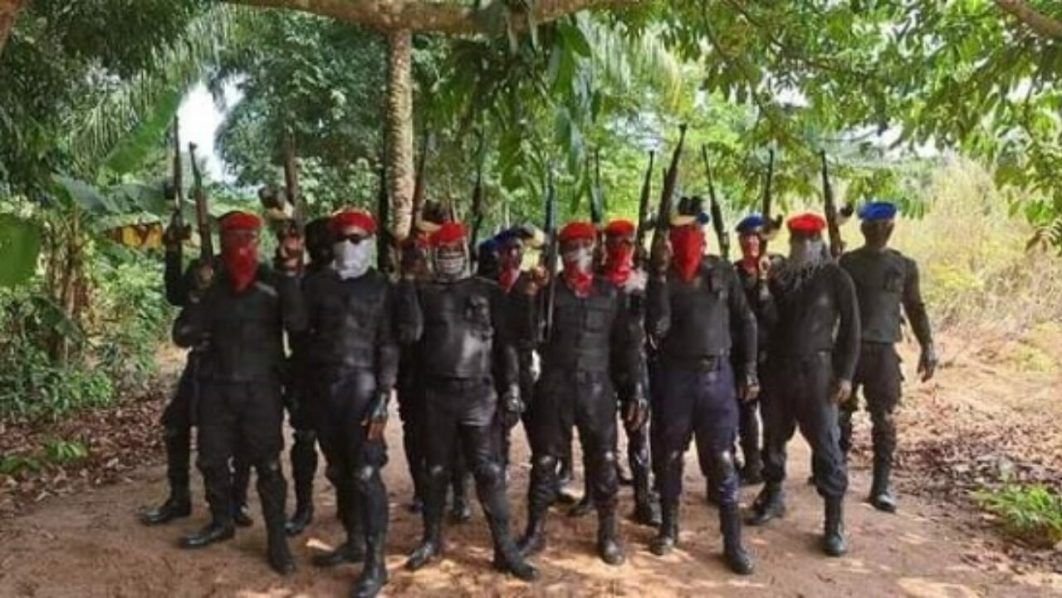
The agitation by the proscribed Indigenous People of Biafra (IPOB) created more tension in the region and exacerbated the situation, with the emergence of its militia arm, the Eastern Security Network (ESN), accused by both State and Federal Governments of unleashing terror on innocent civilians and security checkpoints in the region.
The region particularly witnessed a surge in kidnappings and assassinations, including attacks on prominent citizens in the period under review.
Anambra State, in particular, was plagued by the violent crime with over 14 reported cases of political assassinations between 2022 and 2024.
The attacks became increasingly brazen, with the convoy of the late Senator Ifeanyi Uba coming under heavy attack in 2022, resulting in the deaths of some of his aides and orderlies. Additionally, the political rally of Prof. Chukwuma Soludo was attacked at Isuofia community in Aguata Local Government Area of Anambra in 2021, before his first tenure as Governor of Anambra State, where three police officers were killed.
In November 2025, an attack on former Governor of Anambra State and immediate past Minister of Labour and Productivity Dr. Chris Ngige’s convoy by unknown gunmen left one person dead and several others injured.
In 2021, the region was shocked by the cold-blooded murder of Ahmed Gulak, a former Special Adviser to President Goodluck Jonathan on Political Affairs, who was assassinated on the roadways of Imo State by unknown assailants.
A strong shockwave was felt across Imo State on January 20, 2023, when the Sole Administrator of Ideato North Local Government Area, Chris Ohizu was attacked by unknown gunmen in his country home in Arondizuogu axis of the State. He was kidnapped with two others, and his house was set ablaze.
Two days later, the gunmen gruesomely murdered and beheaded the Local Government Chairman after receiving a six-million-naira ransom for his release. The incident sparked outrage across Imo State when the gunmen released videos showing how they beheaded him with his hands tied while kneeling down.
In March 2025, the Azumini axis of Aba-Port Harcourt Expressway in Abia State was the scene of another brutal attack, when heavily armed gunmen ambushed the convoy of Chief Obasi Lawson, the Founder/CEO of Sobaz Oil and Gas, a prominent player in Nigeria’s downstream/midstream oil and gas sector.
Chief Lawson was abducted, while two of his aides were not lucky as they were killed in cold blood in the incident. This attack sent shockwaves through the business community, highlighting the region’s vulnerability to violent crime.
The insecurity which forced notable Nigerians from the South-East and beyond to relocate abroad includes Mr. Kessington Okorie, a Port Harcourt-based oil and gas worker who fled abroad with his family in 2022 after surviving a kidnap incident with his wife in June 2022 and series of other attacks and kidnap attempts within that period.
Mr. Kessington was kidnapped along with his wife in Imo State on June 3, 2022, and freed two days later after paying huge sum as ransom to the kidnappers to secure their release. The ordeal left his wife hospitalized for days due to the trauma she suffered from the harrowing experience.
This incident, among others, came barely two years after Mr. Kessington narrowly escaped abduction in August 2020 in Port Harcourt as gun-wielding kidnappers trailed him from Elelenwo to JDP roundabout off Peter Odili Road, Port Harcourt. He evaded their capture by driving into a military checkpoint at the gate of an oil servicing company in the area, forcing the gunmen to retreat.
These back-to-back horrific and traumatic incidents compelled Mr. Kessington to relocate abroad with his family in 2022, seeking safety until Nigeria’s security landscape improves especially in the South-East and South-South regions.
Several female kidnap victims who were defiled by their abductors while in captivity choose to maintain a culture of silence after regaining their freedom, to avoid stigma. This culture of silence perpetuates trauma and hinders justice. Victims often face societal judgment, shame, and rejection, making disclosure daunting.
Besides the cases of crime highlighted in this report, there are preponderance of such unreported cases witnessed during the heightened insecurity in Nigeria’s South-East region.
Apart from the economic hardship facing the country, the exodus of Nigerians abroad due to insecurity is not abating, as investors and citizens flee the country’s crippling insecurity and economic misery.
The economic implications are dire, with the contributions of the South-East region to the wealth of Nigeria hanging in the balance.
A resident of the region lamented that, “It is heartbreaking to see our region, once a beacon of prosperity, reduced to a hotspot of insecurity such as kidnapping and other violent crimes, worsened by the multi-faceted economic crisis plaguing the country.”
For another resident “the insecurity got too much that a family member of my friend was kidnapped, and it was a nightmare. We were considering moving abroad, like many others. It’s sad to leave our home, but safety comes first.”
The Nigerian government must act decisively to stem the tide of insecurity and restore stability in the South-East. Until then, the exodus of Nigerians seeking safer shores abroad will continue, draining the region of its talents and potentials (Brain Drain).
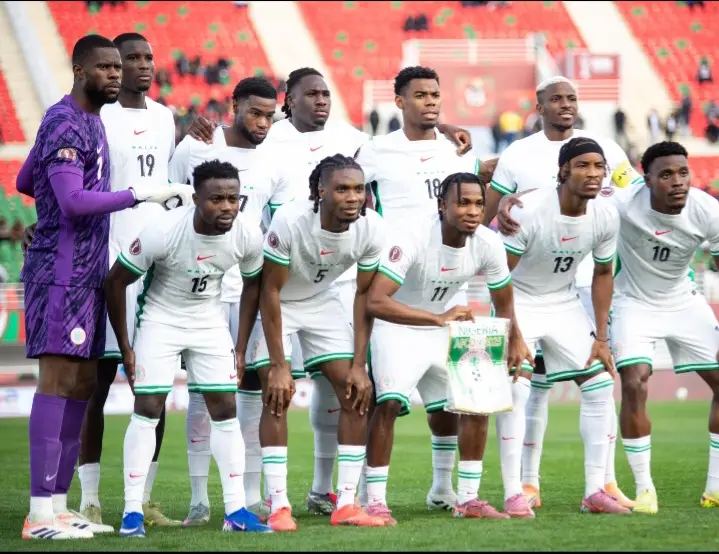
Nigeria’s Super Eagles will take centre stage on Saturday in Marrakech, chasing a semi-final place as AFCON 2025 intensifies with a heavyweight quarter-final clash.
Three-time champions Nigeria meet 2019 winners Algeria at the 45,000-capacity Grand Stade de Marrakech, with pride, history and momentum at stake.
Both teams advanced from the group stage with perfect records, the only sides to do so, but knockout football leaves no room for past achievements.
Nigeria arrived as the tournament favourites after scoring 12 goals and conceding four, including a commanding 4-0 Round of 16 win over Mozambique.
Super Eagles coach, Eric Chelle has played down expectations, insisting focus must remain firmly on the immediate challenge.
He said, “I only think about Marrakech,” Chelle said. “There is a game to play. After that, we can think about the next step.
“The story starts in Marrakech,” he added. “Training, focus and the next game – that is all that matters now.”
In spite of reports of unpaid bonuses and minor on-field disagreements, players insisted that unity within the Nigerian camp remained intact.
On the pitch, Nigeria looked revitalised, combining pace, power and purpose under Chelle’s pragmatic leadership.
Ademola Lookman has been Nigeria’s standout performer, recording three goals and five assists to emerge as the tournament’s most productive player.
Victor Osimhen has also scored three goals, moving within three of Nigeria’s all-time AFCON scoring record of 37 goals.
Akor Adams added fresh impetus with his first AFCON goal against Mozambique, further strengthening Nigeria’s attacking options.
However, defensive lapses remained a concern, with Nigeria conceding four goals in four matches ahead of their sternest test yet.
Midfield anchors Wilfred Ndidi and Alex Iwobi have driven Nigeria’s intensity, though Ndidi, Frank Onyeka and Calvin Bassey are on suspension alert.
History provides mixed comfort. Nigeria and Algeria have met 21 times, with Nigeria winning nine, Algeria seven, and five encounters drawn.
Algeria famously eliminated Nigeria 2-1 in the 2019 AFCON semi-final, sealed by Riyad Mahrez’s stoppage-time free-kick.
The Desert Warriors arrive seeking redemption after group-stage exits at the last two AFCON tournaments.
Coach Vladimir Petković sees reaching the quarter-finals as merely the foundation of a rebuilding journey.
“Qualifying was important, but it is the minimum,” Petković said. “Now our focus is Nigeria. Rebuilding means responsibility, courage and unity.”
Under Petković, Algeria had recorded 19 wins in 24 matches, signalling steady recovery since their 2019 triumph.
He said, “I never promise trophies,” he added. “What I promise is pride, courage and unity. Without unity, success is impossible.”
Algeria edged DR Congo 1-0 after extra time in the Round of 16, Adil Boulbina striking decisively in the 119th minute.
Defensive discipline underpins their campaign, conceding just one goal in four matches, with goalkeeper Luca Zidane in fine form.
Zinedine Zidane had watched every Algeria match from the stands, lending symbolic weight to their quiet resurgence.
Captain Riyad Mahrez, 34, remains influential, scoring three goals and guiding a squad blending experience with youth.
Baghdad Bounedjah, Ismaël Bennacer and Ramy Bensebaini bring winning pedigree, while Fares Chaibi adds youthful drive.
Mahrez expects another tight encounter. “Nigeria? We know them well. The match won’t be easy. Anything is possible,” he said.
Nigeria had reached the AFCON semi-finals a joint-record 16 times, often thriving when the pressure is highest.
Should the Super Eagles advance, they will face either hosts Morocco or Cameroon, reviving memories of the historic 1988 AFCON.
Thirty-eight years ago in Rabat, Nigeria edged Algeria on penalties before losing a controversial final to Cameroon.
On Saturday, history, ambition and belief collide again in Marrakech, as Nigeria seek progress and Algeria chase redemption.


54 Garlands To A Performer: Happy Birthday To Governor Peter Mbah

Nigeria is a Country with Rule of Law Under Renewed Hope Agenda – Military Veterans Caution Nigerian Army Over Land Grabbing
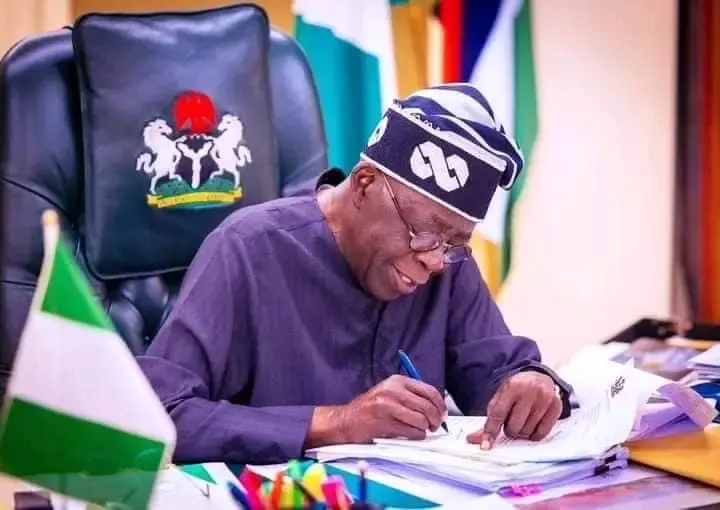
New Petrol Import Permits May Reverse Nigeria’s Push for Domestic Refining and Increase Pressure on Foreign Reserve” — Energy Policy Group Tells President Tinubu
-

 Cover7 months ago
NRC to reposition train services nationwide.. Kayode Opeifa
-

 Fashion9 years ago
These ’90s fashion trends are making a comeback in 2017
-
Entertainment9 years ago
The final 6 ‘Game of Thrones’ episodes might feel like a full season
-
 Opinion1 year ago
Bureaucratic Soldier, Kana Ibrahim heads Ministry of Aviation and Aerospace After Transformative Tenure at Defence
-
 Opinion1 year ago
Hon. Daniel Amos Shatters Records, Surpasses Predecessor’s Achievements in Just Two Years
-

 Opinion4 months ago
Barrister Somayina Chigbue, Esq: A rising legal leader shaping institutioal excellence in Nigeria
-
 News8 months ago
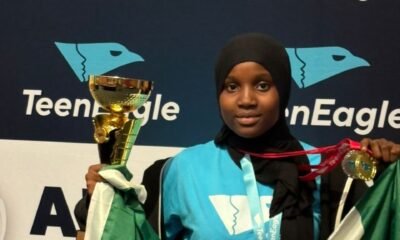
Nigerian Nafisa defeats 69 Countries at UK Global Final English Competition
-
 Entertainment1 year ago
CONGRATULATORY MESSAGE TO THE NEW TOL HUBA, HIS ROYAL MAJESTY, ALHERI TOL BULUS NYAKO Esq.