
Cover
Group urges Tinubu to tackle insecurity in South-West, pardon Igboho

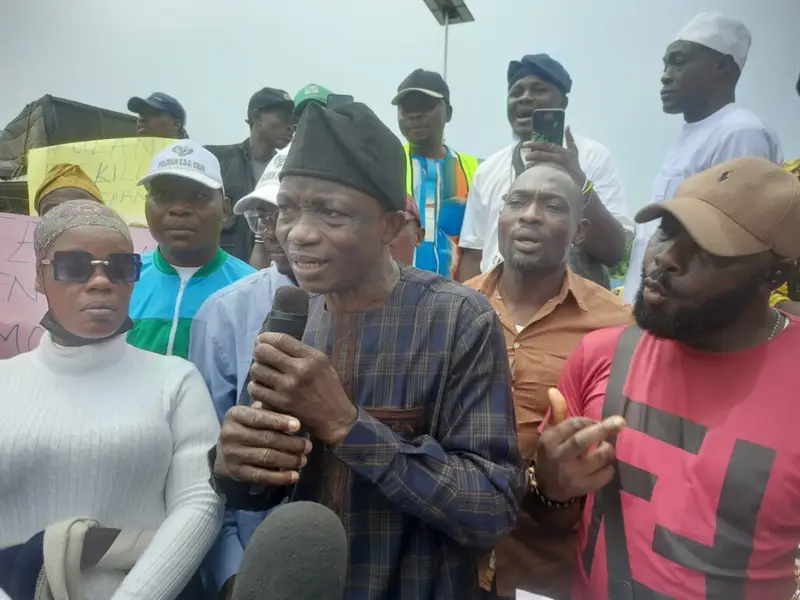
The Yoruba Self-Determination Movement (YSDM) has urged President Bola Tinubu to intensify efforts to end insecurity across the South-West zone.
Leaders and members of the Yoruba socio-cultural group made the call during a peaceful protest on Friday in Lagos.
The protesters also demanded that the Federal Government remove the name of Yoruba Nation agitator, Chief Sunday Adeyemo, popularly known as Sunday Igboho, from its wanted list.
Speaking during the protest, which was held under police watch at the 7Up Tollgate, Mr Opeoluwa Akinola, a leader of the group, said many farmers in rural areas still live in fear of kidnappers and bandits.
He stressed the need for urgent and decisive government action against criminal attacks, adding that the crisis between herders and farmers had persisted for too long.
“As we speak, no fewer than 24 communities have been affected,” Akinola said.
On Adeyemo, he described the agitator as a “son of the soil” who had shown unwavering commitment to protecting the region.
According to him, Adeyemo could contribute significantly to community-led security initiatives if given institutional backing and recognition.
Mrs Funmilayo Ogunniyi, a women leader in the Ifelodun Apapo Omo Yoruba group, commended the efforts of security agencies but said more must be done to protect families and livelihoods.
“Many kidnappings are happening around South-West borders,” she said.
Mr ‘Loluwa Ologun, a youth leader, urged political leaders to rise above partisan divides to confront what he described as a “national monster.”
“Insecurity has grown into a monster. This is not the heritage our forebears left us.
“We refuse to accept a Nigeria where Yoruba sons and daughters live as strangers in their own land,” he said.
The protest follows President Bola Tinubu’s recent approval of a state pardon for 175 Nigerians, an exercise described by the Presidency as part of efforts to promote national reconciliation.
Among those pardoned were the late nationalist Herbert Macaulay and former FCT Minister, Maj.-Gen. Mamman Vatsa (rtd.), who was executed in 1986.
Also granted posthumous clemency were environmental activist Ken Saro-Wiwa and eight members of the Ogoni Nine executed under the Abacha regime in 1995.
In addition, 65 inmates had their sentences reduced, seven death sentences were commuted to life imprisonment, and 82 inmates received presidential clemency.
According to the presidency, the move reflects the government’s commitment to restorative justice and the rule of law.
Analysts say YSDM’s demand for Adeyemo’s delisting from the wanted list aligns with the spirit of forgiveness reflected in the presidential pardon.
They note that extending clemency to the Yoruba agitator could strengthen trust between the government and communities seeking greater security and autonomy.
For many protesters, such a gesture would combine justice with compassion and reinforce Tinubu’s image as a leader committed to peace and inclusion.
As insecurity continues to challenge the region, YSDM says only decisive leadership and reconciliation can guarantee lasting safety for the people of the South-West.

The Chairman of the Nigeria Union of Journalists (NUJ), Federal Capital Territory (FCT) Council, Grace Ike, has been described as a transformative leader in the media profession as she marks her birthday.
In a statement issued on Tuesday in Abuja, a former President of the Nigeria Association of Women Journalists (NAWOJ), Evelyn Onyilo, commended Ike for breaking barriers and redefining leadership within the union.
Onyilo noted that Ike made history as the first female chairman of the NUJ FCT Council in over four decades, describing her emergence as a significant milestone for women in journalism.
She said Ike’s tenure had been marked by remarkable achievements, particularly in infrastructural development and the welfare of members, adding that her leadership had also strengthened participation and unity within the union.
“Her tenure has witnessed unprecedented development and effective mobilisation of members to actively participate in the affairs of the union, making her a foremost transformative leader of our era,” Onyilo said.
The publisher of Phenomenal People Magazine further described Ike as a media icon of immense value, praying for greater accomplishments, good health, and continued success in her leadership journey.
Onyilo congratulated Ike on her birthday and wished her many more years of impactful service.

he Chief of Army Staff (COAS), Lieutenant General Waidi Shaibu, on Saturday, March 21, 2026, hosted a special Sallah luncheon for troops of the Forward Operations Base (FOB) Sobe in Owan West Local Government Area of Edo State as part of activities marking the Eid-el-Fitr celebration.
Speaking at the event, the COAS reaffirmed the Nigerian Army’s commitment to improving troop welfare and boosting morale through strategic initiatives. He urged the soldiers to remain resolute in their duty to defend the nation’s peace, unity, and territorial integrity.
Represented by the Commander, 4 Brigade Nigerian Army, Brigadier General Ahmed Balogun, the Army Chief commended the troops for their resilience and professionalism despite operating under challenging conditions. He noted that their sacrifices and dedication embody the true spirit of the Nigerian soldier.
“They serve in difficult and often demanding environments, far from the comfort of their homes, yet remain steadfast in loyalty and professionalism.
Their endurance, sacrifice, and courage represent the true spirit of the Nigerian soldier,” he said, while praying for their safety and success in ongoing operations.
The COAS also lauded the continued collaboration between the Nigerian Army and other security and intelligence agencies, describing inter-agency synergy as critical to sustaining operational success and national stability.
He further expressed appreciation to President Bola Ahmed Tinubu, Commander-in-Chief of the Armed Forces, for his unwavering support and commitment to the welfare and operational effectiveness of the military, noting that the President’s leadership remains a strong source of motivation for the Armed Forces.
In his welcome address, the Commander, FOB Sobe, Lieutenant Colonel Stanley Agboro, described the COAS luncheon as a significant annual tradition held during major festive periods, including Eid-el-Fitr, Eid-el-Kabir, Easter, and Christmas.
He said the initiative is aimed at boosting troop morale, recognising their sacrifices, honouring fallen heroes, and strengthening camaraderie within the ranks.
Agboro appreciated the Brigade Commander and his entourage for visiting the base to celebrate with the troops. He also acknowledged the presence of the Vice Chairman of Owan West Local Government Area, Mr Dele Aleburu, who represented the council chairperson, Madam Joy Ohonyon, as well as the traditional ruler of Sobe, HRH Anthony Ero Aleburu I, and heads of other security agencies in the area.
The event featured a luncheon, cultural dance performances, comedy presentations, and morale-boosting songs by the troops.
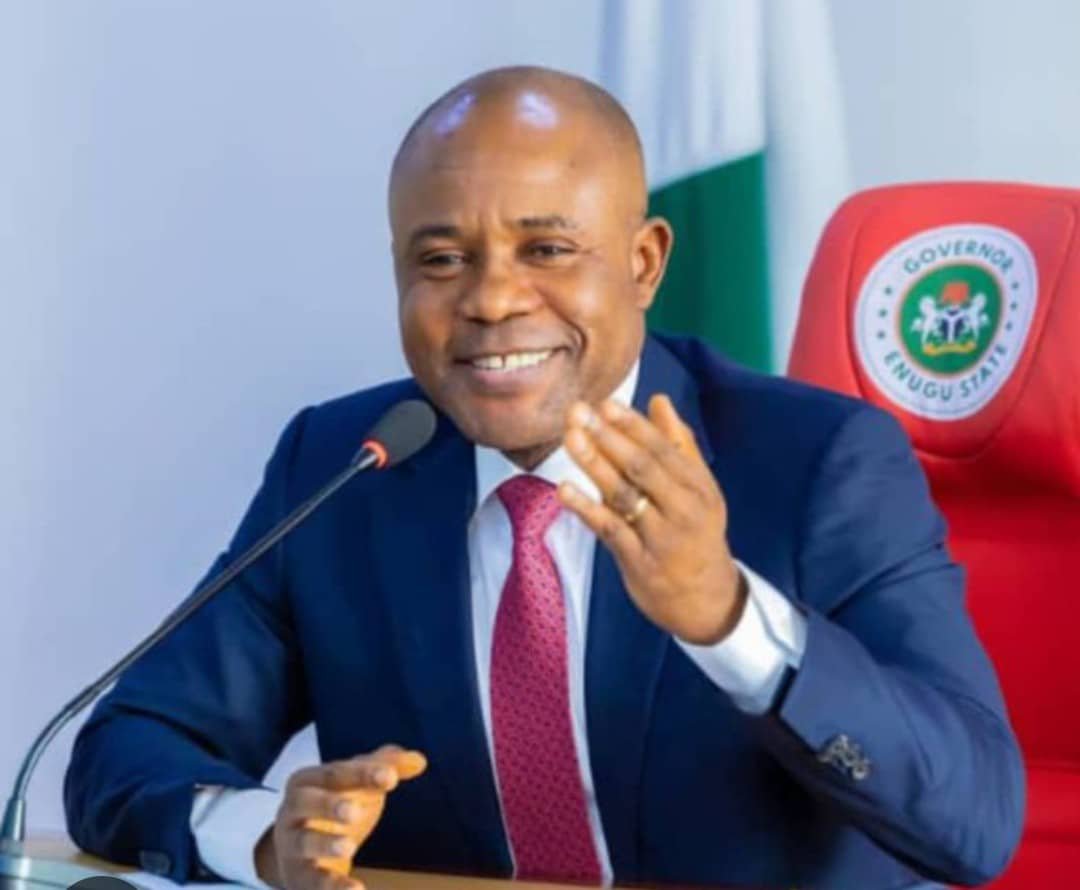
Happy Birthday To An Achiever, History Shall Be kind To You For Your Noble Strides In Leadership.
In the theatre of leadership, where promises often fade into the background of political routine, a few performers step onto the stage with clarity, purpose, and measurable impact. One such figure is Peter Mbah, the Governor of Enugu State, whose journey continues to attract attention for its pace, precision, and ambition.
As he marks his 54th birthday today the 17th of March, it is fitting to string together not just words, but garlands—symbols of appreciation for a man whose governance style has leaned heavily toward results.
Governor Mbah’s leadership narrative is one defined by urgency.
From the outset, he signaled that governance would not be business as usual. His administration set bold targets, particularly in areas such as education, infrastructure, and economic expansion. Rather than dwell in rhetoric, his approach has emphasized timelines, deliverables, and accountability—traits more commonly associated with corporate leadership than traditional politics.
One of the most striking elements of his governance is his focus on education reform. By prioritizing smart schools and digital learning infrastructure, Mbah has demonstrated an understanding that the future of any society lies in how well it prepares its young minds. His policies reflect a belief that education must not only be accessible but also relevant in a rapidly evolving global landscape, little his signature refrain TOMORROW IS HERE resonates not only with Ndi’Enugu and the people of the South East but across the nation.
Infrastructure development under his watch has also taken center stage. Roads, transport systems, and urban renewal projects have been approached not just as physical upgrades, but as economic enablers. The philosophy is simple: when movement becomes easier, commerce thrives, and when commerce thrives, people prosper.
Beyond policy and projects, there is also the intangible quality of leadership presence. Governor Mbah has cultivated an image of a leader constantly in motion—inspecting, engaging, pushing. This has helped shape public perception of a government that is active and responsive, rather than distant and ceremonial.
At 54, the Governor stands at a point where experience meets momentum. There is enough behind him to assess his direction, and enough ahead to determine his legacy. The expectations are high, but so too is the energy he appears to bring to the role.
Birthdays often invite reflection, but they also offer an opportunity to look forward. For the people of Enugu State, this moment is not just about celebrating the man, but also about evaluating the journey so far and anticipating what lies ahead.
Fifty-four garlands, then, are not merely decorative—they represent milestones, challenges overcome, and ambitions still in pursuit. For a performer in the arena of governance, the applause is never final. It is earned, continuously, in the quiet execution of vision.
Happy Birthday, Governor Peter Mbah, indeed under your responsible and responsive watch over Enugu State TOMORROW IS HERE.
Okechukwu Nwafor
Concerned Professionals For Good Governance. (A Good Leadership Advocacy Group).


NUJ FCT Chairman, Grace Ike, Hailed as Transformative Leader on Birthday

It’s Grace Ike’s Day: NUJ FCT Chairman Celebrated Across Board

The Political Economy of Nigeria’s 2027 Elections: APC’s Path to Victory by Olugbesan Idris, Ph.D
-

 Cover7 months ago
NRC to reposition train services nationwide.. Kayode Opeifa
-

 Fashion9 years ago
These ’90s fashion trends are making a comeback in 2017
-
Entertainment9 years ago
The final 6 ‘Game of Thrones’ episodes might feel like a full season
-
 Opinion1 year ago
Bureaucratic Soldier, Kana Ibrahim heads Ministry of Aviation and Aerospace After Transformative Tenure at Defence
-
 Opinion1 year ago
Hon. Daniel Amos Shatters Records, Surpasses Predecessor’s Achievements in Just Two Years
-
 Opinion4 months ago
Barrister Somayina Chigbue, Esq: A rising legal leader shaping institutioal excellence in Nigeria
-

 News8 months ago
Nigerian Nafisa defeats 69 Countries at UK Global Final English Competition
-
 Special Report1 year ago
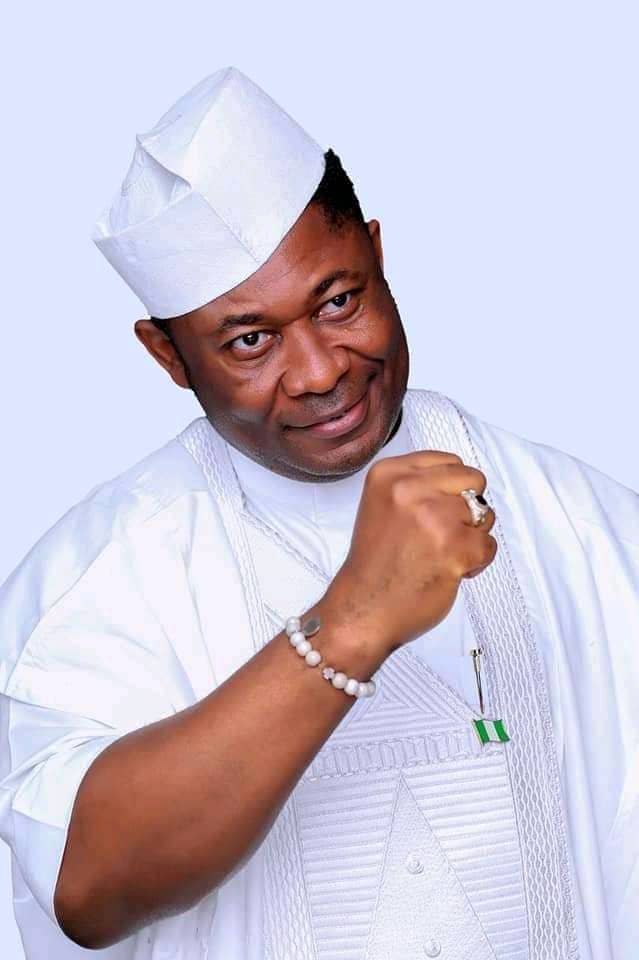
Golden Jubilee: Celebrating Tein Jack-Rich’s Life of Purpose and Impact