
Cover
Guinea-Bissau coup unacceptable assault on democracy — ECOWAS Parliament

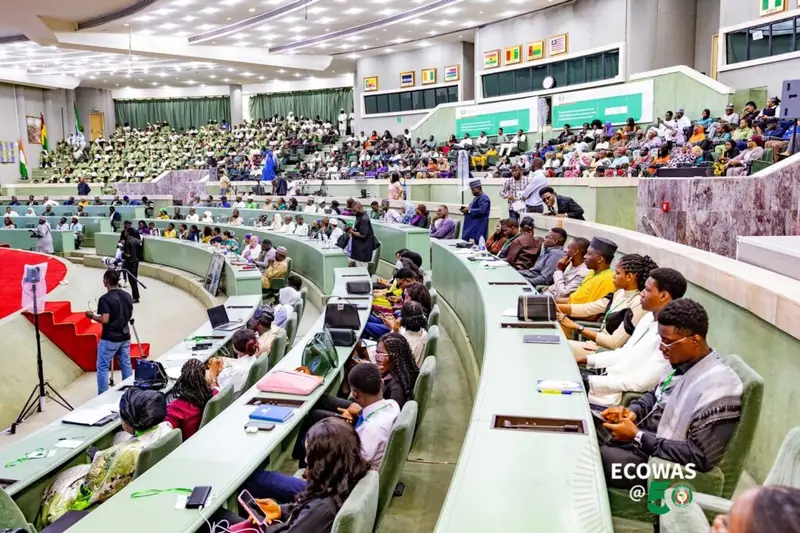
The ECOWAS Parliament has described the recent military coup d’etat and takeover of power in Guinea-Bissau as an unacceptable assault on democracy and a direct threat to regional and global stability.
The parliament’s Speaker Memounatou Ibrahima stated this during the 2025 Second Ordinary Session in Abuja on Tuesday, convened by the Parliament amid rising concern over backsliding in democratic governance across West Africa.
The News Agency of Nigeria (NAN) reports that the two-week session, which coincides with the Parliament’s 25th anniversary, will focus on myriad issues, including the 2026 Community Budget, legislative reforms.
Others include gender parity and women mainstreaming in politics, country reports, strategic engagements with international partners, as well as the specific dedication of Wednesday for deliberations on the Guinea-Bissau coup.
Ibrahima, whose keynote address was read by the First Deputy Speaker and Nigeria’s Deputy Senate President Jibrin Barau warned that the coup violated ECOWAS’ zero tolerance principle against unconstitutional changes of government.
The speaker stated that the military takeover of power in Guinea-Bissau occurred, in spite of a peaceful electoral process, and demanded the full restoration of democratic order in the country.
She also described the military action as a domestic constitutional breach and a destabilising ripple in a region that is already grappling with insecurity, economic strain, and fragile political transitions.
Ibrahima announced that a high-level session would be held on Wednesday, to enable the regional parliamentarians to exhaustively deliberate on the coup in Guinea-Bissau, and chart the way forward.
While decrying the coup as an unfortunate development, she declared that the regional body stood resolutely with the people of Guinea-Bissau amid the truncating of democracy in their country.
The speaker said that the coup signaled a renewed push by ECOWAS to assert authority at a time that the region was witnessing a disturbing resurgence of coups from the Sahel to the coast.
According to her, the will of Guinea-Bissau’s electorate must prevail, adding that ECOWAS institutions and heads of state are aligned on sanctions and diplomatic measures to reverse the military takeover.
Ibrahima called for collective action to protect democratic gains across the sub-region, as the panacea for the development.
“The voices of the people, expressed clearly and peacefully at the ballot box, must be respected.
“Persistent insecurity, economic crises, climate shocks, and unstable transitions continue to test our region.
“However, coordinated, united action remains our best defence,” she said.
The speaker also called for deeper integration, stronger governance frameworks, and strengthened partnerships between West African countries global institutions.
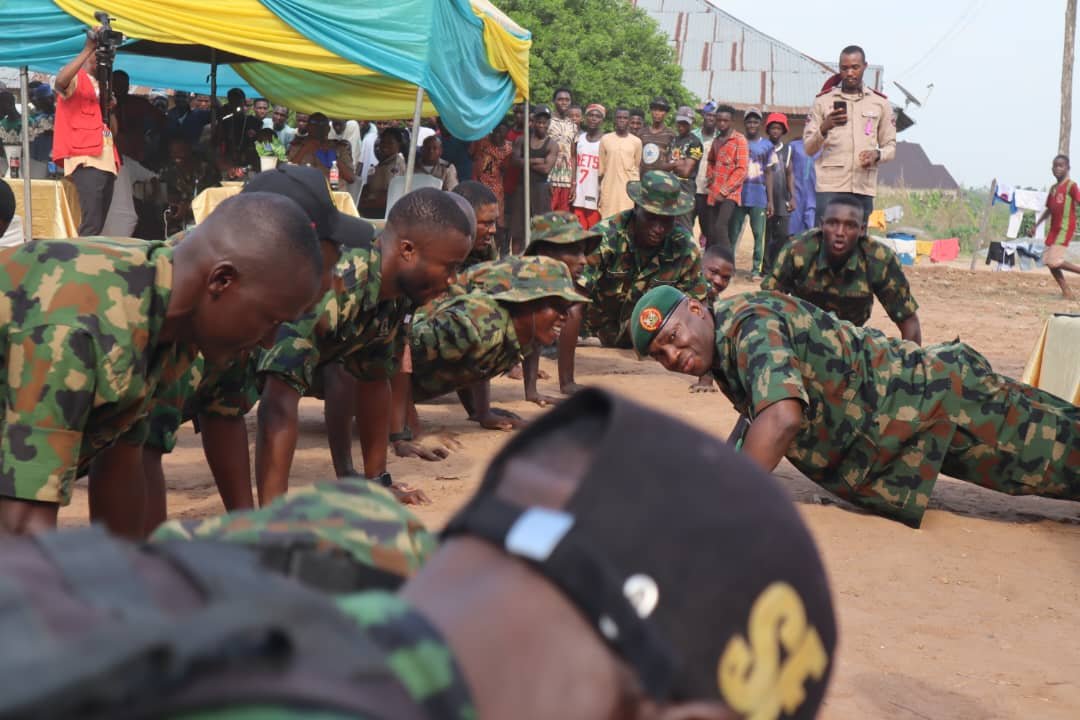
he Chief of Army Staff (COAS), Lieutenant General Waidi Shaibu, on Saturday, March 21, 2026, hosted a special Sallah luncheon for troops of the Forward Operations Base (FOB) Sobe in Owan West Local Government Area of Edo State as part of activities marking the Eid-el-Fitr celebration.
Speaking at the event, the COAS reaffirmed the Nigerian Army’s commitment to improving troop welfare and boosting morale through strategic initiatives. He urged the soldiers to remain resolute in their duty to defend the nation’s peace, unity, and territorial integrity.
Represented by the Commander, 4 Brigade Nigerian Army, Brigadier General Ahmed Balogun, the Army Chief commended the troops for their resilience and professionalism despite operating under challenging conditions. He noted that their sacrifices and dedication embody the true spirit of the Nigerian soldier.
“They serve in difficult and often demanding environments, far from the comfort of their homes, yet remain steadfast in loyalty and professionalism.
Their endurance, sacrifice, and courage represent the true spirit of the Nigerian soldier,” he said, while praying for their safety and success in ongoing operations.
The COAS also lauded the continued collaboration between the Nigerian Army and other security and intelligence agencies, describing inter-agency synergy as critical to sustaining operational success and national stability.
He further expressed appreciation to President Bola Ahmed Tinubu, Commander-in-Chief of the Armed Forces, for his unwavering support and commitment to the welfare and operational effectiveness of the military, noting that the President’s leadership remains a strong source of motivation for the Armed Forces.
In his welcome address, the Commander, FOB Sobe, Lieutenant Colonel Stanley Agboro, described the COAS luncheon as a significant annual tradition held during major festive periods, including Eid-el-Fitr, Eid-el-Kabir, Easter, and Christmas.
He said the initiative is aimed at boosting troop morale, recognising their sacrifices, honouring fallen heroes, and strengthening camaraderie within the ranks.
Agboro appreciated the Brigade Commander and his entourage for visiting the base to celebrate with the troops. He also acknowledged the presence of the Vice Chairman of Owan West Local Government Area, Mr Dele Aleburu, who represented the council chairperson, Madam Joy Ohonyon, as well as the traditional ruler of Sobe, HRH Anthony Ero Aleburu I, and heads of other security agencies in the area.
The event featured a luncheon, cultural dance performances, comedy presentations, and morale-boosting songs by the troops.
Happy Birthday To An Achiever, History Shall Be kind To You For Your Noble Strides In Leadership.
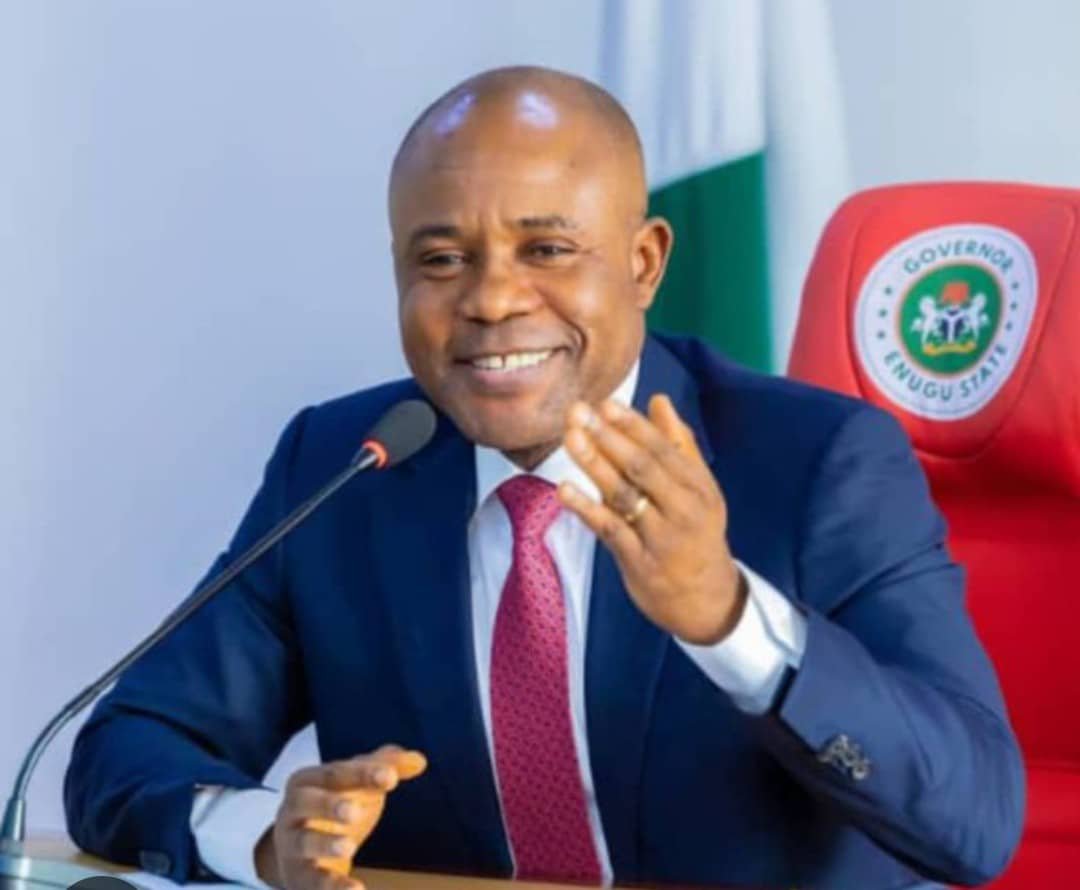
In the theatre of leadership, where promises often fade into the background of political routine, a few performers step onto the stage with clarity, purpose, and measurable impact. One such figure is Peter Mbah, the Governor of Enugu State, whose journey continues to attract attention for its pace, precision, and ambition.
As he marks his 54th birthday today the 17th of March, it is fitting to string together not just words, but garlands—symbols of appreciation for a man whose governance style has leaned heavily toward results.
Governor Mbah’s leadership narrative is one defined by urgency.
From the outset, he signaled that governance would not be business as usual. His administration set bold targets, particularly in areas such as education, infrastructure, and economic expansion. Rather than dwell in rhetoric, his approach has emphasized timelines, deliverables, and accountability—traits more commonly associated with corporate leadership than traditional politics.
One of the most striking elements of his governance is his focus on education reform. By prioritizing smart schools and digital learning infrastructure, Mbah has demonstrated an understanding that the future of any society lies in how well it prepares its young minds. His policies reflect a belief that education must not only be accessible but also relevant in a rapidly evolving global landscape, little his signature refrain TOMORROW IS HERE resonates not only with Ndi’Enugu and the people of the South East but across the nation.
Infrastructure development under his watch has also taken center stage. Roads, transport systems, and urban renewal projects have been approached not just as physical upgrades, but as economic enablers. The philosophy is simple: when movement becomes easier, commerce thrives, and when commerce thrives, people prosper.
Beyond policy and projects, there is also the intangible quality of leadership presence. Governor Mbah has cultivated an image of a leader constantly in motion—inspecting, engaging, pushing. This has helped shape public perception of a government that is active and responsive, rather than distant and ceremonial.
At 54, the Governor stands at a point where experience meets momentum. There is enough behind him to assess his direction, and enough ahead to determine his legacy. The expectations are high, but so too is the energy he appears to bring to the role.
Birthdays often invite reflection, but they also offer an opportunity to look forward. For the people of Enugu State, this moment is not just about celebrating the man, but also about evaluating the journey so far and anticipating what lies ahead.
Fifty-four garlands, then, are not merely decorative—they represent milestones, challenges overcome, and ambitions still in pursuit. For a performer in the arena of governance, the applause is never final. It is earned, continuously, in the quiet execution of vision.
Happy Birthday, Governor Peter Mbah, indeed under your responsible and responsive watch over Enugu State TOMORROW IS HERE.
Okechukwu Nwafor
Concerned Professionals For Good Governance. (A Good Leadership Advocacy Group).
Cover
Nigeria is a Country with Rule of Law Under Renewed Hope Agenda – Military Veterans Caution Nigerian Army Over Land Grabbing

Military and paramilitary veterans who participated in various operations, including ECOMOG, Operation Zaman Lafiya and Operation Pulo Shield, have raised concerns over what they describe as an alleged encroachment on land allocated to them in the Federal Capital Territory (FCT).
The veterans, who are beneficiaries of a welfare housing initiative coordinated through a Special Purpose Vehicle known as the Special Vehicle Plant (SVP) Trust Scheme, claim that construction activities have recently commenced on the land, which they say forms part of their approved housing project.
Speaking through their representatives, a retired Army officer Ayo Olufemi who chose not to mention his rank, the group urged relevant authorities to ensure that all issues relating to the land dispute are handled strictly in accordance with the law. They maintained that Nigeria remains a country governed by the rule of law under the Renewed Hope Agenda of President Bola Ahmed Tinubu.
According to the veterans, the land in dispute is identified as Plot 2303 in Asokoro Cadastral Zone A04, an area that shares boundaries with other military lands belonging to the Nigerian Army, Navy and Air Force.
The group explained that the plot was allocated for the development of a veterans’ welfare housing scheme under the SVP Trust arrangement. Under the framework, the SVP was responsible for site planning, subdivision of the land, allocation to individual beneficiaries, and coordination of Right of Occupancy documentation through the Federal Capital Territory Administration (FCTA).
They stated that beneficiaries opened individual land application files with the Federal Capital Development Authority (FCDA) and received official acknowledgements before land offer letters were issued in 2015.
The veterans further claimed that the project complied with regulatory requirements, including approvals from relevant departments within the FCDA, and that about ₦400 million was reportedly paid as part of statutory ground rent obligations requested by the FCTA.
However, the group alleged that officials linked to the Nigerian Army recently began construction activities on the plot, which they believe falls within the land allocated for the veterans’ housing scheme.
In a petition addressed to the Minister of the Federal Capital Territory, Nyesom Wike, the veterans called for government intervention to prevent what they described as an attempted takeover of the land pending clarification of ownership and boundary issues.
According to the petitioners, the Nigerian Army was previously allocated a neighbouring parcel identified as Plot 2302, measuring approximately 248 hectares, from a larger expanse of land originally designated for military formations and barracks development in the Asokoro area.
They stated that the area behind Mogadishu Cantonment had been earmarked primarily for barracks and accommodation for military personnel.
The veterans also said the allocation of Plot 2303 to their welfare scheme followed representations made to the then Head of State, General Sani Abacha, in recognition of the role played by Nigerian troops during the ECOMOG operations in Sierra Leone.
Beneficiaries of the scheme, they added, had fulfilled statutory obligations, including the payment of required ground rents and other administrative charges.
The group further alleged that attempts were made by individuals linked to Nigerian Army Properties Limited (NAPL) and other parties to merge Plot 2303 with the adjoining Plot 2302 belonging to the Army.
They also claimed that a Memorandum of Understanding was subsequently signed with developers for the construction of residential units described as “modern affordable homes,” with projected selling prices reportedly ranging between ₦81 million and ₦125 million.
According to the petitioners, construction work on the disputed area reportedly began on December 24, 2025.
The veterans stated that some infrastructure earlier developed on the land — including access roads and other facilities constructed in line with FCDA approvals — may have been affected by the ongoing activities.
They also raised broader concerns about the management of military land allocations in the Asokoro area.
According to the petition, Plot 2302 was originally designated for additional barracks development, including a proposed Phase 2 expansion of the facility now known as Tinubu Barracks Phase 1.
However, the veterans alleged that portions of the land were subsequently transferred or sold to institutions, developers and private individuals over time, contrary to the original land-use designation.
They further claimed that only a fraction of the approximately 248 hectares allocated to the Army has reportedly been developed for barracks infrastructure.
The petitioners also alleged that Nigerian Army Properties Limited has continued to transact on parts of the Army’s land allocation through arrangements involving developers and intermediaries.
The veterans argued that these developments may have contributed to boundary disputes involving neighbouring plots, including the land allocated for their housing project.
They therefore called on the FCT Minister to order an immediate review of activities on the disputed land and ensure that all actions comply with existing approvals and legal processes.
In addition, the group requested the establishment of an independent inquiry to examine allegations relating to the allocation and disposal of military land in the Asokoro area.
They also urged the Economic and Financial Crimes Commission (EFCC) to investigate claims concerning the alleged diversion or sale of portions of the Army’s land.
Efforts to obtain official responses from the Nigerian Army, Nigerian Army Properties Limited, and the Federal Capital Territory Administration were unsuccessful as of the time of filing this report.


COAS Salutes Troops’ Sacrifice, Hosts Special Sallah Luncheon in Edo

54 Garlands To A Performer: Happy Birthday To Governor Peter Mbah

Nigeria is a Country with Rule of Law Under Renewed Hope Agenda – Military Veterans Caution Nigerian Army Over Land Grabbing
-
 Cover7 months ago
NRC to reposition train services nationwide.. Kayode Opeifa
-

 Fashion9 years ago
These ’90s fashion trends are making a comeback in 2017
-
Entertainment9 years ago
The final 6 ‘Game of Thrones’ episodes might feel like a full season
-
 Opinion1 year ago
Bureaucratic Soldier, Kana Ibrahim heads Ministry of Aviation and Aerospace After Transformative Tenure at Defence
-
 Opinion1 year ago
Hon. Daniel Amos Shatters Records, Surpasses Predecessor’s Achievements in Just Two Years
-

 Opinion4 months ago
Barrister Somayina Chigbue, Esq: A rising legal leader shaping institutioal excellence in Nigeria
-

 News8 months ago
Nigerian Nafisa defeats 69 Countries at UK Global Final English Competition
-
 Special Report1 year ago
Golden Jubilee: Celebrating Tein Jack-Rich’s Life of Purpose and Impact