
Branded Content
NCC Leads Review of National Telecom Policy

The Nigerian Communications Commission (NCC) has called on interested industry stakeholders to make written submissions to the Commission on the ongoing review of the National Telecommunications Policy (NTP) 2000.
The Commission has set Friday, March 20, 2026, as the deadline for all submissions from stakeholders to be addressed to the Executive Vice Chairman/CEO of the Commission.
The consultation process, which is in exercise of the Commission’s functions under the Nigerian Communications Act (NCA), 2003 and upon the activation of the provisions of Section 24 (1) of the Act on conducting consultative processes for the review of policies, is the first step in the public consultation process to guide the review of the subsisting NTP 2000.
The review of the NTP follows the inauguration of a Ministerial Steering Committee (MSC) and a Ministerial Technical Committee (MTC) by the Minister of Communications, Innovation and Digital Economy, Dr. Bosun Tijani, to commence the process of reviewing the NTP 2000.
Section 24 (1) of the NCA, 2003 states that “Prior to the formulation or review of the general policy for the Nigerian communications sector, the Minister shall cause the Commission on his behalf to first carry out a public consultative process on the proposed policy formulation or modification.”
The policy review will also align with the Minister’s Strategic Blueprint- Accelerating Our Collective Prosperity through Technical Efficiency, which states that the Ministry will drive the review of the Telecoms Policy to account for core issues such as spectrum management, universal access, broadband penetration, net neutrality and quality of service (QoS).
The consultation process and its outcome will support the work of the MSC and the Implementation Committee (IC) in coming up with a reviewed policy that will meet the current challenges of the communications sector and keep up with the rapid and dynamic changes since the current NTP was issued 26 years ago.
The Executive Vice Chairman of the NCC, Dr. Aminu Maida, said in the published consultation paper, that the process will lead to the development of the first draft of the NTP 2026 to replace the existing NTP 2000, following 26 years of implementation.
The draft will also undergo further consultations to enable stakeholders to make more input before a final draft is subjected to the statutory policy approval and validation processes.
“The NTP 2000 has been instrumental to advancing Nigeria’s telecom sector from where it was 26 years ago – from a mere 500,000 lines to almost 180 million active mobile connections as of December 2025.
One of the gaps that the revised policy seeks to address is the increased demand for data services and its externalities.
“This is a first step in the consultation process and there will be other layers of engagements, to ensure that the final draft accommodates varied expertise, feedback and inputs from a cross section of stakeholders,” Maida said.
He implored stakeholders to take the opportunity to participate in developing the policy that will take the communications sector to the next level after the immeasurable successes attained since 2000.
The NTP 2000 marked a major progression from older policies, aiming for liberalisation, modernisation, and competition under the nascent democratic government. NTP replaced the 1998 Policy and successfully paved the way for the growth of mobile telephony and the eventual NCA 2003 by focusing on market deregulation and stakeholder consultation.
In the ongoing review, there are 15 key policy proposals, which form the baseline for the review and potential changes to the existing NTP and provide both the context and policy purpose for necessary changes.
The policy proposal caters to regulation of the industry, its sustainability, emerging technologies, national security, among others.
According to the EVC, the expected feedback will guide the review and amendment of the NTP in line with the expectations of the NCA, 2003.
“The consultation process is open to licensees in the Nigerian communications sector, consumers, agencies of government, international agencies/partners/entities, Civil Society Organisations (CSOs), individuals and other interested stakeholders,” he said.
Branded Content
Transforming Enugu From a Civil Service State to the Industrial, Technological, and Hospitality Hub of the Nation: The Peter Mbah Legacy
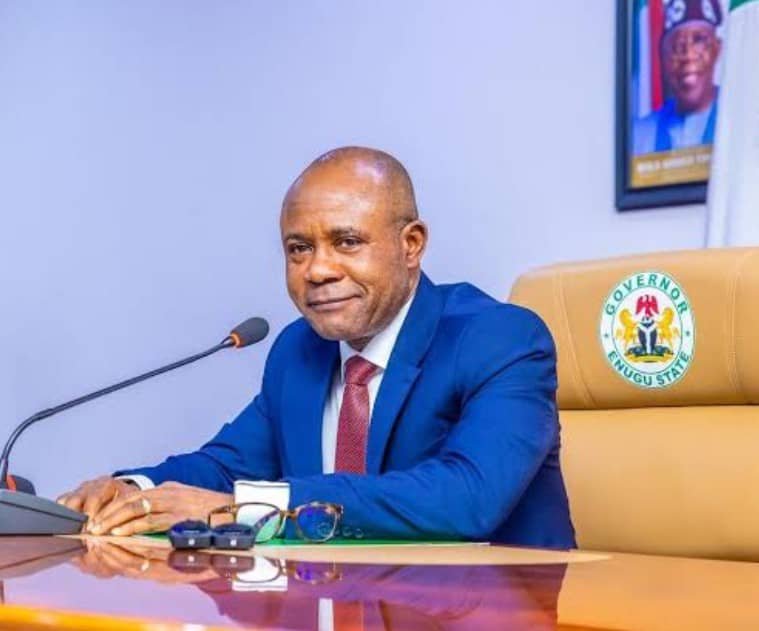
We have seen the SMART SCHOOLS sprouting across the State which Naysayers struggle to rubbish. We have seen the Healthcare Centres that they pretend they cannot see. We have seen Enugu State emerge from a quiet State to the Centre of Corporate activities hosting the most serious Conferences and Corporate events in the Country, which is a testament to uncommon transformation, would the Naysayers also dispute that?
We have seen the eventual end of the Sit-At-Home protestation of IPOB and Pro-Biafra Agitators in the South East, would the Naysayers also deny that it was Peter Mbah that pioneered the challenge of the normative that crippled commerce and industry every Mondays in the South East for years? Have they forgotten how he partnered with Security Agencies, engaged with Igbo Stakeholders, worked with fellow South East Governors and other relevant interests in seeing that the Sit-At-Home protestation is today history? Well politicians of opposing bent will pray their falsehoods gain traction, but we won’t let that happen, we shall meet them TRUTH against falsehood. Facts against fiction, and present critical indices of performance over their debauchery and false propaganda.
Just a few days ago another very bold feat in the Technological growth of Enugu State was sealed with the signing of a 20milion US Dollar project that opens Enugu State as the emergent hub of Technology and Industry in Nigeria. In the coming months most Laptops, Phones, Tabs and Computers that will flood our Markets will not be coming from China, London or the United States but most probably from Enugu, isn’t TOMORROW HERE? Let the Naysayers grapple with the fact that this is not FICTION but TRUISM.
We MUST do some recap of what the watch of Governor Peter Ndubuisi Mbah over Enugu State looks like so TRUTH is not muddled. We MUST continually and continuously put before the people TRUTH over Falsehoods. And without let or hindrance we shall defeat the perfidy of partisans who for politics have chosen to lie and tell foul tales against the obvious.
For decades, Enugu State was widely perceived — both within and outside Nigeria — as a “civil servants’ State”, nay, a polity where federal allocations funded modest public sector activity, with limited industrial vibrancy and slow economic diversification. That narrative, however, has undergone unprecedented rework under the leadership of Governor Peter Ndubuisi Mbah. Since he assumed office on May 29, 2023, Governor Mbah embarked on a bold journey to reinvent Enugu’s economic DNA — leveraging infrastructure, technology, investment reforms, and strategic partnerships to catalyze comprehensive transformation.
From Bureaucracy to Business-Friendly Governance. One of Mbah’s first transformative moves was to dismantle entrenched bureaucratic bottlenecks that stifled business growth and private investment. Through the implementation of Executive Order 005, all Ministries, Departments, and Agencies (MDAs) were mandated to publish service-level agreements laying out transparent processes, costs, and timelines — dramatically improving efficiency and accountability. Yet Naysayers imagine the falsehoods seeking to label Governor Peter Mbah’s watch as opaque will stick, but they won’t. Truth will definitely defeat falsehood.
Mbah’s emphasis on the ease-of-doing-business has rapidly made Enugu a more predictable and attractive ecosystem for investors. Digitizing land administration via the Enugu Geographic Information Services (ENGIS) has slashed land title processing times, fostered investor confidence, and unlocked vast tracts of land for commercial and industrial use. These are facts NOT fiction.
Strategic Infrastructure: Powering Industry, Connectivity and Growth.
Infrastructure development sits at the very heart of Enugu’s ongoing economic metamorphosis. The Mbah administration has constructed hundreds of kilometres of roads linking rural productivity centres to markets. This truism is yet NOT fictional BUT factual.
Revitalized water systems, increasing capacity from 2 million to 120 million litres per day. Yet another TRUTH that they wish wasn’t there.
Passed the Enugu State Electricity Law and operationalized a State electricity regulatory framework, inviting private participation in power generation — a critical move for industrial activity. Another Transformational Stride that they want overlooked BUT we won’t.
Installed extensive fiber-optic networks and modern urban surveillance with AI-enabled command centres, supporting both security and digital commerce. These initiatives collectively underpin a business environment primed for growth, scaling from modest services to robust industrial activity. Any doubt why Enugu State is apparently the go-to State for Conferences and Conventions, and one of the safest in today’s Nigeria?
Industrial Revival and Diversification. Governor Mbah’s industrial strategy bridges legacy revival and futuristic investment. A bold testament to this truism is the fact that dormant enterprises such as Sunrise Flour Mills, United Palm Produce Ltd., and Nigergas Ltd. have been rejuvenated as anchors of local industrial output.
Under Governor Peter Mbah’s watch the Lion Business Park, the Free Trade and Industrial Zone is designed to attract global manufacturers and logistics partners, creating jobs and cementing Enugu’s industrial foothold. Do you yet wonder why and how the State has been able to attract bold foreign Investments, and why Investors and Partners stream to Enugu?
Under the Peter Mbah led government massive agricultural estates and commercial farming initiatives are modernizing food production, adding value chains from the farm to export markets. This is yet another truism that Naysayers loath to admit.
Technology and Human Capital.
To build the Smart Future he holds dear for Ndi’Enugu, Governor Mbah vividly recognizes that the drivers of tomorrow’s economy are rooted in technology and education — not just bricks and mortar. His hallmark Smart Green Schools initiative is deploying high-tech and digitally enabled educational environments across all wards of the State. This strategically positions the youth to thrive in fields such as AI, coding, robotics, and biotech. Simultaneously, investments in digital governance and public sector capacity building are transforming the Civil Service itself into a tech-savvy engine of efficiency and innovation. This is the fact that partisans loathe.
Transportation, Mobility, and Connectivity.
The boisterous and growing Transport infrastructure created by the Action Governor is shifting Enugu from local mobility to regional connectivity and global accessibility. The launch of ENUGU AIR — a State-linked airline initiative — positions the State as a key travel and trade hub linking major Nigerian cities and potentially reaching beyond. If they grudgingly admit this fact, are they disputing the fact that the 5 ultra-modern transport terminals and the State-wide mass transit system, powered by efficient CNG buses, are redefining public mobility? Do they deny the fact that these strategic moves promote intermodal integration — road, rail, and air — putting Enugu on the map as a logistics and travel centre for West Africa? Or for politics MUST they continue to lie and defame a Performing Governor?
The Hospitality, Tourism and Economic Placemaking
Recognitions that attend the Peter Mbah watch are lucid mementos of Enugu’s renewed hospitality and tourism push. Governor Mbah’s administration has revitalized iconic sites and is actively building new infrastructure to draw both local visitors and international travellers. The historic Presidential Hotel — once derelict — has been restored as a symbol of Enugu’s hospitality renaissance. New five-star accommodations and conference facilities are under construction to support global meetings, events, and tourism. Government initiatives are positioning Enugu to compete in sectors such as medical tourism, further diversifying its hospitality appeal. In recognition of these efforts, Enugu has received tourism advancement accolades, underscoring the strategic fusion of infrastructure, culture, and travel in its growth story. Again this is the FACT, most visible and profound, and the FICTION and debauchery of naysayers cannot assail it.
A Legacy structured and sculptured on an irrevocable resolve to MAKE A DIFFERENCE (MAD) in leadership and in governance.
More than Infrastructure what makes Governor Mbah’s legacy profound is not merely the volume of projects, but the holistic vision behind them. He is steadily building an economy less dependent on federal transfers, more resilient in its industrial capacities, and adaptive in an increasingly digital global marketplace. His leadership blends visionary policy, investor confidence-building, and an emphasis on sustainable, inclusive growth, thus positioning Enugu as a model for 21st-century subnational development. And this truism offends Naysayers BUT we won’t let their false narrative and debauchery gain traction.
We implore the Transformational Governor and his Team to sustain the current momentum, if they do so and CONTINUE TO PUT ENUGU STATE FIRST, from the industrial parks and smart cities to tourism and tech education — the present reinvention of Enugu State will not only be the legacy of one leader and his Team but a blueprint for transformative governance across Nigeria.
As 2027 approaches, our challenge to the critics of Governor Peter Ndubuisi Mbah is to dwell on issues of governance NOT falsehoods and blackmail; to his potential opponents at the Polls come 2027 we urge to PUT Enugu State First by addressing and debating people-centered policies NOT debauchery and delusive propaganda; and to the media and the civil society we recommend a proactive investigation of leaders and leadership NOT naysaying and devious proselytism.
With Governor Peter Ndubuisi Mbah yet in the saddle, truly TOMORROW IS HERE. And Enugu State is the WINNER.
Okechukwu Nwafor
Concerned Professionals For Good Governance. (A Good Leadership Advocacy Group).
Branded Content
Nigeria’s telecom sector pulls in $392.9m in nine months as regulatory reset restores investor confidence
Nigeria’s telecom sector is back on investors’ radar.
Fresh data from the National Bureau of Statistics (NBS) shows that the industry attracted $392.92 million in foreign direct investment (FDI) between January and September 2025—surpassing the $319.72 million recorded in the same period of 2024.
The most striking turnaround came in Q3 2025, when FDI inflows surged to $208.51 million, up from just $14.74 million in Q3 2024. That represents a 1,314.59% year-on-year increase—a dramatic reversal from the slump that rattled the sector a year earlier.
Quarterly data shows a steady build-up through 2025. Investments stood at $80.78 million in Q1, rose to $103.63 million in Q2, and then spiked sharply in Q3. The rebound suggests renewed foreign confidence in a sector that had seen capital inflows collapse through much of 2023 and 2024. For context, telecom capital importation reached $191.57 million in Q1 2024 before dropping to $113.42 million in Q2 and plunging to $14.74 million in Q3.
Industry analysts point to a decisive intervention by the Nigerian Communications Commission (NCC) as a major catalyst.
On January 20, 2025, the NCC approved a 50% tariff adjustment—the first major price review in 11 years. The move, which was initially challenged by some quarters, was framed by the regulator as a sustainability measure aimed at restoring operator margins in the face of rising operating costs, currency volatility, and infrastructure pressures.
The tariff adjustment appears to have reset investor sentiment.
In effect, the Commission’s strategy sought to strike a balance between consumer protection and industry viability. By allowing operators limited pricing flexibility under regulatory oversight, the NCC created breathing room for reinvestment—a move that foreign investors seem to have interpreted as a signal of policy stability.
The recovery in FDI suggests that global investors are responding not just to higher tariffs, but to the broader regulatory clarity that accompanied them. The NCC has in recent months emphasised predictable rule-making, enforcement of quality-of-service standards, and corporate governance reforms across the sector.
Industry stakeholders agree that the price review has translated into reinvestment rather than windfall gains. The Association of Telecommunications Companies of Nigeria (ATCON) has said the adjustment enabled operators to channel additional revenue into improving network quality, expanding digital access, and strengthening service delivery.
Those investments are already visible in network expansion metrics. In 2025 alone, operators deployed thousands of new sites nationwide, reinforcing backbone capacity and extending connectivity deeper into underserved communities.
According to the Executive Vice Chairman of the NCC, Dr. Aminu Maida, regulatory interventions following the review triggered fresh commitments of about $1 billion in new investment from telecom operators. The capital is being channelled into infrastructure upgrades, expansion into new coverage areas, and accelerated 4G and 5G deployments.
In a recent statement, Dr. Maida noted that “in 2025, over $1 billion in industry investment resulted in the deployment of more than 2,850 new sites to expand both coverage and capacity nationwide. Much of the progress reflected in today’s reports is a direct outcome of these investments,” while also stating that in 2026, operators were going to be investing even more than the billion dollars seen in 2025.
“We have secured commitments from operators to exceed their 2025 investment levels in 2026, with infrastructure investments continuing in earnest.”
The combination of tariff reform, enforcement of performance standards, and regulatory engagement with operators suggests that the NCC is actively managing both market discipline and sector sustainability. That dual role—referee and enabler—is increasingly shaping capital decisions.
For a sector that underpins Nigeria’s digital economy, the implications are significant. Higher FDI typically translates into stronger infrastructure, improved network quality, expanded broadband penetration, and deeper 5G rollout.
If the current momentum holds, 2025 may be remembered as the year Nigeria’s telecom sector moved from defensive survival to renewed expansion—with regulatory recalibration playing a central role in restoring investor confidence.

Just a look at the story, a flash went off in my head. At this age one shouldn’t engage in protest writings or spew out materials that hover on malcontent or, in the extreme, frustration. Or are my thoughts simply just cyclical? I have had to review my writings in the past few years and I can report, very miserably, that they remain nearly on the same spot, dealing with nearly the same issues with progress really very negligible.
Or how does one comfortably explain the development that, nearly three years into the lifespan of the President Bola Ahmed Tinubu administration, Dr Bosun Tijani, the Minister of Communications, Innovation and Digital Economy, is directing the Nigerian Communications Commission (NCC), on how to regulate the telecommunications industry and actions to punish expeditiously where necessary.
This information is contained a January 8, 2026, memo addressed to Dr Aminu Maida, EVC, by the Minister, titled: Strengthening Regulatory Oversight for Quality-of-Service Compliance and Elevating Consumer Experience in Nigeria’s Telecommunications Sector.
There is nothing wrong with the Minister expressing concerns about developments in the industry and seeking ways to mitigate his worries, but there is everything wrong with the opening line of that memo if you place it side by side with the Nigerian Communications Act 2003.
The memo personally signed by Dr Tijani says in the opening paragraph, “I hereby formally direct the Nigerian Communications Commission (NCC), in the exercise of its statutory mandate, to intensify regulatory measures targeted at enhancing Quality of Service and elevating overall consumer experience across the telecommunications sector.”
While the Minister acknowledged ongoing efforts by the Commission to monitor and improve quality of service, but which have still left subscribers with persistent public dissatisfaction, he pointed out that, “this administration has prioritized significant investments in digital infrastructure and supported policy reforms to restore sector sustainability, it is imperative that these efforts translate into measurable improvements in service quality for Nigerian consumers.”
Dr Tijani therefore placed his demands and further directed the NCC to take some actions within a 90-day framework, with clear milestones and public reporting.
For instance part of his demands are as follows, among many others: Publish operator-specific Quality of Service scorecards on a quarterly basis, covering key indicators including call completion rates, dropped calls, average data speeds relative to advertised speeds, network availability, and complaint resolution performance; Apply automatic and progressive sanctions for repeated QoS breaches, reducing reliance on discretionary enforcement; and Where necessary, apply regulatory escalation measures, including restrictions on expansion approvals or other incentives, for chronic non-compliance.
The Commission was further directed to submit a status update within 30 days.
The NCC is well able to respond to their Minister. But here is my question: what is happening between the telecom regulator and the ministry?
Few days later the NCC made a presentation of the Q4 2025 Network Performance Report, where EVC Maida, said, ‘’Today’s engagement reflects our commitment to transparent, data-driven regulation and the continuous improvement of Nigeria’s digital ecosystem. Through our collaboration with Ookla, we are providing independent insights into real-world network performance and the lived experience of Nigerians across cities, rural communities, highways, and emerging 5G zones. It is in this context that we have released the Q4 2025 Network Performance Report.’’
Some of the topics addressed at the presentation include: Connectivity on the Move – Major Roads Network Report; Network Performance and 5G Reality Report; and Consumer Insights and Industry Trends.
There was another document for the media: Q3 and Q4 2025 Quality of Experience Industry Performance: Comparative Analysis.
This was no response to the Minister but a sequel to the first version which held in October last year. Looking at the information available from the presentation, the earlier one from October last year, and other sundry developments and activities at the Commission, it means that the regulator has enough information to respond to the supervising minister. Almost all information which the Minister requested and directed for action to be taken, will be more than served.
For instance, on National Coverage Map which it introduced last year, there is a particular information which states, ‘’The Commission has introduced a crowd-sourced National Coverage Map designed to enable members of the public to assess and compare operator performance across different geographic locations in Nigeria. The Coverage Map draws on anonymized, real-user performance data and is refreshed on a near real-time basis, providing consumers and stakeholders with an objective view of network availability and performance nationwide.’’
Here is my first observation. The Minister didn’t need to give a directive; all he needed to have done was to call for a ministerial briefing and every information would be on his table. He is the boss and doesn’t need to wear it on his lapel.
Giving directives to the regulator means that he was exercising powers he didn’t have, at least, as per the Nigerian Communications Act 2003, which clearly restricts the Minister and his ministry to only policy matters.
Let me lift a few relevant sections of the Acts as follows: The Minister shall have the following responsibilities and functions pursuant to this Act – the formation, determination and monitoring, of the policy for the communications sector in Nigeria with a view to ensuring, amongst others, the utilization of the sector as a platform for the economic and social development of Nigeria – Section 23(a); the Minister shall, in writing, from time to time notify the Commission of and express his views on the general policy direction of the Federal Government in respect of the communications sector – Section 25(1); and In the execution of his functions and relationship with the Commission, the Minister shall at all times ensure that the independence of the Commission, in regard to the discharge of its functions and operations under this Act, is protected and not compromised in any manner whatsoever – Section 5(2).
Nothing communicated above mandates the Minister to give directives to the regulator, instead the Act directs the Minister to guaranty the freedom of the regulator. Anything outside of the Act, like the directive given in the Minister’s memo, is regulatory capture which is toxic to the regulator and the industry, and even the subscribers who the Minister innocently wants to protect in the wrong way.
Let me also admit that the Minister’s memo has a place in antecedent. Under the Muhammadu Buhari administration, his predecessor, Dr Isa Pantami subjected NCC to the most unconscionable regulatory capture this nation has ever witnessed. His impertinent meddlesomeness dug the NCC into a hole, from which it has been trying to claw its way back ever since. Dr Tijani doesn’t have to go that route of infamy.
Now I understand. Under two EVCs, Engr Ernest Ndukwe and Dr Eugene Juwah (may God continue to keep him), when a Minister was appointed, the Commission would send a technical person to onboard and bring him to a tolerable understanding of the telecommunications industry, irrespective of his background, track record or even a chain of degrees. The simple reason being that industry practice is different from theory.
The Buhari administration destroyed all that working relationship by appointing a Minister with hubris so much bigger than Zuma Rock. The industry is still labouring under the weight. Dr Tijani can do something different. I believe in his ability to perform. He should not disappoint those looking up to him to do much more for the telecom industry with his policies. There is yet so much time for the regulator and the ministry to work together.
— by Okoh Aihe


NSITF, Taraba State Seal Landmark Partnership to Drive Employees’ Compensation Compliance

NCC Leads Review of National Telecom Policy

CSO Calls for Independent Probe Into Allegations Against Enugu Commissioner
-

 Cover6 months ago
NRC to reposition train services nationwide.. Kayode Opeifa
-

 Fashion9 years ago
These ’90s fashion trends are making a comeback in 2017
-
Entertainment9 years ago
The final 6 ‘Game of Thrones’ episodes might feel like a full season
-
 Opinion1 year ago
Bureaucratic Soldier, Kana Ibrahim heads Ministry of Aviation and Aerospace After Transformative Tenure at Defence
-
 Opinion1 year ago
Hon. Daniel Amos Shatters Records, Surpasses Predecessor’s Achievements in Just Two Years
-

 Opinion3 months ago
Barrister Somayina Chigbue, Esq: A rising legal leader shaping institutioal excellence in Nigeria
-

 News7 months ago
Nigerian Nafisa defeats 69 Countries at UK Global Final English Competition
-
 Special Report1 year ago
Golden Jubilee: Celebrating Tein Jack-Rich’s Life of Purpose and Impact