
Business
Ndume, Shehu Sani differ on Tax Reform Bills


Sen. Mohammed Ndume (APC-Borno) and Sen. Shehu Sani have differed on the President Bola Tinubu’s proposed Tax Reform Bills before the National Assembly.
Ndume, a former Senate Chief Whip, in a statement in Abuja on Monday, described the bills as ‘ill-timed’, given the economic challenges Nigerians are currently facing.
“The general thing is that Nigerians are not willing to talk, hear or pay any tax now considering the situation we have faced because this is the government of the people.
“Right now, people can’t even afford what to eat. People are struggling to survive. Let people live first before you start asking them for tax,” Ndume said.
For Sen. Shehu Sani, who represented Kaduna Central Senatorial District in 2015 to 2019, the bills were not inimical to the wellbeing of Nigerians.
“For instance, there is a provision where companies are to pay value added tax to the host state instead of sending it to a single account that would be shared among the 36 states including the Federal Capital Territory.
“It’s in fact economically beneficial and fair to all parts. People should keep aside sentiments and read the bills carefully.
“It’s a comprehensive and bold move to harmonise and simplify tax administration and streamline its operations and enforcement.
“The bill will actually generate and safeguard more revenue for the country and the states.
“It will also combat the corruption in the so-called tax waivers granted to business cabals. There is nowhere in the document where any region will be short-changed or taxes will be increased or jobs will be lost,” he said.
Sani, who is also a civil rights activist, said that the reform would create a paradigm shift from the outdated tax system to a robust way of generating revenue for the nation.
Tinubu had forwarded an executive bill to the National Assembly in October, urging lawmakers to consider and pass four tax reform bills.
They include the Nigeria tax bill, Nigeria Revenue Service Establishment Bill, the Tax Administration Bill and the Joint Revenue Board Establishment bills.

Pumpkin Property, a fast-growing real estate development firm committed to creating modern, affordable, and sustainable housing solutions across Nigeria, has announced a groundbreaking initiative that integrates high-speed satellite internet into its housing projects, redefining modern living standards in the country.
Under this initiative, homebuyers in selected Pumpkin Property estates will receive Starlink hardware, professional installation, and three months of complimentary high-speed internet subscription upon purchasing a home.
The initiative will initially be available in Prime Living Estate and Prime View Estate located within Millennium City, Kaduna, as well as Pumpkin Homes located in Karsana, Abuja.
Pumpkin Property focuses on developing well-planned residential communities supported by essential infrastructure—including road networks, drainage systems, street lighting, and modern utilities—while embracing innovative technology that enhances residents’ quality of life.
To support the rollout of this initiative, Pumpkin Property has entered into a collaboration agreement with Konga Online Nigeria Limited for the supply, installation, and technical support of Starlink hardware and related connectivity products across Pumpkin housing projects and real estate developments in Nigeria.
In addition, Pumpkin Property has partnered with TD Africa, an authorized distributor of Starlink solutions in Africa. Through this partnership, Pumpkin Property will have direct access to the latest Starlink hardware, including Starlink kits and accessories, ensuring reliable deployment within its estates.
Starlink, the satellite internet constellation developed by SpaceX, delivers high-speed broadband connectivity through a network of low-Earth orbit satellites. The technology expands access to reliable internet in regions where traditional fibre or terrestrial infrastructure remains limited. As Elon Musk explained:
“Starlink is designed to provide high-speed, low-latency broadband internet to places where access has been unreliable, expensive, or completely unavailable.”
Speaking on the initiative, the CEO of Pumpkin Holdings Limited, Mr Oladeji Bamidele, emphasized the growing importance of digital infrastructure in modern housing developments.
“Connectivity has become as essential as electricity and water in modern communities. By integrating Starlink technology into our housing developments, we are ensuring that our homeowners enjoy reliable high-speed internet from the moment they move in. This initiative reflects our commitment to building future-ready communities across Nigeria.”
By integrating satellite connectivity into its housing projects, Pumpkin Property is positioning itself at the forefront of technology-enabled real estate development in Nigeria, setting a new benchmark for smart living communities.
Prospective homeowners and investors interested in the Starlink-powered homes at Prime Living Estate and Prime View Estate in Millennium City, Kaduna, and Pumpkin Homes in Karsana, Abuja, are encouraged to contact Pumpkin Property for further information on availability and purchase options.

Transcorp Hilton Abuja has conducted its first-quarter unannounced fire drill simulation as part of efforts to strengthen safety measures and emergency preparedness within the facility.
The exercise, which took place on 19th February 2026, was carried out in collaboration with the Federal Fire Service. The simulation forms part of the hotel’s structured safety programme aimed at ensuring a high level of emergency readiness and effective coordination with relevant authorities.
Management of the hotel said the initiative underscores its unwavering commitment to the safety and well-being of guests and team members.
“We successfully carried out our Q1 unannounced fire drill simulation with the support of the Nigeria Fire Service. This exercise forms part of our structured safety programme, designed to ensure a high level of emergency preparedness and effective coordination with relevant authorities,” the management stated.
The drill comes shortly after the hotel hosted its Valentine’s Day weekend promotion across its rooms and restaurants. The celebration, characterised by romance, entertainment and vibrant experiences, was warmly received by guests.
As preparations begin for the Holy Month of Ramadan, the management reassured guests of a safe, serene and memorable stay.
“We appreciate the understanding of our guests and apologise for any inconvenience the exercise may have caused,” the management added.
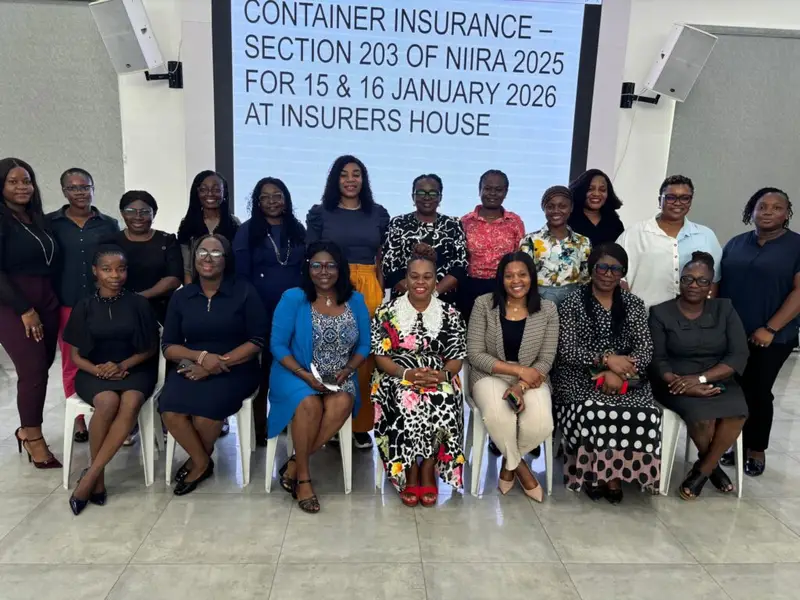
The Nigerian Insurers Association (NIA) has commenced a two-day training workshop for underwriters on the Nigerian Insurance Industry Reform Act (NIIRA) 2025.
According to a statement from NIA, the training is focused on Sections 75 and 76, as well as the Compulsory Container Insurance scheme.
The workshop, which began on Thursday, is scheduled to end on Friday.
The News Agency of Nigeria (NAN) reports that no fewer than 40 underwriters involved in container insurance, were participating in the training held at the Insurers House, Victoria Island, Lagos.
At the opening of the workshop, Director-General of the NIA, Mrs Bola Odukale, said that insurance remained a critical pillar of national development and economic stability.
Odukale noted that a well-regulated and legally backed insurance industry, was essential for economic growth, investor confidence and the protection of the public.
She urged participants to engage actively in the sessions, adding that the training would strengthen professional capacity and improve effective implementation of compulsory insurance provisions for the overall benefit of the economy.
NAN reports that facilitators at the workshop include: Mrs Margaret Ogbonnah, Director at the Nigerian Shippers’ Council; Mr Soji Oni, Controller 1, Technical, NIA, Mr Owolabi Longe, Chief Executive Officer of Ironlink Communications, among others.


54 Garlands To A Performer: Happy Birthday To Governor Peter Mbah

Nigeria is a Country with Rule of Law Under Renewed Hope Agenda – Military Veterans Caution Nigerian Army Over Land Grabbing
New Petrol Import Permits May Reverse Nigeria’s Push for Domestic Refining and Increase Pressure on Foreign Reserve” — Energy Policy Group Tells President Tinubu
-

 Cover7 months ago
NRC to reposition train services nationwide.. Kayode Opeifa
-

 Fashion9 years ago
These ’90s fashion trends are making a comeback in 2017
-
Entertainment9 years ago
The final 6 ‘Game of Thrones’ episodes might feel like a full season
-
 Opinion1 year ago
Bureaucratic Soldier, Kana Ibrahim heads Ministry of Aviation and Aerospace After Transformative Tenure at Defence
-
 Opinion1 year ago
Hon. Daniel Amos Shatters Records, Surpasses Predecessor’s Achievements in Just Two Years
-

 Opinion4 months ago
Barrister Somayina Chigbue, Esq: A rising legal leader shaping institutioal excellence in Nigeria
-

 News8 months ago
Nigerian Nafisa defeats 69 Countries at UK Global Final English Competition
-
 Special Report1 year ago
Golden Jubilee: Celebrating Tein Jack-Rich’s Life of Purpose and Impact