
Cover
UK Probes West Ham Owner Sullivan Over Historic Allegations

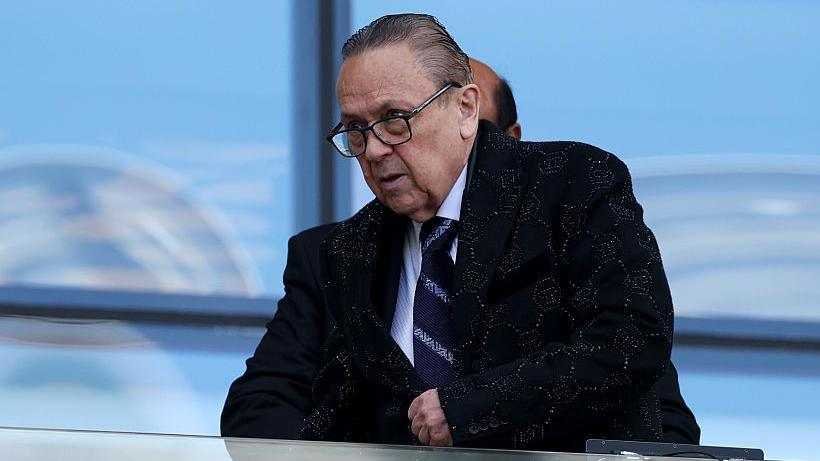
The British government has expressed concern over allegations of sexual exploitation against West Ham United’s largest shareholder, David Sullivan. The claims, reported by the BBC and The Times, have triggered investigations by police and football regulators, raising questions about governance in English football.
Allegations Surface
Seven women accuse Sullivan of predatory behaviour dating back to the 1980s and 1990s, when he owned tabloid newspapers Daily Sport and Sunday Sport. The accounts describe pressure on young models to engage in sexual activity, often under exploitative circumstances.
Sullivan, 77, denies the allegations, calling them “false” and “sensationalised.” He stepped down as West Ham’s joint-chairman last weekend, citing respect for the club and its supporters. Despite resigning from leadership roles, he remains the club’s largest shareholder.
Government and Police Response
The Department for Culture, Media and Sport said the allegations must be treated with “utmost seriousness” and investigated thoroughly. The Metropolitan Police confirmed they are probing a case involving indecent images and sexual exploitation in London and Essex during the 1980s.
Specialist detectives are leading the inquiry, stressing that offences against women and girls are taken seriously regardless of how much time has passed.
Football Regulator Steps In
England’s Independent Football Regulator (IFR) has contacted West Ham about the allegations. Officials said they will use statutory powers to assess Sullivan’s suitability under ownership rules. This marks one of the regulator’s first major tests since its creation, highlighting growing scrutiny of football’s governance structures.
West Ham in Transition
Sullivan’s departure follows years of controversy at West Ham. Alongside late business partner David Gold and former vice-chair Karren Brady, Sullivan oversaw the club’s move from Upton Park to the London Stadium in 2016, a decision that sparked fan protests.
Gold died in 2023, while Brady left earlier this year. Czech investor Daniel Kretinsky, who already owns 27 percent of the club, is expected to increase his stake, potentially reshaping West Ham’s ownership landscape.
Wider Implications
The allegations against Sullivan extend beyond football. They raise broader questions about accountability for powerful figures in sport and media, especially when claims date back decades. The government’s intervention signals a shift toward stricter oversight, while police investigations may determine whether criminal charges follow.
For West Ham supporters, the scandal compounds frustration after the club’s relegation from the Premier League last month. For regulators, it underscores the challenge of ensuring integrity in football ownership.
As investigations continue, Sullivan’s future in English football remains uncertain. What is clear is that the case has already intensified calls for transparency and accountability in the sport’s highest offices.
Nigeria’s Independent National Electoral Commission (INEC) has raised alarm over two recent court judgments that challenge aspects of its timetable for the 2027 general elections. The commission insists that the rulings, if left unaddressed, could disrupt the entire electoral calendar and undermine preparations for the polls.
Court Judgments Spark Concern
The first ruling, delivered on May 20, 2026, in a case brought by the Youth Party, questioned specific timelines in INEC’s schedule. A second ruling, issued on May 26 in a suit filed by the Social Democratic Party (SDP), produced a mixed outcome. While affirming INEC’s authority to issue an electoral timetable, the court nullified certain deadlines relating to candidate nomination and substitution.
INEC Chairman, Prof. Joash Amupitan, told political party leaders at a consultative meeting in Abuja that the commission has filed appeals against both judgments. He stressed that electoral activities are interconnected and cannot be arbitrarily removed without creating chaos.
Why the Timetable Matters
Amupitan explained that the timetable is not a collection of isolated dates but a framework designed to ensure orderly elections. Beyond statutory deadlines, INEC must accommodate several operational processes, including:
- Submission and verification of party membership registers
- Monitoring of primaries nationwide
- Upload of primary results to INEC’s portal
- Candidate nomination procedures
- Printing and quality assurance of ballot papers and result sheets
- Deployment of election materials and training of personnel
- Voter education campaigns
- Procurement of sensitive materials
- Configuration of BVAS machines
- Compliance with legal obligations such as inviting parties to inspect electoral materials
He argued that removing or altering any of these processes without a coherent framework would compromise transparency and efficiency.
Respect for Judicial Process, But Warning of Risks
While acknowledging the authority of the courts, Amupitan said the judgments raise critical questions about the extent of INEC’s constitutional powers. He warned that fragmenting the timetable could destabilize Nigeria’s electoral system.
“The commission considers it imperative that all electoral activities be harmonised within a coherent and workable framework that promotes certainty, transparency, administrative efficiency and equal treatment of all political parties,” he said.
Political Parties Briefed
INEC assured political parties that despite the pending appeals, preparations for the 2027 elections remain on track. Amupitan announced that on June 26, 2026, the commission will issue access codes to parties for its Candidate Nomination Portal. The portal will allow designated officers to upload names and details of candidates. He cautioned that the portal is fully automated and will close once the prescribed period expires.
Broader Implications
The dispute highlights the tension between judicial oversight and electoral management. While courts play a role in ensuring legality, INEC argues that excessive interference in operational timelines could paralyze the system.
Observers note that the controversy comes at a sensitive time, with Nigeria preparing for its first election under a 48-team global football-style calendar of political parties and heightened public scrutiny of democratic institutions. The rulings have already sparked debate about whether Nigeria’s electoral laws provide sufficient clarity on INEC’s powers.
Looking Ahead
INEC’s appeals will determine whether the commission retains full control over its timetable or whether courts will continue to intervene in operational details. For now, the commission insists it will conduct the 2027 polls in strict compliance with the Constitution, the Electoral Act, and lawful judicial pronouncements.
The outcome of these legal battles will shape not only the 2027 elections but also the future of electoral governance in Nigeria. At stake is the delicate balance between judicial authority and the independence of the body charged with safeguarding the nation’s democracy.
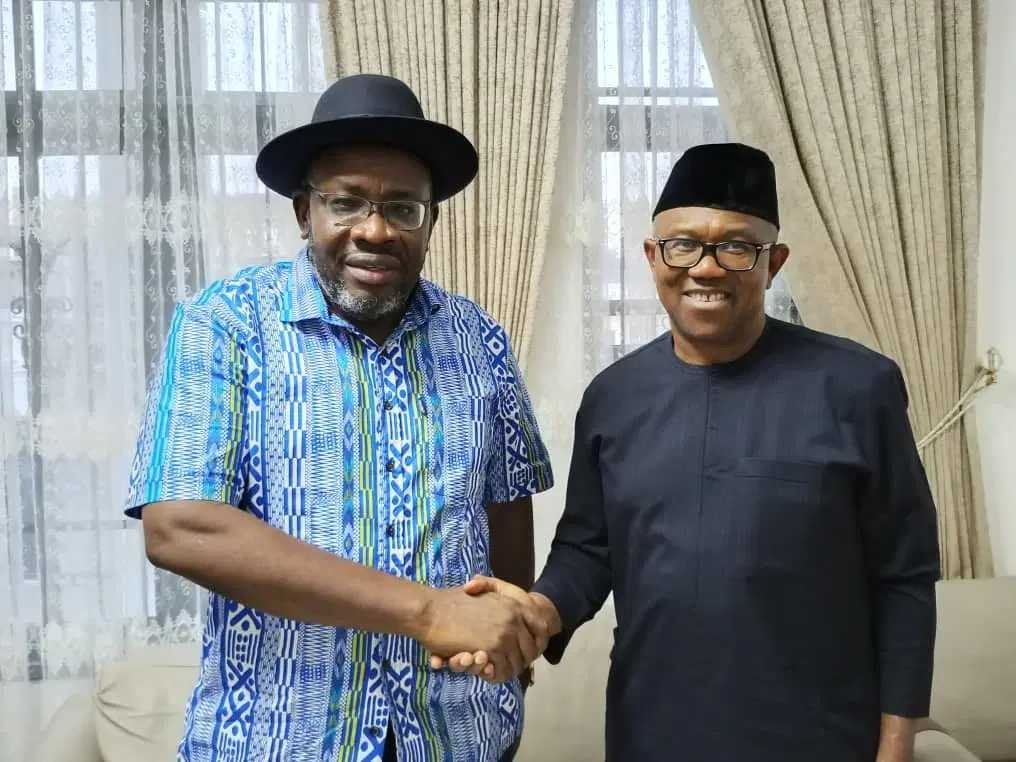
Factional Labour Party chairman Julius Abure has issued a sharp warning to Senator Seriake Dickson, leader of the Nigeria Democratic Congress (NDC), urging him to tread carefully in his alliance with Peter Obi and his supporters.
Abure’s statement followed Obi’s ratification as NDC’s presidential candidate at the party’s national convention in Abuja. He argued that Dickson must avoid repeating the mistakes that plunged the Labour Party into crisis after the 2023 elections.
Lessons from Labour Party’s Experience
Abure recalled how the Labour Party accommodated Obi’s interests ahead of the 2023 polls, granting tickets to many of his supporters, often at no cost. According to him, the party believed it was investing in a new political movement. Instead, he claimed, those elected later turned against the LP leadership.
He accused Obi and Abia State Governor Alex Otti of abandoning the party structure once in office. “We ensured Obi’s interests were taken care of. Most of the tickets were free, but they later struggled with the leadership of the party,” Abure said.
Crisis and Leadership Battles
The Labour Party’s internal turmoil deepened when the Independent National Electoral Commission (INEC) acted on a court ruling that declared the tenure of LP executives expired. This led to the emergence of an interim committee led by Nenadi Usman, further weakening the party’s cohesion.
Abure argued that Dickson must learn from this episode by ensuring his loyalists occupy key positions within the NDC. “He needed to bring his own people so that when the chips are down, he will also have people that will speak and defend him,” he advised.
Warning Against Domination
Abure accused Obi’s supporters of attempting to dominate the NDC, just as they did in the Labour Party. “They trooped into NDC with Obi hoping to occupy every space. No leader of any political party seeing what Obi did to the Labour Party will make that mistake again,” he said.
He described Obi’s followers as opportunistic, warning that they could undermine Dickson’s leadership if given unchecked influence.
Political Strategy Ahead of 2027
The warning reflects broader tensions in Nigeria’s opposition politics as parties prepare for the 2027 elections. Abure’s remarks highlight the struggle between established party leaders and new political movements seeking influence.
For Dickson, the challenge lies in balancing Obi’s national appeal with the need to protect NDC’s internal structure. Abure’s advice underscores the risks of ceding too much ground to external forces, especially in a political environment where loyalty often shifts after electoral victories.
Broader Implications
The episode illustrates the fragility of Nigeria’s party system, where alliances are frequently tested by personal ambition and shifting loyalties. Abure’s intervention is not only a warning to Dickson but also a reminder of how quickly political goodwill can unravel.
As the NDC positions itself for 2027, the party must navigate the delicate balance between embracing Obi’s popularity and safeguarding its leadership integrity. Abure’s cautionary tale from the Labour Party crisis serves as a stark reminder that political partnerships, if not carefully managed, can destabilize even the most promising movements.
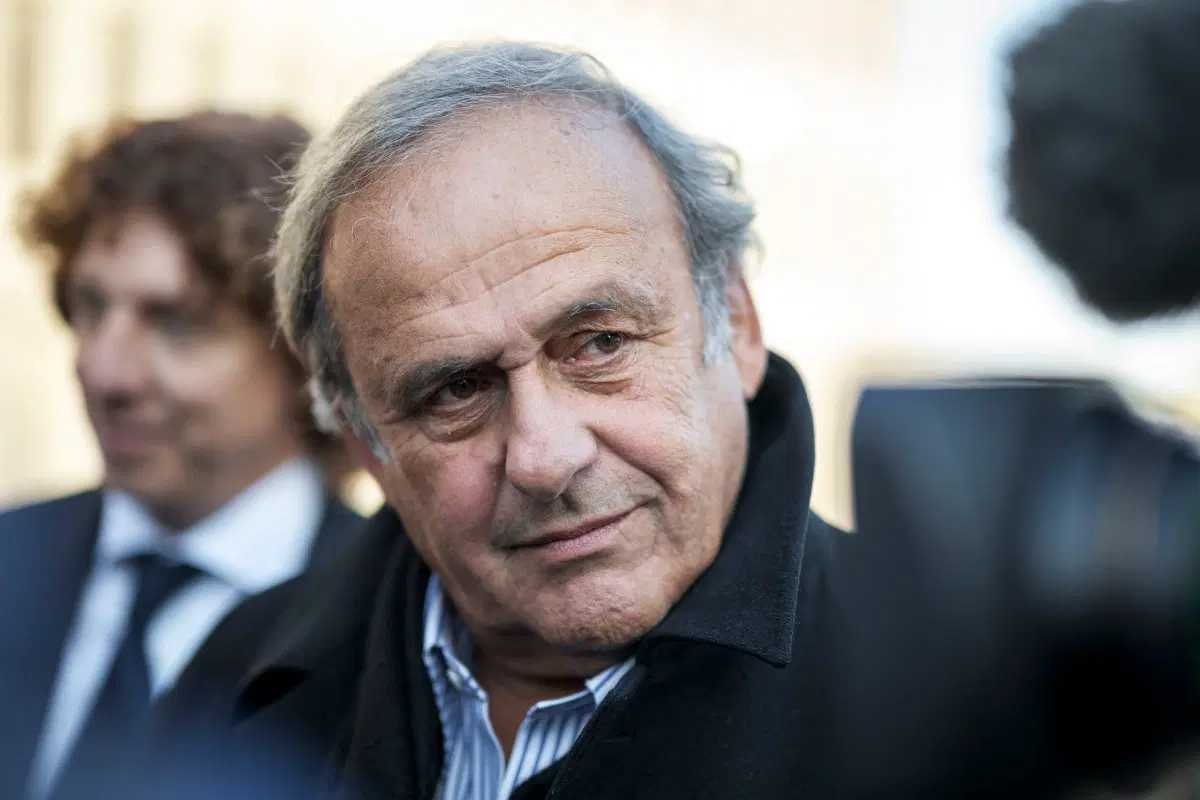
Michel Platini, once tipped to lead FIFA, has reignited one of football’s most controversial sagas. The former UEFA president has filed both criminal and civil suits in France against FIFA and its current president, Gianni Infantino, claiming corruption allegations destroyed his career and denied him the chance to head world football.
The Lawsuit
Platini, 70, is seeking financial compensation from FIFA while also pursuing criminal complaints against Infantino, former FIFA legal director Marco Villiger, and ex-audit committee chairman Domenico Scala. He argues that coordinated efforts blocked his path to the presidency after corruption allegations surfaced in 2015.
The Payment That Changed Football
At the heart of the dispute lies a payment of two million Swiss francs made to Platini in 2011, approved by then FIFA president Sepp Blatter. The transaction triggered investigations by FIFA’s ethics committee, leading to lengthy bans for both men. Platini was initially suspended for eight years, later reduced to four by the Court of Arbitration for Sport.
The sanctions effectively ended his campaign to succeed Blatter, despite being widely regarded as the frontrunner at the time. Infantino, who had served as UEFA’s general secretary under Platini, eventually rose to the presidency in 2016.
Platini’s Legacy
Before his fall from football politics, Platini was one of the sport’s most celebrated figures. He won the Ballon d’Or three times in succession and captained France to victory at the 1984 European Championship. His transition into administration saw him lead UEFA from 2008 to 2015, where he championed reforms such as Financial Fair Play.
Cleared but Not Restored
In 2025, a Swiss federal criminal appeals court cleared both Platini and Blatter of corruption charges, closing a decade-long legal battle. Yet Platini insists the damage was irreversible. He argues that the allegations and disciplinary actions unjustly prevented him from becoming FIFA president, a role he believes was within reach.
Infantino’s Position
Infantino, now firmly entrenched as FIFA president, has not publicly responded to the lawsuit. His rise from Platini’s deputy at UEFA to the head of FIFA underscores the irony of the case. Platini’s legal action directly challenges Infantino’s legitimacy, reopening questions about how football’s leadership was reshaped during the crisis years.
Implications for FIFA
The lawsuit threatens to drag FIFA back into the spotlight for the wrong reasons. It revives memories of the organisation’s troubled past, when corruption scandals undermined its credibility. For Infantino, the case could place his administration under renewed scrutiny, particularly regarding transparency and governance.
A Fight for Reputation
For Platini, the battle is about more than compensation. It is an attempt to reclaim his reputation and highlight what he sees as injustice. His case underscores the long shadow cast by FIFA’s corruption scandals and the personal toll they inflicted on football’s most influential figures.
Looking Ahead
As proceedings unfold in France, the football world will watch closely. Platini’s lawsuit may not change the past, but it could reshape perceptions of FIFA’s present leadership. More importantly, it reopens a debate about accountability in global football governance—a debate FIFA has long sought to move beyond.
Platini’s fight is not just about lost opportunity; it is about rewriting the narrative of who was denied the chance to lead world football, and why.


INEC Battles Court Rulings That Threaten 2027 Election Timetable

Abure Warns Dickson: Lessons from Labour Party’s Turmoil

Platini’s Legal Battle Reopens Civil Suits Against FIFA
-
 Cover9 months ago
NRC to reposition train services nationwide.. Kayode Opeifa
-

 Fashion9 years ago
These ’90s fashion trends are making a comeback in 2017
-
Entertainment9 years ago
The final 6 ‘Game of Thrones’ episodes might feel like a full season
-
 Politics2 months ago
NNPP Diaspora Stakeholder and Key Kwankwaso Ally, Dr. Usman Tijjani Shehu, Rejoins APC
-
 Opinion1 year ago
Bureaucratic Soldier, Kana Ibrahim heads Ministry of Aviation and Aerospace After Transformative Tenure at Defence
-
 Opinion1 year ago
Hon. Daniel Amos Shatters Records, Surpasses Predecessor’s Achievements in Just Two Years
-
 Opinion6 months ago
Barrister Somayina Chigbue, Esq: A rising legal leader shaping institutioal excellence in Nigeria
-

 News10 months ago
Nigerian Nafisa defeats 69 Countries at UK Global Final English Competition