Cover
13 Lawmakers Defect as Chinda Steps Down as Minority Leader
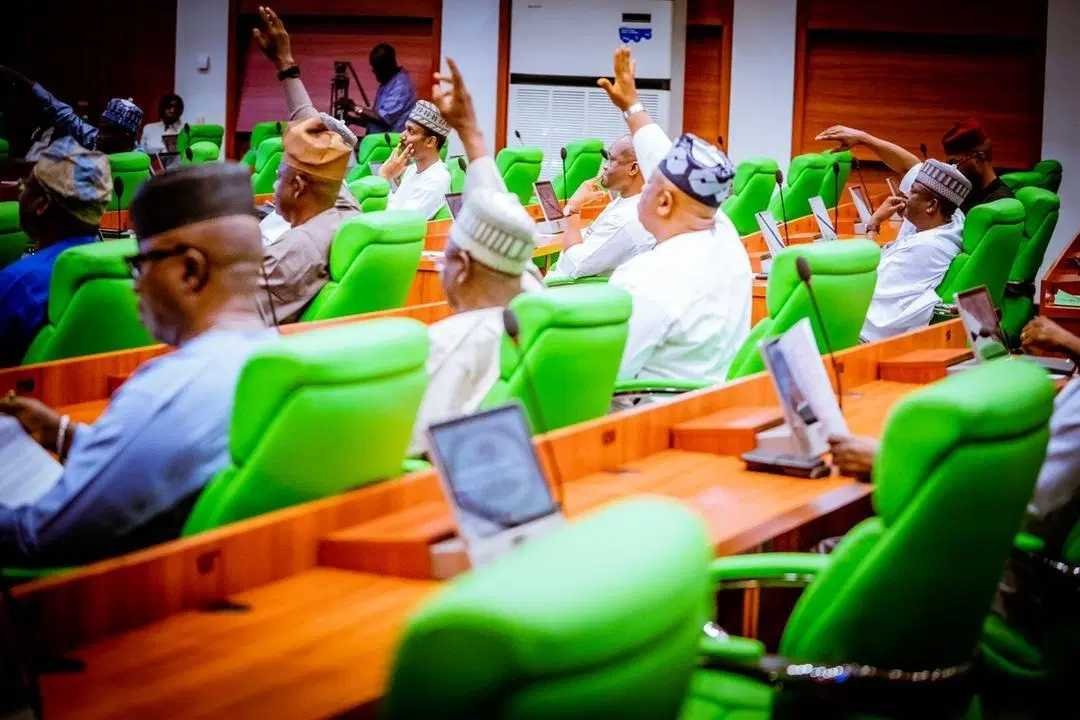
The House of Representatives was jolted on Tuesday by a wave of political realignments as thirteen lawmakers defected from their parties, citing internal disputes and the need to strengthen their ties with constituents. The development underscored the volatility of Nigeria’s political landscape, where party loyalty often bends under the weight of local pressures and national ambitions.
Speaker Reads Defection Letters
Speaker Tajudeen Abbas presided over the plenary session and read letters from the defecting lawmakers. Each letter detailed reasons ranging from unresolved leadership crises to dissatisfaction with party structures. The Speaker’s role was largely procedural, but the sheer number of defections highlighted growing instability across major parties.
Gaza Moves to Labour Party
One of the notable shifts came from Gaza, who left the Social Democratic Party (SDP) for the Labour Party (LP). His defection takes effect in May 2026, marking a calculated move into a party that has gained traction among younger voters and urban constituencies.
Ehnona Joins PDP
Alex Ehnona announced his departure from the All Progressives Congress (APC) to the Peoples Democratic Party (PDP). He assured colleagues that his commitment to legislative duties remained firm despite the change. His move reflects a broader trend of lawmakers repositioning themselves ahead of future elections.
Iyawo’s Second Switch in Three Weeks
Esosa Iyawo’s defection drew attention because it was his second in less than a month. He left the APC for the National Democratic Congress (NDC), citing irreconcilable differences within the Edo State chapter of the APC. Iyawo withdrew an earlier letter dated May 12, 2026, and reaffirmed his dedication to democratic principles.
Lawal and Tafoki Exit APC
Sani Lawal also left the APC, effective May 4, explaining that the decision was aimed at better serving his constituents. Similarly, Shehu Tafoki defected to the PDP after what he described as careful reflection and consultations. Both lawmakers framed their moves as necessary for improved representation.
Six PDP Lawmakers Head to APM
The most significant bloc defection occurred in Oyo State, where six PDP lawmakers—Adebayo Adepoju, Adedeji Stanley Olajide, Ojo Sunday, Najeem Oyedeji, Folajimi Oyekunle, and Abbas Adigun—moved to the Allied Peoples Movement (APM). Their letters cited leadership crises, internal divisions, and unresolved legal battles within the PDP. They stressed that consultations with constituents and stakeholders informed their decisions.
Benedict Leaves Labour Party for PDP
Etanebene Benedict defected from the Labour Party to the PDP. He pointed to the dissolution of the Labour Party’s executive structure, which left members without recognised officials during the nomination process. He also criticised party leaders for openly supporting President Bola Ahmed Tinubu, saying it created an untenable environment for opposition voices.
Gwalabe Joins APM
Auwalu Gwalabe of Bauchi State also left the PDP for the APM, effective May 4. His move added to the growing tally of lawmakers abandoning the PDP, signalling deeper fractures within the party.
Chinda Resigns as Minority Leader
In a related development, Kingsley Chinda resigned as Minority Leader following his defection from the PDP to the APC. Chinda, who recently emerged as the APC governorship candidate for Rivers State in the 2027 election, formally informed the House of his resignation. His exit marked the end of his tenure as leader of the opposition caucus.
Implications for the House
The defections and Chinda’s resignation reshaped the balance of power in the House. The PDP, once dominant in opposition, now faces dwindling numbers and internal strife. The APC, despite losing members, gained a high-profile figure in Chinda, strengthening its position ahead of the 2027 polls.
Broader Political Context
Defections are not new in Nigeria’s legislature, but the scale of Tuesday’s events was striking. They reflect the fluid nature of party politics, where lawmakers often prioritise survival and influence over long-term loyalty. With elections looming, these moves may foreshadow further realignments as politicians seek platforms that best serve their ambitions.
The House of Representatives has become a theatre of shifting allegiances, with defections reshaping party dynamics and leadership roles. Chinda’s resignation as Minority Leader capped a day of political upheaval, leaving Nigerians to ponder how these changes will affect governance and opposition strength in the months ahead.
Cover
Datti Baba-Ahmed Declares Independence From Obi, Joins PRP
Former Labour Party vice-presidential candidate, Yusuf Datti Baba-Ahmed, has clarified his political stance, insisting that his decisions are independent of former presidential candidate Peter Obi. Baba-Ahmed, who was Obi’s running mate in the 2023 presidential election, said his move to the Peoples Redemption Party (PRP) was based on principle and conviction, not loyalty to any individual.
Speaking on the Naija Unfiltered podcast, Baba-Ahmed explained that many assumed he would follow Obi into the African Democratic Congress (ADC) after the Labour Party’s internal crisis. He rejected that assumption, stressing that his political choices are his own.
“They thought I would follow Peter Obi, but I had given enough sympathy then. As a leader, I believed he should have solved the problem within the Labour Party instead of leaving,” he said.
Baba-Ahmed questioned the logic of abandoning one party due to internal disputes only to join another that could face similar challenges. He argued that political leadership requires fixing problems rather than walking away.
“If Abure was a problem, what makes him think the Nwosu or David Mark of the ADC will not be a problem? What makes him think the chairman of Seriake’s party, NDC, will not be a problem? It’s the same thing wherever you go. Stay here and fix the problem,” he stated.
He emphasised that his refusal to join Obi in the ADC was consistent with his principles. “With due respect, Peter Obi does not own my politics, he does not own me. I am independent,” Baba-Ahmed declared.
According to him, he had communicated his reasons directly to Obi, explaining that his decision was not personal but strategic. “I gave my cogent and logical reason for not joining the ADC, all of which have come through,” he added.
Baba-Ahmed’s move to the PRP marks a significant shift in Nigeria’s opposition politics. While the Labour Party and Obi continue to explore new alliances, Baba-Ahmed’s decision underscores divisions within the opposition camp over strategy ahead of the 2027 elections.
His remarks highlight the growing realignments among political figures seeking platforms that reflect their values and offer stability. For Baba-Ahmed, the PRP provides a base to pursue his political future without the baggage of unresolved disputes.
The development also signals the challenges facing Nigeria’s opposition parties as they attempt to consolidate strength against the ruling APC. Baba-Ahmed’s insistence on independence reflects broader concerns about personality-driven politics and the need for institutional stability.
As the 2027 elections draw closer, his stance adds another layer to the evolving dynamics within Nigeria’s political landscape, where alliances are shifting and leaders are redefining their roles.
Cover
Ucheibe, Ordega To Join Falcons Ahead Senegal Friendly Match
Nigeria’s Super Falcons have received a boost as Benfica midfielder Christy Ucheibe and Al-Ittihad forward Francisca Ordega joined the team’s camp in Ikenne, Ogun State, ahead of their two-legged friendly matches against Senegal.
The duo arrived on Wednesday morning alongside Glory Ogbonna, Blessing Nkor, Comfort Erhabor, and Sikiratu Isah, expanding the squad as preparations intensify for the matches scheduled for Friday and Monday at the Remo Stars Sports Complex.
Team media officer Mary Akinsola confirmed that eight players had already reported to camp on Tuesday evening. They include Joy Omewa, Tosin Demehin, Toni Payne, Blessing Ilivieda, Folashade Ijamilusi, Anderline Mgbechi, Ngozi Okobi-Okeoghene, and Omorinsola Babajide.
These arrivals joined the early group led by six-time CAF Player of the Year Asisat Oshoala, Shukurat Oladipo, and Kafayat Shittu, bringing the total number of players in camp to 17. More players and officials are expected in the coming days as the squad builds towards full strength.
The friendly matches against Senegal are part of Nigeria’s preparations for the 2026 Women’s Africa Cup of Nations (WAFCON), which will be hosted in Morocco in July. The Falcons are aiming to extend their dominance by winning a record 11th continental title. Success at WAFCON will also secure qualification for the 2027 FIFA Women’s World Cup in Brazil.
The arrival of experienced players like Ucheibe and Ordega adds depth to the squad. Ucheibe, known for her midfield control at Benfica, and Ordega, a seasoned forward with international experience, are expected to provide leadership and balance to the team. Their presence will be crucial as Nigeria tests its readiness against Senegal, a side eager to challenge the Falcons’ supremacy.
The camp atmosphere reflects determination and focus. With a blend of established stars and emerging talents, the Falcons are shaping a squad capable of competing at the highest level. The friendlies will serve as a tactical rehearsal, allowing head coach Randy Waldrum to assess combinations and strategies before the continental showdown.
Nigeria’s women’s team has long been a powerhouse in African football, and the build-up to WAFCON is seen as an opportunity to reinforce that status. The Senegal friendlies will not only test the team’s fitness and cohesion but also provide fans with a glimpse of the squad’s potential heading into Morocco.
Cover
Ali’s Guinness Boxing Dream: Reps Endorse On Private Funding
The House of Representatives has thrown its weight behind veteran Nigerian boxer Bash Ali’s ambition to stage a Guinness World Record Boxing Championship in Nigeria. However, lawmakers made it clear that the project must be financed through private sponsorship rather than government funds.
The resolution came after the House Committee on Public Petitions, chaired by Kwamoti Bitrus, presented its findings on a petition Ali filed against the National Sports Commission. Ali alleged that officials had sabotaged his efforts and created administrative hurdles that stalled the project for years.
Ali, a former World Boxing Federation cruiserweight champion, has been campaigning for more than two decades to stage the Guinness World Record fight. At 70, he hopes to become the oldest boxer in history to compete in a professional championship bout. His dream has survived multiple administrations, but repeated disputes with sports authorities have kept the project in limbo.
Presenting the committee’s report, Bitrus explained that Ali accused the National Sports Commission of frustrating his plans through bureaucratic delays and lack of cooperation. After reviewing the petition, the committee recommended that Ali pursue the project strictly as a privately funded initiative.
The House adopted the recommendation, stressing that while government agencies should provide regulatory and logistical support, they must not assume financial responsibility. Lawmakers directed the National Sports Commission to ensure a fair and transparent process in granting approvals, providing access to facilities, and coordinating with security agencies.
According to the resolution, relevant government institutions may offer non-financial assistance such as security, protocol coordination, and international liaison when formally requested. However, such support must not create financial obligations for the government.
The House also urged the Federal Ministry of Sports and the National Sports Commission to clearly define the boundaries of government involvement in privately organised international sporting events. Lawmakers said this would prevent future disputes and ensure clarity for stakeholders.
For Ali, the decision represents both a challenge and an opportunity. While the government will not bankroll the event, the resolution provides a framework for him to seek private sponsorship with the assurance of regulatory cooperation. This could open doors for corporate investors and international partners who may be more willing to support the fight under a transparent structure.
Ali’s career dates back to the 1980s when he rose to prominence as a cruiserweight champion. His proposed Guinness World Record fight has attracted attention globally, not only for its historic significance but also for its potential to spotlight Nigeria as a host for major international sporting events.
Supporters of the veteran boxer believe the House’s decision offers renewed hope. By removing the uncertainty of government funding and clarifying the role of regulatory agencies, the resolution may finally pave the way for Ali to achieve his long-standing ambition.
The development marks a turning point in one of Nigeria’s most enduring sports controversies. For Ali, the path forward now depends on his ability to mobilise private capital and secure the trust of sponsors who share his vision of making history in the boxing ring.
-
Cover9 months agoNRC to reposition train services nationwide.. Kayode Opeifa
-
Fashion9 years agoThese ’90s fashion trends are making a comeback in 2017
-
Entertainment9 years agoThe final 6 ‘Game of Thrones’ episodes might feel like a full season
-
Politics2 months agoNNPP Diaspora Stakeholder and Key Kwankwaso Ally, Dr. Usman Tijjani Shehu, Rejoins APC
-
Opinion1 year agoBureaucratic Soldier, Kana Ibrahim heads Ministry of Aviation and Aerospace After Transformative Tenure at Defence
-
Opinion1 year agoHon. Daniel Amos Shatters Records, Surpasses Predecessor’s Achievements in Just Two Years
-
Opinion6 months agoBarrister Somayina Chigbue, Esq: A rising legal leader shaping institutioal excellence in Nigeria
-
News10 months agoNigerian Nafisa defeats 69 Countries at UK Global Final English Competition