
Headlines
2027: Saliu Mustapha quits APC amid Kwara crisis

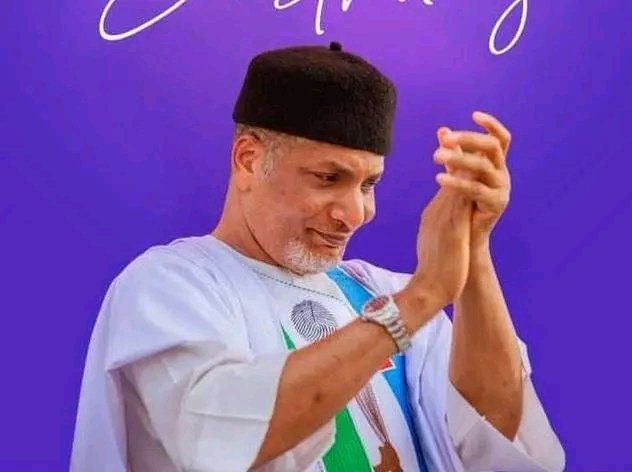
The crisis rocking the All Progressives Congress (APC) in Kwara State has taken a major turn with the resignation of Senator Saliu Mustapha.
The Senator is one of the most prominent figures in the party and a key member of the bloc of aggrieved stakeholders challenging the party’s handling of its 2027 succession process.
Mustapha, who represents Kwara Central Senatorial District in the National Assembly and is the Turaki of Ilorin Emirate, announced his resignation in a statement late Thursday night addressed to the chairman of his ward in Gambari 1, Ilorin East Local Government Area.
He also posted the letter on his verified Facebook page.
- Transfer: Daga Signs New Long-Term Contract With Molde FK
- Subsidy: Atiku is desperate for power – Presidency
He said the decision followed recent developments within the party.
His departure comes after months of tension surrounding the APC’s governorship primary, which produced Speaker Yakubu Danladi Salihu as the party’s candidate for the 2027 governorship election.
Mustapha said he did not arrive at the decision hastily, stressing that it followed weeks of consultations and engagements with political stakeholders, supporters, constituents across Kwara Central and other well meaning Kwarans.
He said his decision was ultimately guided by his conviction that politics should be driven by people, principles and purpose.
“Where the path of a political platform no longer sufficiently aligns with these convictions and the aspirations of the people one represents, the honourable thing to do is to chart a new course,” Mustapha said.
The senator, however, expressed appreciation to the APC leadership, particularly President Bola Ahmed Tinubu, for the relationships, experiences and opportunities he gained during his years in the party.
He assured his constituents and supporters that his resignation would not diminish his commitment to their interests.
“My political platform may change, but my principles, purpose and commitment to the people remain unchanged,” he said.
Mustapha pledged to continue working for the interests of the people of Kwara Central, Kwara State and Nigeria, regardless of the political platform through which he pursues his future political engagements.
The resignation is likely to have significant implications for the political calculations ahead of the 2027 elections.
Mustapha had particularly been at the centre of the internal struggle that followed the APC governorship primary.
The senator had himself contested the APC governorship ticket before the party eventually produced Danladi Salihu.
The primary, held on May 22 after being postponed by one day, produced a decisive result on paper.
Danladi polled 94,990 votes to defeat Ambassador Abdulfatai Yahaya Seriki, who scored 41,700 votes. Bashir Omolaja Bolarinwa came third with 22,118 votes.
But the result did not end the contest.
Instead, it triggered one of the most serious internal disputes in the Kwara APC since the party came to power in the state in 2019.
The disagreement centred not only on the identity of the party’s governorship candidate but also on the process that produced him, the role of Governor AbdulRahman AbdulRazaq in determining his successor and the future distribution of political influence within the party.
Before the primary, AbdulRazaq had endorsed Yahaya Seriki as his preferred successor after consultations with party leaders and structures.
The endorsement was subsequently overtaken by events when Danladi emerged from the primary as the party’s candidate.
Reports also emerged shortly before the primary that the governor had shifted his support towards the Speaker.
The development fractured what had appeared to be an emerging consensus within the party.
Several aspirants and influential stakeholders subsequently rejected the outcome and began organising under what became known as the G15 bloc.
In June, ten governorship aspirants, including Mustapha, Seriki, Yahaya Oloriegbe, Dele Belgore, Bashir Bolarinwa and others, petitioned President Tinubu, asking him to intervene in what they described as a worsening crisis in the Kwara APC.
They accused the state leadership of weakening the coalition that produced the APC’s 2019 victory and warned that the party’s electoral prospects could be endangered if the grievances were not addressed.
The crisis subsequently spread beyond the governorship contest.
The three serving Kwara senators, including Mustapha, later called for a review of the party’s governorship, senatorial, House of Representatives and House of Assembly primaries, arguing that the APC was passing through a critical period requiring urgent intervention.
The aggrieved bloc continued to insist that the problem could not be resolved simply by recognising Danladi as the party’s candidate.
The APC, on its part, maintained that the primary was conducted under the supervision of the national leadership and that Danladi legitimately emerged as the candidate.
The party subsequently presented Danladi with his INEC nomination form after the national leadership ratified his emergence and reviewed petitions arising from the primaries.
That move further hardened positions.
The G15 later expanded its activities, drawing support from other aggrieved party figures, lawmakers and stakeholders and publicly warning that the APC could lose Kwara if the dispute was not resolved.
In July, the group described itself as a formidable political bloc and warned that the exit of its members to the opposition could have serious electoral consequences for the ruling party.
The dispute subsequently acquired a broader political dimension.
The group began operating under the banner of the O To Ge Progressives, drawing on the political movement that helped the APC defeat the then ruling political establishment in the 2019 Kwara elections.
The coalition has accused AbdulRazaq of attempting to determine the political succession process and of alienating influential stakeholders, allegations the governor and his supporters have rejected.
By August, the dispute had moved beyond internal complaints.
Reports indicated that the aggrieved bloc rejected the APC candidates produced through the disputed process while maintaining support for President Tinubu’s re-election bid.
The development also opened the door for opposition politicians to court the aggrieved APC figures.
Former Senate President Bukola Saraki was reported to be exploring discussions with members of the bloc, while the Kwara PDP was also reported to have opened talks with aggrieved APC stakeholders ahead of the 2027 elections.
Mustapha’s resignation represents a significant escalation.
His departure could consequently reshape negotiations over the 2027 elections, particularly in Kwara Central, where the battle for political control is expected to be intense.
Although Mustapha did not disclose the political platform he intends to join, his resignation came amid intensifying speculation over a possible move to the Peoples Democratic Party (PDP), with talks reportedly underway between the senator and opposition stakeholders ahead of the 2027 elections.
The development has heightened expectations that Mustapha could eventually emerge as the PDP’s candidate for Kwara Central Senatorial District, a possibility that would set up a major political confrontation in the district.
Recent reports indicated that the PDP was considering offering Mustapha its Kwara Central senatorial ticket if he defects from the APC, with the arrangement potentially bringing him into direct competition with the political structure of Governor AbdulRahman AbdulRazaq.
The speculation gained further momentum after PDP stakeholders publicly indicated their willingness to accommodate Mustapha.
There were reports that the senator was weighing a move to the PDP amid growing disagreements within the APC, while sources said discussions around his possible defection had intensified.
A PDP figure, Yinka Otukoko, who is associated with the party’s Kwara Central senatorial contest, was also reported to have indicated that his ticket could be made available to either Mustapha or former lawmaker Moshood Mustapha.
But for now, Mustapha has framed his decision as a principled departure from a platform that, in his assessment, no longer sufficiently reflects his political convictions and the aspirations of the people he represents.
“I remain deeply grateful to the leadership of the APC, particularly President Bola Ahmed Tinubu, for the relationships built and the experiences gained during my time in the party,” he said.
But he made it clear that his resignation should not be interpreted as an abandonment of his political responsibilities.
He said his commitment to Kwara Central, Kwara State and Nigeria remained firm.









Troops kill 25 terrorists in Borno

Corp members abducted in Imo regain freedom

Phrank Shuaibu Faces Fresh Controversy as Arewa Group Backs Kperogi’s Allegations

Now Hiring: Academic and Technical Staff at a Leading Private University in Gombe State

LAUTECH 18th Convocation: EEE Class ’05 Alumni Celebrate as Electronic and Electrical Engineering Department Produced the School’s Overall Best Graduating Student


