Opinion
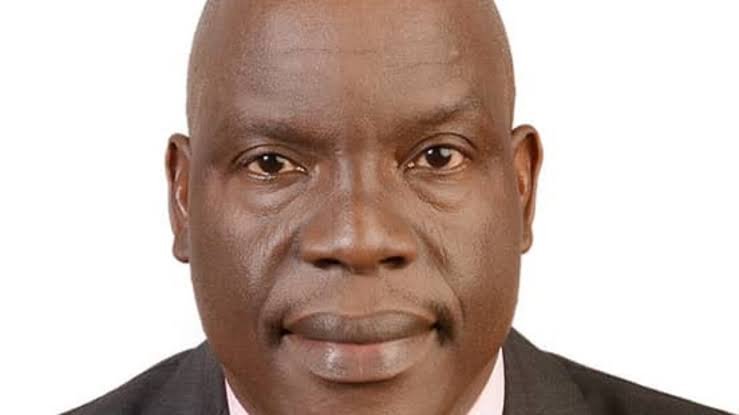
KOMOLAFE: BUILDING A LEGACY OF REFORMS NOT RHETORICS
By Paul Ikpambese
With a vision that stretches beyond the horizon, Engineer Gbenga Komolafe is crafting a legacy of groundbreaking reforms that are revolutionising the oil and gas industry. His trailblazing career, marked by numerous achievements and milestones, has been a masterclass in visionary leadership. From spearheading the Nigeria Pipeline and Storage Company to leading the Nigerian Upstream Regulatory Commission, Chief Komolafe’s singular passion has been to transform the industry and shape its future. With a keen eye for opportunity and an intimate understanding of the sector, he is boldly rewriting the rules and pushing the boundaries of what’s possible.
Like the great leaders who have transformed their industries, Chief Gbenga Komolafe is driven by a bold vision for the oil and gas sector. Inspired by the likes of Nelson Mandela, who fought for a united South Africa, and Lee Kuan Yew, who propelled Singapore to prosperity, Chief Komolafe’s mission is to revamp the oil industry, harnessing its potential to drive growth, prosperity, and progress. With his leadership, vision, and expertise, he is reshaping the sector, pushing boundaries, and unlocking new opportunities for success.
A team player, Engr. Komolafe possesses a strong ability to inspire with his ideas and his direction, forming an integral unit, mobilised towards achieving shared visions and goals. An innovative and strategic thinker, his ability to bring about effective and result-based solutions to the daily challenges facing the petroleum industry in Nigeria and indeed impact and guide not just the country, but the global oil industry into sustainable growth and development, has made him a well-sought-after material and resource fellow.
Little wonder then that in such a short stay on the saddle, Engr. Komolafe has transformed the Nigerian Upstream Petroleum Regulatory Commission (NUPRC) into an epochal frontier revenue-generating institution in Nigeria’s oil and gas sector, making sure that the industry operates efficiently, safely, and sustainably. To enhance national development and preserve its pride of place as a frontier national revenue earner, Chief Komolafe deliberately positioned NUPRC to evolve an economic contribution model that prioritises the efficient maximisation of revenue collection, while attracting direct national and foreign investment.
To enhance the social responsibility of the upstream regulatory sector of the nation’s oil and gas sector, and place it at the hearts and minds of the citizens, he devised a system of enhanced community based environmental and social governance which aims at implementing environmental regulations, engaging with local communities, and promoting corporate social responsibility in line with the Renewed Hope Agenda of President Tinubu’s administration.
Some of his innovative and far reaching reforms include; the enhancement of transparency in the licencing processes, improvement of the processes leading to fiscal transparency, accountability and open-governance, and the strengthening of a robust community based action group which enhances stronger collaboration and effective coordination between the oil and gas companies and their host communities fostering peaceful coexistence and leading to a rancour free mutually symbiotic relationship.
Komolafe’s services of leadership at the NUPRC have not just outstandingly transformed and translated his vision into reality but have also predicted a destined future of greatness and prosperity for Nigerians in line with the Renewed Hope Agenda, and is doing all it takes to invent it. His diverse reforms also aim at making Nigeria’s upstream oil and gas sector Africa’s investment frontier. To achieve this, he has stimulated various diverse innovative reforms, such as the reduction of entry barriers, enhancement of regulatory efficiency and the unlocking of about %17billion investment from China and other parts of the world.
With the setting up of a timeline of 12 months for deliverables in the PIA, Komolafe has been able to set in motion a catalytic reaction with the trajectory of speeding up the processes of the actualisation of the Renewed Hope Mandate. In line with his desire to provide one of the best and most iconic workplace ambience for staff and business operators, he invested heavily in speeding up the completion of the 48,400 m2 ‘The Barrel’, a facility which sets the highest standard in both design and functionality.
His vision is not misplaced given that Nigeria is rated fifth on the world scale of oil-producing countries, and the continent’s largest in gas and second-largest in oil reserve, with an estimated 37.5 billion barrels and a gas holding of 209 trillion cubic feet (TCF). This explains why part of his vision is to consistently increase the country’s oil and gas reserves while stimulating focused production, enhancing hydrocarbon accounting and transparency, and achieving cost-efficient and effective decarbonization in the upstream operations.
As a thoroughly focused and dynamic leader, Chief Gbenga Komolafe’s exceptional understanding of industry trends and phenomena has been instrumental in shaping his vision for the oil and gas sector. His ability to navigate complex human relations has also enabled him to build a robust, flexible, and research-driven institution that prioritises people-oriented approaches. This leadership acumen is rooted in his impressive educational background, which includes a degree in Engineering from the University of Ilorin, MSc degrees in Industrial and Labour Relations and Industrial and Production Engineering, and a Bachelor’s degree in Law from 2006, culminating in his call to the Nigerian Bar in 2008.
This wealth of knowledge and diverse experience has not only honed his expertise and proficiency but also instilled in him a deep appreciation for effective collaboration, synergy, and teamwork. As a result, he has been able to leverage the Petroleum Industry Act (PIA) to drive seamless implementation, eliminate unnecessary bureaucracy, and propel the NUPRC to new heights. With his unique blend of skills and experience, Chief Komolafe has positioned NUPRC to excel in planning, development, regulation, and implementation, ultimately driving progress in the upstream petroleum sector.
A slew of groundbreaking regulations have been gazetted, transforming the oil and gas sector. These include regulations such as the Petroleum Licensing Round Regulations 2022, Petroleum Royalty Regulations 2022, and Nigeria Upstream Petroleum Host Communities Development Regulations 2022, which aim to drive growth, transparency, and sustainability in the industry. Other notable regulations include those related to domestic gas delivery obligations, petroleum measurement, production curtailment, and frontier basins exploration fund administration.
Chief Komolafe’s commitment to stakeholder engagement has been evident in the development of these regulations, as well as in the Commission’s Draft Regulatory Framework for Energy Transition, Decarbonisation and Carbon Monetisation. Through extensive stakeholder engagement meetings, he has ensured that all relevant parties are carried along in the development of this framework, resulting in highly effective and achievable frameworks that position the Energy Transition and Carbon Monetisation Division of the Commission for success.
As a foremost regulator and business enabler, of the upstream petroleum oil and gas sector, he has deposited both his time, energy and resources at ensuring he creates a more fulfilling and inviting ambience for foreign direct investment, thereby boosting the oil and gas reserve, to a condensate reserves status of 37.046 billion barrels, with a life index of 60 years representing a slight increase of 0.37% compared to 36.910 billion barrels as of 1st January 2021, and a National Gas reserves status of 208.62 (trillion cubic feet) TCF with a life index of 80 years, representing an increase of 1.01% compared to 206.53 TCF as of 1st January 2021.
Indeed, Engr. Gbenga Komolafe has demonstrated through building a legacy of reforms within the framework of the Renewed Hope Agenda of Mr. President that a man of vision is not only an asset to every nation but can simply lay a solid, verifiable, transformational, ethical base for his country’s prosperity.
Ikpambese wrote this piece from Warri.
Cover
IKOH NDI ABIA 2027: The Maturity Of Time For A Calm, Experience And Winning Leadership In Abia State
By Aaron Mike Odeh
Politics, especially in a developing democracy like ours, is beyond mere political activities and electoral contests. It is fundamentally about leadership, vision, emotional intelligence, capacity, and the ability to inspire confidence among the people. In moments when the destiny of a people stands at a defining crossroads, wisdom demands that political parties and stakeholders place competence, experience and acceptability above sentiments and unnecessary experimentation.
As someone who has actively participated in Abia politics for over twenty-six years, occupying different positions at appointment status, i believe I possess the moral standing and practical experience to speak with clarity on the political future of Abia State and the direction the All Progressives Congress (APC), should take ahead of the 2027 governorship election.
My political journey and Media Consultancy has taken me across the length and breadth of NIGERIA including Abia State. From Arochukwu to Ukwa, from Umunneochi to Ikwuano, I have interacted closely with party leaders, grassroots mobilizers, traditional institutions, youths, women groups and stakeholders across different divides. I have watched governments emerge and fade. I have seen political structures built and dismantled. I have equally studied the expectations, emotions and aspirations of Abia people over the years.
From this wealth of experience and practical evaluation of Abia politics, one fact has remained consistently clear: for APC to genuinely position itself for victory in 2027, the party must present a candidate with political maturity, administrative experience, emotional stability, credibility and the capacity to unite various interests within and outside the party.
Without hesitation, I strongly believe that Chief Henry Ikechukwu Ikoh perfectly fits into this critical expectation.
Chief Ikoh represents a rare blend of humility, experience, consistency and strategic political understanding. In a political environment often dominated by controversies, unnecessary bitterness and divisive tendencies, he has remained calm, focused, approachable and remarkably stable. These qualities may appear ordinary to some people, but in practical governance and political management, they are indispensable virtues that sustain leadership and build confidence among the electorate.
One of the strongest assets Chief Ikoh possesses is his maturity and ability to relate across political, ethnic and social lines. Politics in Abia today requires a leader who can build bridges rather than walls; a leader who understands that governance succeeds better when stakeholders are respected and united under a common vision. Chief Ikoh has demonstrated this quality over the years through his interactions with people across party affiliations and communities.
Beyond his personal qualities, Chief Henry Ikechukwu Ikoh possesses extensive experience in public service and political administration. Leadership is not learned overnight. It is developed through years of service, sacrifice, strategic engagement and practical exposure. Abia State at this moment requires a leader who understands governance, appreciates political realities and possesses the administrative competence to navigate the challenges confronting our people.
Another important factor that distinguishes Chief Ikoh is his consistency of purpose. His aspiration to govern Abia State is not a sudden ambition driven by opportunism or political convenience. Since 2003, he has remained steadfast, focused and committed to his vision for the state. Such consistency speaks volumes about conviction, preparedness and genuine passion for service.
In politics, consistency builds trust. It reassures the people that a leader is not merely pursuing personal ambition but is driven by a long-term vision and commitment to societal development. This is one quality many Abians have come to appreciate in Chief Ikoh.
Furthermore, APC as a party must begin to prioritize electability and acceptability ahead of internal sentiments. Elections are won not merely through slogans, but through strategic calculations, grassroots acceptance and broad-based support. The reality before us is that the people of Abia are yearning for a leadership that is calm, responsible, inclusive and development-oriented. They desire a leader who can listen, unite and inspire confidence across different sectors of society.
Chief Henry Ikechukwu Ikoh possesses these qualities in abundance.
His calm disposition, amiable personality and infectious ebullience naturally attract people to him. He is not known for needless controversies or divisive politics. Rather, he embodies the spirit of maturity and responsible engagement that APC needs to expand its acceptance across Abia State.
The journey toward 2027 should therefore not be approached with bitterness, selfish calculations or divisive tendencies. It should be approached with sincerity, wisdom and genuine concern for the future of Abia State and the success of our great party.
There comes a moment in the life of every people when destiny presents an opportunity that must not be ignored. I strongly believe that moment has come for APC in Abia State.
Indeed, as the Holy Scripture declares, “The time to favour Zion, yea, the set time, has come.” For Abia State, this is the maturity of time to embrace tested experience, political maturity and purposeful leadership.
With deep sense of responsibility and commitment to the progress of our state, I most respectfully appeal to APC stakeholders, leaders and delegates to rally behind Chief Henry Ikechukwu Ikoh and support the vision of IKOH NDI ABIA 2027.
This is not merely about an individual ambition; it is about giving APC the strongest opportunity to win the governorship election and provide purposeful leadership for the good people of Abia State.
The task before us is collective. The future is now. And the time is ripe for a leader with capacity, humility, experience and vision.
THE SET TIME IS NOW!
Aaron Mike Odeh, A Public Affairs Analyst, Media Consultant, Human and Community development advocate wrote from Post Army Housing Estate Kurudu Abuja
Opinion
BOARD ROOM TO TRENCHES: HOW MOHAMMED GONI ALKALI SUSTAINS HIS LEADERSHIP PROWESS
By James Ikuku
Leadership powers reforms, while innovation drives development. Leadership, therefore, is not merely about holding a title or occupying an office, but about functionality, sound decision-making, effective citizen mobilization, and consistent results delivery, especially under pressure during times of upheaval and distress.
A true leader must always remain strategically clear about the chosen direction, execute plans in alignment with that vision, and do so with full accountability—boots on the ground—while delivering tangible outcomes.
Alhaji Mohammed Goni Alkali is not just a leader; he is a leader with a distinct difference. From his Maiduguri office as the Managing Director of the North East Development Commission (NEDC), he meticulously plans the Commission’s operations, which involve the management of billions of Naira, all anchored on comprehensive recovery frameworks.
Yet, he frequently steps out with his boots firmly on the ground across the six states under the Commission’s coverage—Adamawa, Borno, Bauchi, Gombe, Taraba, and Yobe. There, Alhaji Mohammed personally ensures that what is documented on paper is precisely what materializes on the ground.
Each state receives its fair share of the dividends of the Renewed Hope Agenda: schools are constructed or renovated, health centres are equipped and new ones built in underserved communities, and farming communities long devastated by years of Boko Haram insurgency are steadily rebuilt and restored.
These are the defining hallmarks of the leadership of this ubiquitous enigma. From the boardroom to the trenches, Alhaji Mohammed is recreating the NEDC, redefining its priorities, and transforming it into a masterpiece of humanitarian and post-conflict disaster management. His efforts continue to earn consistent applause as he delivers results even at the most challenging conflict-affected points.
Indeed, with a rich background of experience garnered from the private sector, Alhaji Mohammed cannot be taken for granted when it comes to adherence to standard operational procedures, workplace discipline, personal integrity, and an unwavering focus on results. He does not treat the Commission as a mere contract-dispensing agency.
Instead, he runs it as a proactive human conflict interventionist organization whose core target is the full reconstruction and rehabilitation of the entire North East region, alongside a deliberate reduction—if not elimination—of the prevailing level of poverty.
Driven by a strong sense of accountability and boardroom-level rigor, he ensures that every kobo allocated and released to the agency is utilized strictly for the benefit of the people. To achieve this, he mandates that all contracts pass through rigorous due process, maintaining zero tolerance for padding or any form of financial impropriety.
As a grassroots mobilizer, Alhaji Mohammed’s leadership is both seen and deeply felt by the people. Under his watch, roads, bridges, schools, and healthcare facilities have been constructed across all six states, covering their 112 Local Government Areas.
To address the yawning education gaps created by the destruction of schools during the insurgency and the persistent challenge of out-of-school children, Alhaji Goni embarked on an ambitious programme of school construction and renovation.
Through the launch of the ₦6 billion Education Endowment Fund and various targeted programmes for the training and re-training of teachers in Tsangaya and Islamiyya schools, he has successfully infused new life and vigour into an educational system that had almost collapsed under the weight of prolonged insurgency.
To revive food security and agricultural productivity, Alhaji Mohammed activated a comprehensive integrated Agricultural Programme. This initiative distributes farming inputs and tools—including improved seeds, fertilizers, machinery, and extension services—to enhance food production, sustain local economies, and support smallholder farmers who lost their livelihoods during the crisis years.
To cushion the devastating effects of years of insurgency and provide meaningful relief to displaced persons still living in IDP camps, he rolled out multiple targeted interventions. These include the deployment of ₦3 billion worth of ophthalmology equipment to Borno State, among other critical support measures.
A proactive administrator and astute strategist determined to redefine the operations of this humanitarian support agency, Alhaji Goni prioritizes three key pillars of intervention. Working collaboratively as a team, he deliberately delegates roles and responsibilities to the executive directors in charge of humanitarian affairs, operations, and finance.
He promotes the efficient use of collaboration, stakeholder engagement, synergy, and inter-agency cooperation. This approach has brought state governors together, fostering greater community ownership of the various programmes and projects established within their respective states.
In 2025, the Commission effectively utilized the ₦131.34 billion allocation it received, achieving 59% implementation of its ₦290.99 billion budgetary provision. Building on this foundation, Alhaji Mohammed has prioritized infrastructural development, humanitarian support, and socio-economic recovery. These priorities are clearly encapsulated in the Commission’s 2026 budget proposal of ₦244.07 billion.
His administration rests firmly on the twin foundations of transparency and the prudent utilization of resources, with accountability as its central fulcrum. Alhaji Mohammed adopts a pragmatic and innovative approach to the management of the Commission, ensuring proper and deliberate forecasting of needs and outcomes.
In a region where development funds have historically disappeared without trace, it is to Alhaji Mohammed’s credit that his leadership is anchored on truth. He insists on timely and open reporting of budget performance, doing so with honesty even when implementation is only partial.
He demands the even distribution of interventions across all 112 Local Government Areas, maintaining that development must not exist only on budget documents but must be manifest, verifiable, consistent, and impactful.
Reconstruction under his watch is practical, accountable, and people-centric, with emphasis placed on justice rather than partisan politics. For a region long defined by insurgency and years of neglect, this is more than leadership—it is resilience in action.
Little wonder, then, that the 2026 budget of ₦244.07 billion, targeted at critical infrastructure, humanitarian support, and socio-economic recovery, speaks volumes. It prioritizes road construction, relief materials, agricultural skills acquisition, and capacity development for Commission staff. This reflects a man who is both competent and capable of doing what is right.
His insistence on regular field monitoring, transparency, and contextual integration further amplifies the fact that his plan is not a generic ‘one-size-fits-all’ approach, but a progressive, adaptive action designed to rebuild what is broken, restore what has been lost, and prevent any relapse into crisis.
This is where strategy, funding, and legitimacy combine to win the war against underdevelopment. It is where boardroom promises ultimately meet ground realities.
Indeed, Alhaji Mohammed Goni Alkali’s plans are working because he personally bridges both worlds—he does the work in the boardroom and equally commits to the trenches.
For him, politics may have provided the seat, but operational excellence is what keeps him firmly at the table of impactful service. This is the story of a man who has taken policy to reality, who refused to remain only at the top but deliberately moved to the ground-level spaces where decisions are tested by weather, politics, insecurity, and complex human behaviour—and is steadily winning.
Ikuku writes from Abuja
Opinion
TAJUDEEN ABBAS AND HIS ZARIA INDABA FOR TINUBU’S 2027
By Philip Agbese
There is a clear difference between an organic mammoth crowd and a rented crowd. The organic mammoth crowd is a very huge crowd that shows up unsolicited, unpaid, and uncoerced. This crowd grows out from the real, audacious buy-in, not artificial mobilization.
Basically, the structure of an organic mammoth crowd is tied to the attendance of traditional rulers, market women, children, clerics, youth leaders, and grassroots structures. They are there because they have a stake in what is taking place. It is a proof of intactness, and a powerful currency. This is what the South Africans call an “indaba.”
It was indeed an indaba in Zaria, when the Rt. Honourable Speaker, Rt. Hon. Tajudeen Abbas, PhD, GCON, made the grand declaration reaffirming support for President Asiwaju Bola Ahmed Tinubu, GCFR, and the All Progressives Congress (APC), ahead of the 2027 general election.
I must confess that I have not seen this Zaria crowd anywhere in Nigeria before. We all had the mindset that the usual northern crowd died when former President Buhari went to be with the Lord. Alas, I was wrong.
For a man whose performance at the National Assembly has been nothing less than superlative, the rally, turned into an Indaba — a gathering of intent — was however not strange.
Since June 2023, when he became the Hon. Speaker of the 10th Assembly, Rt. Hon. Tajudeen Abbas has leveraged the national budget and his connections to carry out gigantic interventions in his Zaria Federal Constituency and across the entire North West.
Given the 25 road projects that have been fully completed and the 18 more that are slated for commencement soon, along with the various police stations built or upgraded across the length and breadth of the constituency, TJ Abbas has spoken for himself. He has demonstrated his avowed commitment to both the fight against insecurity and improved interconnectivity, so much so that the indaba is a powerful symbol.
Few people are aware of the construction of various Primary Health Centres, including those in Bizaro and Dambo wards which have been fully equipped with state-of-the-art medical supplies, all initiated by him. Neither are they informed of the modern ICT Centres in Amaru and Kwarbai A ward.
The people of Abba village had to flow out in their thousands to that historic 10km road march because the reconstruction of the bridge that links them to the rest of the world — which was destroyed since 2014 — remains indelible in their hearts.
In the same vein, the hundreds of thousands of farmers who came out did so because they could easily associate the gathering with the over 80,000 bags of fertilizers, thousands of farm inputs, equipment, and the two-year supply of farm seedlings distributed to them by Rt. Hon. Tajudeen Abbas.
Again, the 1,865 constituents, including those from Zaria Zone 1 and Nuhu Babajo Stadium, who have benefited from the distribution of motorcycles initiated by Rt. Hon. Tajudeen Abbas remain grateful to his gracious magnanimity and had to come out to attest to this.
The thousands of civil servants and non-traditional students, out of the over 500,000 strong voters’ population of one of the strongest constituencies in Nigeria, that turned out did so in response to the National Open University Campus sited in the constituency, which now grants them easy and uninterrupted access to affordable university education. Meanwhile, the hundreds of lawyers who attended did so out of the fact that they have variously benefitted from the College of Legal Studies located in Zaria, an initiative of Rt. Hon. Tajudeen Abbas.
It is indeed noteworthy to state that the thousands of school children and hundreds of teachers came to give their support to a man who brought them a new initiative of enhanced leadership development, enhanced teachers’ productivity through the Teachers’ Education Fund, and also renovated hundreds of schools, changing the learning and teaching environment favourably.
Mr. Speaker will remain an enigma and a very strong formidable political force, not just in Zaria Federal Constituency but in the entire North West because of the over 50 billion Naira allocation that he attracted into the 2025 budget for sundry projects across 8 LGAs in Kaduna North Senatorial District, including ABA, Kasu, College of Education, and Gidan Waya.
Distinctively, using his clout and congruence, Rt. Hon. Tajudeen Abbas as the Speaker of the 10th Assembly institutionalised the North West development plan beyond his Zaria home to the entire North West by concretising the Bill that created the North West Development Commission (NWDC). He also ensured the inauguration of the House Committee to oversee it.
He did not stop there but also made sure the Commission has a comprehensive Needs Assessment, inclusive of a 10-year strategic plan. In doing all these, he neither conferred with flesh and blood but instead publicly demonstrated strong deliberate action towards tackling the insecurity, poverty, and infrastructural decay within the region.
As the distinguished Hon. Speaker, Rt. Hon. Abbas remains the instrument for the passage of more Bills than any other House since 1999, and has personally sponsored more legislations on insecurity, agricultural policies, pharmaceutical regulations, and the resolution of ASUU-FG disputes than any other legislator. For these, the people of Zaria Federal Constituency are not just extremely proud of him but are willing to follow his direction.
His grassroots mobilisation and strategic influence in attracting several key federal government appointments and his unique partnership with his state governor, Governor Uba Sani, which has led to the establishment of several unprecedented development projects, programs and interventions in Kaduna and Zaria is not unnoticed by his constituents but has drawn applause, commitment and acceptability from them.
The Zaria crowd was therefore not an accident. They were there because TJ, as he is fondly called, has turned up when nobody did. They came in their thousands because Rt. Hon. Abbas turned the office of the Speaker into a delivery multipurpose vehicle. And now he came with a simple message, which they were all willing to listen to and act upon: “the North, after Buhari, is still here, and we are with President Asiwaju Bola Ahmed Tinubu into 2027”.
The myth of a ‘Dead’ Northern crowd is only an assumption proven wrong by Rt. Hon. Tajudeen Abbas. The gathering was not a nostalgia to Late President Buhari; it was instead an alignment around a new centre of gravity and President Tinubu is good to go into 2027.
Zaria is symbolic, historic, and intact. It remains the leading centre of learning, commerce, and traditional authority not just in the North but all of Africa. Zaria also represents the North West corridor.
Rt. Hon. Tajudeen Abbas and his quality representation is a currency of inestimable value. A currency of consolidation, and a demonstration and assurance of a secured base before the field becomes crowded.
The ‘Indaba’ worked because it is a consultation, not a campaign. Traditional rulers spoke, clerics prayed effectually and fervently, youth leaders pledged their unalloyed loyalty and unreserved support, fostering a framework of shared responsibility and consensus, which was solidly built on the altar of public trust and acceptability.
A bulldozer, bridge builder, and strategic visioneer, Rt. Hon. Tajudeen Abbas resonates as a low-key but effective strategist with strong propensity to align federal projects with northern priorities.
He spoke the language of the Emirate system and the Ulama. He amplified cultural fluency, granting him immediate access and eliminating other federal characters. Without any personal cult or noisy aggrandisement, Rt. Hon. Abbas tied his political identity to President Tinubu, forging a strong administrative agenda that goes beyond self to an institution, and creating a larger buy-in.
Through this Indaba, he has sent a clear, unambiguous signal to conspirators that the North West has a formidable structure which has been reactivated early and will not repeat the mistake of 2023. He has made it clear that this organic northern mammoth crowd, with a majority of youths, was motivated above pecuniary benefits, less dependent on a single man, and strongly Buhari’s base without Buhari, but remains an alignment with continuity, stability, and federal projects.
Indeed, the Zaria Indaba is not a Buhari crowd but a reconstructed Indaba, and Rt. Hon. Tajudeen Abbas is the architect of this organic mammoth crowd of like-minds.
*Hon. Agbese, the Deputy Spokesperson, Federal House of Representatives writes from Abuja
-
Cover8 months agoNRC to reposition train services nationwide.. Kayode Opeifa
-
Fashion9 years agoThese ’90s fashion trends are making a comeback in 2017
-
Entertainment9 years agoThe final 6 ‘Game of Thrones’ episodes might feel like a full season
-
Opinion1 year agoBureaucratic Soldier, Kana Ibrahim heads Ministry of Aviation and Aerospace After Transformative Tenure at Defence
-
Politics1 month agoNNPP Diaspora Stakeholder and Key Kwankwaso Ally, Dr. Usman Tijjani Shehu, Rejoins APC
-
Opinion1 year agoHon. Daniel Amos Shatters Records, Surpasses Predecessor’s Achievements in Just Two Years
-
Opinion5 months agoBarrister Somayina Chigbue, Esq: A rising legal leader shaping institutioal excellence in Nigeria
-
News9 months agoNigerian Nafisa defeats 69 Countries at UK Global Final English Competition