Connect with us

Health

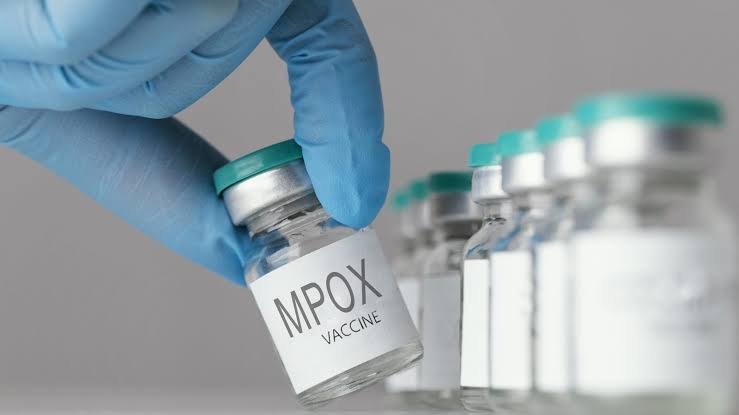
Africa CDC reports progress in Mpox response, expands vaccination across countries

Published

on

The Africa Centres for Disease Control and Prevention (Africa CDC) has reported progress in the fight against mpox across several African countries.

Prof. Yap Boum, Deputy Incident Manager Incident Management Support Team, Africa CDC, gave the report during a virtual press briefing on Thursday.

Boun cited improvements in surveillance, vaccination and case management, adding that challenges remain in hotspot regions.

According to him, the Democratic Republic of Congo (DRC) continues to record the highest number of cases.

“Over 31,000 infections and nearly 2,000 deaths have been confirmed, with a case fatality rate of 1.5 per cent among suspected cases and 0.41 per cent among confirmed cases,” he said.

Boun said that the provinces of North Kivu, South Kivu, and Kinshasa accounted for 63 per cent of infections.

He noted strong case management efforts, but also highlighted the need for better access in conflict-affected regions.

He also raised concern over co-infections, with a significant proportion of mpox patients in Kinshasa, Kampala, and Freetown found to be living with HIV, and in some cases, syphilis.

He called for stronger integration of mpox response into broader health systems, including systematic HIV testing for mpox patients.

“Sierra Leone has reported a sharp decline in new infections, attributed to intensified door-to-door sensitisation campaigns, community-driven messaging, and active surveillance.

“Still, Western Area Urban and Western Area Rural continue to account for three-quarters of the country’s cases.

“Meanwhile, Liberia is set to undergo an intra-action review next week, as the country continues to battle rising infections and struggles with a high proportion of patients being managed at home,” he said.

He confirmed that cases dropped by 58 per cent in Guinea, bringing the total to 965 cases and two deaths.

However, he said that 80 per cent of hospitalised patients presented with severe disease, prompting calls for earlier care, strengthened surveillance in hotspot regions such as Conakry, Kindia and Kankan.

“Kenya has also seen cases rise from 23 to 52, with Mombasa, Busia, and Nakuru identified as hotspots.

“The country has successfully deployed 10,700 vaccine doses, fully meeting its target, and is awaiting more supplies to cover Nairobi and high-risk groups, including truck drivers and sex workers,” he said

Across the continent, Boun confirmed that 4.7 million vaccine doses have been delivered to 15 countries, with over one million doses administered.

“An additional 485,000 doses are currently available, while pending shipments will deliver 42,000 doses each to Liberia and Uganda this week,” he said.

He described the scaling up of vaccine supply as a major milestone.

“We have moved from a time when Africa had only 20,000 doses to now, nearly five million.

“But much more is needed to adequately control the epidemic and prevent the risk of pandemic spread,” he said.

Continue Reading
Click to comment

Leave a Reply

Your email address will not be published. Required fields are marked *

Cover

Ban on Sachet Alcohol May Trigger Job Losses, Protesters Warn

Published

on

Tension flared in Abuja on Wednesday as a coalition under the aegis of Concerned Citizen for Change staged a protest, calling for the immediate removal of the Director-General of the National Agency for Food and Drug Administration and Control (NAFDAC), Prof. Mojisola Christianah Adeyeye, over what they described as “gross incompetence and abuse of office.”

Addressing journalists during a press conference at the protest ground, the group’s Director, Amb. Kingsley Nwanze, criticised the agency’s enforcement of a ban on sachet alcohol and 200ml PET bottle alcoholic products, describing the move as “illegal, arbitrary and economically damaging.”

Nwanze alleged that the enforcement contravenes existing national alcohol policy provisions approved by the Federal Ministry of Health, as well as a presidential directive halting disruptions of affected businesses pending the outcome of stakeholder consultations.

According to him, the action also disregards resolutions of the House of Representatives, which had earlier advised against the ban following a public hearing involving key industry stakeholders.

“The decision is capable of triggering civil unrest and undermining ongoing economic reforms. It will harm legitimate businesses, lead to job losses, and create room for illicit and unregulated products to thrive,” he said.

The group argued that sachet and small-volume alcoholic beverages serve low-income consumers and provide controlled consumption options, contrary to claims that they encourage abuse, particularly among minors.

They further maintained that industry operators had invested heavily in campaigns promoting responsible drinking and restricting underage access, noting that such efforts have yielded measurable results.

Nwanze warned that sustaining the ban could negatively impact government revenue, disrupt the value chain, and encourage smuggling of substandard alternatives into the country.

He said the group had formally petitioned the Senate and expressed confidence that lawmakers would review the matter based on “empirical evidence and stakeholder engagement.”

The protesters, however, urged President Bola Ahmed Tinubu to take decisive action by removing the NAFDAC DG, insisting that her continued stay in office was no longer in the public interest.

As of the time of filing this report, NAFDAC had not issued an official response to the allegations.

The protest highlights growing tensions between regulators and industry players over public health policies and economic considerations in Nigeria’s beverage sector.

Continue Reading

Cover

Abuja Protest Targets NAFDAC Boss as Group Condemns Alcohol Ban Enforcement

Published

on

Members of the Centre for Leadership and Creative Entrepreneurs in Africa (CELCE-Africa) on Thursday staged a protest at the Federal Ministry of Health headquarters in Abuja, calling for the immediate disengagement of the Director-General of the National Agency for Food and Drug Administration and Control (NAFDAC), Prof. Mojisola Christianah Adeyeye.

Addressing journalists during a press conference at the ministry premises, the group accused the NAFDAC boss of what it described as “gross insensitivity to issues of national concern,” particularly over the agency’s enforcement of a ban on sachet alcohol and 200ml PET bottle alcoholic products.

The group argued that the enforcement of the ban was hasty and inconsistent with the provisions of the National Alcohol Policy already adopted by the Federal Ministry of Health.

According to CELCE-Africa, the decision also contradicts a directive from the administration of Bola Ahmed Tinubu which, it said, advised the agency not to disrupt the operations of affected companies pending the outcome of a joint committee review.

Speaking on behalf of the group, Amb. Kingsley Enwelim Nwanze warned that the policy could lead to job losses and economic disruption within the alcohol production and distribution value chain.

He further referenced a resolution of the House of Representatives of Nigeria dated March 14, 2024, which restrained NAFDAC from proceeding with the ban after stakeholder consultations and a public hearing.

The group also criticised comments allegedly attributed to the NAFDAC Director-General linking alcohol consumption to banditry in Nigeria, describing the claim as misleading and lacking empirical evidence.

According to the organisation, Nigeria’s banditry crisis is driven by complex factors including organised criminal networks, proliferation of illegal arms, kidnapping activities and the abuse of hard drugs, rather than regulated alcoholic beverages.

CELCE-Africa said sachet and small PET alcohol products were introduced to provide affordable options for low-income adult consumers and warned that removing them from the market could encourage illicit production and cross-border smuggling.

The group maintained that while it supports strict regulation of unsafe and substandard products, government policies should be evidence-based and developed through broad consultation with stakeholders.

It also warned that the enforcement of the ban could threaten the livelihoods of thousands of Nigerians involved in the production, distribution and retail of alcoholic beverages.

The protesters therefore called on President Tinubu to urgently review the policy and consider removing the NAFDAC Director-General, arguing that her recent actions were no longer aligned with public interest.

Officials of NAFDAC had yet to respond to the protest as of the time of filing this report.

Continue Reading

Cover

NUJ, FCT to launch health insurance scheme for members

Published

on

Chairman of the FCT Council of the Nigeria Union of Journalists (NUJ), Comrade Grace Ike said on Thursday that the council plan to launch a health insurance scheme for it’s members who are currently not enjoying th service.

Speaking at the official unveiling of the FCT Health Insurance scheme for members of the House of Representatives Press Corps, Comrade Ike said the council will collaborate with the FCT Health department and the FHIS to actualise the scheme.

She commended the Chairman of the House of Representatives Committee on Media and Public Affairs, Hon. Akin Rotimi for taking the initiative to pay for the health insurance scheme for about 130 journalists covering the House of Representatives.

She said “On behalf of the Nigeria Union of Journalists, Abuja Council, I warmly commend this historic launch of the Health Insurance Scheme for members of the House of Representatives Press Corps.

“Let me specially appreciate the foresight and leadership of Hon. Akin Rotimi Jr. for initiating this noble and thoughtful intervention, the first of its kind for this Press Corps. This gesture sends a clear and powerful message that journalists are valued partners in the democratic process, not just observers of it.

“Health insurance is not a luxury; it is protection. Media professionals work under intense pressure; tight deadlines, constant mobility, exposure to risks, and the mental strain that comes with covering governance and national issues.

“When journalists are healthy and secure, they are better positioned to discharge their duties with clarity, courage, and professionalism.

“This initiative therefore strengthens not just the welfare of the Press Corps, but the quality of democratic engagement itself.

“As we receive this support, we must see it as both encouragement and responsibility. We must redouble our commitment to ethical reporting, factual accuracy, balanced coverage, and constructive nation building. The public looks to us for credible information. The nation relies on us to uphold truth and accountability.

“Let this investment in our wellbeing translate into renewed dedication to excellence.

“To the House leadership, we say thank you for leading by example.
To our colleagues in the Press Corps, we say: let us rise to the moment and justify this confidence placed in us.

“Nigeria depends on a strong legislature. At the same time, Nigeria also depends on a responsible media. Democracy thrives when the media is healthy and alive to its responsibility. Working together with the legislature, we can strengthen our democracy”.

Chairman of the House of Representatives Press Corps, Gboyega Onadiran expressed gratitude to the Chairman, House Committee on Media and Publicity, Hon. Akin Rotimi Jnr, for his foresight, leadership, and commitment to the welfare of journalists covering the National Assembly, saying the initiative reflects thoughtful leadership that recognises that a healthy press is vital to a healthy democracy.

He also expressed gratitude to the Mandate Secretary, Health Services and Environment Secretariat of the FCT, Dr. Dolapo Fasawe, for her collaboration and openness in extending this important health coverage to members of the Press Corps, saying “Your support reinforces the message that healthcare should be inclusive and accessible to all.”

He said Nigeria is steadily advancing toward the goal of Universal Health Coverage, a system where every citizen has access to quality healthcare services without suffering financial hardship.

Onadiran said “today’s initiative is a practical step in that direction. It demonstrates that achieving universal coverage requires partnership, commitment, and deliberate action.

“Health insurance remains one of the most effective tools to protect families from catastrophic health expenses. As journalists, we are witnesses to the realities many Nigerians face when healthcare is not affordable.

“By enrolling in structured health insurance, we are not only protecting ourselves but also aligning with the national vision of sustainable healthcare financing.

“I therefore use this opportunity to encourage other professional bodies, media organisations, associations, and institutions to key into health insurance schemes. When organisations prioritise the health of their members, they strengthen productivity, stability, and long-term growth.

“To the management and staff of the FCT Health Insurance Scheme, thank you for your professionalism and dedication in ensuring a smooth rollout of this programme.

“To my colleagues in the House of Representatives Press Corps, I appreciate your unity and cooperation. Let us take full advantage of this opportunity and ensure its success”.

Continue Reading

Trending

Copyright © 2023 - 2025 DailyMirror Nigeria. Design by AspireWeb.ng, powered by WordPress.