Connect with us

Headlines

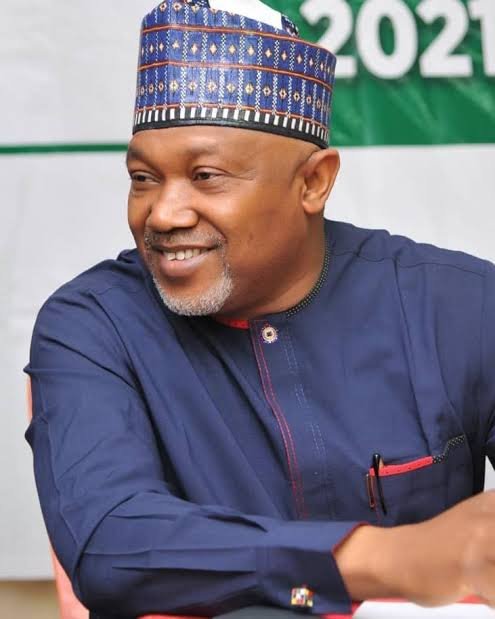
Calls Mount for Probe of Ex-REA Director Agaka over Alleged Diversion of N12bn COVID-19 Funds

Published

on

Pressure is growing on anti-graft agencies to investigate Engr. Sulaiman Bolakale Kawu Agaka, a former executive director of the Rural Electrification Agency (REA), over allegations that more than N12 billion in COVID-19 intervention funds meant for rural electrification projects were diverted under his watch.

The call came in a statement on Wednesday by the Movement for Public Accountability (MPA), a civil society organisation, through its president, Comrade Akinwale Lawal.

The group said the probe was necessary to restore public trust and send a clear message that senior officials cannot escape scrutiny simply by retiring from office.

According to MPA, while the Economic and Financial Crimes Commission (EFCC) and Independent Corrupt Practices and Other Related Offences Commission (ICPC) have already taken steps to prosecute some officials of the agency for corruption, those arraigned appear to be the “foot soldiers” rather than the architects of the rot.

The group insisted that Agaka, who oversaw projects, procurement and monitoring during the period, must be made to account for how such large-scale diversions occurred.

“Engr. Agaka cannot continue to wear the garb of neutrality when billions vanished in departments directly under his supervision. He owes Nigerians answers, and those answers must be demanded by the EFCC and ICPC,” Comrade Lawal said.

The group alleged that funds earmarked to power rural schools, health centres and small businesses were instead diverted through fraudulent procurement processes and questionable consultant contracts.

It accused Agaka of presiding over an environment where contract splitting, diversion through staff accounts, and the use of substandard materials became entrenched.

MPA said the consequences of this mismanagement remain visible across the country, where many rural communities are still in darkness despite budgetary allocations.

“Every child studying under a lantern and every clinic operating without electricity is a direct reminder of the betrayal that happened in REA under Agaka,” Lawal added.

The organisation further questioned Agaka’s lifestyle after retirement, saying his sudden wealth and political visibility suggest that illicit proceeds may have been laundered into private ventures.

It urged the Code of Conduct Bureau (CCB) to review his asset declarations and compare them with his legitimate earnings as a public servant.

“No one is saying accolades or honours should be stripped from him without due process. What we are saying is that the wealth he now flaunts raises questions that must be answered. Nigerians have the right to know whether public funds meant for their development are underwriting his ambitions,” the statement read.

Beyond Agaka, MPA called for broader reforms to ensure senior directors in public institutions bear responsibility for what happens under their watch.

It noted that Nigeria’s culture of treating retirement as an escape route from accountability has weakened institutions and emboldened corruption.

“This country must outgrow the habit of chasing small fry while sparing those who had the authority to prevent wrongdoing. The EFCC and ICPC must prove that the law is blind by looking at those who had the power, not just those who signed papers on their behalf,” Lawal insisted.

The group also demanded a forensic audit of all projects executed under Agaka’s tenure, stressing that the audit should examine procurement records, project delivery timelines and payments to contractors. It said only such an independent exercise would establish whether Agaka directly benefited from the alleged diversion.

MPA urged President Bola Tinubu’s administration to match its anti-corruption rhetoric with action by ensuring that no one, regardless of title or connections, is beyond scrutiny.

“This case will test whether Nigeria is serious about fighting corruption or only interested in headlines. Agaka’s record must be placed under the microscope,” the group said.

Continue Reading
Click to comment

Leave a Reply

Your email address will not be published. Required fields are marked *

Headlines

FCT Security Failure: Byazhin Demands Action as Locals Forced to Fund Own Defence

Published

on

FCT Community Demands Immediate Security Boost

In order to address the rising level of insecurity in their community, residents of Byazhin in the Federal Capital Territory’s (FCT) Bwari Area Council have demanded immediate government action.

During a visit to the village on Monday, they made the request in separate interviews with the News Agency of Nigeria (NAN).

According to NAN, some locals were observed removing overgrown plants from residential areas in an attempt to increase visibility and get rid of potential criminal hiding places.

They noted that the security situation had changed their daily routines, with their movement being restricted, especially at night, and that the exercise was intended to supplement current security efforts and make the community safer. Some locals have temporarily moved to safer areas with their family.

One of the impacted residents, Mrs. Christiana Ugo, claimed that she and her family were compelled to leave their house as they no longer felt safe.

“We fled our house because we were worried about what would occur. Until things get better, my kids and I are staying at my sister’s house.

“We hope we can go back home soon and live fearlessly,” she stated.

Ugo stated that while leaving their house was a tough choice, her family’s safety could not be compromised.

Another local, Stephen, also referred to as Papa Elijah, recalled a recent kidnapping and claimed that the victim was freed following the payment of a ransom.

In order to discourage criminal activity, Stephen further claimed that suspected kidnappers operate out of a big rock behind the neighbourhood and urged the authorities to set up a permanent security presence there.

He claims that by planning night patrols, the community has increased local security operations.

Speaking as well, resident Mr. Oluwa Deji stated that many homeowners had opted to stay in the neighbourhood despite security worries because it was not an option for them to forsake buildings they had spent years creating.

Deji observed that locals had decided to continue cooperating and supporting neighbourhood vigilante organisations in the hopes of long-term government action.

According to Mr. Adekunle Adewale, the community’s leader, there have been a few security-related events in the region, such as attempted invasions by suspected herders.

He said that residents had increased internal security by hiring security guards and setting up vigilante patrols three times a week. He also mentioned that monthly security meetings were held to discuss security tactics and examine developments.

When situations surpassed the capabilities of local volunteers, Adewale observed that the community continued to work closely with the police.

However, he voiced concerns about what he called an insufficient government presence, pointing out that the Byazhin Development Association was primarily responsible for funding security measures, infrastructure for energy, and other development projects.

He urged the government to bolster community security and upgrade access routes, arguing that improved infrastructure and ongoing security measures will further improve property and life safety.

The Federal Capital Territory Administration (FCTA) and pertinent security agencies were urged by the locals to improve surveillance, step up routine patrols, and take aggressive steps to safeguard people and property. (NAN)

Continue Reading

Headlines

SSCE Fee Hike: Government Must Balance Cost Recovery with Access to Education

Published

on

SSCE Fee Hike: Government Must Balance Cost Recovery with Access to Education By Comrade Yekini Lukmon R. Afolabi  Telephone: 07065313924 Email: yklukmon@gmail.com 
The decision by the Federal Government to approve an 82 per cent increase in the registration fees for the West African Senior School Certificate Examination (WAEC) and the National Examinations Council (NECO), raising the uniform fee from ₦27,500 to ₦50,000 with effect from March 2027, deserves careful reconsideration. While the rationale behind the adjustment may be understandable, its economic and social implications cannot be ignored.
No one disputes the need for periodic reviews of examination fees. The cost of conducting credible public examinations has risen significantly due to inflation, higher logistics expenses, enhanced security requirements, technological innovations, the rising cost of printing materials, and improved remuneration for permanent and ad hoc personnel. These realities are genuine and cannot simply be wished away.
However, public policy should not be formulated in isolation from the prevailing realities confronting citizens. Today, millions of Nigerian households are battling severe economic hardship. Food inflation remains high, transportation costs continue to rise, and the purchasing power of the average family has been severely eroded. For many parents, providing three meals a day has become a struggle. Introducing an 82 per cent increase in examination fees under these circumstances risks placing an unbearable burden on families already stretched beyond their limits.
Nigeria is home to far more struggling parents than affluent ones. A visit to public secondary schools across the country is enough to appreciate the financial realities confronting ordinary families. For many students, the inability to pay examination fees could mean delayed graduation or outright withdrawal from school. Such an outcome would be a setback for a nation that urgently needs an educated and skilled workforce to drive economic growth.
This issue should not be reduced to partisan politics or sensational criticism. Rather, it calls for constructive engagement between government, education stakeholders, parents, and the examination bodies. While the reasons advanced for the increase are legitimate, there is still room for a balanced solution that protects the financial sustainability of WAEC and NECO without denying deserving students access to education.
Education remains one of the strongest instruments for national development. It builds human capital, reduces poverty, promotes social mobility, and strengthens national productivity. Any policy that inadvertently erects financial barriers to secondary education ultimately undermines the country’s long-term development objectives. Equal educational opportunities should not become the exclusive preserve of children from wealthy homes.
Lagos State offers a practical example worthy of consideration. Since 1999, successive administrations have sustained a policy of paying WAEC registration fees for eligible public secondary school students. Initiated during the administration of President Bola Ahmed Tinubu as Governor of Lagos State, the programme has eased the financial burden on parents and enabled thousands of students to complete their secondary education. Many beneficiaries of that intervention are Today making meaningful contributions to Nigeria’s economy and society. I proudly count myself among them.
This is not necessarily an argument that every state government should assume responsibility for paying SSCE examination fees. Rather, it is an appeal to the Federal Ministry of Education and the relevant examination bodies to review the proposed increase with greater sensitivity to the prevailing economic realities. Alternative funding mechanisms, phased adjustments, targeted subsidies for indigent students, or other creative solutions should be explored before imposing such a steep increase.
Education should never become a privilege reserved for those who can afford it. As Nigeria grapples with the challenge of building a prosperous and inclusive society, policies that expand access to education must take precedence over those that inadvertently shut the door on the children of ordinary citizens. Government must therefore strike a careful balance between recovering operational costs and preserving every Nigerian child’s right to quality education.
Let’s leave no child behind.
By Comrade Yekini Lukmon R. Afolabi
Telephone: 07065313924
Continue Reading

Headlines

Can Nigeria’s drone industry deliver Africa’s defence sovereignty

Published

on

Military manufacturing may be growing, but defence sovereignty depends on far more than production.

Across Africa, the ability to defend borders, monitor territory and protect critical infrastructure remains heavily dependent on foreign suppliers. Turkish drones patrol borders, Chinese surveillance systems monitor cities and Russian fighter jets form the backbone of several air forces.

For decades, African militaries have turned abroad for critical defence technologies, leaving the continent largely positioned as a buyer rather than a producer.

An Abuja-based start-up is attempting to change that equation.

Terra Industries, founded in 2024 by Nathan Nwachuku and Maxwell Maduka, both in their early twenties, designs and manufactures drones, autonomous surveillance towers and unmanned ground vehicles from facilities in Abuja and Accra.

Unlike companies that primarily assemble imported components, Terra says it develops its own software, airframes, propellers and lithium-ion battery packs, with more than 70 percent of its inputs sourced locally.

The company says its systems are currently used to protect infrastructure valued at approximately $11bn, including power plants, lithium and gold mines, oil refineries and other strategic assets across eight African countries and Canada.

Building capability

The shift from importing security technology to producing it locally has become an increasingly important debate across Africa. Governments facing armed groups, porous borders, maritime insecurity and attacks on critical infrastructure are searching for faster and more adaptable solutions.

Terra’s move from private infrastructure security into engagements with Nigeria’s defence institutions reflects that changing environment. The company says its systems are designed to address challenges ranging from maritime surveillance and border monitoring to the protection of energy and mining assets.

The Archer drone, developed by Terra Industries, is part of a new generation of locally manufactured military technology emerging across Africa [Terra Industries]
The Archer drone, developed by Terra Industries, is part of a new generation of locally manufactured military technology emerging across Africa [File: Terra Industries]

“Coastal states in West Africa are focused on maritime surveillance because of piracy and illegal fishing in the Gulf of Guinea,” chief executive Nathan Nwachuku told Al Jazeera. “States dealing with insurgency and porous borders want persistent aerial surveillance and a rapid-response capability. Others are looking at protection for pipelines, power and energy infrastructure, and mining assets, the same problems we started solving in Nigeria.”

The company is now preparing for a larger regional footprint. Nwachuku confirmed that Terra’s second production facility in Ghana will become Africa’s largest drone manufacturing hub, with an annual production capacity of 50,000 units by 2028.

“Our long-term ambition goes beyond the continent because the threats our systems are designed to address exist across the Global South,” he said. “Governments in South Asia and South America face them too, and they face the same dependency on foreign suppliers. We intend to serve them as we grow.”

Investor confidence

The scale of investment behind Terra reflects growing interest in Africa’s emerging defence technology sector. The company has raised $34m in seed funding, which it describes as one of the largest early-stage funding rounds in African technology.

The investment was led by 8VC, the venture capital firm founded by Palantir Technologies co-founder Joe Lonsdale, alongside Lux Capital and Valor Equity Partners, investors behind companies such as Anduril and SpaceX.

“The round closed in under two weeks, which is rare even by global standards,” Tage Kene-Okafor, Terra Industries’ director of communications, told Al Jazeera. “But what has been more exciting is our cap table, where we have the likes of 8VC, Lux Capital and Valor Equity Partners, investors that have backed companies shaping the future of defence and advanced manufacturing globally.”

Security imperative

The interest in companies like Terra comes as drones become increasingly central to conflicts across Africa. In the Sahel, inexpensive commercial drones have moved from surveillance tools to weapons used on the battlefield, creating new challenges for militaries that often lack effective counter-drone capabilities.

According to the Armed Conflict Location and Event Data (ACLED), Jama’at Nusrat al-Islam wal-Muslimin (JNIM), the al-Qaeda-linked coalition operating in Mali and Burkina Faso, has carried out more than 100 drone attacks since 2023, with 2025 recording the highest number to date.

Terra says its Kama interceptor drone was developed in response to this changing threat environment. The company says the system can reach speeds of up to 300kph and is designed to counter hostile drones in environments where traditional air defence systems may be unavailable or too expensive.

Building defence technology, however, is not the same as achieving defence sovereignty.

Sovereignty question

While a country can build manufacturing capacity through investment, engineering talent and industrial policy, defence sovereignty requires institutions capable of managing procurement, ensuring accountability and sustaining strategic industries over the long term.

Janice Greaver, director at the Pan African Sustainable, Innovation and Development Associates (PASIDA), argues that local production alone cannot answer those questions.

“Seventy percent local sourcing means little until we know who controls the intellectual property, who is employed and who is left out,” she told Al Jazeera. “And when private capital arms the state with no visible civil society oversight, we are simply trading one dependency (on foreign suppliers) for another (on unaccountable domestic capital).”

Terra Industries has demonstrated that sophisticated defence technologies can be designed and manufactured in Africa. Its rapid rise reflects both growing technical capability on the continent and the pressure created by worsening security challenges.

Whether that becomes genuine defence sovereignty will depend on what happens beyond the factory floor: how governments buy, regulate and oversee the technologies they increasingly seek to build themselves.

As Greaver cautions: “Its manufacturing capacity is being built, sovereignty requires the accountability structures that do not yet exist”.

Source: https://www.aljazeera.com/news/2026/7/13/can-nigerias-drone-industry-deliver-africas-defence-sovereignty

Continue Reading

Trending

Copyright © 2023 - 2026 DailyMirror Nigeria. Design by AspireWeb.ng, powered by WordPress.