Headlines
Calls Mount for Probe of Ex-REA Director Agaka over Alleged Diversion of N12bn COVID-19 Funds
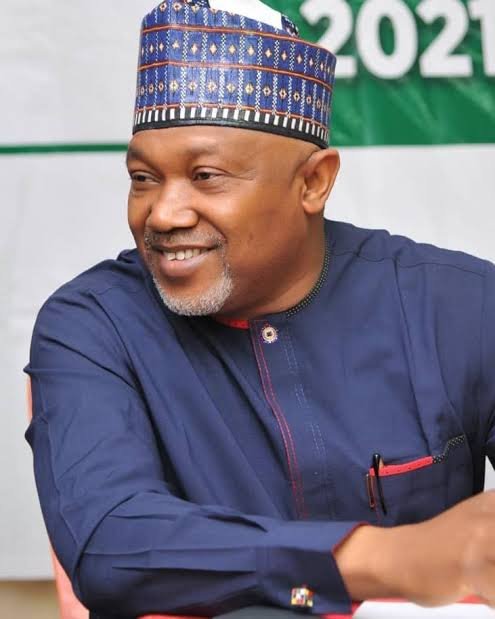
Pressure is growing on anti-graft agencies to investigate Engr. Sulaiman Bolakale Kawu Agaka, a former executive director of the Rural Electrification Agency (REA), over allegations that more than N12 billion in COVID-19 intervention funds meant for rural electrification projects were diverted under his watch.
The call came in a statement on Wednesday by the Movement for Public Accountability (MPA), a civil society organisation, through its president, Comrade Akinwale Lawal.
The group said the probe was necessary to restore public trust and send a clear message that senior officials cannot escape scrutiny simply by retiring from office.
According to MPA, while the Economic and Financial Crimes Commission (EFCC) and Independent Corrupt Practices and Other Related Offences Commission (ICPC) have already taken steps to prosecute some officials of the agency for corruption, those arraigned appear to be the “foot soldiers” rather than the architects of the rot.
The group insisted that Agaka, who oversaw projects, procurement and monitoring during the period, must be made to account for how such large-scale diversions occurred.
“Engr. Agaka cannot continue to wear the garb of neutrality when billions vanished in departments directly under his supervision. He owes Nigerians answers, and those answers must be demanded by the EFCC and ICPC,” Comrade Lawal said.
The group alleged that funds earmarked to power rural schools, health centres and small businesses were instead diverted through fraudulent procurement processes and questionable consultant contracts.
It accused Agaka of presiding over an environment where contract splitting, diversion through staff accounts, and the use of substandard materials became entrenched.
MPA said the consequences of this mismanagement remain visible across the country, where many rural communities are still in darkness despite budgetary allocations.
“Every child studying under a lantern and every clinic operating without electricity is a direct reminder of the betrayal that happened in REA under Agaka,” Lawal added.
The organisation further questioned Agaka’s lifestyle after retirement, saying his sudden wealth and political visibility suggest that illicit proceeds may have been laundered into private ventures.
It urged the Code of Conduct Bureau (CCB) to review his asset declarations and compare them with his legitimate earnings as a public servant.
“No one is saying accolades or honours should be stripped from him without due process. What we are saying is that the wealth he now flaunts raises questions that must be answered. Nigerians have the right to know whether public funds meant for their development are underwriting his ambitions,” the statement read.
Beyond Agaka, MPA called for broader reforms to ensure senior directors in public institutions bear responsibility for what happens under their watch.
It noted that Nigeria’s culture of treating retirement as an escape route from accountability has weakened institutions and emboldened corruption.
“This country must outgrow the habit of chasing small fry while sparing those who had the authority to prevent wrongdoing. The EFCC and ICPC must prove that the law is blind by looking at those who had the power, not just those who signed papers on their behalf,” Lawal insisted.
The group also demanded a forensic audit of all projects executed under Agaka’s tenure, stressing that the audit should examine procurement records, project delivery timelines and payments to contractors. It said only such an independent exercise would establish whether Agaka directly benefited from the alleged diversion.
MPA urged President Bola Tinubu’s administration to match its anti-corruption rhetoric with action by ensuring that no one, regardless of title or connections, is beyond scrutiny.
“This case will test whether Nigeria is serious about fighting corruption or only interested in headlines. Agaka’s record must be placed under the microscope,” the group said.

Headlines
SSCE Fee Hike: Government Must Balance Cost Recovery with Access to Education
Headlines
Can Nigeria’s drone industry deliver Africa’s defence sovereignty
Military manufacturing may be growing, but defence sovereignty depends on far more than production.
Across Africa, the ability to defend borders, monitor territory and protect critical infrastructure remains heavily dependent on foreign suppliers. Turkish drones patrol borders, Chinese surveillance systems monitor cities and Russian fighter jets form the backbone of several air forces.
For decades, African militaries have turned abroad for critical defence technologies, leaving the continent largely positioned as a buyer rather than a producer.
An Abuja-based start-up is attempting to change that equation.
Terra Industries, founded in 2024 by Nathan Nwachuku and Maxwell Maduka, both in their early twenties, designs and manufactures drones, autonomous surveillance towers and unmanned ground vehicles from facilities in Abuja and Accra.
Unlike companies that primarily assemble imported components, Terra says it develops its own software, airframes, propellers and lithium-ion battery packs, with more than 70 percent of its inputs sourced locally.
The company says its systems are currently used to protect infrastructure valued at approximately $11bn, including power plants, lithium and gold mines, oil refineries and other strategic assets across eight African countries and Canada.
Building capability
The shift from importing security technology to producing it locally has become an increasingly important debate across Africa. Governments facing armed groups, porous borders, maritime insecurity and attacks on critical infrastructure are searching for faster and more adaptable solutions.
Terra’s move from private infrastructure security into engagements with Nigeria’s defence institutions reflects that changing environment. The company says its systems are designed to address challenges ranging from maritime surveillance and border monitoring to the protection of energy and mining assets.
![The Archer drone, developed by Terra Industries, is part of a new generation of locally manufactured military technology emerging across Africa [Terra Industries]](https://www.aljazeera.com/wp-content/uploads/2026/07/IMG_4128-1-1783618110.jpeg?w=770&resize=770%2C580&quality=80)
“Coastal states in West Africa are focused on maritime surveillance because of piracy and illegal fishing in the Gulf of Guinea,” chief executive Nathan Nwachuku told Al Jazeera. “States dealing with insurgency and porous borders want persistent aerial surveillance and a rapid-response capability. Others are looking at protection for pipelines, power and energy infrastructure, and mining assets, the same problems we started solving in Nigeria.”
The company is now preparing for a larger regional footprint. Nwachuku confirmed that Terra’s second production facility in Ghana will become Africa’s largest drone manufacturing hub, with an annual production capacity of 50,000 units by 2028.
“Our long-term ambition goes beyond the continent because the threats our systems are designed to address exist across the Global South,” he said. “Governments in South Asia and South America face them too, and they face the same dependency on foreign suppliers. We intend to serve them as we grow.”
Investor confidence
The scale of investment behind Terra reflects growing interest in Africa’s emerging defence technology sector. The company has raised $34m in seed funding, which it describes as one of the largest early-stage funding rounds in African technology.
The investment was led by 8VC, the venture capital firm founded by Palantir Technologies co-founder Joe Lonsdale, alongside Lux Capital and Valor Equity Partners, investors behind companies such as Anduril and SpaceX.
“The round closed in under two weeks, which is rare even by global standards,” Tage Kene-Okafor, Terra Industries’ director of communications, told Al Jazeera. “But what has been more exciting is our cap table, where we have the likes of 8VC, Lux Capital and Valor Equity Partners, investors that have backed companies shaping the future of defence and advanced manufacturing globally.”
Security imperative
The interest in companies like Terra comes as drones become increasingly central to conflicts across Africa. In the Sahel, inexpensive commercial drones have moved from surveillance tools to weapons used on the battlefield, creating new challenges for militaries that often lack effective counter-drone capabilities.
According to the Armed Conflict Location and Event Data (ACLED), Jama’at Nusrat al-Islam wal-Muslimin (JNIM), the al-Qaeda-linked coalition operating in Mali and Burkina Faso, has carried out more than 100 drone attacks since 2023, with 2025 recording the highest number to date.
Terra says its Kama interceptor drone was developed in response to this changing threat environment. The company says the system can reach speeds of up to 300kph and is designed to counter hostile drones in environments where traditional air defence systems may be unavailable or too expensive.
Building defence technology, however, is not the same as achieving defence sovereignty.
Sovereignty question
While a country can build manufacturing capacity through investment, engineering talent and industrial policy, defence sovereignty requires institutions capable of managing procurement, ensuring accountability and sustaining strategic industries over the long term.
Janice Greaver, director at the Pan African Sustainable, Innovation and Development Associates (PASIDA), argues that local production alone cannot answer those questions.
“Seventy percent local sourcing means little until we know who controls the intellectual property, who is employed and who is left out,” she told Al Jazeera. “And when private capital arms the state with no visible civil society oversight, we are simply trading one dependency (on foreign suppliers) for another (on unaccountable domestic capital).”
Terra Industries has demonstrated that sophisticated defence technologies can be designed and manufactured in Africa. Its rapid rise reflects both growing technical capability on the continent and the pressure created by worsening security challenges.
Whether that becomes genuine defence sovereignty will depend on what happens beyond the factory floor: how governments buy, regulate and oversee the technologies they increasingly seek to build themselves.
As Greaver cautions: “Its manufacturing capacity is being built, sovereignty requires the accountability structures that do not yet exist”.
Source: https://www.aljazeera.com/news/2026/7/13/can-nigerias-drone-industry-deliver-africas-defence-sovereignty
Headlines
Major General Mutkut Applauds 4 Brigade’s Proactive Security Operations During Edo Assessment Visit
The Commander Infantry Corps (CIC), Major General Godwin Mutkut, has commended the operational readiness and administrative achievements of the Headquarters 4 Brigade, Nigerian Army, during an operational assessment visit to the formation in Benin City, Edo State.
During the visit on Saturday, July 11, Major General Mutkut commissioned several completed infrastructure projects and praised the Brigade for maintaining a proactive security posture that has contributed to peace and stability across Edo State.
Addressing officers and soldiers, the Infantry Corps Commander conveyed the goodwill message of the Chief of Army Staff (COAS), Lieutenant General Waidi Shaibu, and applauded the troops for their loyalty, discipline, professionalism, resilience and commitment to duty.
He urged personnel to remain focused on their constitutional responsibilities while upholding the core values, ethics and traditions of the Nigerian Army.
Major General Mutkut also stressed the importance of maintaining strong family relationships, noting that a stable home environment plays a vital role in enhancing the effectiveness and wellbeing of military personnel.
As part of the assessment visit, the Commander commissioned a series of projects completed under the leadership of the Commander 4 Brigade, Brigadier General Ahmed Balogun. The projects include the remodelled Brigade Conference Room, a new Brigade Operations Room, Brigade Sick Bay, an ultra-modern Fire Point, Quarter Guard, and the newly constructed 4 Brigade Mascot and Fountain.
He described the projects as significant investments that would enhance operational efficiency, improve troop welfare and provide a more conducive working environment for personnel.
Major General Mutkut commended Brigadier General Balogun for his leadership and commitment to implementing the Chief of Army Staff’s Command Philosophy through infrastructure development and effective command administration.
Earlier, Brigadier General Balogun welcomed the Commander Infantry Corps and expressed appreciation for the operational assessment visit, describing it as a morale booster for officers and soldiers of the Brigade.
He reaffirmed the Brigade’s commitment to protecting lives and property across its area of responsibility while sustaining the high standards of professionalism, discipline and operational excellence associated with the Nigerian Army and the Infantry Corps.
The visit also featured a tour of facilities within the Nigerian Army Cantonment, Ekehuan, Benin City, an interactive session with officers and soldiers, and the presentation of souvenirs.
-
Branded Content3 weeks agoNow Hiring: Academic and Technical Staff at a Leading Private University in Gombe State
-
Headlines11 months agoNRC to reposition train services nationwide.. Kayode Opeifa
-
Entertainment9 years agoThe final 6 ‘Game of Thrones’ episodes might feel like a full season
-
Fashion9 years agoThese ’90s fashion trends are making a comeback in 2017
-
Politics3 months agoNNPP Diaspora Stakeholder and Key Kwankwaso Ally, Dr. Usman Tijjani Shehu, Rejoins APC
-
Opinion2 years agoBureaucratic Soldier, Kana Ibrahim heads Ministry of Aviation and Aerospace After Transformative Tenure at Defence
-
Opinion1 year agoHon. Daniel Amos Shatters Records, Surpasses Predecessor’s Achievements in Just Two Years
-
Opinion7 months agoBarrister Somayina Chigbue, Esq: A rising legal leader shaping institutioal excellence in Nigeria