Opinion
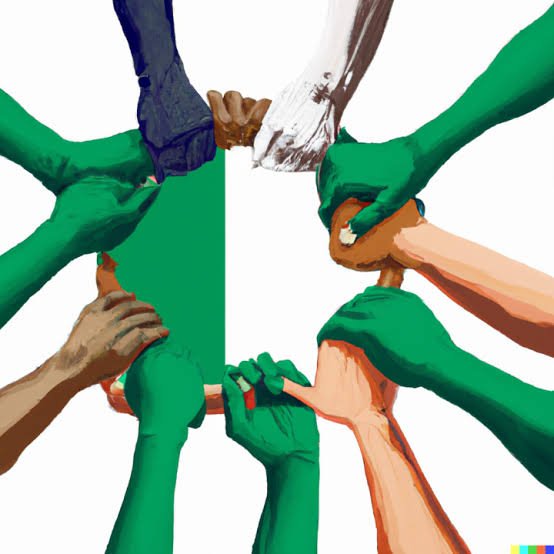
NATIONAL UNITY: THE KEY TO NIGERIA’S SURVIVAL AND GREATNESS
BY SANI KUKASHEKA USMAN (rtd) mni fnipr
Nigeria, the largest Black nation in the world and Africa’s most populous country, proudly hailed as “the Giant of Africa,” stands at a crossroads. Its unity is under siege, and the cracks are not just threatening its identity but also obstructing its path to development, peace, security, and global stature. What’s most concerning is the pervasive indifference to these existential challenges, as if the gravity of the situation has yet to sink in. This looming crisis demands urgent attention, which is why I feel compelled to sound the alarm and draw focus to this critical issue before the consequences become irreversible.
Today, our society is deeply divided along tribal, religious, and regional lines, with these affiliations often taking precedence over national interests and identity. This trend is dangerous, as it undermines Nigeria’s potential for progress. Corruption, insecurity, and economic instability are all symptoms of a lack of national unity and collective will.
However, despite the importance of national unity, successive governments over the years were not able to achieve the deliberate and sustained efforts needed to transform Nigeria’s diversity into an advantage. Instead, Nigeria experiences noticeable progressive divisive tendencies, rhetorics, hate speech, and ethnic and religious profiling which have been allowed to flourish, often without consequence. These actions further deepen societal fractures and raise serious concerns about the nation’s future.
The absence of unity among Nigerians often leads to conflicting efforts and a lack of cohesion on critical national issues, significantly impeding the country’s progress and development. When citizens and stakeholders fail to align their goals and collaborate effectively, resources are wasted, growth opportunities are missed, and the nation struggles to address its challenges efficiently. Building a sense of shared purpose and fostering national unity are therefore essential to unlocking Nigeria’s full potential and ensuring sustainable advancement.
With over 250 ethnic groups and a complex religious landscape, Nigeria needs a strong foundation of national unity and cohesion to overcome its challenges and achieve its full potential as envisioned by its founding fathers.
The Dangers of Division
Nigeria today is a nation fractured along tribal and religious lines, plagued by mistrust, suspicion, and a constant undercurrent of conflict across its six geopolitical zones. Disunity fuels corruption by enabling the exploitation of divisions for personal gain. Trust is eroded, accountability diminishes, and those in power often operate with impunity, enriching themselves while the nation suffers.
This atmosphere of division also enables insecurity to thrive. Extremist ideologies and criminal enterprises exploit societal fractures, gaining footholds and undermining the fabric of society. The incessant ethnic and religious clashes create fertile ground for violence, extremism, and instability.
A divided nation is akin to a house with crumbling foundations. Nigeria cannot effectively tackle its challenges or harness its vast potential without a united front. National unity is not just a lofty ideal but a practical necessity for survival and development.
Disunity, whether driven by ethnicity, religion, or clan loyalties, often leads to violent conflicts, economic devastation, the displacement of entire populations and state failure. The collapse of Yugoslavia, the ongoing instability in Somalia, and the decades-long conflict in Sudan and South Sudan all demonstrate the devastating consequences of deep-seated divisions and lack of unity. These examples serve as stark reminders of the importance of national unity and the dangers of allowing divisions to fester and erupt into violence.
Activities and institutions play a vital role in uniting Nigerians by bridging ethnic, religious, and regional divides. Events such as the World Cup, African Cup of Nations, and other local and international sporting competitions ignite shared passion and collective pride as Nigerians rally behind their national team. Similarly, cultural festivals like the Calabar Carnival, Osun Osogbo Festival, and Argungu Fishing Festival celebrate Nigeria’s rich diversity and provide platforms for inter-ethnic and inter-religious interactions, fostering mutual understanding and appreciation. However, the irregular nature of these events calls for more consistent efforts to sustain their unifying impact.
Institutions like unity schools, the National Youth Service Corps (NYSC), and military service have also been instrumental in promoting national integration. By bringing together young Nigerians from diverse backgrounds, these institutions nurture lifelong relationships built on mutual respect and understanding, free of ethnic or religious bias. Such initiatives contribute to breaking down barriers, cultivating a spirit of inclusivity, and fostering a sense of shared identity and purpose among Nigerians.
Therefore, leaders can amplify these efforts by actively participating in these platforms and using them to promote national dialogue and foster inter-ethnic and inter-religious harmony. They should prioritise cross-cultural exchanges, expand interethnic activities in schools, and implement inclusive policies in sports, education, and service programs. Such strategic investments will deepen unity, enhance social cohesion, and reinforce a collective sense of belonging among all Nigerians.
The Power of Unity
Across the world, unity is the cornerstone of meaningful development. Nigeria fought a three-year civil war to preserve its unity. A united Nigeria can collectively combat corruption, one of the nation’s most persistent challenges. When citizens see themselves as part of a shared destiny, they are more likely to demand transparency, accountability, and good governance from those leading them.
Insecurity also thrives in a divided society. However, when Nigerians prioritise safety and peace over regional or religious differences, the forces of insecurity will undoubtedly face a formidable, unified opposition. Similarly, national unity can help address social vices such as criminality. A united populace can channel its diversity into innovation, entrepreneurship, and education, creating a robust and inclusive economy.
The United States, Germany, and the United Arab Emirates all exemplify the power of unity. The US, a diverse nation, has harnessed its “E Pluribus Unum” spirit to overcome challenges and achieve global prominence. Germany, after decades of division, reunified and quickly became a European powerhouse. The UAE, a federation of diverse emirates, demonstrates how collective action can transform a region and achieve remarkable economic and social progress. These examples highlight the significant advantages that unity can bring, from economic prosperity and political stability to global influence.
Overcoming Barriers to National Unity
Nigeria’s diversity should have been a source of cultural richness and a potential tourism gold mine, but it is too often weaponised to create division. Some politicians and religious leaders frequently exploit differences for personal gain, sowing seeds of discord and polarising the public. Religion meant to serve as a moral compass, is often manipulated to deepen divides among Nigerians.
To overcome these barriers, Nigerians must prioritise national identity over ethnic and religious sentiments or affiliations. Education is vital in this process. The recent reintroduction of history into school curriculums is commendable, as a people without a sense of history lack direction. Schools should teach the value of diversity and the dangers of division, laying the groundwork for a united future.
Interfaith and interethnic dialogue is essential for building trust and understanding. Platforms for open discussions among diverse groups can dismantle prejudices and promote tolerance. Such dialogue helps individuals move beyond stereotypes, fostering a shared commitment to national progress.
However, equity and justice must form the foundation of national unity. When citizens feel represented and valued, regardless of ethnicity, religion, or region, they are more likely to embrace a collective identity. Ensuring fair resource distribution, providing equal opportunities, and holding leaders accountable are critical steps in this direction.
The Role of Leadership and Citizens
Fostering national unity in this country requires a multi-pronged approach involving responsible leadership, active citizen participation, and the dedicated efforts of institutions like the National Orientation Agency (NOA).
Similarly, leadership at all levels must prioritise inclusivity and equity. Policies that favour one group over another breed resentment and undermine trust; therefore, such policies should be revisited and reviewed. It is also pertinent to note that leaders who champion fairness, justice, and the common good inspire citizens to transcend parochial loyalties and work towards national development, peace, and unity.
Citizens play a vital role in fostering unity through acts of tolerance, understanding, and solidarity. Organisations like the Alumni Association of the National Institute (AANI), the Nigerian Institute of Public Relations (NIPR), and the Nigerian Society for Peace Studies and Practice (SPSP) play crucial roles in promoting peace and unity through advocacy, enlightenment, and dialogue. Their efforts, along with those of the Institute for Peace and Conflict Resolution (IPCR) and the Counselling Association of Nigeria (NASSON), must be acknowledged and supported.
The National Orientation Agency (NOA) plays a central role in educating and sensitising the public on the importance of national unity and cohesion. Through public awareness campaigns, community engagement programs, and civic education initiatives, NOA can effectively counter divisive narratives and promote a shared sense of national identity.
Government and private sector collaboration is essential. Programs like the National Youth Service Corps (NYSC) are vital tools for interethnic integration. Strengthening NYSC and encouraging interethnic marriages with incentives can significantly deepen national cohesion.
Leadership visitations and cross-regional engagements by traditional, religious, and political leaders can foster trust and understanding. Education reform is equally important. Curriculums should emphasise shared values, histories, and aspirations to nurture unity from an early age. Responsible journalism that counters divisive narratives is another key factor in fostering a united and harmonious nation.
The Way Forward
Nigeria’s immense potential is undermined by divisive tendencies and a lack of unity. It is time for all Nigerians to rise above divisive rhetoric and embrace the shared goal of building a prosperous, secure, and inclusive nation. This requires a concerted effort from all stakeholders, with the National Orientation Agency (NOA) playing a very important role.
NOA, with its extensive reach and network, can effectively disseminate messages of unity, tolerance, and national cohesion through innovative public awareness campaigns, community engagement initiatives, and civic education programmes. By countering divisive narratives and promoting a shared sense of national identity, NOA can significantly contribute to fostering national unity and cohesion among Nigerians.
Therefore, the government must actively support and empower NOA with the necessary resources and mandate to effectively carry out this onerous responsibility. This includes strengthening its capacity for research, data analysis, and impact assessment to ensure the effectiveness of its programmes.
Beyond NOA’s efforts, the government must build on existing initiatives like the National Youth Service Corps (NYSC) and partner with bridge-building organisations like AANI, NIPR, and SPSP. These organizations, along with the Institute for Peace and Conflict Resolution (IPCR) and the Counselling Association of Nigeria (NASSON), can play important roles in promoting dialogue, fostering understanding, and building bridges across ethnic and religious divides.
Citizens also must actively participate in the process of nation-building by embracing tolerance, understanding, and solidarity. Promoting interethnic marriages, encouraging cross-cultural exchanges, and actively countering hate speech are the right steps towards fostering a more cohesive society in this nation.
Consequently, a united Nigeria is not just a dream but the only path to achieving greatness. Together, with the active involvement of NOA, government, civil society organisations, and all citizens, we can create a nation where every individual thrives, fulfilling the promise of a brighter future. As the timeless adage goes, “United we stand, divided we fall.” The future of Nigeria depends on our ability to embrace unity and forge a common destiny.
The writer, Sani Kukkasheka Usman (rtd) mni fnipr, is a retired senior military officer, public relations and security consultant dedicated to national unity, peace and security. He actively shares his insights and engages with the public on his Facebook and X platforms via @skusman.

Opinion
No More Pipeline Vandalism in The Niger Delta, But…
APPRAISING MILITARY RESOLVE AND THE PATH TO SUSTAINABLE OIL SECURITY
By Aaron Mike Odeh
On a recent media assessment visit by the Director, Defence Media Operations, Major General Michael E Onoja on the 20 January 2026, the General Officer Commanding (GOC), 6 Division of the Nigerian Army and Commander Land Component Operation DELTA SAFE, Major General Emmanuel Emeka, stated that there will be “no more pipeline vandalism in the Niger Delta” indicating a strong affirmation of military resolve and institutional confidence in the ongoing operations within Nigeria’s most economically strategic region.
Far from being a casual statement, the pronouncement reflects the operational posture, command clarity, and renewed determination of the Nigerian Armed Forces (AFN) under the leadership of General Olufemi Oluyede. It signals a clear message: the era of unchecked sabotage of national economic assets is being decisively confronted.
CONTEXTUALISING THE GOC’S DECLARATION
Statements of this magnitude from a serving GOC carry both symbolic and operational weight. They are rooted in firsthand command experience, intelligence assessments, and measurable gains on the ground. In this regard, Major General Emmanuel Emeka’s assertion should be understood as a projection of confidence derived from sustained military engagement, improved coordination with sister security agencies, and enhanced operational discipline within the 6 Division’s area of responsibility.
The Niger Delta has long posed complex security challenges due to its difficult terrain, extensive pipeline networks, and the activities of organised criminal syndicates. Against this backdrop, the GOC’s declaration underscores a belief that the Nigerian Armed Forces has reached a level of operational advantage sufficient to deter, disrupt, and dismantle pipeline vandalism networks.
OPERATIONAL GAINS AND MILITARY PROFESSIONALISM
Under Major General Emmanuel Emeka’s command, the 6 Division has intensified patrols, improved intelligence-led operations, and sustained pressure on illegal refining camps and crude oil theft routes. These efforts align with the Federal Government’s strategic objective of securing oil infrastructure as a matter of national economic security.
The GOC’s statement therefore reflects not mere optimism, but a professional assessment of the division’s growing capacity to dominate the operational environment. It also reinforces the Nigerian Armed Forces constitutional role as a stabilising force, committed to safeguarding national assets in support of economic recovery and investor confidence.
THE “BUT”: BEYOND KINETIC SUCCESS
While commending the resolve and achievements of the 6 Division, it is equally important to situate the declaration within a broader national framework. The “but” in the statement should not be interpreted as doubt or contradiction; rather, it represents an acknowledgment of the multifaceted nature of pipeline security in the Niger Delta.
Pipeline vandalism has historically been sustained not only by criminal intent, but also by socioeconomic pressures, environmental degradation, and the absence of alternative livelihoods in some host communities. Military success, while indispensable, achieves greater durability when complemented by effective civil governance, economic inclusion, and community trust-building.
COMMUNITY ENGAGEMENT AS A FORCE MULTIPLIER
One of the strengths of recent military operations in the Niger Delta has been improved civil-military relations. The success of the Armed Forces is closely tied to cooperation from local communities, traditional institutions, and credible stakeholders.
Sustainable pipeline security is most effective when host communities become partners in protection rather than passive observers. The GOC’s declaration implicitly places responsibility on all stakeholders—government agencies, oil companies, community leaders, and youths—to consolidate the gains made by the Armed Forces.
INSTITUTIONAL SYNERGY AND NATIONAL RESPONSIBILITY
The efforts of the 6 Division do not exist in isolation. They form part of a wider national security ecosystem involving regulatory agencies, intelligence services, law enforcement bodies, and policy institutions. The GOC’s confidence should therefore inspire complementary actions across these sectors.
Oil companies must uphold environmental standards and transparent community engagement. Regulatory bodies must enforce accountability. Development agencies must deliver visible dividends of peace. These non-military actions reinforce the security umbrella provided by the Nigerian Armed Forces.
LEADERSHIP AND STRATEGIC MESSAGING
Major General Emmanuel Emeka’s statement also serves as strategic communication—boosting troop morale, reassuring investors, and reinforcing public confidence in the Armed Forces of Nigeria. Such leadership messaging is essential in shaping national narratives around security, discipline, and state authority.
By articulating a firm stance against pipeline vandalism, the GOC is not only commanding troops, but shaping expectations and setting benchmarks for operational success.
CONCLUSION
The declaration that there will be “no more pipeline vandalism in the Niger Delta” should be seen as a reflection of strengthened military capacity, improved leadership focus, and renewed institutional confidence under Major General Emmanuel Emeka, GOC 6 Division of the Armed Forces.
The Nigerian Armed Forces has demonstrated readiness to secure critical national assets. The task ahead is to consolidate these gains through sustained operations, inter-agency synergy, and socio-economic interventions that address underlying vulnerabilities.
In this context, the GOC’s statement stands as both an assurance and a call to collective national responsibility—one that deserves commendation, support, and strategic follow-through.
Aaron Mike Odeh, a Public Affairs Analyst Media Consultant and Community Development Advocator wrote from Post Army Housing Estate Kurudu Abuja
Opinion
Appraising NUPRC’s New Tempo
By Grace Ameh
As a woman who has spent years admiring the quiet strength of sisters carving paths in Nigeria’s demanding energy sector, my heart swelled with genuine joy the moment Chief Mrs. Oritsemeyiwa Eyesan’s appointment as Commission Chief Executive of the Nigerian Upstream Petroleum Regulatory Commission was announced.
Here stands a remarkable daughter of the Niger Delta, graceful yet fiercely determined, becoming the first woman to lead our nation’s upstream regulator. Her rise feels deeply personal, like watching a beloved sister finally claim the spotlight she has long deserved.
The NUPRC, as a young agency born from the transformative Petroleum Industry Act of 2021, has shouldered enormous responsibilities in a complex and evolving landscape—navigating fluctuating production levels amid global energy shifts, addressing delays in data dissemination that can affect investor planning, tackling the persistent menace of crude oil theft that impacts national revenue, and working to enhance transparency in licensing rounds and asset management for greater stakeholder confidence.
This institution emerged with bold ambitions to modernise regulation, attract investment, and optimise Nigeria’s hydrocarbon resources, yet it has operated in an environment marked by inherited challenges and the need for continuous adaptation to deliver on its mandate.
Then, in December 2025, President Bola Tinubu nominated Chief Mrs Eyesan as the first woman to lead NUPRC, a move swiftly confirmed by the Senate.
My spirit lifted immediately. Chief Eyesan’s journey inspires every woman dreaming big in this field. She holds a Bachelor of Education in Economics from the prestigious University of Benin, graduating in 1986 with a solid foundation in economic theory, market analysis, and project evaluation—skills that would prove invaluable in the complex world of energy finance and strategy.
Her academic grounding equipped her to navigate large-scale investments and regulatory frameworks with precision. Early in her career, she honed her financial acumen in banking, serving as Branch Manager at People’s Bank of Nigeria and later as Treasury Officer at Gulf Bank, before joining NNPC in 1992.
Over nearly 33 years, she rose steadily through roles in planning, procurement, corporate strategy, and sustainability, culminating as Executive Vice President, Upstream, until her retirement in November 2024. In that position, she oversaw strategic management of Nigeria’s upstream operations, led sustainability initiatives, strengthened financial discipline, and guided critical reforms aligned with the PIA.
Since assuming office, Chief Eyesan has brought a refreshing wave of purpose and collaboration to NUPRC. Her patriotic commitment shines brightly as she aligns the Commission’s work with President Tinubu’s Renewed Hope Agenda, emphasising increased crude oil production to enhance energy security and revenue, accelerated gas monetisation to advance the Decade of Gas vision, and robust transparency measures to rebuild investor trust.
I admire her focus on digitisation; she is thoughtfully integrating digital tools to improve operational efficiency, accountability, and ease of business, cutting through layers of bureaucracy that once slowed progress. Her leadership style feels deeply relatable—inclusive and engaging. With an open-door policy and regular town halls, she encourages staff input while forging stronger ties with stakeholders, labour unions, and professional bodies.
She champions environmentally sustainable practices, ensuring growth does not come at the cost of our land and waters. Her strategic vision unfolds organically: boosting crude reserves and output for economic stability, scaling gas utilisation for power generation and exports, fortifying regulations to attract long-term investments, nurturing technical expertise through partnerships and capacity building, and embedding digitisation hand-in-hand with transparency to foster dynamic, confidence-inspiring growth.
In these early weeks of January 2026, tangible steps are emerging. She has advanced the 2025 licensing round, scheduling a key pre-bid conference for January 14 in Lagos to draw fresh capital into exploration and development. Partnerships, such as deepened synergy with the Nigerian Midstream and Downstream Petroleum Regulatory Authority, highlight her collaborative spirit.
What touches me profoundly is how Chief Eyesan views challenges as opportunities. She inherited an agency needing revitalisation but approaches it with grace, strategy, and unyielding diligence—that workaholic patriotism we so admire in trailblazing women. Her experience positions her uniquely to resolve legacy issues, unlock stranded assets, and position NUPRC as Africa’s premier regulator.
Reflecting on this new era, sisterly pride overwhelms me. Chief Mrs. Oritsemeyiwa Eyesan is truly an Amazon—resilient, visionary, and devoted to Nigeria’s progress. In her capable hands, the upstream sector is not just recovering; it is poised to soar, delivering sustainable wealth for generations.
Dear sister, you embody the hope we renew daily. The light of your leadership illuminates our path forward, proving once again that when a woman of substance rises, the nation rises with her.
*Ameh an Oil and gas expert writes from Kaduna.
Opinion
FIFA World Cup: Counting the costs of Super Eagles missed opportunities
By Victor Okoye
As the football world prepares for the expanded 48-team 2026 FIFA World Cup, Nigeria is facing the prospect of missing the global showpiece for the eighth time since its inception in 1930, a development that has drawn concern from football stakeholders and sports administrators in the country.
The Super Eagles, who made their World Cup debut at USA 1994, have qualified for the finals six times but failed to reach the tournament on seven previous occasions.
Should Nigeria fail to qualify for the 2026 edition, it would mark the eight miss and a second consecutive absence, further highlighting the rising cost of non-participation in an era of unprecedented financial rewards.
Historically, missing the World Cup was largely a sporting setback. Financial incentives were modest in earlier tournaments.
In USA 1994, FIFA’s total prize money stood at about 62 million dollars, with champions Brazil earning roughly four million dollars.
France 1998 offered about 131 million dollars in total prize money, while winners received around six million dollars.
The figures rose steadily to 300 million dollars at Brazil 2014 and 440 million dollars at Russia 2018 and Qatar 2022.
However, FIFA’s recent review has significantly raised the stakes.
The FIFA Council has approved a record 727 million dollars financial package for the 2026 World Cup, to be co-hosted by the United States, Canada and Mexico.
At an estimated exchange rate of 1,500 naira to the dollar, the total sum translates to about 1.09 trillion naira.
Of this amount, 655 million dollars (approximately 982.5 billion naira) will be shared as prize money among the 48 participating teams.
Champions will earn 50 million dollars, runners-up 33 million dollars, third place 29 million dollars and fourth place 27 million dollars.
Teams finishing between fifth and eighth will receive 19 million dollars, ninth to 16th are to receive 15 million dollars, 17th to 32nd will pocket 11 million dollars, while teams ranked 33rd to 48th will earn nine million dollars.
Each qualified nation will also receive 1.5 million dollars as preparation funds.
This guarantees every participating team a minimum of 10.5 million dollars — about 15.75 billion naira — before the tournament begins.
Nigeria’s 2026 qualification campaign ended in disappointment after the Super Eagles finished second behind South Africa in their group and lost the African playoff final to the Democratic Republic of Congo (DR Congo) on penalties.
To date, no public official report has broken down the total operational costs or expenditure to prosecute the 2026 World Cup qualifying campaign (travel, allowances, camps, logistics) but there are concerns and scrutiny over Nigeria Football Federation (NFF) finances.
The scrutiny includes how funds received from FIFA and CAF have been used over the years following the House of Representatives move to probe more than 25 million dollars in FIFA/CAF grants given to the NFF between 2015 and 2025, citing accountability questions.
However, the NFF has petitioned FIFA over alleged player-eligibility breaches by DR Congo, a move that has reopened debate within the football community.
Reacting to the situation, former Super Eagles captain and 1994 AFCON winner, Mutiu Adepoju, described the possibility of another World Cup absence as “a huge setback”.
“Missing one World Cup is painful, but missing two in a row is unacceptable for a country like Nigeria. Beyond pride, the financial loss is enormous and affects football development at all levels,” Adepoju said.
Former NFF Technical Director, Austin Eguavoen, said qualification had become more critical than ever due to the new prize structure.
“In the past, the World Cup was more about exposure. Now, the money involved can change the entire football ecosystem. Missing out means missing an opportunity to invest in grassroots and infrastructure,” Eguavoen said.
Chairman of the Nigeria Premier Football League (NPFL), Gbenga Elegbeleye, said the impact would also be felt in the domestic league.
“When the national team is at the World Cup, it attracts attention to our league and players. Absence reduces visibility, sponsorship interest and confidence in the system,” Elegbeleye said.
Similarly, former Minister of Sports, Solomon Dalung, said Nigeria must treat World Cup qualification as a national project.
“The Super Eagles missing the World Cup repeatedly shows deeper administrative and structural issues. The financial consequences alone should force stakeholders to rethink planning and accountability,” Dalung said.
On the legal challenge before FIFA, NFF Secretary-General, Dr Mohammed Sanusi, confirmed that the matter was under review.
“We have submitted our petition and we are waiting for FIFA’s decision. The rules are clear on nationality and eligibility, and we believe the issues raised deserve careful consideration,” Sanusi said.
If FIFA rules in Nigeria’s favour, the Super Eagles could be reinstated into the intercontinental playoffs, restoring a pathway to qualification and access to guaranteed earnings of at least 15.75 billion naira.
Failure would confirm Nigeria’s eighth World Cup absence, with consequences ranging from lost revenue and reduced global visibility to diminished influence in international football.
With the 2026 World Cup set to deliver the highest financial rewards in FIFA history, stakeholders agree that Nigeria can no longer afford repeated absences from football’s biggest stage.
-
Cover5 months agoNRC to reposition train services nationwide.. Kayode Opeifa
-
Fashion9 years agoThese ’90s fashion trends are making a comeback in 2017
-
Entertainment9 years agoThe final 6 ‘Game of Thrones’ episodes might feel like a full season
-
Opinion1 year agoBureaucratic Soldier, Kana Ibrahim heads Ministry of Aviation and Aerospace After Transformative Tenure at Defence
-
Opinion1 year agoHon. Daniel Amos Shatters Records, Surpasses Predecessor’s Achievements in Just Two Years
-
Opinion2 months agoBarrister Somayina Chigbue, Esq: A rising legal leader shaping institutioal excellence in Nigeria
-
News6 months agoNigerian Nafisa defeats 69 Countries at UK Global Final English Competition
-
Special Report1 year agoGolden Jubilee: Celebrating Tein Jack-Rich’s Life of Purpose and Impact