Opinion
When Propaganda Failed: How Silence Betrayed the Campaign Against Egbetokun
In Nigeria’s modern political and media environment, public figures often find themselves subjected to intense scrutiny. Criticism, accountability, and public debate are essential pillars of democracy. However, there are moments when criticism crosses the line into calculated campaigns of disinformation, propaganda, and deliberate character assassination.
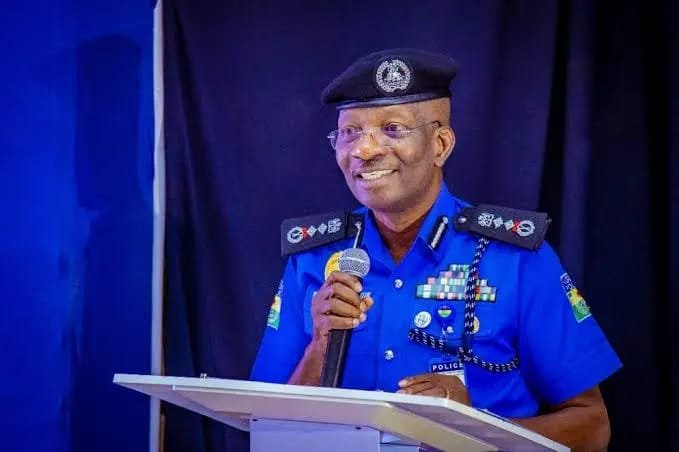
The controversy surrounding former Inspector-General of Police, Kayode Egbetokun, now appears to be one of those moments.
For months, Nigerians witnessed a relentless media campaign aimed at discrediting the former police chief. From sensational headlines to coordinated social media narratives, the objective appeared obvious: damage the reputation of a man whose policing career spanned decades of service, sacrifice, and professional commitment to the Nigerian state.
Today, however, the sudden silence from many of those voices has exposed the campaign for what it truly was.Among the loudest promoters of the attacks was Omoyele Sowore and his media platform.
The moment Egbetokun attained the age of 60 in September 2024, he was immediately branded an “illegal IGP” by activists and commentators who neither possessed constitutional authority nor the legal mandate to interpret the law beyond the courts.Yet Nigeria is governed by laws, not media outrage, activism, or social media campaigns.
The legal position regarding the tenure of the Inspector-General of Police was already clear. Section 7(6) of the Nigeria Police Act guarantees a four-year tenure for an appointed Inspector-General of Police. More importantly, the Nigeria Police Act (Amendment) Bill, 2024, introduced Section 18(8A), which expressly clarified that an Inspector-General of Police shall complete the statutory tenure attached to the office regardless of retirement rules concerning age or years of service.
That amendment became law in July 2024, months before Egbetokun turned 60.This single legal reality fundamentally weakened the narrative being aggressively promoted in certain political and media circles. The amendment was neither hidden nor ambiguous. It was publicly enacted legislation designed specifically to avoid instability and unnecessary disruptions in police leadership.
What makes the entire episode even more revealing is what did not happen.Despite the daily outrage, media pressure, protests, interviews, and repeated declarations that Egbetokun was “occupying office illegally,” no serious legal challenge was successfully pursued against his tenure. Ironically, many of those leading the media attacks were already frequent visitors to the Federal High Court in Abuja on various matters.If the appointment was truly unconstitutional, why was there no decisive judicial confrontation?
The answer appears increasingly obvious: those driving the narrative likely understood that the law itself did not support their claims.Even more revealing is the silence surrounding the current Inspector-General of Police, Olatunji Rilwan Disu, who reportedly turned 60 on April 13, 2026. During interviews around the Federal High Court, Abuja, Sowore publicly threatened to also label Disu an “illegal IGP.”Yet weeks later, that threat has remained largely rhetorical.
No sustained media outrage. No coordinated campaigns. No daily headlines. No dramatic accusations.That silence has unintentionally exposed what many Nigerians had already begun to suspect: the attacks against Egbetokun may never have been about constitutional principles alone, but rather selective outrage shaped by other motives.
Today, Egbetokun appears more peaceful and relaxed in retirement. Curiously, many of the dramatic allegations and sensational “exposés” that once flooded social media have suddenly disappeared. The circulation of questionable police documents has faded. The orchestrated scandals have evaporated. The noise has reduced because the mission the propaganda served has apparently ended.
History, however, has a unique way of exposing conspiracies and separating truth from manufactured narratives.The Holy Bible states in Proverbs 24:8: “He who plots evil will be called a schemer.” Proverbs 26:27 further warns: “Whoever digs a pit will fall into it; if someone rolls a stone, it will roll back on them.”These verses resonate strongly with the events that unfolded around the former police chief.
Many of the allegations levelled against Egbetokun gradually collapsed under public scrutiny, reinforcing the belief among his supporters that much of the campaign was carefully designed to tarnish the image of a career police officer who devoted much of his life to national service.
This is not to suggest that public officials should be shielded from criticism. Far from it. In every democracy, scrutiny remains necessary for transparency and accountability. But there is an important distinction between constructive criticism and a coordinated attempt to destroy reputations through misinformation, exaggeration, and politically motivated propaganda.
As Nigeria continues to strengthen its democratic institutions, the media and civil society must also recognize the responsibility that comes with influence. Activism is powerful, but when mixed with selective outrage and unverified narratives, it risks undermining public trust and weakening legitimate democratic engagement.
Now retired, Egbetokun can enjoy the peace that often accompanies a clear conscience and years of service rendered to one’s nation. More importantly, Nigeria still needs experienced professionals like him. His institutional knowledge, policing expertise, and strategic understanding of national security remain valuable assets that can still contribute meaningfully to the country’s security architecture and public sector development.
In the end, truth possesses a stubborn quality that propaganda can never permanently suppress.Campaigns fade. Narratives collapse. Silence eventually speaks.And sometimes, silence exposes the conspiracy more loudly than words ever could.

Opinion
Appreciating NEDC’s Intervention in North East educational struggle
By Audu Moses
For several years, schools in the North Eastern part of Nigeria, and indeed it’s entire educational system were in ruins and rots. They were visibly and intentionally targeted.
Schools were burned, teachers and learners were killed, while thousands more were displaced or abducted, with entire communities left with an equal generation of children, whose only history and places of abode are IDP camps and displacement homes.
It has been over 15 years of traumatic and horrific stories. This reality confronted the entire country and even the international community. The insurgents did not only attack schools, the inflicted violence on the psyche, attempting to destroy it’s fundamental ideals, and fabrics through demoralizing and radicalizing the system.
Education is not just about grades and certificates, it’s about survival, and a generation.
It is within this context that the North East Development Commission’s educational program of rebuilding and sustainability, across Borno, Yobe, Adamawa, Gombe, Taraba, and Bauchi States, deserve not just mere bureaucratic acknowledgement but public appreciation.
Since June 2016 through 2018, the story has been terrible and horrific; schools were reduced to rubbles, textbooks were burned, teachers and learners killed or displaced.
For the NEDC, the approach is not about press releases but the prioritization of actual reconstruction of classrooms, laboratories, libraries, conveniences, and protective perimeter fences. This is because, they understand that there can be no school without a roof, because no child learns under the tree, especially during the rains, or when the sun bites.
Truth is, a roof and a blackboard may not guarantee learning but the sure make it possible.
Those structures are clear testaments that something foundational and normal is already taking place, and that the initial barriers has been eliminated , and the people were never abandoned by their government.
For the people of the North East, the greatest challenge remains the “lost cohort”, those children who were within the 12 years to 17years bracket, who suffered the real pangs of insurgency, and had missed school for between 4years to 6years. To this group, the thought of jumping classes, or just being promoted notionally to the Junior Secondary School class will not just be counterproductive but stigmatizing. Hence, the innovative accelerated learning centres and integration program for IDPs and almajiri students.
Although critics will conclude that the plan is not a perfect one, but it remains the most pragmatic approach, as it gives the out-of-school children a second chance, with the possibility of not just eliminating the situation created by grown-ups sitting in the same class with children young enough to be their children, but granting the perfect ambience for formal education, an an alternative for vocational training, as it stops the cycle of permanent exclusion of thousands.
The focus on local capacity building remains cardinal approach that functions side-by-side with infrastructural development, as infrastructure without teachers will only be a shell or a museum.
Notably, fixing the teachers through retraining, is like fixing the pipeline which results in fixing the future. While, the incentives for educators to study educational courses abroad, with a return-to-serve condition, solves a job security challenge for the teachers who will now return back home to a sure ready job.
Through this local teaching workforce, sustainability is entrenched by a group of teachers who understand the context of the environment and are not afraid to remain, ensuring and consolidating the development of an enduring system who have a stake in the state.
This is a trite fact that, interventions in the educational sector are slow, expensive, and at times vulnerable to the setbacks against the sidelines of insecurity and conflict.
But by making education the core pillar of NEDC sustainability program, in its collaborative fight against insecurity and insurgency, NEDC has demonstrated it’s avowed commitment in ridding the region from child recruitment for instability by insurgents, at the same time stabilizing the region.
NEDC indeed has demonstrated that it is an agent of confidence and trust building as it continues to train and produce more graduates, thereby growing the human capital base that is necessary for the future sustainability of the region.
It stands to the NEDC that it has remained focused over the years on a sector that does not necessarily create or attract headlines.
However, the superlative works of the NEDC has to be amplified and applauded by well-meaning patriots, as this will certainly reenforce it’s focus and priority.
Indeed, NEDC has changed the narratives in the North East from destruction to rebuilding, and from displacement to reequiping and retraining.
They have also restored the dignity of thousands of communities who were told that the government has abandoned and forgotten them because they do not matter. NEDC has eliminated the supply chain of insurgents recruitment into violent groups, giving youths better positive alternative, while building huge human capital base needed by the region as it progressively recover from the years of destruction due to insurgency and conflicts.
A functioning school in town that was once a ghost town is good for all, no matter the political party, religion, or race. This is not flattery, it is a push to keep moving on, because the next generation needs education and the North East needs a chance to redefine itself beyond conflicts and insurgency.
Soon the narratives will no longer be “out-of-school children” but will become “what these graduates have achieved and produced.”
This conversation is worth having and the North East Development Commission (NEDC) is making it happen. This indeed is worth appreciating and supporting.
Moses wrote this piece from Abuja.
Opinion
FOREIGN ENGAGEMENTS, ECONOMIC STABILIZATION, AND THE DANGERS OF POPULIST SIMPLIFICATION
By Tanimu Yakubu
Introduction
Peter Obi’s intervention once again reflects a persistent tendency to reduce extremely complex questions of economic recovery, sovereign diplomacy, and international capital engagement into simplistic populist soundbites.
The Real Economic Inheritance
No serious analyst disputes that foreign engagements should ultimately produce measurable economic outcomes. The real issue, however, is whether Mr. Obi properly understands the sequence through which nations emerging from fiscal and monetary instability rebuild investor confidence, restore credibility, and reposition themselves within global capital markets.
President Tinubu inherited an economy facing severe structural stress: an unsustainable fuel subsidy regime, multiple exchange-rate distortions, collapsing fiscal buffers, mounting debt-service pressures, dwindling investor confidence, and unprecedented dependence on Ways and Means financing simply to sustain government operations.
Why International Engagement Matters
Under such circumstances, international engagements are not mere ceremonial excursions; they become instruments for rebuilding sovereign credibility, restoring policy confidence, reassuring investors, strengthening diplomatic alignments, attracting long-term capital, and repositioning the country within regional and global economic networks.
The False Comparison with the United States
Mr. Obi’s comparison between Nigeria and the United States under Donald Trump is particularly superficial. The United States engages China from the position of the world’s dominant reserve currency issuer, the largest consumer market on earth, and a mature industrial economy with deep capital markets and global technological dominance. Nigeria, by contrast, is a reforming emerging economy attempting to stabilize itself after years of fiscal distortion and policy disequilibrium. The contexts are not remotely comparable.
Investment Confidence Takes Time
More importantly, many of the benefits of state engagements do not materialize instantly in the form of dramatic headline announcements. Serious investments, infrastructure partnerships, manufacturing relocations, energy financing arrangements, and sovereign investment commitments often emerge gradually after sustained diplomatic engagement, policy stabilization, and investor confidence-building.
The Contradiction in the Criticism
Ironically, many of the same critics now demanding immediate investment inflows were among those who opposed the difficult stabilization reforms — including fuel subsidy removal and exchange-rate unification — that were necessary to restore the macroeconomic credibility investors require before committing long-term capital.
The Fiscal Reality
The uncomfortable truth is that Nigeria was approaching a dangerous fiscal cliff before this administration intervened. The government had become excessively reliant on Central Bank financing merely to sustain recurrent obligations. Fuel subsidies had become fiscally indefensible. Exchange-rate arbitrage had become systemic. Delayed reforms would likely have produced even deeper economic instability.
What this administration confronted was not the luxury of ideal sequencing, but the urgency of stabilization.
Conclusion
It is therefore intellectually inconsistent to oppose stabilization reforms on one hand while simultaneously demanding the investment confidence that only such reforms can eventually produce.
Diplomacy should indeed generate economic value. But rebuilding a damaged economy requires more than slogans, photo comparisons, or selective foreign analogies. It requires difficult decisions, international re-engagement, policy credibility, institutional stabilization, and the patience necessary for long-term economic restructuring to take root.
Opinion
AMB. DR. KINGSLEY AMAFIBE: A Visionary Peace Advocate Transforming Lives Through Leadership, Empowerment, and Humanitarian Service
By Anthony Ada Abraham
Ambassador (Dr.) Kingsley Amafibe represents a modern generation of African leaders who understand that true development goes beyond politics and economics alone.
His journey from media and entertainment into peace advocacy, humanitarian service, youth empowerment, and leadership development reflects a vision centered on people, progress, and social impact.
Born in Delta State, Nigeria, Amb. Amafibe has spent more than sixteen years building platforms that connect governance, business, culture, and youth development. What makes his contribution remarkable is not merely the titles he holds, but the consistency with which he has used influence, media, and events as instruments for social transformation.
As the Founder and President of the Peace Ambassador Agency Worldwide, he has helped create opportunities for dialogue, recognition, and collaboration among leaders, creatives, entrepreneurs, and young Africans.
In a continent where divisions based on ethnicity, religion, and politics often threaten social cohesion, his advocacy for peace and unity remains highly relevant. Through initiatives such as the Peace Achievers International Conference & Awards and the 100 Most Notable Peace Icons Africa, he has amplified the voices of individuals and institutions working toward positive change.
One of the strongest aspects of Amb. Amafibe’s work is his commitment to youth empowerment. Many leaders speak about young people as the future, but he has consistently invested in programmes that provide practical opportunities through scholarships, mentorship, talent discovery, entrepreneurship support, and educational outreach.
Platforms like the Big Dreams Talent Show and Miss Ambassador for Peace demonstrate his belief that creativity and entertainment can become powerful tools for empowerment and nation-building.
His contribution to humanity is also evident in the humanitarian dimension of his work. Through the Davdan Peace and Advocacy Foundation and other outreach programs, he has supported underprivileged communities, students, and aspiring entrepreneurs. In societies where many young people struggle with unemployment, lack of direction, and limited access to opportunities, initiatives like these can create lasting social impact.
Amb. Amafibe’s influence extends beyond Nigeria. By organising international conferences and events across countries including Rwanda, Kenya, Ghana, Morocco, France, and the United States, he has contributed to projecting African excellence and encouraging cross-border collaboration. His ability to unite government officials, security agencies, business leaders, creatives, and youth advocates under one platform reflects exceptional organizational and diplomatic skill.
Professionally, his background in finance, business administration, leadership, media, and advertising has shaped his multidimensional approach to leadership.
He understands that sustainable peace cannot exist without economic empowerment, education, and institutional development. This philosophy is visible in both his advocacy work and entrepreneurial ventures.
His recognition through numerous local and international awards further highlights the impact of his efforts. However, beyond awards and public recognition, perhaps his greatest achievement lies in inspiring hope and ambition among young Africans. He represents the idea that leadership is not only about occupying positions of power but about creating opportunities for others to grow and succeed.
As an author and public speaker, Amb. Amafibe has also contributed intellectually to conversations surrounding peacebuilding, governance, African development, philanthropy, and the creative industry.
His books and public engagements continue to encourage conversations about leadership, social responsibility, and continental progress.
In many ways,
Ambassador (Dr.) Kingsley Amafibe embodies the role of a bridge-builder, someone working across industries and sectors to promote unity, empowerment, and development.
His work reminds society that peace is not merely the absence of conflict, but the presence of opportunity, inclusion, education, and hope.
While Africa continues to face challenges ranging from insecurity to unemployment and social inequality, individuals like Amb. Amafibe play an important role in shaping a more positive future.
His contributions to humanity stand as a testament to the power of visionary leadership, humanitarian service, and the belief that empowered people can transform communities and nations.
Anthony Ada Abraham is a journalist and social commentator writes in from Abuja
-
Cover9 months agoNRC to reposition train services nationwide.. Kayode Opeifa
-
Fashion9 years agoThese ’90s fashion trends are making a comeback in 2017
-
Entertainment9 years agoThe final 6 ‘Game of Thrones’ episodes might feel like a full season
-
Politics1 month agoNNPP Diaspora Stakeholder and Key Kwankwaso Ally, Dr. Usman Tijjani Shehu, Rejoins APC
-
Opinion1 year agoBureaucratic Soldier, Kana Ibrahim heads Ministry of Aviation and Aerospace After Transformative Tenure at Defence
-
Opinion1 year agoHon. Daniel Amos Shatters Records, Surpasses Predecessor’s Achievements in Just Two Years
-
Opinion6 months agoBarrister Somayina Chigbue, Esq: A rising legal leader shaping institutioal excellence in Nigeria
-
News10 months agoNigerian Nafisa defeats 69 Countries at UK Global Final English Competition