Opinion
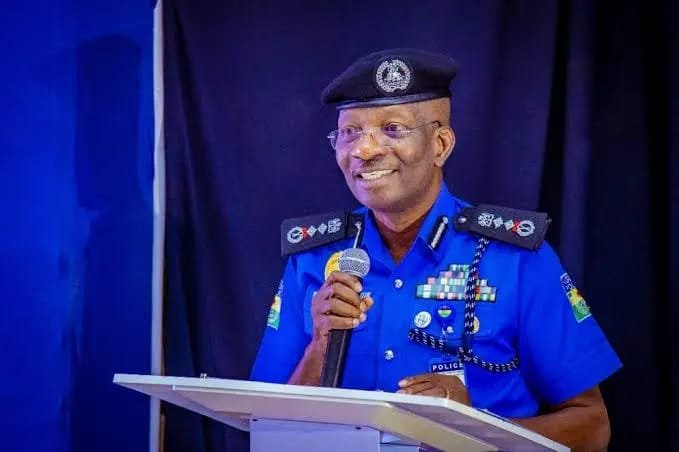
When Propaganda Failed: How Silence Betrayed the Campaign Against Egbetokun
In Nigeria’s modern political and media environment, public figures often find themselves subjected to intense scrutiny. Criticism, accountability, and public debate are essential pillars of democracy. However, there are moments when criticism crosses the line into calculated campaigns of disinformation, propaganda, and deliberate character assassination.
The controversy surrounding former Inspector-General of Police, Kayode Egbetokun, now appears to be one of those moments.
For months, Nigerians witnessed a relentless media campaign aimed at discrediting the former police chief. From sensational headlines to coordinated social media narratives, the objective appeared obvious: damage the reputation of a man whose policing career spanned decades of service, sacrifice, and professional commitment to the Nigerian state.
Today, however, the sudden silence from many of those voices has exposed the campaign for what it truly was.Among the loudest promoters of the attacks was Omoyele Sowore and his media platform.
The moment Egbetokun attained the age of 60 in September 2024, he was immediately branded an “illegal IGP” by activists and commentators who neither possessed constitutional authority nor the legal mandate to interpret the law beyond the courts.Yet Nigeria is governed by laws, not media outrage, activism, or social media campaigns.
The legal position regarding the tenure of the Inspector-General of Police was already clear. Section 7(6) of the Nigeria Police Act guarantees a four-year tenure for an appointed Inspector-General of Police. More importantly, the Nigeria Police Act (Amendment) Bill, 2024, introduced Section 18(8A), which expressly clarified that an Inspector-General of Police shall complete the statutory tenure attached to the office regardless of retirement rules concerning age or years of service.
That amendment became law in July 2024, months before Egbetokun turned 60.This single legal reality fundamentally weakened the narrative being aggressively promoted in certain political and media circles. The amendment was neither hidden nor ambiguous. It was publicly enacted legislation designed specifically to avoid instability and unnecessary disruptions in police leadership.
What makes the entire episode even more revealing is what did not happen.Despite the daily outrage, media pressure, protests, interviews, and repeated declarations that Egbetokun was “occupying office illegally,” no serious legal challenge was successfully pursued against his tenure. Ironically, many of those leading the media attacks were already frequent visitors to the Federal High Court in Abuja on various matters.If the appointment was truly unconstitutional, why was there no decisive judicial confrontation?
The answer appears increasingly obvious: those driving the narrative likely understood that the law itself did not support their claims.Even more revealing is the silence surrounding the current Inspector-General of Police, Olatunji Rilwan Disu, who reportedly turned 60 on April 13, 2026. During interviews around the Federal High Court, Abuja, Sowore publicly threatened to also label Disu an “illegal IGP.”Yet weeks later, that threat has remained largely rhetorical.
No sustained media outrage. No coordinated campaigns. No daily headlines. No dramatic accusations.That silence has unintentionally exposed what many Nigerians had already begun to suspect: the attacks against Egbetokun may never have been about constitutional principles alone, but rather selective outrage shaped by other motives.
Today, Egbetokun appears more peaceful and relaxed in retirement. Curiously, many of the dramatic allegations and sensational “exposés” that once flooded social media have suddenly disappeared. The circulation of questionable police documents has faded. The orchestrated scandals have evaporated. The noise has reduced because the mission the propaganda served has apparently ended.
History, however, has a unique way of exposing conspiracies and separating truth from manufactured narratives.The Holy Bible states in Proverbs 24:8: “He who plots evil will be called a schemer.” Proverbs 26:27 further warns: “Whoever digs a pit will fall into it; if someone rolls a stone, it will roll back on them.”These verses resonate strongly with the events that unfolded around the former police chief.
Many of the allegations levelled against Egbetokun gradually collapsed under public scrutiny, reinforcing the belief among his supporters that much of the campaign was carefully designed to tarnish the image of a career police officer who devoted much of his life to national service.
This is not to suggest that public officials should be shielded from criticism. Far from it. In every democracy, scrutiny remains necessary for transparency and accountability. But there is an important distinction between constructive criticism and a coordinated attempt to destroy reputations through misinformation, exaggeration, and politically motivated propaganda.
As Nigeria continues to strengthen its democratic institutions, the media and civil society must also recognize the responsibility that comes with influence. Activism is powerful, but when mixed with selective outrage and unverified narratives, it risks undermining public trust and weakening legitimate democratic engagement.
Now retired, Egbetokun can enjoy the peace that often accompanies a clear conscience and years of service rendered to one’s nation. More importantly, Nigeria still needs experienced professionals like him. His institutional knowledge, policing expertise, and strategic understanding of national security remain valuable assets that can still contribute meaningfully to the country’s security architecture and public sector development.
In the end, truth possesses a stubborn quality that propaganda can never permanently suppress.Campaigns fade. Narratives collapse. Silence eventually speaks.And sometimes, silence exposes the conspiracy more loudly than words ever could.

Headlines
SSCE Fee Hike: Government Must Balance Cost Recovery with Access to Education
Opinion
Patriotic Nigerian Network Driving Diaspora Investment, National Development and Nigeria’s Global Image
By Augustine Aminu
As countries around the world increasingly rely on their diaspora communities to stimulate economic growth, attract investments and transfer knowledge, Nigeria is witnessing the emergence of organisations determined to bridge the gap between citizens at home and abroad.
Among them is the Patriotic Nigerian Network (PNN), a United States-based non-governmental organisation positioning itself as a platform for connecting Nigerians across the globe with opportunities to contribute meaningfully to national development.
Rather than limiting diaspora engagement to remittances, the organisation is championing a broader agenda that includes investment promotion, education, infrastructure advocacy, governance reforms and the projection of a more balanced global narrative about Nigeria.
A Vision Beyond Borders
Founded by philanthropist, researcher and professional engineer Emmanuel Akwu Adejo, the Patriotic Nigerian Network is driven by a simple but ambitious vision: eliminating geographical barriers that separate Nigerians while fostering a united commitment to nation-building.
According to Adejo, Nigeria’s future depends not only on government interventions but also on the collective expertise, financial resources and patriotic commitment of millions of Nigerians living abroad.
He explained that the organisation was established to move beyond conversations by creating practical initiatives capable of delivering measurable developmental impact while documenting authentic stories that reflect Nigeria’s resilience and progress.
Redefining Diaspora Engagement
Nigeria remains one of Africa’s largest recipients of diaspora remittances, with billions of dollars flowing into the country annually. However, stakeholders argue that the true value of the diaspora extends far beyond financial transfers.
The Patriotic Nigerian Network seeks to harness the intellectual, professional and entrepreneurial capacity of Nigerians overseas by creating structured platforms for engagement in national development.
Its programmes are designed to encourage collaboration between professionals abroad and institutions in Nigeria while supporting initiatives capable of generating sustainable economic growth.
According to the organisation, diaspora communities possess significant expertise in engineering, medicine, technology, education, finance and entrepreneurship that can accelerate national transformation when effectively coordinated.
Promoting Trusted Investment Opportunities
One of the Network’s flagship initiatives focuses on addressing one of the biggest concerns among Nigerians abroad—safe and transparent investment opportunities.
The organisation is developing trusted channels that enable diaspora Nigerians to invest in real estate and other development projects with greater confidence through transparency, accountability and proper verification mechanisms.
By reducing investment risks and strengthening investor confidence, the initiative aims to encourage greater diaspora participation in Nigeria’s housing and infrastructure sectors.
The organisation believes that creating a credible investment ecosystem will not only benefit Nigerians abroad but also stimulate local economic activities, create jobs and contribute to national development.
Investing in Education and Human Capital
Beyond investment promotion, the Patriotic Nigerian Network considers education a critical pillar of sustainable development.
Through strategic partnerships, mentorship programmes and advocacy initiatives, the organisation seeks to improve access to quality education while equipping young Nigerians with skills required to compete in today’s rapidly evolving global economy.
The Network argues that investing in education remains one of the most effective strategies for reducing poverty, promoting innovation and preparing future generations for leadership.
Infrastructure as a Catalyst for Growth
The organisation also advocates improved infrastructure and stronger economic integration across Nigeria.
It believes better connectivity among cities, markets and businesses will enhance commerce, improve productivity and unlock new opportunities for investment and employment.
According to the Network, sustainable infrastructure development remains essential to achieving inclusive economic growth and improving the quality of life for millions of Nigerians.
Changing the Global Narrative
Beyond development initiatives, the Patriotic Nigerian Network is working to reshape international perceptions of Nigeria.
For decades, global conversations about Nigeria have often focused on insecurity, corruption and economic challenges. While acknowledging these realities, the organisation argues that they should not overshadow the country’s achievements in innovation, healthcare, entrepreneurship, education, technology, culture and community service.
By documenting credible success stories and promoting evidence-based narratives, the Network hopes to project a more balanced image of Nigeria internationally.
Its leadership maintains that accurate storytelling backed by research can strengthen investor confidence, attract international partnerships and inspire greater national pride among Nigerians worldwide.
Advocacy for Good Governance
The Network also places governance reforms at the centre of its advocacy efforts.
Through constructive engagement with stakeholders, it promotes transparency, accountability and responsive public institutions, arguing that sustainable development depends on effective governance and citizen participation.
According to the organisation, stronger institutions are essential for attracting investments, protecting public resources and ensuring long-term national progress.
The Growing Role of the Nigerian Diaspora
Observers say organisations like the Patriotic Nigerian Network reflect a growing trend of diaspora-led development initiatives that complement government efforts.
With millions of Nigerians residing across North America, Europe, Asia and other parts of Africa, the diaspora represents an enormous reservoir of knowledge, innovation and investment capital capable of accelerating national development.
Experts increasingly believe that structured engagement between the diaspora and local institutions could unlock significant opportunities in infrastructure, healthcare, education, technology, manufacturing and entrepreneurship.
Looking Ahead
As the Patriotic Nigerian Network expands its global footprint, its leadership says the organisation will continue building partnerships that encourage investment, strengthen education, promote accountability and foster national unity.
For Engineer Emmanuel Akwu Adejo, patriotism is not defined by physical location but by a willingness to contribute to Nigeria’s development wherever one resides.
The Network’s long-term ambition is to ensure that Nigerians at home and abroad work together through credible, transparent and sustainable initiatives that translate collective aspirations into measurable national progress.
If sustained, such diaspora-driven efforts could further strengthen Nigeria’s development agenda while reinforcing the idea that nation-building is a shared responsibility that transcends geographical boundaries.
Opinion
NYSC Reforms and Nigeria’s National Defence Policy
By Johnson Akintunde
The reality of today’s Nigeria demands that institutions created as pillars of national survival must be shielded from every form of threats. It isn’t farfetched to conclude that factors like insurgency, transactional kidnappings, separatist agitations, cyber threats, communal conflicts, environmental disasters, and humanitarian emergencies have collectively redefined the meaning of national security. It Is precisely within this strategic framework that I believe the NYSC continues to occupy a unique and indispensable position that must be defended at all cost.
The proposed National Youth Service Corps (NYSC) reform that was approved by Federal Executive Council (FEC) has become the genesis of an existential miscalculation in one of Nigeria’s most enduring nation-building institutions. While it is important to periodically evaluate every institution established by law in order remain relevant to present realities, proposed reforms must never become synonymous with destruction of foundational ideals that have sustained national unity for over five decades.
However, as a legislator that’s privileged serve in House of Representatives Committees on Youth Development and Defence, I have examined these proposed reforms from a unique institutional vantage point. I have viewed it through a broader prism of Nigeria’s national Defence policy, internal security architecture, emergency response, and sustaining national-legacy objectives. It is on this note that I discovered that the proposed NYSC reforms are structurally, fundamentally, and unacceptably not in tandem with the philosophy of Nigeria’s National Defence Policy. Therefore, it must be subjected to further review before any executive or legislative action be taken.
Moreover, I further discovered that the Federal Executive Council (FEC) failed to fully understand that the NYSC was never intended to merely function as an employment programme, but was deliberately created as a national reconciliation mechanism designed to support national integration, heal divisions, encourage intercultural understanding, and build discipline among graduates drawn from every corner of the federation. This misconception became the founding error of an executive hubris. While they thought they have created a solution, they didn’t know they have unknowingly weaponized the administrative machinery of state to strip the NYSC of its foundational ethos.
Consequently, every service year brings together thousands of graduates from different ethnic, religious, cultural, and linguistic backgrounds who would otherwise never have interacted meaningfully. They live together during orientation camps, work together in host communities, build lasting friendships, establish businesses, marry across ethnic lines, and develop a broader understanding of Nigeria’s diversity. To even contemplate transforming a 53-year old bastion of national legacy into a glorified, hyper-fragmented vocational training center is a strategic blunder of seismic proportions.
The centerstroke of the proposed executive policy is the fragmentation of the service year into eleven specialized career streams that ranges from the so-called “Agric Corps” to the “Tech and Digital Corps”, coupled with a heavy focus on business planning, basic accounting, and financial literacy.
Furthermore, this vocational obsession creates a dangerous redundancy. Nigeria possesses numerous agencies mandated to handle youth empowerment and vocational training. Why must we cannibalize a national defense asset to replicate the functions of civilian economic agencies?
The NYSC should complement these initiatives, and not duplicate them. What it requires is strategic strengthening, and not ceremonial abandonment.
Perhaps the greatest weakness of the proposed reforms lies in the apparent disregard for Nigeria’s National Defence Policy. To sacrifice the paramilitary and integrative core of the NYSC on the altar of temporary economic metrics is an act of policy desperation that yields no tangible economic return while severely depleting our national strategic reserve.
Apparently, I have observe how enlightened democratic nations across the world recognize that national Defence extends beyond standing armed forces and military hardware. Countries such as Switzerland, Israel, Finland, and South Korea have consistently invested in different forms of national service and citizen preparedness. Military orientation, emergency response training, disaster management, first aid, civil defence awareness, leadership development, and civic responsibility are now recognised internationally as essential components of national resilience.
Moreover, the orientation camps already expose corps members to elementary drills, discipline, teamwork, endurance, emergency response, and basic security consciousness. These experiences cultivate resilience, patriotism, respect for constituted authority, and collective responsibility. Such values cannot be replicated through classroom lectures on entrepreneurship alone. While other countries are moving in a promising direction, Nigeria should not be moving in the opposite direction.
To fully comprehend the danger of civilianizing the NYSC, it is important I remind everyone of the historical contribution of the corps during the global COVID-19 pandemic era. When the pandemic breached our borders, overwhelmed health systems across the world, it was not corporate consultants or civilian entrepreneurs who stood on the frontlines of the emergency. It was our corps members; most notably the young doctors, nurses, and pharmacists of the NYSC who stepped into the breach to support and complement the shortages of healthcare workers working under extraordinary conditions.
Now, imagine a Nigeria without that coordinated national pool of trained professionals during the pandemic. The consequences could have been far more devastating. Their contributions were not ceremonial. They were operationally significant.
I would like us to turn our precious attention to a specific operational modification, extending the orientation camp from a 3-week to 6-week period and dividing this 6weeks into three 2-week phases. At a first glance, it might be perceived as enriching the program. However, a close observation revealed it to be a logistical camping-nightmare in its entirety. The traditional three-week orientation camp is intensive, immersive, and filled with uninterrupted crucible of regimentation. The days are carefully structured into early morning drills, physical training, lectures on national security, and military parades. It is enthusiastic, leaving no room for sluggishness or laziness.
Unfortunately, this proposed six-week model completely fractures this psychological conditioning. By breaking the camp into distinct, disparate phases where the first two weeks focus on civic responsibility, the next two on financial literacy and business planning, and the final two on stream-specific training.
You cannot build discipline by subjecting an individual to military drills for two weeks, then allowing them to lounge in lecture halls discussing business plans for the next two weeks, before concluding with a superficial introduction to a specialized stream. The intensity is lost; the regimentation is compromised; and the physical conditioning is neutralized. What you are left with is an extended, financially draining exercise that satisfies neither the demands of rigorous military training nor the requirements of deep professional development.
Perhaps the most alarming and hazardous component of the approved reforms is the transition to a civilian operational leadership structure from the accustomed traditional military Director-General. The architects of this policy have attempted to soothe security concerns by claiming that the “safety aspect” will remain anchored by the military while the “operational leadership” shifts to a civilian. This explanation displays a complete ignorance of command structure dynamics.
The NYSC is an organization that deploys hundreds of thousands of young Nigerians across the length and breadth of a vast, complex nation, and operates within a security environment that requires rapid, decisive, and authoritative decision-making. The traditional appointment of a serving Brigadier-General of the Nigerian Army as the Director-General is not an accident of history; it is a structural necessity. A military Director-General brings with him the full weight, intelligence network, logistical capability, and command authority of the Nigerian Armed Forces.
When an NYSC camp faces an imminent security threat, or when corps members are caught in regional volatility, a military DG does not write memos or engage in inter-ministerial consultations. He utilizes direct military radio frequencies, activates local military formations, commands immediate tactical support, and coordinates with state governors from a position of institutional power.
Moreover, this battle-tested command structure with a civilian DG is an invitation to institutional paralysis. A civilian leader, no matter how accomplished in public administration, lacks the tactical training, the immediate access to the defense hierarchy, and the command authority necessary to navigate a national crisis. This will create a dangerous gap and bad signals to criminal elements that the NYSC camps are now porous for attacks.
Another important change to look into is the replacement of the NYSC rugged khaki uniform with the cultural iconic “Adire” attire under the guise of promoting local textile manufacturing. The NYSC khaki uniform has stood for over five decades as a powerful symbol of our unity. This khaki project the youths to Nigerians as soldiers of peace and development, serving a common nation. It is important to note that “Adire” is culturally indigenous the Yoruba people of Southwestern Nigeria. This ethnic ownership presents the decision of an Adire uniform as a glaring short-sighted move that threatens our fragile national peace, and defence policy.
Additionally, to mandate that a national, pan-Nigerian paramilitary organization discard its neutral, unifying uniform in favor of a fabric tied to a specific ethnic group is to invite immediate geopolitical friction that can turn a small misunderstanding into community violence. If “Adire” becomes the compulsory national uniform, what prevents stakeholders from the North from demanding “Fula” or “Babanriga” motifs, or representatives from the South-East or South-South from insisting on “Akwete” or “Isiagu” patterns?
In a country as ethnically sensitive as ours, such a move will inevitably be interpreted through the distorted lens of ethnic triumphalism and cultural hegemony. This proposal evidently lacks both strategic wisdom and cultural sensitivity.
This is an urgent appeal to the president and Commander-in-Chief of the Armed Forces, Asiwaju Bola Ahmed Tinubu, to immediately stop the execution of these reforms. The flaws in this proposed reform are too systemic to be corrected by minor adjustments. This entire policy must be discarded before it causes irreparable damages to our national pride.
However, if any change must occur, the President must set up an expanded stakeholder review committee that will thoroughly evaluate the future of the NYSC. This committee must move beyond the narrow perspectives of economic planners and include a broad coalition of national security experts, seasoned legislators, and community leaders.
I strongly believe that there are better ways to integrate modern digital skills and agricultural trainings without dismantling the military command structure, discarding the symbols that unify the corps, or fracturing the orientation timeline.
As a representative of the people and guardian of our national security, i will not allow this vital institution to be reduced to a fragmented, civilianized training school. Our defence policy demands a prepared citizenry. Our democracy demands patriotic citizens. We all must fight these ill-advised reforms with every constitutional and legislative tool at our disposal, and ensure that the National Youth Service Corps continues to serve as a strategic instrument of national unity, emergency preparedness, civic responsibility, and national defence for generations yet unborn.
Akintunde ex-corp member wrote this piece from Badagry.
-
Branded Content3 weeks agoNow Hiring: Academic and Technical Staff at a Leading Private University in Gombe State
-
Headlines11 months agoNRC to reposition train services nationwide.. Kayode Opeifa
-
Entertainment9 years agoThe final 6 ‘Game of Thrones’ episodes might feel like a full season
-
Fashion9 years agoThese ’90s fashion trends are making a comeback in 2017
-
Politics3 months agoNNPP Diaspora Stakeholder and Key Kwankwaso Ally, Dr. Usman Tijjani Shehu, Rejoins APC
-
Opinion2 years agoBureaucratic Soldier, Kana Ibrahim heads Ministry of Aviation and Aerospace After Transformative Tenure at Defence
-
Opinion1 year agoHon. Daniel Amos Shatters Records, Surpasses Predecessor’s Achievements in Just Two Years
-
Opinion7 months agoBarrister Somayina Chigbue, Esq: A rising legal leader shaping institutioal excellence in Nigeria