Connect with us

Cover

Tinubu’s Reforms Face Scrutiny As Democratic Space Narrows

Published

on

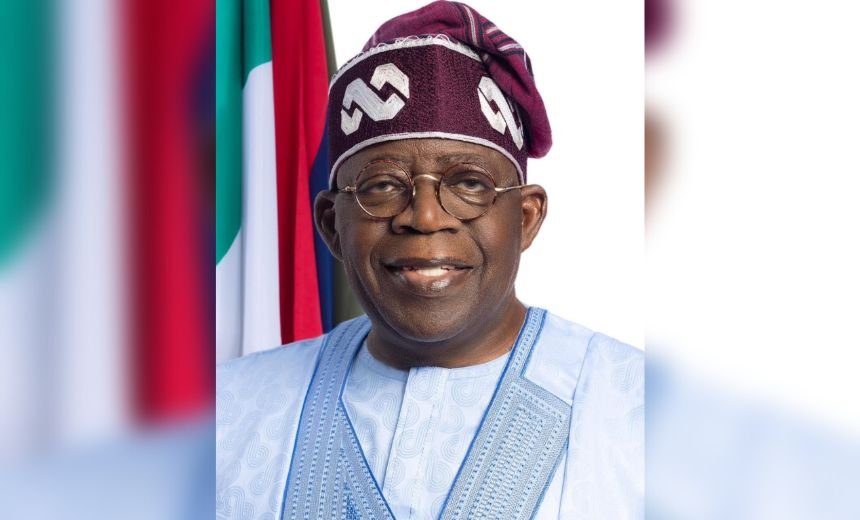
As President Bola Tinubu enters his third year in office, Nigeria’s political climate reflects a paradox: sweeping reforms on one hand, and growing fears of democratic decline on the other. His administration has rolled out ambitious policies since May 2023, but critics argue that these gains are overshadowed by shrinking political freedoms and rising concerns about institutional independence.

Local Government Autonomy: Promise and Paralysis
One of Tinubu’s most notable achievements is the Supreme Court ruling granting full autonomy to Nigeria’s 774 local government areas. For decades, governors controlled council funds through joint allocation committees, a system widely blamed for stifling grassroots development. The court’s decision was hailed as a landmark victory for governance reform.

Yet, implementation has stalled. In Osun State, disputes over council leadership after the 2025 elections led to frozen allocations for 30 local governments. The Federal Government directed funds to APC chairmen, sparking resistance from Governor Ademola Adeleke. Although the Supreme Court later ruled that withholding funds violated constitutional provisions, the allocations remain blocked. Civil society groups now accuse the government of undermining its own reform by failing to enforce compliance.

Opposition Under Pressure
Tinubu’s administration has also faced accusations of interfering in opposition politics. The ruling All Progressives Congress (APC) is alleged to be exploiting internal divisions within rival parties ahead of the 2027 elections.

Governor Seyi Makinde of Oyo State claimed that FCT Minister Nyesom Wike told Tinubu he would “hold PDP for you against 2027.” Wike denied the allegation, but his frequent support for APC candidates while remaining in the PDP has fueled suspicions of sabotage.

Further controversy erupted when Chief of Staff Femi Gbajabiamila reportedly advised an ADC lawmaker to “stay in ADC, fight them, scatter them.” Critics saw this as evidence of official encouragement of factional crises. Opposition parties including PDP, Labour Party, ADC, and SDP have all faced leadership disputes, often despite court rulings. Analysts warn that these conflicts weaken Nigeria’s multiparty system and tilt the balance of power toward the APC.

Fears of a One-Party State
Defections from opposition parties to the APC have become routine, raising alarms about Nigeria drifting toward a one-party state. Governors and lawmakers continue to align with the ruling party, consolidating its dominance.

Critics argue that state resources and political pressure are being deployed to weaken rivals. The presidency rejects these claims, insisting that political plurality remains intact. Tinubu himself has warned that suppressing opposition would breed tyranny. Still, the growing imbalance in Nigeria’s political space suggests otherwise.

Judiciary and INEC Under Scrutiny
Nigeria’s democratic institutions have not escaped controversy. The judiciary faces accusations of being used to weaken opposition parties through selective rulings. Meanwhile, the Independent National Electoral Commission (INEC) has been criticised for partisanship and lack of transparency.

Civil society organisations point to flaws in INEC’s Result Viewing Portal (IReV) and question appointments into the commission, alleging executive influence. INEC insists it remains impartial, but public confidence in the electoral process is fragile. This distrust could shape political dynamics as the 2027 elections approach.

Reform vs. Democratic Resilience
Tinubu’s presidency is defined by bold reforms, including efforts to restructure governance and strengthen local institutions. Yet, these reforms coexist with growing concerns about inclusiveness and democratic resilience. The paradox is clear: while the administration pursues structural change, the political environment appears increasingly hostile to opposition voices.

Observers argue that Tinubu’s legacy will depend on whether he can balance reform with respect for democratic freedoms. If reforms continue without genuine political pluralism, Nigeria risks sliding into authoritarian tendencies masked by economic restructuring.

The Road Ahead
Three years into Tinubu’s tenure, Nigeria stands at a crossroads. His administration has delivered landmark policies, but controversies over opposition suppression, judicial independence, and electoral credibility cast shadows over these achievements.

The coming months will test whether Tinubu can consolidate reforms while safeguarding democracy. For citizens, the stakes are high: they want effective governance, but also assurance that their voices will not be silenced.

As 2027 draws closer, Nigeria’s political trajectory will hinge on whether Tinubu’s bold resets strengthen democratic institutions or erode them. The answer will determine not only his legacy but also the future of Nigeria’s fragile democracy.
Continue Reading
Click to comment

Leave a Reply

Your email address will not be published. Required fields are marked *

Cover

Atiku Criticises Tinubu Government, Says Ransom Now Part Of Nigerians’ Household Budgets

Published

on

Former Vice President Atiku Abubakar has raised alarm over the worsening insecurity in Nigeria, declaring that ransom payments have now become a regular item in household budgets. He accused the Bola Tinubu administration of celebrating debt statistics while Nigerians struggle with hunger, fear, and collapsing livelihoods.

Atiku’s statement, released through his aide Phrank Shaibu, came in response to recent claims from the Presidency that Nigeria’s debt levels compare favourably with other African nations. He described the comparison as detached from reality, arguing that ordinary citizens are more concerned about survival than abstract figures.

According to Atiku, families across Nigeria now live under constant threat of kidnappers and bandits. He painted a grim picture of communities where road travel is a gamble, villages are attacked with disturbing frequency, and parents dread late-night calls announcing the abduction of loved ones. “It is insulting that while Nigerians are withdrawing children from school and skipping meals, the Presidency is busy celebrating debt numbers as if borrowing itself were an achievement,” he said.

The former vice president linked the insecurity crisis directly to Nigeria’s food shortages. He noted that farmers have been driven off their lands by armed gangs, leaving vast territories under the control of terrorists. This, he argued, has crippled food production, triggered soaring prices, and worsened malnutrition. “The inevitable result is what Nigerians are witnessing today — astronomical food prices, hunger, and rising anger among citizens abandoned by their government,” he added.

Atiku acknowledged that borrowing can be useful when tied to productive investments such as infrastructure and job creation. However, he insisted that under Tinubu, borrowing has only deepened poverty and insecurity. He accused the government of financing consumption and wasteful lifestyles instead of investing in projects that improve citizens’ welfare. “No nation prospers by borrowing to sustain policy failures. Nigerians see no link between the rising debt profile and any improvement in their daily lives,” he said.

He also accused the administration of relying on propaganda to distract citizens from economic mismanagement. Recalling his time in government with former President Olusegun Obasanjo, Atiku highlighted reforms that freed Nigeria from Paris Club debt and restored international confidence. He contrasted that with the current situation, where debt has ballooned without tangible benefits.

“It is tragic that a government which inherited a struggling but manageable economy has plunged the nation into deeper debt, deeper poverty, and deeper insecurity within such a short period,” Atiku said. He dismissed the Presidency’s debt comparisons as “statistical gymnastics” irrelevant to ordinary Nigerians.

For Atiku, the real questions are whether food is affordable, whether children are safe, whether businesses can survive, and whether farmers can return to their lands. He argued that under Tinubu, the answers are increasingly bleak. “Nigerians do not care about debt ratios. They care about survival, and sadly, the future looks more uncertain by the day,” he concluded.

Atiku urged the government to abandon propaganda and confront Nigeria’s harsh realities with sincerity and competence. He called for urgent action to restore security, revive food production, and ease economic hardship before the country slips further into instability.

His remarks reflect growing frustration among Nigerians who face daily threats from kidnappers and bandits while struggling with inflation and unemployment. The image of ransom payments becoming part of household budgets underscores the depth of the crisis. For many families, survival now means setting aside money not only for school fees and rent but also for the possibility of paying kidnappers to free loved ones.

Atiku’s intervention adds to mounting pressure on the Tinubu administration to deliver concrete solutions. With insecurity spreading and economic hardship worsening, the government faces a critical test of leadership. For Nigerians, the demand is clear: less propaganda, more action, and a genuine commitment to restoring hope in a country where despair has become the norm.

Continue Reading

Cover

Centre faults suit against Chinda, says Rivers APC candidate complied with constitutional requirements

Published

on

A pro-democracy group, the Centre for Constitutional Governance and Electoral Integrity (CCGEI), has dismissed attempts to stop Kingsley Chinda, member representing Obio/Akpor federal constituency, from participating in the All Progressives Congress (APC) governorship process in Rivers state, insisting that the lawmaker complied with all constitutional and party requirements before joining the race.

The group was reacting to a suit filed at the federal high court in Abuja by the Association of Legislative Drafting and Advocacy Practitioners (ALDRAP), which asked the court to stop the Independent National Electoral Commission (INEC) from recognising Chinda’s participation in the APC governorship primary.

Chinda, an ally of Nyesom Wike, minister of the Federal Capital Territory (FCT), emerged as the sole candidate in the APC governorship primary conducted on May 21 after Siminalayi Fubara, governor of Rivers state, withdrew from the contest hours before the exercise.

In a statement issued on Tuesday in Abuja, Ibrahim Danjuma, executive director of CCGEI, described the legal action as “misleading, politically motivated and lacking constitutional substance”.

According to the group, Chinda formally resigned from his leadership position in the house of representatives and ceased performing the functions of minority leader from April 2, 2026, well within the timeframe required under existing electoral guidelines.

“The facts are straightforward and verifiable. Hon. Kingsley Chinda stepped down from his role as minority leader on April 2 and effectively disengaged from the leadership structure of the PDP before participating in the APC governorship process,” the statement reads.

“To suggest otherwise is an attempt to distort both the law and the sequence of events for political advantage.”

The group argued that Chinda’s participation in the APC primary cannot be interpreted as a constitutional violation, noting that the lawmaker acted in accordance with provisions guiding political participation and party realignment.

CCGEI added that the suit appears designed to create unnecessary political tension in Rivers state rather than protect constitutional order.

“This is clearly an effort to weaponise litigation for political ends. Nigerians are aware that internal political realignments ahead of elections are common and must be assessed based on facts, not speculation,” Danjuma said.

The organisation further noted that Chinda neither concealed his political decision nor continued to exercise authority as minority leader after stepping down from the position.

It also maintained that the APC acted within its rights by allowing him to participate in the primary after fulfilling the necessary requirements.

The group urged the judiciary to resist political pressure and focus strictly on constitutional interpretation and documentary evidence before the court.

It added that attempts to invalidate Chinda’s candidacy through technical arguments would undermine democratic participation and the rights of political actors to freely associate and contest elections under the law.

Continue Reading

Cover

Group lauds Oluyede as military neutralises 317 terrorists, rescues 221 victims in one month

Published

on

A civil society group, the Coalition for National Security and Democratic Stability (CNSDS), has commended the Chief of Defence Staff (CDS), General Olufemi Oluyede, over the growing operational efficiency of the Nigerian Armed Forces following the neutralisation of 317 terrorists and criminal elements across the country within one month.

The group said the latest operational figures released by the Defence Headquarters reflect a renewed momentum in the military’s campaign against terrorism, kidnapping, oil theft and organised criminal networks.

Speaking during a press conference in Abuja on Thursday, Samuel Agada, president of the coalition, said the achievements recorded in May 2026 demonstrate the impact of improved coordination among the armed forces, intelligence agencies and other security institutions under Oluyede’s leadership.

The Defence Headquarters had disclosed that troops operating across various theatres neutralised 317 terrorists and criminal elements, arrested 314 suspects and rescued 221 kidnapped civilians during coordinated operations carried out nationwide in May.

The military also recovered dozens of weapons, dismantled illegal arms factories and destroyed oil theft facilities in different parts of the country.

Reacting to the development, Agada said the results show that the Armed Forces are steadily regaining operational dominance in several troubled regions.

“These figures are not just statistics. They represent communities protected, lives saved and criminal networks disrupted through the courage and professionalism of Nigerian troops,” he said.

“We commend the Chief of Defence Staff, General Olufemi Oluyede, for providing strategic leadership at a critical time when the country faces complex security threats across multiple fronts.”

According to the coalition, the operations carried out under different military formations in the north-east, north-west, north-central, south-south and south-east indicate a stronger level of intelligence gathering and inter-agency collaboration.

Agada particularly praised troops involved in counter-terrorism operations against Boko Haram and ISWAP fighters in the north-east, describing the rescue of abducted women and children as “a major humanitarian achievement”.

He also noted that the dismantling of illegal arms manufacturing facilities and the interception of logistics supplies used by criminal groups were significant breakthroughs in weakening the operational capacity of terrorists and kidnappers.

“The destruction of illegal arms factories and the disruption of supply chains show that the military is not only confronting attacks but also targeting the infrastructure sustaining insecurity,” he said.

The coalition further applauded military operations against crude oil theft syndicates in the Niger Delta, saying the destruction of illegal refining sites and the seizure of stolen petroleum products would help protect national economic interests.

Agada said the Armed Forces deserve public support and recognition for sustaining simultaneous operations across several regions despite difficult conditions and the sacrifices made by personnel on the frontlines.

He expressed condolences to families of soldiers who lost their lives during operations and urged Nigerians to continue providing credible intelligence to security agencies.

“The success of these operations also reminds us that national security is a collective responsibility. Citizens must continue to cooperate with security agencies by sharing timely and credible information,” he said.

The coalition added that while insecurity remains a major challenge, the recent operational gains show that sustained military pressure and intelligence-led operations can significantly weaken criminal networks threatening peace and stability in the country.

Continue Reading

Trending

Copyright © 2023 - 2025 DailyMirror Nigeria. Design by AspireWeb.ng, powered by WordPress.