Headlines
Tinubu’s Reforms Face Scrutiny As Democratic Space Narrows
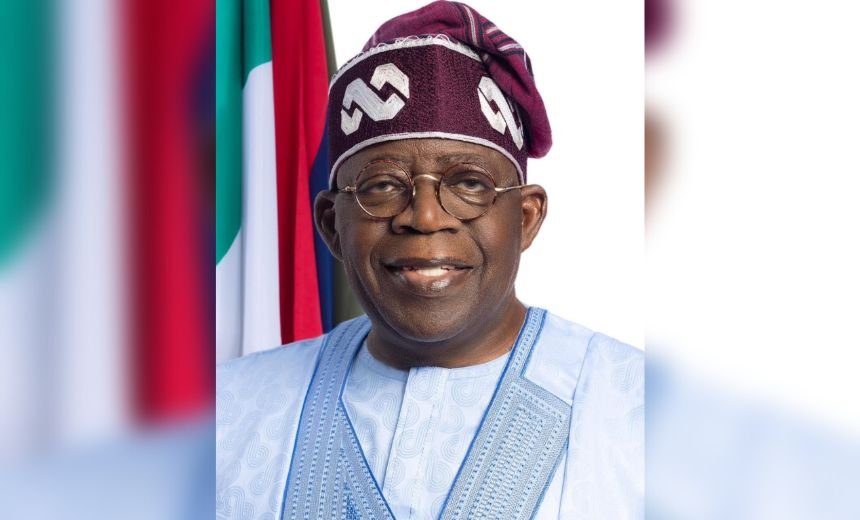
As President Bola Tinubu enters his third year in office, Nigeria’s political climate reflects a paradox: sweeping reforms on one hand, and growing fears of democratic decline on the other. His administration has rolled out ambitious policies since May 2023, but critics argue that these gains are overshadowed by shrinking political freedoms and rising concerns about institutional independence.
Local Government Autonomy: Promise and Paralysis
One of Tinubu’s most notable achievements is the Supreme Court ruling granting full autonomy to Nigeria’s 774 local government areas. For decades, governors controlled council funds through joint allocation committees, a system widely blamed for stifling grassroots development. The court’s decision was hailed as a landmark victory for governance reform.
Yet, implementation has stalled. In Osun State, disputes over council leadership after the 2025 elections led to frozen allocations for 30 local governments. The Federal Government directed funds to APC chairmen, sparking resistance from Governor Ademola Adeleke. Although the Supreme Court later ruled that withholding funds violated constitutional provisions, the allocations remain blocked. Civil society groups now accuse the government of undermining its own reform by failing to enforce compliance.
Opposition Under Pressure
Tinubu’s administration has also faced accusations of interfering in opposition politics. The ruling All Progressives Congress (APC) is alleged to be exploiting internal divisions within rival parties ahead of the 2027 elections.
Governor Seyi Makinde of Oyo State claimed that FCT Minister Nyesom Wike told Tinubu he would “hold PDP for you against 2027.” Wike denied the allegation, but his frequent support for APC candidates while remaining in the PDP has fueled suspicions of sabotage.
Further controversy erupted when Chief of Staff Femi Gbajabiamila reportedly advised an ADC lawmaker to “stay in ADC, fight them, scatter them.” Critics saw this as evidence of official encouragement of factional crises. Opposition parties including PDP, Labour Party, ADC, and SDP have all faced leadership disputes, often despite court rulings. Analysts warn that these conflicts weaken Nigeria’s multiparty system and tilt the balance of power toward the APC.
Fears of a One-Party State
Defections from opposition parties to the APC have become routine, raising alarms about Nigeria drifting toward a one-party state. Governors and lawmakers continue to align with the ruling party, consolidating its dominance.
Critics argue that state resources and political pressure are being deployed to weaken rivals. The presidency rejects these claims, insisting that political plurality remains intact. Tinubu himself has warned that suppressing opposition would breed tyranny. Still, the growing imbalance in Nigeria’s political space suggests otherwise.
Judiciary and INEC Under Scrutiny
Nigeria’s democratic institutions have not escaped controversy. The judiciary faces accusations of being used to weaken opposition parties through selective rulings. Meanwhile, the Independent National Electoral Commission (INEC) has been criticised for partisanship and lack of transparency.
Civil society organisations point to flaws in INEC’s Result Viewing Portal (IReV) and question appointments into the commission, alleging executive influence. INEC insists it remains impartial, but public confidence in the electoral process is fragile. This distrust could shape political dynamics as the 2027 elections approach.
Reform vs. Democratic Resilience
Tinubu’s presidency is defined by bold reforms, including efforts to restructure governance and strengthen local institutions. Yet, these reforms coexist with growing concerns about inclusiveness and democratic resilience. The paradox is clear: while the administration pursues structural change, the political environment appears increasingly hostile to opposition voices.
Observers argue that Tinubu’s legacy will depend on whether he can balance reform with respect for democratic freedoms. If reforms continue without genuine political pluralism, Nigeria risks sliding into authoritarian tendencies masked by economic restructuring.
The Road Ahead
Three years into Tinubu’s tenure, Nigeria stands at a crossroads. His administration has delivered landmark policies, but controversies over opposition suppression, judicial independence, and electoral credibility cast shadows over these achievements.
The coming months will test whether Tinubu can consolidate reforms while safeguarding democracy. For citizens, the stakes are high: they want effective governance, but also assurance that their voices will not be silenced.
As 2027 draws closer, Nigeria’s political trajectory will hinge on whether Tinubu’s bold resets strengthen democratic institutions or erode them. The answer will determine not only his legacy but also the future of Nigeria’s fragile democracy.
Headlines
SSCE Fee Hike: Government Must Balance Cost Recovery with Access to Education
Headlines
Can Nigeria’s drone industry deliver Africa’s defence sovereignty
Military manufacturing may be growing, but defence sovereignty depends on far more than production.
Across Africa, the ability to defend borders, monitor territory and protect critical infrastructure remains heavily dependent on foreign suppliers. Turkish drones patrol borders, Chinese surveillance systems monitor cities and Russian fighter jets form the backbone of several air forces.
For decades, African militaries have turned abroad for critical defence technologies, leaving the continent largely positioned as a buyer rather than a producer.
An Abuja-based start-up is attempting to change that equation.
Terra Industries, founded in 2024 by Nathan Nwachuku and Maxwell Maduka, both in their early twenties, designs and manufactures drones, autonomous surveillance towers and unmanned ground vehicles from facilities in Abuja and Accra.
Unlike companies that primarily assemble imported components, Terra says it develops its own software, airframes, propellers and lithium-ion battery packs, with more than 70 percent of its inputs sourced locally.
The company says its systems are currently used to protect infrastructure valued at approximately $11bn, including power plants, lithium and gold mines, oil refineries and other strategic assets across eight African countries and Canada.
Building capability
The shift from importing security technology to producing it locally has become an increasingly important debate across Africa. Governments facing armed groups, porous borders, maritime insecurity and attacks on critical infrastructure are searching for faster and more adaptable solutions.
Terra’s move from private infrastructure security into engagements with Nigeria’s defence institutions reflects that changing environment. The company says its systems are designed to address challenges ranging from maritime surveillance and border monitoring to the protection of energy and mining assets.
![The Archer drone, developed by Terra Industries, is part of a new generation of locally manufactured military technology emerging across Africa [Terra Industries]](https://www.aljazeera.com/wp-content/uploads/2026/07/IMG_4128-1-1783618110.jpeg?w=770&resize=770%2C580&quality=80)
“Coastal states in West Africa are focused on maritime surveillance because of piracy and illegal fishing in the Gulf of Guinea,” chief executive Nathan Nwachuku told Al Jazeera. “States dealing with insurgency and porous borders want persistent aerial surveillance and a rapid-response capability. Others are looking at protection for pipelines, power and energy infrastructure, and mining assets, the same problems we started solving in Nigeria.”
The company is now preparing for a larger regional footprint. Nwachuku confirmed that Terra’s second production facility in Ghana will become Africa’s largest drone manufacturing hub, with an annual production capacity of 50,000 units by 2028.
“Our long-term ambition goes beyond the continent because the threats our systems are designed to address exist across the Global South,” he said. “Governments in South Asia and South America face them too, and they face the same dependency on foreign suppliers. We intend to serve them as we grow.”
Investor confidence
The scale of investment behind Terra reflects growing interest in Africa’s emerging defence technology sector. The company has raised $34m in seed funding, which it describes as one of the largest early-stage funding rounds in African technology.
The investment was led by 8VC, the venture capital firm founded by Palantir Technologies co-founder Joe Lonsdale, alongside Lux Capital and Valor Equity Partners, investors behind companies such as Anduril and SpaceX.
“The round closed in under two weeks, which is rare even by global standards,” Tage Kene-Okafor, Terra Industries’ director of communications, told Al Jazeera. “But what has been more exciting is our cap table, where we have the likes of 8VC, Lux Capital and Valor Equity Partners, investors that have backed companies shaping the future of defence and advanced manufacturing globally.”
Security imperative
The interest in companies like Terra comes as drones become increasingly central to conflicts across Africa. In the Sahel, inexpensive commercial drones have moved from surveillance tools to weapons used on the battlefield, creating new challenges for militaries that often lack effective counter-drone capabilities.
According to the Armed Conflict Location and Event Data (ACLED), Jama’at Nusrat al-Islam wal-Muslimin (JNIM), the al-Qaeda-linked coalition operating in Mali and Burkina Faso, has carried out more than 100 drone attacks since 2023, with 2025 recording the highest number to date.
Terra says its Kama interceptor drone was developed in response to this changing threat environment. The company says the system can reach speeds of up to 300kph and is designed to counter hostile drones in environments where traditional air defence systems may be unavailable or too expensive.
Building defence technology, however, is not the same as achieving defence sovereignty.
Sovereignty question
While a country can build manufacturing capacity through investment, engineering talent and industrial policy, defence sovereignty requires institutions capable of managing procurement, ensuring accountability and sustaining strategic industries over the long term.
Janice Greaver, director at the Pan African Sustainable, Innovation and Development Associates (PASIDA), argues that local production alone cannot answer those questions.
“Seventy percent local sourcing means little until we know who controls the intellectual property, who is employed and who is left out,” she told Al Jazeera. “And when private capital arms the state with no visible civil society oversight, we are simply trading one dependency (on foreign suppliers) for another (on unaccountable domestic capital).”
Terra Industries has demonstrated that sophisticated defence technologies can be designed and manufactured in Africa. Its rapid rise reflects both growing technical capability on the continent and the pressure created by worsening security challenges.
Whether that becomes genuine defence sovereignty will depend on what happens beyond the factory floor: how governments buy, regulate and oversee the technologies they increasingly seek to build themselves.
As Greaver cautions: “Its manufacturing capacity is being built, sovereignty requires the accountability structures that do not yet exist”.
Source: https://www.aljazeera.com/news/2026/7/13/can-nigerias-drone-industry-deliver-africas-defence-sovereignty
Headlines
Major General Mutkut Applauds 4 Brigade’s Proactive Security Operations During Edo Assessment Visit
The Commander Infantry Corps (CIC), Major General Godwin Mutkut, has commended the operational readiness and administrative achievements of the Headquarters 4 Brigade, Nigerian Army, during an operational assessment visit to the formation in Benin City, Edo State.
During the visit on Saturday, July 11, Major General Mutkut commissioned several completed infrastructure projects and praised the Brigade for maintaining a proactive security posture that has contributed to peace and stability across Edo State.
Addressing officers and soldiers, the Infantry Corps Commander conveyed the goodwill message of the Chief of Army Staff (COAS), Lieutenant General Waidi Shaibu, and applauded the troops for their loyalty, discipline, professionalism, resilience and commitment to duty.
He urged personnel to remain focused on their constitutional responsibilities while upholding the core values, ethics and traditions of the Nigerian Army.
Major General Mutkut also stressed the importance of maintaining strong family relationships, noting that a stable home environment plays a vital role in enhancing the effectiveness and wellbeing of military personnel.
As part of the assessment visit, the Commander commissioned a series of projects completed under the leadership of the Commander 4 Brigade, Brigadier General Ahmed Balogun. The projects include the remodelled Brigade Conference Room, a new Brigade Operations Room, Brigade Sick Bay, an ultra-modern Fire Point, Quarter Guard, and the newly constructed 4 Brigade Mascot and Fountain.
He described the projects as significant investments that would enhance operational efficiency, improve troop welfare and provide a more conducive working environment for personnel.
Major General Mutkut commended Brigadier General Balogun for his leadership and commitment to implementing the Chief of Army Staff’s Command Philosophy through infrastructure development and effective command administration.
Earlier, Brigadier General Balogun welcomed the Commander Infantry Corps and expressed appreciation for the operational assessment visit, describing it as a morale booster for officers and soldiers of the Brigade.
He reaffirmed the Brigade’s commitment to protecting lives and property across its area of responsibility while sustaining the high standards of professionalism, discipline and operational excellence associated with the Nigerian Army and the Infantry Corps.
The visit also featured a tour of facilities within the Nigerian Army Cantonment, Ekehuan, Benin City, an interactive session with officers and soldiers, and the presentation of souvenirs.
-
Branded Content3 weeks agoNow Hiring: Academic and Technical Staff at a Leading Private University in Gombe State
-
Headlines11 months agoNRC to reposition train services nationwide.. Kayode Opeifa
-
Entertainment9 years agoThe final 6 ‘Game of Thrones’ episodes might feel like a full season
-
Fashion9 years agoThese ’90s fashion trends are making a comeback in 2017
-
Politics3 months agoNNPP Diaspora Stakeholder and Key Kwankwaso Ally, Dr. Usman Tijjani Shehu, Rejoins APC
-
Opinion2 years agoBureaucratic Soldier, Kana Ibrahim heads Ministry of Aviation and Aerospace After Transformative Tenure at Defence
-
Opinion1 year agoHon. Daniel Amos Shatters Records, Surpasses Predecessor’s Achievements in Just Two Years
-
Opinion7 months agoBarrister Somayina Chigbue, Esq: A rising legal leader shaping institutioal excellence in Nigeria