Connect with us

Cover

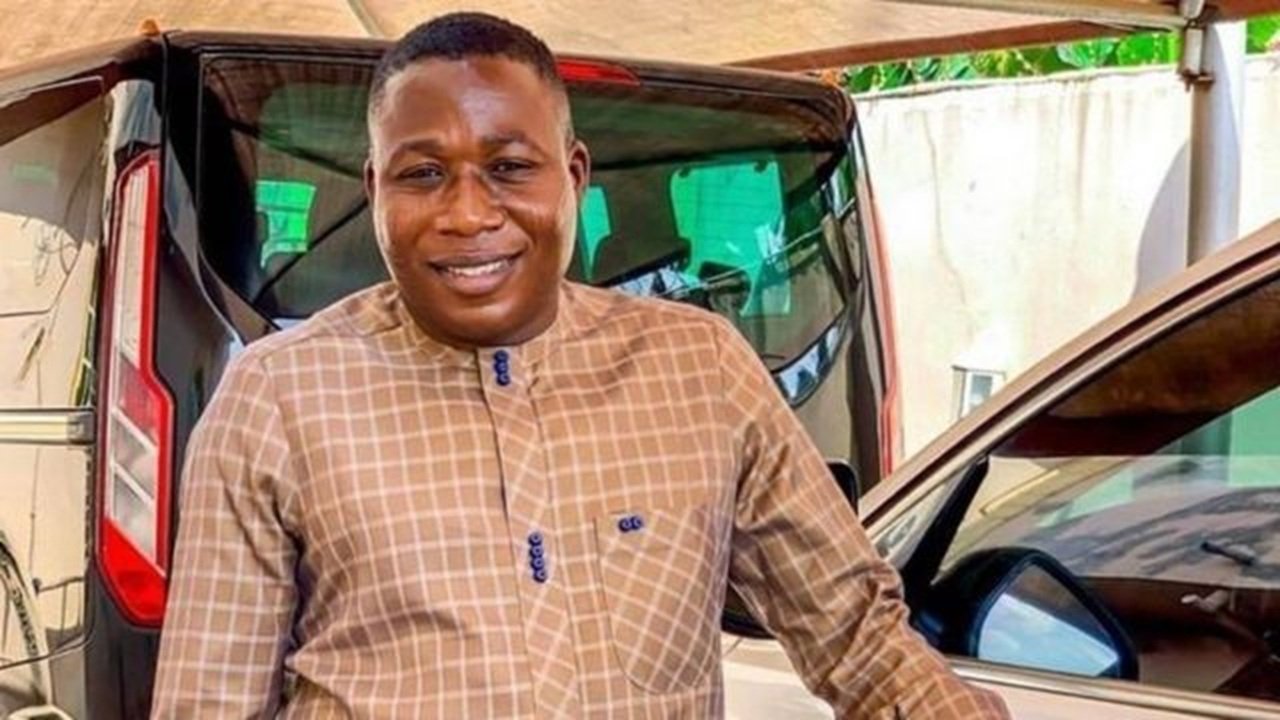
Politicians Fingered In Oyo Abductions: Igboho’s Warning

Published

on

Politicians-Fingered-in-Oyo-Abductions,-Igboho’s-Warning

Yoruba Nation activist Sunday Adeyemo, widely known as Sunday Igboho, has issued a stern warning to Nigerian politicians allegedly linked to the abduction of schoolchildren in Oyo State. He declared that unless the attacks stop, he will publicly name those he believes are financing and arming the perpetrators.

Igboho’s Allegations

Speaking at his Ibadan residence during a meeting with the new leadership of the National Association of Nigerian Students (NANS), Igboho accused politicians of fueling insecurity in the South-West. He claimed that the abductions in Oriire Local Government Area were not random acts of banditry but coordinated operations backed by powerful figures.

“I know the politicians behind them,” Igboho said in a video now circulating online. “They are the ones giving them ammunition and money. If they do not stop, I will mention them all.”

Clash with Oyo Government

Igboho revealed that he had volunteered to lead a rescue mission for the abducted students but was blocked by the Oyo State Government. According to him, officials warned that any attempt to storm the kidnappers’ hideouts could endanger the victims’ lives. He insisted that his security outfit, “Iru Ekun,” approved by the Federal Government, was capable of dislodging the criminals from the forests.

“The state government said no security must act without them,” he explained. “But if they are serious about rescuing the victims, they should allow my boys and me to chase them out. Even with their bombs and weapons, they cannot withstand us.”

Political Undertones

The activist linked the abductions to wider political schemes aimed at destabilizing President Bola Tinubu’s administration. He compared the current situation to the challenges faced by former President Goodluck Jonathan, suggesting that opponents are trying to make Nigeria ungovernable.

“They want to ruin Tinubu’s government the same way they tried with Jonathan,” Igboho said. “It was Tinubu who freed me when I was in exile. Why should I fight him? Those behind these attacks are spreading propaganda and fake news to weaken his support.”

The Oriire Abduction

On May 15, gunmen stormed three schools in Oriire Local Government Area, abducting at least 45 pupils and teachers. The schools attacked included Baptist Nursery and Primary School, Yawota; Community Grammar School, Esiele; and L.A. Primary School. Witnesses reported that the kidnappers spoke Yoruba, Hausa, and Pidgin English, suggesting a coordinated group with diverse backgrounds.

Days later, one of the abducted teachers, Michael Oyedokun, was gruesomely killed. A video released by the bandits showed him being beheaded after being forced to speak on camera. The chilling footage heightened tension across the state and fueled calls for urgent government action.

Security Response

Security agencies reportedly surrounded possible escape routes near the Old Oyo National Park, where the kidnappers fled. Despite these efforts, the abductees remain in captivity, and fear continues to grip local communities.

Igboho argued that the government’s approach has been too slow and bureaucratic. He maintained that grassroots security networks like his “Iru Ekun” could deliver faster results if allowed to operate freely.

Igboho’s Position

The activist emphasized that he has no personal stake in the crisis, noting that his family lives abroad and cannot be targeted. His concern, he said, is for the abducted children and the future of the Yoruba people.

“Why should I fret? Nobody can kidnap me or my family. But I am worried about these children. Do we have to wait endlessly before rescuing them?” he asked.

Broader Implications

Igboho’s accusations raise serious questions about the intersection of politics and insecurity in Nigeria. If politicians are indeed backing criminal networks, the implications for governance and public trust are profound. His threat to name names could trigger political shockwaves across Oyo State and beyond.

For now, the state government insists that private security outfits must comply with its regulations. Governor Seyi Makinde recently issued an Executive Order to control the activities of such groups, a move Igboho says he is willing to respect — provided it does not hinder urgent rescue operations.

The abduction of schoolchildren in Oyo State has once again exposed Nigeria’s fragile security architecture. While government forces continue their search, Sunday Igboho’s warning adds a new dimension to the crisis. Whether he follows through on his threat to expose politicians remains to be seen, but his words have already intensified public debate on accountability and leadership in the fight against banditry.
Continue Reading
Click to comment

Leave a Reply

Your email address will not be published. Required fields are marked *

Cover

Arteta Rebuilds Arsenal After Champions League Final Heartbreak

Published

on

Arteta-Rebuilds-Arsenal After-Champions-League-Final-Heartbreak

The trophy cabinet at the Emirates Stadium tells an incomplete story this summer.

Arsenal won the Premier League title for the first time in 22 years. They reached the Champions League final unbeaten through the league phase, winning every group stage match. They stood 90 minutes — and ultimately five penalty kicks — away from the greatest season in the club’s modern history.
Then Eberechi Eze and Gabriel missed their penalties in Budapest. PSG lifted the trophy. Arsenal flew home as champions of England and runners-up of Europe.
Mikel Arteta is not in the mood to accept that gap again.

4 Players Available: The Squad Clearout Begins
While players and fans dispersed for the World Cup and summer holidays, Arsenal’s hierarchy was already working. The message from within the club is clear: the squad that finished second in Budapest is not the squad that will compete next season.

According to reports from Metro UK, four players have been placed in the available category as Arteta and the board prepare to fund and create space for incoming signings.
Gabriel Martinelli heads the list — a decision that reflects not sentiment but statistics. The Brazilian winger is the longest-serving member of the current squad, a fan favourite, and the subject of considerable affection at the Emirates. He was also responsible for just one Premier League goal across 30 appearances in 2025-26. For a title-winning and European finalist squad, that return is insufficient. The club is prepared to listen to offers.

Leandro Trossard, versatile and reliable, is also available. At 30, he remains a quality operator — but Arsenal’s ambition requires upgrading rather than retaining cover players approaching the latter stages of their careers.

Gabriel Jesus faces a different kind of exit narrative. The Brazilian striker worked through an ACL recovery only to find the door firmly closed in front of him. Viktor Gyökeres and Kai Havertz occupy the attacking positions ahead of him, and with Arteta seeking a new striker in the transfer window, Jesus has no realistic pathway back into regular contention. A move would benefit all parties.
Ben White completes the four. The right-back has been a consistent presence but the club’s desire to recruit a new option in that position makes his continued participation increasingly uncertain.

Arteta’s Blueprint: What Arsenal Need
The manager was unusually candid in his post-final assessment of what Budapest revealed.
“What they are able to do with the ball, with individual actions, I haven’t seen it,” Arteta said of PSG. “It’s not the plan to play in certain areas when you don’t have the ball, but they force you to do that. So, even more credit to the players.”

That admission tells you exactly what Arsenal lack and what Arteta is targeting. PSG’s ability to create and convert through individual brilliance — through players who can unlock a game on their own — exposed the ceiling of Arsenal’s current squad construction.
Arteta wants four specific additions: a striker, a left-winger, a central midfielder, and a right-back. Each position maps directly onto a deficiency the final exposed.

The Transfer Targets: Álvarez and Rogers in the Frame
Arsenal have been linked with Julián Álvarez, the Argentine forward currently at Atlético Madrid. Álvarez has reportedly expressed a desire to move on from the Spanish capital — though his preference is said to be Barcelona rather than north London. Whether Arsenal can change that calculus with a more compelling project or a superior financial offer remains to be seen.

Morgan Rogers of Aston Villa has also attracted Arsenal’s attention. The 22-year-old England international can operate as a number ten and across the attacking midfield line — the kind of flexibility that fits Arteta’s systemic demands. Villa will not negotiate cheaply, but Rogers represents exactly the profile of young, high-ceiling player that Arsenal’s recruitment model has consistently targeted.
The left-wing and right-back positions have not yet produced the same level of publicly reported interest. Expect those links to emerge as the summer develops and the player sales create budget clarity.

The Financial Picture
Arsenal’s Champions League run was financially significant. Reaching the final unbeaten through the league phase and advancing through every knockout round generated substantial UEFA prize money — though the final’s penalty defeat meant the winner’s bonus was PSG’s rather than theirs.

The Premier League title adds its own commercial premium: broadcasting distributions, prize money, and the enhanced commercial appeal of being English champions heading into a new season. Arsenal are not operating under financial constraint. They are operating under ambition.

What This Season Ultimately Means
Losing a Champions League final on penalties is painful. It is also evidence that Arsenal belongs at that level — that the project Arteta began when he took over in December 2019 has now reached the point where the club is not simply competing but contending for the game’s ultimate prizes.

Three consecutive second-place Premier League finishes. A first title in 22 years. A Champions League final. The trajectory is real and it is steep.
For Nigerian Arsenal fans — and the club has one of the most passionate followings on the African continent — this summer represents the first time in a generation that the question is not whether Arsenal can reach the top, but what it will take to stay there.
The answer Arteta is constructing involves four exits and at least four arrivals. The Budapest final was not the end. It was the standard he now demands Arsenal exceed.


Continue Reading

Cover

The Coaches With Highest Paid In 2026 World Cup

Published

on

World-Cup-Stadiums

The 2026 FIFA World Cup is not only a showcase of footballing talent but also a reflection of the staggering financial commitments national federations are making to secure elite managers. Salary figures released ahead of the tournament reveal the top ten highest-paid coaches, underscoring the premium placed on leadership at the global stage.

Ancelotti Leads the Pack

Brazil’s Carlo Ancelotti sits comfortably at the top, earning £8.28 million annually. The former Real Madrid boss was appointed to guide the South American giants in their quest for a record sixth World Cup title. His salary reflects both his pedigree and Brazil’s determination to dominate once again.

England Bets Big on Tuchel

England follows with Thomas Tuchel, who earns £5.06 million per year. The German tactician was hired to end England’s long wait for international success after Gareth Southgate’s near misses. Tuchel’s appointment signals the Football Association’s willingness to invest heavily in proven managerial expertise.

Host Nation’s Gamble

The United States, one of the tournament’s co-hosts, ranks third with Mauricio Pochettino on £4.53 million annually. The Argentine coach, known for his stints at Tottenham Hotspur, Paris Saint-Germain, and Chelsea, is tasked with leading the American squad on home soil. His salary reflects the ambition of the U.S. federation to make a deep run in the competition.

European Heavyweights

Germany’s Julian Nagelsmann earns £4.2 million, placing him fourth. Portugal’s Roberto Martinez and Uzbekistan’s Fabio Cannavaro share fifth place at £3.5 million each. Cannavaro’s inclusion is particularly striking, given Uzbekistan’s status as a debutant at the World Cup. His appointment highlights the nation’s bold investment in global football credibility.

France’s Didier Deschamps, who guided Les Bleus to victory in 2018, earns £3.31 million, ranking seventh. Despite his proven track record, his salary is lower than several of his peers, reflecting perhaps the French federation’s confidence in his long-standing tenure.

South American Icons

Argentina’s Lionel Scaloni, Uruguay’s Marcelo Bielsa, and Netherlands coach Ronald Koeman complete the list, each earning £2.61 million annually. Scaloni, who led Argentina to World Cup glory in 2022, remains one of the most respected figures in international football despite a comparatively modest salary.

Financial Stakes in Global Football

The rankings reveal the growing financial stakes in international football. Federations are willing to spend millions to secure managers capable of delivering success. For smaller nations like Uzbekistan, investing in a high-profile coach like Cannavaro is both a statement of ambition and a bid to inspire confidence on the world stage.

As the 2026 FIFA World Cup approaches, the salaries of these top coaches highlight the immense value placed on tactical leadership. Whether these investments translate into trophies remains to be seen, but one thing is clear: the race for football glory is as much about financial muscle as it is about talent on the pitch.

Continue Reading

Cover

Kenneth Okonkwo: Divided Opposition Could Hand Tinubu 2027 Victory

Published

on

Kenneth-Okonkwo
Kenneth Okonkwo

Kenneth Okonkwo, a prominent figure in the African Democratic Congress (ADC), has cautioned that votes cast for Peter Obi in the 2027 presidential election could inadvertently secure President Bola Tinubu’s second term.

Speaking during an interview with Symfoni TV, Okonkwo stressed that opposition parties must unite under a single platform if they hope to challenge the ruling All Progressives Congress (APC). He argued that a divided opposition would only strengthen Tinubu’s electoral chances.

Warning on Fragmented Opposition

Okonkwo explained that political analysts have repeatedly warned about the dangers of vote splitting. According to him, any opposition candidate running outside a coalition framework risk weakening the collective effort to unseat the incumbent.

“Either you’re working for Tinubu directly in APC, or indirectly by dividing the opposition votes,” he said. “In both cases, Tinubu benefits.”

Criticism of Obi’s Political Strategy

The ADC chieftain criticized Peter Obi’s reported withdrawal from coalition talks within the party. He claimed Obi was unwilling to participate in a competitive primary process, which he described as essential for any serious presidential contender.

“Nobody forced Obi to enter ADC. He joined on his own, but left just before the deadline,” Okonkwo stated. “You cannot aspire to lead a challenged country and avoid competition.”

Regional Alliances and Victor Umeh’s Advice

Okonkwo also recalled a conversation with Anambra South Senator Victor Umeh, who suggested that the South-East’s best chance of producing a president lay in forming alliances with northern leaders.

He claimed Umeh had advised that Obi should consider a vice-presidential role in such an arrangement, but Obi reportedly rejected the idea. “Victor Umeh told me that Obi is stubborn and prefers to try on his own rather than align strategically,” Okonkwo said.

Implications for 2027

Okonkwo urged opposition supporters to reflect carefully on their choices ahead of the next general election. He warned that votes for Obi could indirectly secure Tinubu’s re-election.

“In 2027, anybody voting for Peter Obi is voting for Tinubu. Don’t say I didn’t warn you,” he declared.

Broader Political Context

His remarks highlight the growing debate over coalition politics in Nigeria. With Tinubu expected to seek a second term, opposition parties face pressure to consolidate their strength. Analysts argue that failure to unite could repeat past scenarios where divided opposition votes allowed incumbents to retain power.

Kenneth Okonkwo’s comments underscore the urgency of opposition unity in Nigeria’s political landscape. Whether Peter Obi chooses to rejoin coalition talks or pursue an independent path, the decision will shape the dynamics of the 2027 presidential election. For now, the warning remains clear: a fractured opposition could pave the way for Tinubu’s continued hold on power.

Continue Reading

Trending

Copyright © 2023 - 2025 DailyMirror Nigeria. Design by AspireWeb.ng, powered by WordPress.