Connect with us

Opinion

N-HYPADEC AS A PERFECT SYNONYM FOR AN INTERVENTIONIST AGENCY

Published

on

By Lydia Ochapa

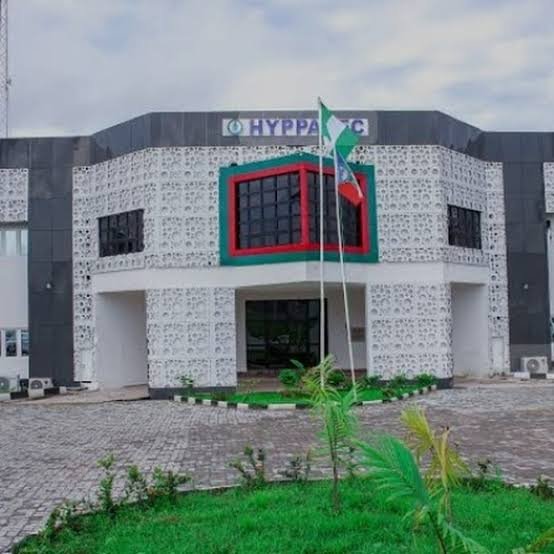
The Hydroelectric Power Producing Areas Development Commission (HYPADEC) is a constitutional body charged with the responsibilities of addressing ecological challenges from the operations of Hydroelectric Dams.

The law establishing it was first signed into law in 2010, but later amended in 2013 to take care certain inadequacies, especially the inclusion of Benue and Plateau States and also the addition of a 30 percent revenue derived from the total revenue accruing to the companies or authorities operating in the host communities with 10% revenue derived from concessioning of the hydro plants and royalties paid to the Federal Government.

However, in 2016, the law was aging amendment effectively reducing the percentage from 30%to 10% on the total revenue deductible from revenue generated by any company or authority from the operations of any hydroelectric dam, in any member state of the Commission

In 2020, President Muhammadu Buhari, GCFR, constituted the first Governing Council for the Commission which was inaugurated in December, 2020. The main quest of the Commission is to harness resources in the most transparent, acceptable and cost-efficient manner towards ameliorating the negative effects of hydroelectric dam operations in HYPPADEC member states.

This includes the formulation of strategic policies and guidelines for the development of hydroelectric power producing areas and managing ecological menace due to operations of dams and other hydroelectric power activities.

Ever since its inauguration, the Commission has been doing outstandingly well, raising bars and defeating the hope of traducers. In a significant, effective and efficient display of commendable commitment and equanimity, the Commission has over the years helped to define what an interventionist agency means in the current world especially for a country like Nigeria. An Agency that can promptly respond and mitigate against various environment and social challenges with a view to positively modifying their outcomes, thereby preventing harm or/and improving proper functioning of society.

Promote the rapid development of what the agency has achieved so far. And make a case for proper funding of the agency to make more impact on the lives of our constituents all over and across the country.

In a deliberate commitment towards ensuring that various catchment communities of the Hydro Electric Power Producing Areas derive benefits from the work of the Commission, it conducted several specific ‘Needs Assessment and Community Mapping’. This Assessments was used to generate information which was later utilized to improve the policy and programs decisions of the government, as well as redirect its focus in the areas of citizen’s needs, education, trainings, and organizational needs of the catchment areas, communities, and ensuring long-term success.

In a further bid to re-write the narratives, re-invent strategies and redeem the infrastructural image of the country, the Commission embarked upon the construction of various drainage channels, in erosion and flood endemic areas, to contain the menace of erosion threatening some of the affected communities. Two of these areas are the Idye drainage in Benue State and Patigi in Kwara State.

The Commission also constructed several classroom blocks and rehabilitated several others, provided about one hundred and fifty solar powered boreholes and installed thousands of solar street lights across the various political wards in the country.

Also the Commission ensured the provision of portable, accessible and clean drinking water on a daily basis to over 2.1 billion people nationwide, appreciating the uniqueness of water and its essence of it as a necessary factor to life and living.

In a demonstration of patriotism and foresight, the Commission constructed solar powered motorized boreholes in all the affected communities of Tse-Sor Community in Gwer East Local Government area of Benue State, Yauri in Kebbi State and New Bussa in Niger State to enhance access to potable water and ease the communities from the burden diseases occasioned by unhygienic water. These communities are all ancient settlements that were relocated to their present locations as a result of the construction of Kainji Dam and as a result are facing incessant water scarcity unbefitting of their status as headquarters of the historic emirates.

The Commission also provided water to Yauri and New Bussa to alleviate the problems of acute water scarcity in those communities, rehabilitated the Yauri and New Bussa waterworks and also cleared the water logs in various communities to enhance water transportation, commerce and economic development and growth.

The Commission also distributed over ten thousand life jackets to the boat operators in the communities, enhancing water transportation safety. And also distributed over two thousand motorcycles to members of the vigilante groups and other security operatives to contain the menace of insecurity in the affected communities.

In order to ameliorate the sufferings of the victims of flood disaster in Benue, Kebbi, Kogi, Kwara, Niger and Plateau States, relief materials worth more than millions of naira was distributed to the affected communities.by the Commission.

In consolidation of its Educational Support Programme, the Commission sponsored 4000 students to re-sit their Senior School Certificate Examinations with the National Examination Council and provided scholarship for students in tertiary institution.

Also the Commission carried out medical outreaches, including surgeries, across the six HYPPADEC States impacting on over 20,000 patients were attended to.

The Commission gas overtime rescued several villages from marauding herdsmen and various forms of attacks, granting Security Supports through the provision of over 2,500 motorcycles to security operatives in host communities, thereby emphasizing and reiterating the imperatives of security as the paramount importance in the development of any society, and a precondition for proper articulation, formulation and implementation of developmental agenda by those at the helm of affairs in every society.

The Commission has enhanced the training of her staff through attendance to various workshops, courses and seminars so as to enhance capacity building and the production of and efficient, effective, competent and productive workforce.

Through its Youth Transformation Programme, the Commission also empowered over five thousand youths in various skills for self-reliance.

Indeed the various projects of the Commission is highly demanding of both financial and material provision, making it necessary for the upward review of the budgetary allocation of the Commission. For instance, just recently, the Commission again provided seven hand pump boreholes for the seven village communities out of the fifty-one communities earmarked under Wuya-Kede Ward.

There is also urgent need to immediately survey and assess the status of all the dams to ensure that they do not pose threats to the host communities.

There are also strenuous constraints and needs for interventions in various communities and villages, as citizens daily are confronted by the death of their loved ones, destruction of properties resulting from natural disaster and man-made conflict, destruction of farmlands, animals, schools and health centers by floods, and provision of potable water.

The increase in budgetary funding so advocated for will enhance and create more impact on the lives of our constituents all over and across the country.

The relieve and renewed hope given by the focused, patriotic and people-oriented leadership coupled with the sincere drive and positive efforts of the Managing Director/CEO Abubakar Sadiq Yelwa Fcna, FNIM (Katukan Yauri) is as well steering a new and fundamental course, driving several innovations and holistically conscientious strategies.

He has indeed demonstrated what the country need to prosper as a nation, and amplified the fact that, it is more of a question of determination and honesty of purpose. Alhaji Abubakar Sadiq Yelwa Fcna, FNIM (Katukan Yauri) has demonstrated in no small measure that YES, we can as a nation and that everything is possible.

Ochapa is a geologist writing from Makurdi, Benue State.

Continue Reading
Click to comment

Leave a Reply

Your email address will not be published. Required fields are marked *

Opinion

No More Pipeline Vandalism in The Niger Delta, But…

Published

on

APPRAISING MILITARY RESOLVE AND THE PATH TO SUSTAINABLE OIL SECURITY

By Aaron Mike Odeh

On a recent media assessment visit by the Director, Defence Media Operations, Major General Michael E Onoja on the 20 January 2026, the General Officer Commanding (GOC), 6 Division of the Nigerian Army and Commander Land Component Operation DELTA SAFE, Major General Emmanuel Emeka, stated that there will be “no more pipeline vandalism in the Niger Delta” indicating a strong affirmation of military resolve and institutional confidence in the ongoing operations within Nigeria’s most economically strategic region.
Far from being a casual statement, the pronouncement reflects the operational posture, command clarity, and renewed determination of the Nigerian Armed Forces (AFN) under the leadership of General Olufemi Oluyede. It signals a clear message: the era of unchecked sabotage of national economic assets is being decisively confronted.

CONTEXTUALISING THE GOC’S DECLARATION
Statements of this magnitude from a serving GOC carry both symbolic and operational weight. They are rooted in firsthand command experience, intelligence assessments, and measurable gains on the ground. In this regard, Major General Emmanuel Emeka’s assertion should be understood as a projection of confidence derived from sustained military engagement, improved coordination with sister security agencies, and enhanced operational discipline within the 6 Division’s area of responsibility.
The Niger Delta has long posed complex security challenges due to its difficult terrain, extensive pipeline networks, and the activities of organised criminal syndicates. Against this backdrop, the GOC’s declaration underscores a belief that the Nigerian Armed Forces has reached a level of operational advantage sufficient to deter, disrupt, and dismantle pipeline vandalism networks.
OPERATIONAL GAINS AND MILITARY PROFESSIONALISM
Under Major General Emmanuel Emeka’s command, the 6 Division has intensified patrols, improved intelligence-led operations, and sustained pressure on illegal refining camps and crude oil theft routes. These efforts align with the Federal Government’s strategic objective of securing oil infrastructure as a matter of national economic security.
The GOC’s statement therefore reflects not mere optimism, but a professional assessment of the division’s growing capacity to dominate the operational environment. It also reinforces the Nigerian Armed Forces constitutional role as a stabilising force, committed to safeguarding national assets in support of economic recovery and investor confidence.

THE “BUT”: BEYOND KINETIC SUCCESS
While commending the resolve and achievements of the 6 Division, it is equally important to situate the declaration within a broader national framework. The “but” in the statement should not be interpreted as doubt or contradiction; rather, it represents an acknowledgment of the multifaceted nature of pipeline security in the Niger Delta.
Pipeline vandalism has historically been sustained not only by criminal intent, but also by socioeconomic pressures, environmental degradation, and the absence of alternative livelihoods in some host communities. Military success, while indispensable, achieves greater durability when complemented by effective civil governance, economic inclusion, and community trust-building.

COMMUNITY ENGAGEMENT AS A FORCE MULTIPLIER
One of the strengths of recent military operations in the Niger Delta has been improved civil-military relations. The success of the Armed Forces is closely tied to cooperation from local communities, traditional institutions, and credible stakeholders.
Sustainable pipeline security is most effective when host communities become partners in protection rather than passive observers. The GOC’s declaration implicitly places responsibility on all stakeholders—government agencies, oil companies, community leaders, and youths—to consolidate the gains made by the Armed Forces.

INSTITUTIONAL SYNERGY AND NATIONAL RESPONSIBILITY
The efforts of the 6 Division do not exist in isolation. They form part of a wider national security ecosystem involving regulatory agencies, intelligence services, law enforcement bodies, and policy institutions. The GOC’s confidence should therefore inspire complementary actions across these sectors.
Oil companies must uphold environmental standards and transparent community engagement. Regulatory bodies must enforce accountability. Development agencies must deliver visible dividends of peace. These non-military actions reinforce the security umbrella provided by the Nigerian Armed Forces.

LEADERSHIP AND STRATEGIC MESSAGING
Major General Emmanuel Emeka’s statement also serves as strategic communication—boosting troop morale, reassuring investors, and reinforcing public confidence in the Armed Forces of Nigeria. Such leadership messaging is essential in shaping national narratives around security, discipline, and state authority.
By articulating a firm stance against pipeline vandalism, the GOC is not only commanding troops, but shaping expectations and setting benchmarks for operational success.

CONCLUSION
The declaration that there will be “no more pipeline vandalism in the Niger Delta” should be seen as a reflection of strengthened military capacity, improved leadership focus, and renewed institutional confidence under Major General Emmanuel Emeka, GOC 6 Division of the Armed Forces.
The Nigerian Armed Forces has demonstrated readiness to secure critical national assets. The task ahead is to consolidate these gains through sustained operations, inter-agency synergy, and socio-economic interventions that address underlying vulnerabilities.
In this context, the GOC’s statement stands as both an assurance and a call to collective national responsibility—one that deserves commendation, support, and strategic follow-through.

Aaron Mike Odeh, a Public Affairs Analyst Media Consultant and Community Development Advocator wrote from Post Army Housing Estate Kurudu Abuja

Continue Reading

Opinion

Appraising NUPRC’s New Tempo

Published

on

By Grace Ameh

As a woman who has spent years admiring the quiet strength of sisters carving paths in Nigeria’s demanding energy sector, my heart swelled with genuine joy the moment Chief Mrs. Oritsemeyiwa Eyesan’s appointment as Commission Chief Executive of the Nigerian Upstream Petroleum Regulatory Commission was announced.

Here stands a remarkable daughter of the Niger Delta, graceful yet fiercely determined, becoming the first woman to lead our nation’s upstream regulator. Her rise feels deeply personal, like watching a beloved sister finally claim the spotlight she has long deserved.  

The NUPRC, as a young agency born from the transformative Petroleum Industry Act of 2021, has shouldered enormous responsibilities in a complex and evolving landscape—navigating fluctuating production levels amid global energy shifts, addressing delays in data dissemination that can affect investor planning, tackling the persistent menace of crude oil theft that impacts national revenue, and working to enhance transparency in licensing rounds and asset management for greater stakeholder confidence.

This institution emerged with bold ambitions to modernise regulation, attract investment, and optimise Nigeria’s hydrocarbon resources, yet it has operated in an environment marked by inherited challenges and the need for continuous adaptation to deliver on its mandate.

Then, in December 2025, President Bola Tinubu nominated Chief Mrs Eyesan as the first woman to lead NUPRC, a move swiftly confirmed by the Senate.

My spirit lifted immediately. Chief Eyesan’s journey inspires every woman dreaming big in this field. She holds a Bachelor of Education in Economics from the prestigious University of Benin, graduating in 1986 with a solid foundation in economic theory, market analysis, and project evaluation—skills that would prove invaluable in the complex world of energy finance and strategy.

Her academic grounding equipped her to navigate large-scale investments and regulatory frameworks with precision. Early in her career, she honed her financial acumen in banking, serving as Branch Manager at People’s Bank of Nigeria and later as Treasury Officer at Gulf Bank, before joining NNPC in 1992.

Over nearly 33 years, she rose steadily through roles in planning, procurement, corporate strategy, and sustainability, culminating as Executive Vice President, Upstream, until her retirement in November 2024. In that position, she oversaw strategic management of Nigeria’s upstream operations, led sustainability initiatives, strengthened financial discipline, and guided critical reforms aligned with the PIA.

Since assuming office, Chief Eyesan has brought a refreshing wave of purpose and collaboration to NUPRC. Her patriotic commitment shines brightly as she aligns the Commission’s work with President Tinubu’s Renewed Hope Agenda, emphasising increased crude oil production to enhance energy security and revenue, accelerated gas monetisation to advance the Decade of Gas vision, and robust transparency measures to rebuild investor trust.

I admire her focus on digitisation; she is thoughtfully integrating digital tools to improve operational efficiency, accountability, and ease of business, cutting through layers of bureaucracy that once slowed progress. Her leadership style feels deeply relatable—inclusive and engaging. With an open-door policy and regular town halls, she encourages staff input while forging stronger ties with stakeholders, labour unions, and professional bodies.

She champions environmentally sustainable practices, ensuring growth does not come at the cost of our land and waters. Her strategic vision unfolds organically: boosting crude reserves and output for economic stability, scaling gas utilisation for power generation and exports, fortifying regulations to attract long-term investments, nurturing technical expertise through partnerships and capacity building, and embedding digitisation hand-in-hand with transparency to foster dynamic, confidence-inspiring growth.

In these early weeks of January 2026, tangible steps are emerging. She has advanced the 2025 licensing round, scheduling a key pre-bid conference for January 14 in Lagos to draw fresh capital into exploration and development. Partnerships, such as deepened synergy with the Nigerian Midstream and Downstream Petroleum Regulatory Authority, highlight her collaborative spirit.

What touches me profoundly is how Chief Eyesan views challenges as opportunities. She inherited an agency needing revitalisation but approaches it with grace, strategy, and unyielding diligence—that workaholic patriotism we so admire in trailblazing women. Her experience positions her uniquely to resolve legacy issues, unlock stranded assets, and position NUPRC as Africa’s premier regulator.

Reflecting on this new era, sisterly pride overwhelms me. Chief Mrs. Oritsemeyiwa Eyesan is truly an Amazon—resilient, visionary, and devoted to Nigeria’s progress. In her capable hands, the upstream sector is not just recovering; it is poised to soar, delivering sustainable wealth for generations.

Dear sister, you embody the hope we renew daily. The light of your leadership illuminates our path forward, proving once again that when a woman of substance rises, the nation rises with her.

*Ameh an Oil and gas expert writes from Kaduna.

Continue Reading

Opinion

FIFA World Cup: Counting the costs of Super Eagles missed opportunities

Published

on

By Victor Okoye

As the football world prepares for the expanded 48-team 2026 FIFA World Cup, Nigeria is facing the prospect of missing the global showpiece for the eighth time since its inception in 1930, a development that has drawn concern from football stakeholders and sports administrators in the country.

The Super Eagles, who made their World Cup debut at USA 1994, have qualified for the finals six times but failed to reach the tournament on seven previous occasions.

Should Nigeria fail to qualify for the 2026 edition, it would mark the eight miss and a second consecutive absence, further highlighting the rising cost of non-participation in an era of unprecedented financial rewards.

Historically, missing the World Cup was largely a sporting setback. Financial incentives were modest in earlier tournaments.

In USA 1994, FIFA’s total prize money stood at about 62 million dollars, with champions Brazil earning roughly four million dollars.

France 1998 offered about 131 million dollars in total prize money, while winners received around six million dollars.

The figures rose steadily to 300 million dollars at Brazil 2014 and 440 million dollars at Russia 2018 and Qatar 2022.

However, FIFA’s recent review has significantly raised the stakes.

The FIFA Council has approved a record 727 million dollars financial package for the 2026 World Cup, to be co-hosted by the United States, Canada and Mexico.

At an estimated exchange rate of 1,500 naira to the dollar, the total sum translates to about 1.09 trillion naira.

Of this amount, 655 million dollars (approximately 982.5 billion naira) will be shared as prize money among the 48 participating teams.

Champions will earn 50 million dollars, runners-up 33 million dollars, third place 29 million dollars and fourth place 27 million dollars.

Teams finishing between fifth and eighth will receive 19 million dollars, ninth to 16th are to receive 15 million dollars, 17th to 32nd will pocket 11 million dollars, while teams ranked 33rd to 48th will earn nine million dollars.

Each qualified nation will also receive 1.5 million dollars as preparation funds.

This guarantees every participating team a minimum of 10.5 million dollars — about 15.75 billion naira — before the tournament begins.

Nigeria’s 2026 qualification campaign ended in disappointment after the Super Eagles finished second behind South Africa in their group and lost the African playoff final to the Democratic Republic of Congo (DR Congo) on penalties.

To date, no public official report has broken down the total operational costs or expenditure to prosecute the 2026 World Cup qualifying campaign (travel, allowances, camps, logistics) but there are concerns and scrutiny over Nigeria Football Federation (NFF) finances.

The scrutiny includes how funds received from FIFA and CAF have been used over the years following the House of Representatives move to probe more than 25 million dollars in FIFA/CAF grants given to the NFF between 2015 and 2025, citing accountability questions.

However, the NFF has petitioned FIFA over alleged player-eligibility breaches by DR Congo, a move that has reopened debate within the football community.

Reacting to the situation, former Super Eagles captain and 1994 AFCON winner, Mutiu Adepoju, described the possibility of another World Cup absence as “a huge setback”.

“Missing one World Cup is painful, but missing two in a row is unacceptable for a country like Nigeria. Beyond pride, the financial loss is enormous and affects football development at all levels,” Adepoju said.

Former NFF Technical Director, Austin Eguavoen, said qualification had become more critical than ever due to the new prize structure.

“In the past, the World Cup was more about exposure. Now, the money involved can change the entire football ecosystem. Missing out means missing an opportunity to invest in grassroots and infrastructure,” Eguavoen said.

Chairman of the Nigeria Premier Football League (NPFL), Gbenga Elegbeleye, said the impact would also be felt in the domestic league.

“When the national team is at the World Cup, it attracts attention to our league and players. Absence reduces visibility, sponsorship interest and confidence in the system,” Elegbeleye said.

Similarly, former Minister of Sports, Solomon Dalung, said Nigeria must treat World Cup qualification as a national project.

“The Super Eagles missing the World Cup repeatedly shows deeper administrative and structural issues. The financial consequences alone should force stakeholders to rethink planning and accountability,” Dalung said.

On the legal challenge before FIFA, NFF Secretary-General, Dr Mohammed Sanusi, confirmed that the matter was under review.

“We have submitted our petition and we are waiting for FIFA’s decision. The rules are clear on nationality and eligibility, and we believe the issues raised deserve careful consideration,” Sanusi said.

If FIFA rules in Nigeria’s favour, the Super Eagles could be reinstated into the intercontinental playoffs, restoring a pathway to qualification and access to guaranteed earnings of at least 15.75 billion naira.

Failure would confirm Nigeria’s eighth World Cup absence, with consequences ranging from lost revenue and reduced global visibility to diminished influence in international football.

With the 2026 World Cup set to deliver the highest financial rewards in FIFA history, stakeholders agree that Nigeria can no longer afford repeated absences from football’s biggest stage. 

Continue Reading

Trending

Copyright © 2023 - 2025 DailyMirror Nigeria. Design by AspireWeb.ng, powered by WordPress.