
Uncategorized
Akinosho’s Regular Faulty View and A Regulator’s Achievements

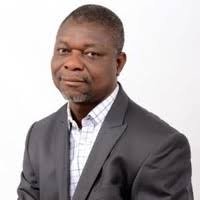
By Bukola Olasanmi
On the surface, the piece published in the online and PDF editions of the Africa Oil+Gas Report on 24 November 2025 under the title “The irregularities of the regulator will keep Nigeria’s upstream underachieving” wears the respectable garb of a professional intervention designed to stimulate debate and provoke corrective action.
A closer, honest reading instantly betrays the personal grievance of the publisher, Toyin Akinosho, who has cynically disguised his private shopping list as an “editorial.” The deliberate distortion of facts, the selective deployment of half-truths, and the insertion of outright falsehoods disgrace the very idea of an editorial—an exercise that is meant to be impartial, disinterested, and committed solely to the public good. For the remainder of this rebuttal, therefore, the article will be correctly described as Akinosho’s opinion piece, not as any official editorial of the Africa Oil+Gas Report.
To dignify it with the label “editorial” would be an insult to every serious publication that has ever taken a principled stand on issues of national importance. In that single article, Akinosho has managed to commit what amounts to journalistic fraud in print. Were he still resident in Nigeria rather than safely ensconced abroad where he now peddles his wares, a strong case could be made for charging him with criminal defamation and cyber-stalking.
By rushing into print, he has implicated himself beyond rescue. Had he kept his resentments private, some people might still have mistaken his silence for wisdom. Instead, he has chosen to advertise the hollowness of the “decades of experience” he so loudly trumpets—experience that now stands exposed as little more than recycled gossip, hot air, and copy-paste plagiarism from the NUPRC website and social-media handles.
One would not be surprised if, cornered by the collapse of his latest stunt, he resurrects his decade-old trick of claiming “assassination attempts” in order to cloak his fabrications in a martyr’s robe. His only plausible plea at this point is ignorance; everything else—malice, envy, and mercenary interest—is already on full display.
Akinosho’s tirade against the NUPRC (and by extension its leadership) conveniently omits the elementary truth that attracting investment into any sector is never the responsibility of a single regulator acting in isolation. Global capital flows are shaped by security, fiscal policy, judicial certainty, infrastructure, and a dozen other variables. A responsible analyst would at least have acknowledged the devastating impact of Nigeria’s lingering insecurity on investor confidence.
Instead, Akinosho remained silent on the subject, preferring to train his guns exclusively on the Commission while pretending the broader context does not exist. Yet even within this hostile operating environment, the NUPRC under Engr. Gbenga Komolafe has delivered results that no honest observer can dismiss as modest.
The aggressive roll-out of improved metering infrastructure has driven crude-oil theft and losses to a 16-year low by mid-2025. The 2024–2025 divestment programmes and licensing rounds have been widely praised for transparency and competitiveness. The Project One Million Barrels incremental initiative has already added approximately 250,000 barrels per day of sustainable production. These are verifiable, quantifiable achievements—facts that sit uncomfortably with Akinosho’s narrative of failure and therefore had to be ignored entirely.
The mask slips completely in the seventh paragraph, where he laments: “Hopes that NUPRC’s appointment earlier this year of a professional with business journalism experience and a track record of demanding transparency from powerful individuals and institutions as its head of communications would lead to predictable and timely release of data have been dashed.”
Translation: “They should have given the job to me. I have a geology degree, industry exposure, and I run a newsletter—never mind that my ‘journalism’ consists largely of lifting NUPRC press releases verbatim and selling them to foreign subscribers as proprietary analysis.
Fire the current spokesman and install me instead.” It is a naked, pathetic job application dressed up as public-interest commentary. One sincerely hopes that the Commission Chief Executive, Engr. Gbenga Komolafe, treats this tawdry piece of blackmail with the contempt it deserves. Intellectual laziness is the kindest explanation for such a shoddy, narrow-gauge outburst.
The days when Akinosho could simply harvest data from the NUPRC website, repackage it with minimal effort, and flog it abroad as “exclusive insight” are over. The Commission now releases timely, detailed, world-class data directly to the public—cutting out the parasitic middlemen who used to monetise information that was never theirs to sell. That is the real source of his rage: the tap has been turned off, and the easy money has dried up.
Let Toyin Akinosho understand this clearly: his attempt to denigrate an institution that has become a benchmark of competence and transparency in Nigeria’s public sector is doomed to fail—now and always.
What is truly galling is the shameless plagiarism that has sustained Akinosho’s “career” for years. Page after page of his paid reports, sometimes sold for thousands of dollars to unsuspecting international clients, are nothing more than lightly reworded copies of press releases, presentations, and social-media infographics. He adds a few adjectives, changes a headline, and pockets the money while contributing zero original research, zero fieldwork, and zero value.
Now that the Commission publishes everything in real time—with infographics, spreadsheets, and interactive dashboards—he has been reduced to a digital scavenger screaming because the free buffet has been replaced by an open, transparent cafeteria that no longer needs his waiter services.
The irony is delicious: a man who postures as the conscience of Nigerian upstream is in reality its most conspicuous freeloader. While genuine journalists and analysts burn shoe leather attending technical meetings, interviewing engineers, and crunching data, Akinosho sits abroad, copies, pastes, and cashes cheques. His entire brand—built on the borrowed credibility of other people’s work—is collapsing in real time, and the panic is palpable.
This November 2025 tantrum is not the cry of a wounded patriot; it is the death rattle of a hustler whose business model has been rendered obsolete by competence and openness. Finally, spare us the pretence of elder-statesman gravitas.
A man who has spent years dining out on the NUPRC’s intellectual property now has the effrontery to lecture the same institution on “irregularities” because it refused to hand him a salaried position he never applied for through proper channels. The sheer sense of entitlement would be comical if it were not so pathetic.
Toyin Akinosho is not a victim of regulatory failure; he is a casualty of his own laziness, greed, and the irreversible triumph of institutional excellence over parasitic pamphleteering. History will record him not as a chronicler of Nigeria’s oil industry, but as a cautionary tale of what happens when a mediocre middleman mistakes access for talent and plagiarism for journalism. The NUPRC has moved on. He never began.
*Olasanmi is a legislative writer with a focus in oil and gas


Nine Burnt Beyond Recognition In Bauchi Road Crash

Woman Rescued After Allegedly Jumping Into Lagos Lagoon From Carter Bridge

How Gunmen ambushed patrol team, killed two operatives in Plateau

Now Hiring: Academic and Technical Staff at a Leading Private University in Gombe State

LAUTECH 18th Convocation: EEE Class ’05 Alumni Celebrate as Electronic and Electrical Engineering Department Produced the School’s Overall Best Graduating Student


