Connect with us

Opinion

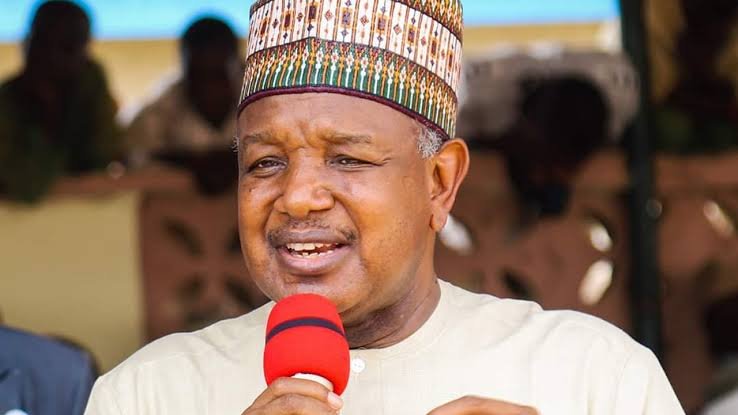
Appraising Tinubu’s Renewed Hope Through Bagudu’s Lens

Published

on

By Afolabi Adetutu

In the administration of President Bola Ahmed Tinubu, the Renewed Hope Agenda is fast evolving from a mere campaign slogan to a policy thrust that’s redefining the very architecture of governance, and largely reflected in Nigeria’s budgetary planning and execution. At the heart of this transformation is Senator Abubakar Atiku Bagudu—the Honourable Minister of Budget and National Planning; a silent catalyst who embodies and institutionalises the economic philosophy of the president’s agenda, silent works and accurate execution of budget planning with a profound sense of purpose.

Senator Bagudu not only understood the philosophical and fiscal underpinnings of the Tinubu administration, but he has translated it and made it evident in Nigeria’s progressive economy. The Renewed Hope Agenda is not just a poetic permutation of optimism; it is a bold, structured promise of recalibrating Nigeria’s economy, restoring institutional dignity, reengineering the public sector, and revitalising citizen confidence in the federal government.

Bagudu, with his extraordinary blend of fiscal discipline, economic realism, and a technocratic touch, is serving as the architect and conductor of the nation’s budgetary symphony. The inheritance of President Tinubu’s administration in May 2023 was a faltering economy that was encumbered by rising inflation, debt overhang, low public trust, and a chaotic fiscal culture, reflecting the grim realities of the time. Yet, in less than two years, there has been a perceptible change in trajectory and a strong affirmation of rejuvenating hope.

Appointing a former governor, senator, and erudite economist, in the person of Senator Atiku Bagudu, was not just for political balancing; it was a calculated move and a strategic economic reconfiguration by President Tinubu, who is a master strategist himself. Under Bagudu’s leadership, the Ministry of Budget and National Planning has become a bedrock of renewed economic consciousness. His mantra was drawn from President Tinubu’s ideology, making sure that he moves budgeting from a yearly ritual of numbers to a roadmap for national rebirth.

Budgeting, in the hands of Senator Bagudu, is no longer just an inert tabulation of numbers but a moral and developmental instrument used in driving the course of a nation. The 2024 national budget, which was themed “Budget of Renewed Hope” reflected a transformative ambition that called for development. Witnessing a staggering N28.7 trillion in expenditure and a strategic allocation to sectors such as health, defence, education, and infrastructure, it is evident that national priorities are being deliberately aligned with human development indices.

Senator Bagudu ensures that the budgetary process is both inclusive and transparent. For the first time in a long while, budget town halls were held across geo-political zones, just to ensure that the budget reflects the aspirations of a diverse federation. Bagudu worked tenaciously with the National Assembly Committees and the Budget Office of the Federation in ensuring that the medium-term expenditure framework (MTEF) became realistic and development-focused.

Moreover, it is also on record that under his watch, capital expenditure now takes centre stage, with the budget earmarked for capital projects at over 37%. This is a commendable deviation from past regimes where recurrent spending choked national ambitions, thereby placing infrastructure as a pedestal on which economic expansion is anchored.

One profound critical element of Bagudu’s impact that’s less celebrated is how well he has recalibrated fiscal discipline. It is no surprise that the Nigerian budget system we used to know has suffered from underperformance, leakages, and a notorious culture of “budget paddings” and abandoned projects for decades. His reformative actions within the ministry have led to the adoption of digital budget tracking systems, which have expanded the capabilities of the Government Integrated Financial Management Information System (GIFMIS) and harmonised budget reporting templates across ministries, departments, and agencies (MDAs).

However, Bagudu’s insistence on budget credibility has geared up the push for a more stringent implementation of the Public Finance Management Act. In his quiet but firm demeanour, he ensured that MDAs strongly stick to expenditure and project implementation timelines. His persistence in wielding the tool of compliance has made the budget be seen as a legally binding covenant with people, rather than being perceived as an elastic instrument to be stretched and manipulated at will.

It is to Bagudu’s credit that the government is not merely investing in brick-and-mortar schools and hospitals but is deliberately enhancing quality and access. With over N1.3 trillion allocated to education and more than N1.2 trillion to healthcare in the 2024 budget, the narrative of social investments has shifted to strategic development. His work with the Ministries of Education and Health to institutionalise performance-based budgeting has ensured that every spending directly impacts measurable outcomes, such as maternal mortality, availability of materials for easy learning, school enrollment rates, and life expectancy.

Similarly, it has been discovered that the emphasis on job creation and youth empowerment under the Renewed Hope Job Creation initiative is intricately linked to Bagudu’s planning and execution. The National Social Investment Programme (NSIP) reforms, the conditional cash transfer schemes, and the disbursements of microcredit to small-scale entrepreneurs are all being embedded into the budgetary process under his supervision. For a man who isn’t attracted to fanfare or court publicity, Bagudu’s touch has been greatly impactful in these initiatives.

President Tinubu’s administration has never pretended about its desire to wean Nigeria off the addiction to oil revenues. And in this regard, the role of the Ministry of Budget and National Planning becomes even more pivotal. Senator Bagudu’s budgetary strategy emphasises diversification, which is not merely an economic necessity, but as a patriotic obligation. This redirection of budgetary attention to sectors with latent comparative advantage is evident that Bagudu share an aligned view with Mr President’s agenda.

Perhaps what makes Senator Bagudu’s contributions even more compelling is how well he has been able to balance political wisdom with technocratic vigour. In his words, “I don’t view budgeting as an academic exercise but as a living, breathing instrument of socio-economic transformation.” Of a truth, this philosophy of his has prudently shaped Nigeria’s national outlook.

In Cabinet meetings and inter-ministerial dialogues, he champions a strong but quiet voice of reasoning, one which advocates for prudent borrowing, counselling against populism, and resists expenditure wastage. Unlike many who wield power with a flourish and to oppress, Senator Bagudu wears his influence like a devoted monk wears his robe: firm, calm, and purposeful.

The Renewed Hope Agenda is not merely rhetoric under his leadership in the budgetary ministry; it is producing results in social welfare, infrastructure renewal, economic stabilisation, and fiscal rebalancing. Budget credibility is gaining traction. Investor confidence is inching upward. And most importantly, the people are beginning to see and feel the dividends of planning.

In Senator Atiku Bagudu, we see a man who not only believes in Nigeria but is helping to build the scaffolding for its future prosperity. His personality reminds us that not all catalysts are noisy, not all reformers are water banners, and not all patriots are flamboyant. They work modestly, methodically, and masterfully.

Adetutu writes from Abuja

Continue Reading
Click to comment

Leave a Reply

Your email address will not be published. Required fields are marked *

Opinion

Trailblazing Leadership: Professor Audi’s 5-Year Journey of Excellence As NSCDC Boss

Published

on

By Gambo Jagindi

Nigeria’s security landscape has been indelibly marked by the tenure of Professor Ahmed Abubakar Audi as Commander General of the Nigerian Security and Civil Defense Corps (NSCDC). As he completes his five-year term, stakeholders are lauding his unwavering commitment to excellence and visionary leadership that has transformed the corps into a world-class security agency.

Born on September 30, 1967, in Laminga, Nasarawa State, Professor Audi’s rise to the top is a testament to his unrelenting pursuit of excellence. With a PhD in Public Administration, a Master’s in Law Enforcement and Criminal Justice, and a Bachelor’s degree in Physical and Health Education, he joined the NSCDC in 1996 as a volunteer and steadily climbed the ranks, earning several professional merit awards, including the Distinguished Merit Award for Excellence in Administration and Security Operations. He is a member of the National Institute (mni) and a Fellow of the Institute of Security and Forensic Studies, Nigeria.

Under Professor Ahmed Abubakar Audi’s stewardship, the NSCDC has achieved remarkable milestones, including notable apprehensions and improved security measures, while significantly boosting staff morale and inspiring a new generation of security personnel, cementing his reputation as a visionary leader in the security sector, and leaving an indelible mark on Nigeria’s security landscape .

Audi’s five-year tenure has been marked by a steady commitment to fairness and inclusivity. By ensuring federal character in appointments and promotions, he has addressed longstanding disparities and boosted staff morale. The payment of backlog promotions and arrears has put smiles on the faces of deserving officers, reflecting positively on the corps’ leadership. This emphasis on equity has created a more motivated workforce, positioning the NSCDC for continued success under Professor Audi’s leadership, which stakeholders are urging to be extended

Marking the completion of his five-year tenure, the NSCDC boss recently commissioned five strategic projects to boost the corps’ operational capacity, showcasing his visionary leadership. The projects include a Standard Mini Fire Fighting Station, a VIP Protection Unit Office Complex, the Hydrocarbon and Maritime Security Command and Control Centre, and a 24-Unit Staff Quarters. As Professor Audi concludes his first term, stakeholders are calling on President Bola Ahmed Tinubu to extend his service, citing his dedication, patriotism, and excellence. With his continued service, Nigeria’s security architecture stands to gain significantly, and his leadership would remain a driving force for progress and stability. The nation would benefit from his expertise and experience, making a strong case for his tenure extension

Also as Nigeria hurtles towards the 2027 election, the need for seasoned security leadership has never been more pressing. Professor Ahmed Abubakar Audi, the outgoing Commander General of the Nigerian Security and Civil Defense Corps (NSCDC), is uniquely positioned to provide the steady hand required to ensure a peaceful and secure electoral process. With his proven track record of collaboration with sister security agencies, Professor Audi is well-equipped to lead the charge in protecting critical national assets and providing the desired security cover for the election.

Some Nigerians are advocating for the extension of Professor Ahmed Abubakar Audi’s tenure as NSCDC head, citing his proven expertise and strong relationships with other security agencies. Retaining him for at least two more years, they argue, would ensure a secure environment for the 2027 election, with critical infrastructure protected, election-related violence prevented, and law and order maintained. This, they believe, would bolster Nigerians’ confidence in the electoral process, making a strong case for President Bola Ahmed Tinubu to consider retaining Professor Audi’s services, given his wealth of experience and demonstrated patriotism.

Jagindi is a digital media publisher who writes from Abuja via jagindi2016@gmail.com

Continue Reading

Opinion

Benjamin Kalu: Demonstrating Emotional Intelligence In Turbulent Times

Published

on

By Philip Agbese

Nigeria’s democracy has gotten to a point where the resilience of our noble institutions is constantly tested by the intensity of agreement and disagreement in parliamentary Chambers. It is precisely in such moments we see ideas collide, voices of opposition rise, and passions sometimes threaten to overwhelm procedure that shows leadership should be seen beyond just title.

The recent deliberations surrounding the amended Electoral Act 2026 has further revealed Rt. Hon. Benjamin Kalu, who is the Deputy Speaker, to be an outstanding leader in the Nigerian House of Representatives. His conduct has undoubtedly express emotional intelligence, institutional fidelity, and democratic maturity. Kalu’s capacity to read the room without being ruled by it, and to act decisively without becoming dismissive, has in truth become a far more demanding attribute that is worthy of emulation. It was this quality that defined Benjamin Kalu’s leadership during one of the most contentious legislative exercises in the House.

However, the atmosphere recently felt inside the chamber during the clause-by-clause consideration of the Electoral Act amendment was electric in the sense that tempers frayed, tensions flared, and opposition lawmakers staged protests over the removal of the “real-time” transmission clause. It is well understood that the phrase itself; “real-time transmission,” had over time, assumed a symbolic weight which goes beyond its technical meaning. Within the House and in the imagination of the public, it has become a shorthand for electoral credibility, transparency, and the collective yearning by Nigerians for a system they could trust. At this point, it was, in essence, what Nigerians wanted.

Yet, while many lawmakers were understandably engrossed on the symbolic power of real-time transmission, an essential question which was barely asked by anyone amidst the echoes of protest is: what will happen when the imperfect realities of technology, and human systems occur during electoral exercise?

The debatable controversy surrounding real-time transmission reveals a deep philosophical divide that exist in governance. On one side, we have those who viewed the provision as non-negotiable electoral reform, while on the other side were lawmakers who support the electronic transmission in principle and also advocate for a safeguard-manual collation in the event of technological failure. The later was not a rejection of progress but an acknowledgment of contingency.

It is a general knowledge that in a country like Nigeria, server fluctuations, network instability, technological imperfections are not just hypothetical but lived experience. Therefore, the insistence on a single, inflexible method of conduct is a big democratic risk. It was this inconvenience that Hon. Kalu perceived the necessity of the right intervention, even as the opposition chants reverberated through the chamber.

Presiding over proceedings like this is a task that requires more than just the mastery of House rules, one that demands the sensitivity of managing human behaviour under stress. This was the confrontation before the deputy speaker: how would he uphold the rules of the House, protect minority voices, and ensure that dissent was heard, while also preventing the legislature from being held hostage by procedural brinkmanship.

As protests erupted over the removal of the real-time transmission clause, Hon. Kalu didn’t allow frustration to harden into rigidity, he chose a more demanding route. He gave room to the opposition lawmakers to vent their grievances. At the same time, he showed an affirmation of institutional integrity as he remained anchored to the rules governing legislative debate, insisting that the House must proceed, clause by clause, regardless of the volume of objections. His refusal to personalise the conflict along political line was an applaudable move that distinguished the deputy speaker’s conduct as a hallmark of emotional intelligence.

Hon. Kalu’s intervention showed a precise confrontation about idealism and realism. While opposition voices kept hitting on the removal of an absolute real-time clause as betrayal of public trust, the Deputy Speaker stood firm on the realty that rigidity can itself undermine credibility, because he believes that an electoral process that collapses because of issues with server or disruption in network does not serve democracy; but imperils it. His decision to steer the House retaining electronic transmission while permitting manual collation in the event of technological failure, has created a trustworthy legal framework.

It is important to understand that this outcome wasn’t from a place of partisan manoeuvring or one that pits the government against opposition. It is one that cut across party lines, standing as broad agreement on the desirability of electronic transmission. At this point, the law was only left to acknowledge the possibility of technological imperfections. In this sense, the Deputy Speaker’s role was not to advance a party agenda but to reconcile competing anxieties within the same democratic family.

Surprisingly, throughout the proceedings, the Deputy Speaker remained conspicuously focused even amidst the turbulence created by opposition’s protests. His demeanour at that moment conveyed a quiet message that the House would not be distracted from its duty. Hon. Kalu listened, he ruled, and he moved the process forward. He also ensured that that the amended Electoral Act 2026 was eventual passed.

At the end of the session, the law emerged not as the imposition of a dominant faction but as the product of legislative process that has undergone exhaustive and contentious sessions. Through the result of achieving a balanced outcome, the Deputy Speaker demonstrated that emotional intelligence is not opposed to rationality; it enhances it. This dual recognition has proven that the institution itself speaks louder than any individual voice, and this is the essence of responsible lawmaking by intelligent lawmakers.

It is also worthy of note that the true beneficiary of the Deputy Speaker’s display of high intellect is not a party or faction, but the Nigerian democratic project itself. His effort to prevent the House from descending into procedural chaos, has protected the credibility of the legislature, most especially at a time when public trust has become so fragile and precious at the same time.

Moreover, only few leaders who, like Hon. Kalu, can acknowledge the need of agreements in building institutions towards solutions that would create enduring services. He understood that the authority of the chair derives not from force but from fairness. Kalu has always interpret and enforce rules within the house without appearing partisan; and he has been guiding debates without dictating outcomes.

Kalu’s conduct during the passage of the amended Electoral Act embodies the essence of leadership, one that defines it to be much of temperament as it is about intellect. This exemplary action calls for more presence of intellectual leaders like Kalu in Nigeria’s democratic journey, because history would be a good judge of the amended Electoral Act 2026 on its practical outcomes in future elections. However, regardless of how those outcomes would unfold, the process by which the law was passed will always stand as a guide for future leaders.

This is a feat that should indeed be celebrated by all Nigerians rather than being condemned. Without doubt, the Deputy Speaker has demonstrated that emotional intelligence is not an abstract concept but a lived practice that strengthens democracy itself when exercised with integrity.

Agbese, Deputy Spokesperson of the House of Representatives, writes from Apa-Agila.

Continue Reading

Opinion

No More Pipeline Vandalism in The Niger Delta, But…

Published

on

APPRAISING MILITARY RESOLVE AND THE PATH TO SUSTAINABLE OIL SECURITY

By Aaron Mike Odeh

On a recent media assessment visit by the Director, Defence Media Operations, Major General Michael E Onoja on the 20 January 2026, the General Officer Commanding (GOC), 6 Division of the Nigerian Army and Commander Land Component Operation DELTA SAFE, Major General Emmanuel Emeka, stated that there will be “no more pipeline vandalism in the Niger Delta” indicating a strong affirmation of military resolve and institutional confidence in the ongoing operations within Nigeria’s most economically strategic region.
Far from being a casual statement, the pronouncement reflects the operational posture, command clarity, and renewed determination of the Nigerian Armed Forces (AFN) under the leadership of General Olufemi Oluyede. It signals a clear message: the era of unchecked sabotage of national economic assets is being decisively confronted.

CONTEXTUALISING THE GOC’S DECLARATION
Statements of this magnitude from a serving GOC carry both symbolic and operational weight. They are rooted in firsthand command experience, intelligence assessments, and measurable gains on the ground. In this regard, Major General Emmanuel Emeka’s assertion should be understood as a projection of confidence derived from sustained military engagement, improved coordination with sister security agencies, and enhanced operational discipline within the 6 Division’s area of responsibility.
The Niger Delta has long posed complex security challenges due to its difficult terrain, extensive pipeline networks, and the activities of organised criminal syndicates. Against this backdrop, the GOC’s declaration underscores a belief that the Nigerian Armed Forces has reached a level of operational advantage sufficient to deter, disrupt, and dismantle pipeline vandalism networks.
OPERATIONAL GAINS AND MILITARY PROFESSIONALISM
Under Major General Emmanuel Emeka’s command, the 6 Division has intensified patrols, improved intelligence-led operations, and sustained pressure on illegal refining camps and crude oil theft routes. These efforts align with the Federal Government’s strategic objective of securing oil infrastructure as a matter of national economic security.
The GOC’s statement therefore reflects not mere optimism, but a professional assessment of the division’s growing capacity to dominate the operational environment. It also reinforces the Nigerian Armed Forces constitutional role as a stabilising force, committed to safeguarding national assets in support of economic recovery and investor confidence.

THE “BUT”: BEYOND KINETIC SUCCESS
While commending the resolve and achievements of the 6 Division, it is equally important to situate the declaration within a broader national framework. The “but” in the statement should not be interpreted as doubt or contradiction; rather, it represents an acknowledgment of the multifaceted nature of pipeline security in the Niger Delta.
Pipeline vandalism has historically been sustained not only by criminal intent, but also by socioeconomic pressures, environmental degradation, and the absence of alternative livelihoods in some host communities. Military success, while indispensable, achieves greater durability when complemented by effective civil governance, economic inclusion, and community trust-building.

COMMUNITY ENGAGEMENT AS A FORCE MULTIPLIER
One of the strengths of recent military operations in the Niger Delta has been improved civil-military relations. The success of the Armed Forces is closely tied to cooperation from local communities, traditional institutions, and credible stakeholders.
Sustainable pipeline security is most effective when host communities become partners in protection rather than passive observers. The GOC’s declaration implicitly places responsibility on all stakeholders—government agencies, oil companies, community leaders, and youths—to consolidate the gains made by the Armed Forces.

INSTITUTIONAL SYNERGY AND NATIONAL RESPONSIBILITY
The efforts of the 6 Division do not exist in isolation. They form part of a wider national security ecosystem involving regulatory agencies, intelligence services, law enforcement bodies, and policy institutions. The GOC’s confidence should therefore inspire complementary actions across these sectors.
Oil companies must uphold environmental standards and transparent community engagement. Regulatory bodies must enforce accountability. Development agencies must deliver visible dividends of peace. These non-military actions reinforce the security umbrella provided by the Nigerian Armed Forces.

LEADERSHIP AND STRATEGIC MESSAGING
Major General Emmanuel Emeka’s statement also serves as strategic communication—boosting troop morale, reassuring investors, and reinforcing public confidence in the Armed Forces of Nigeria. Such leadership messaging is essential in shaping national narratives around security, discipline, and state authority.
By articulating a firm stance against pipeline vandalism, the GOC is not only commanding troops, but shaping expectations and setting benchmarks for operational success.

CONCLUSION
The declaration that there will be “no more pipeline vandalism in the Niger Delta” should be seen as a reflection of strengthened military capacity, improved leadership focus, and renewed institutional confidence under Major General Emmanuel Emeka, GOC 6 Division of the Armed Forces.
The Nigerian Armed Forces has demonstrated readiness to secure critical national assets. The task ahead is to consolidate these gains through sustained operations, inter-agency synergy, and socio-economic interventions that address underlying vulnerabilities.
In this context, the GOC’s statement stands as both an assurance and a call to collective national responsibility—one that deserves commendation, support, and strategic follow-through.

Aaron Mike Odeh, a Public Affairs Analyst Media Consultant and Community Development Advocator wrote from Post Army Housing Estate Kurudu Abuja

Continue Reading

Trending

Copyright © 2023 - 2025 DailyMirror Nigeria. Design by AspireWeb.ng, powered by WordPress.