
Cover
Call for sugar tax detrimental to manufacturing sector- CPPE


The Centre for the Promotion of Private Enterprise (CPPE) has expressed concern over renewed calls in some quarters for the imposition of additional taxes on sugar-sweetened non-alcoholic beverages in Nigeria.
CPPE Founder, Dr Muda Yusuf, made this known on Wednesday in Lagos via a statement.
Accorsing to Yusuf, while public health challenges such as diabetes and cardiovascular diseases warrant urgent attention, the proposition of a sugar-specific tax is misplaced and economically risky.
He said that the call was not adequately contextualised within Nigeria’s prevailing structural, social, and macroeconomic realities.
“Advocacy for sugar taxation in Nigeria is largely driven by externally derived policy templates, particularly those associated with global health institutions.
“However, global best practice does not support sugar taxation as a sustainable or standalone solution to non-communicable diseases, especially in economies characterised by high inflation, weak purchasing power, fragile industrial recovery, and widespread poverty, such as Nigeria,” he said.
Yusuf noted that the country’s food and beverage industry remained the largest and most dynamic segment of the manufacturing sector, with the non-alcoholic beverages sub-sector playing a particularly significant role.
He said data from the National Bureau of Statistics indicated that the food and beverage industry contributed approximately 40 per cent of total manufacturing output, making it a critical driver of industrial growth, employment and value creation.
He added that beyond factory-level operations, the sector sustained an extensive value chain that spans farmers, agro-input suppliers, processors, packaging companies, logistics providers, wholesalers, retailers, and the hospitality industry.
“Collectively, these activities support millions of livelihoods nationwide.
“Any policy that undermines this sector therefore carries wide-ranging economic consequences, including job losses, declining household incomes, reduced investment and setbacks to poverty-reduction efforts,” he said.
The CPPE boss added that manufacturers of non-alcoholic beverages were among the most heavily taxed and cost-pressured businesses in the Nigerian economy.
He listed existing fiscal obligations to include 30 per cent Company Income Tax, 7.5 per cent Value-Added Tax (VAT), N10 per litre excise duty, four per cent National Development Levy on assessable profits.
Others, he said, were four per cent Free on Board levy on imported inputs, import duties of five per cent to 15 per cent on intermediate raw materials, 0.5 per cent ECOWAS levy, property taxes at sub-national levels and multiple state and local government levies.
“These fiscal pressures are further compounded by Nigeria’s challenging operating environment, including high energy costs, prohibitive logistics expenses, exchange-rate volatility, and elevated interest rates.
“The cumulative effect has been rising production costs, shrinking margins, subdued investment appetite, and higher consumer prices,” he said.
Yusuf said available evidence suggested that sugar taxes delivered limited public health benefits unless embedded within broader, long-term lifestyle, behavioural, and structural interventions.
He added that in Nigeria, the rising incidence of diabetes and related non-communicable diseases was driven primarily by poor overall diet quality, particularly carbohydrate-heavy meals, physical inactivity and sedentary lifestyles.
Other causes, he observed, included urban design that discouraged walking and cycling, genetic and hereditary factors.
Yusuf said that while taxation may marginally influence consumption patterns, it does not address these root causes.
“Conversely, the economic costs of additional taxation, higher consumer prices, reduced demand, job losses, and weakened industrial investment are immediate, tangible, and potentially severe,” he said.
Yusuf said a more sustainable path to public health outcomes would be for policymakers to prioritise evidence-based, inclusive and development-friendly alternatives.
They include lifestyle and nutrition education, community-based health awareness programmes, promotion of physical activity and exercise, encouragement of fruit and vegetable consumption.
Others, he said, were healthy food subsidies rather than punitive taxation and urban planning that supports walking, cycling and active transportation.
“These measures directly address the underlying drivers of diabetes and cardiovascular diseases, deliver broader social benefits, and avoid undermining a critical pillar of Nigeria’s manufacturing and employment base.
“Nigeria’s economy remains in a delicate recovery phase.
“Introducing additional sugar-specific taxes at this time risks reversing recent industrial gains, weakening employment outcomes, and undermining the objectives of ongoing manufacturing-friendly fiscal reforms,” he said.
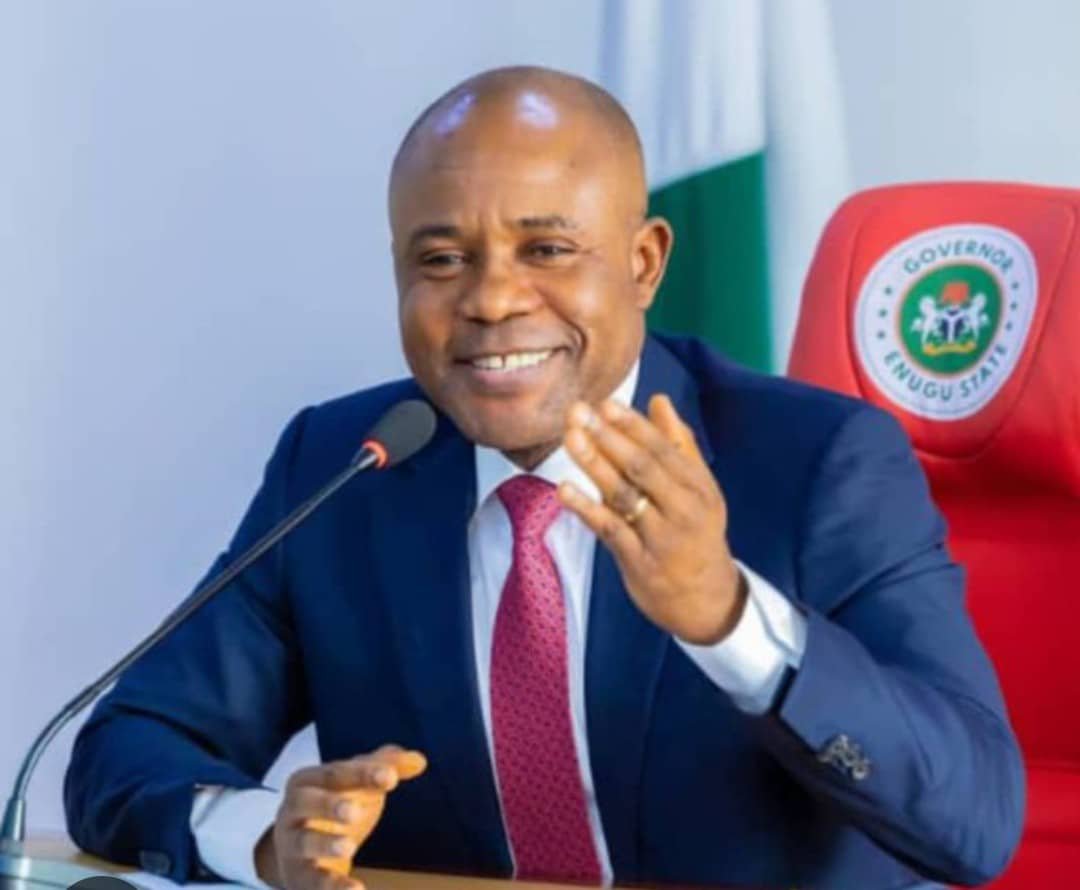
Happy Birthday To An Achiever, History Shall Be kind To You For Your Noble Strides In Leadership.
In the theatre of leadership, where promises often fade into the background of political routine, a few performers step onto the stage with clarity, purpose, and measurable impact. One such figure is Peter Mbah, the Governor of Enugu State, whose journey continues to attract attention for its pace, precision, and ambition.
As he marks his 54th birthday today the 17th of March, it is fitting to string together not just words, but garlands—symbols of appreciation for a man whose governance style has leaned heavily toward results.
Governor Mbah’s leadership narrative is one defined by urgency.
From the outset, he signaled that governance would not be business as usual. His administration set bold targets, particularly in areas such as education, infrastructure, and economic expansion. Rather than dwell in rhetoric, his approach has emphasized timelines, deliverables, and accountability—traits more commonly associated with corporate leadership than traditional politics.
One of the most striking elements of his governance is his focus on education reform. By prioritizing smart schools and digital learning infrastructure, Mbah has demonstrated an understanding that the future of any society lies in how well it prepares its young minds. His policies reflect a belief that education must not only be accessible but also relevant in a rapidly evolving global landscape, little his signature refrain TOMORROW IS HERE resonates not only with Ndi’Enugu and the people of the South East but across the nation.
Infrastructure development under his watch has also taken center stage. Roads, transport systems, and urban renewal projects have been approached not just as physical upgrades, but as economic enablers. The philosophy is simple: when movement becomes easier, commerce thrives, and when commerce thrives, people prosper.
Beyond policy and projects, there is also the intangible quality of leadership presence. Governor Mbah has cultivated an image of a leader constantly in motion—inspecting, engaging, pushing. This has helped shape public perception of a government that is active and responsive, rather than distant and ceremonial.
At 54, the Governor stands at a point where experience meets momentum. There is enough behind him to assess his direction, and enough ahead to determine his legacy. The expectations are high, but so too is the energy he appears to bring to the role.
Birthdays often invite reflection, but they also offer an opportunity to look forward. For the people of Enugu State, this moment is not just about celebrating the man, but also about evaluating the journey so far and anticipating what lies ahead.
Fifty-four garlands, then, are not merely decorative—they represent milestones, challenges overcome, and ambitions still in pursuit. For a performer in the arena of governance, the applause is never final. It is earned, continuously, in the quiet execution of vision.
Happy Birthday, Governor Peter Mbah, indeed under your responsible and responsive watch over Enugu State TOMORROW IS HERE.
Okechukwu Nwafor
Concerned Professionals For Good Governance. (A Good Leadership Advocacy Group).
Cover
Nigeria is a Country with Rule of Law Under Renewed Hope Agenda – Military Veterans Caution Nigerian Army Over Land Grabbing

Military and paramilitary veterans who participated in various operations, including ECOMOG, Operation Zaman Lafiya and Operation Pulo Shield, have raised concerns over what they describe as an alleged encroachment on land allocated to them in the Federal Capital Territory (FCT).
The veterans, who are beneficiaries of a welfare housing initiative coordinated through a Special Purpose Vehicle known as the Special Vehicle Plant (SVP) Trust Scheme, claim that construction activities have recently commenced on the land, which they say forms part of their approved housing project.
Speaking through their representatives, a retired Army officer Ayo Olufemi who chose not to mention his rank, the group urged relevant authorities to ensure that all issues relating to the land dispute are handled strictly in accordance with the law. They maintained that Nigeria remains a country governed by the rule of law under the Renewed Hope Agenda of President Bola Ahmed Tinubu.
According to the veterans, the land in dispute is identified as Plot 2303 in Asokoro Cadastral Zone A04, an area that shares boundaries with other military lands belonging to the Nigerian Army, Navy and Air Force.
The group explained that the plot was allocated for the development of a veterans’ welfare housing scheme under the SVP Trust arrangement. Under the framework, the SVP was responsible for site planning, subdivision of the land, allocation to individual beneficiaries, and coordination of Right of Occupancy documentation through the Federal Capital Territory Administration (FCTA).
They stated that beneficiaries opened individual land application files with the Federal Capital Development Authority (FCDA) and received official acknowledgements before land offer letters were issued in 2015.
The veterans further claimed that the project complied with regulatory requirements, including approvals from relevant departments within the FCDA, and that about ₦400 million was reportedly paid as part of statutory ground rent obligations requested by the FCTA.
However, the group alleged that officials linked to the Nigerian Army recently began construction activities on the plot, which they believe falls within the land allocated for the veterans’ housing scheme.
In a petition addressed to the Minister of the Federal Capital Territory, Nyesom Wike, the veterans called for government intervention to prevent what they described as an attempted takeover of the land pending clarification of ownership and boundary issues.
According to the petitioners, the Nigerian Army was previously allocated a neighbouring parcel identified as Plot 2302, measuring approximately 248 hectares, from a larger expanse of land originally designated for military formations and barracks development in the Asokoro area.
They stated that the area behind Mogadishu Cantonment had been earmarked primarily for barracks and accommodation for military personnel.
The veterans also said the allocation of Plot 2303 to their welfare scheme followed representations made to the then Head of State, General Sani Abacha, in recognition of the role played by Nigerian troops during the ECOMOG operations in Sierra Leone.
Beneficiaries of the scheme, they added, had fulfilled statutory obligations, including the payment of required ground rents and other administrative charges.
The group further alleged that attempts were made by individuals linked to Nigerian Army Properties Limited (NAPL) and other parties to merge Plot 2303 with the adjoining Plot 2302 belonging to the Army.
They also claimed that a Memorandum of Understanding was subsequently signed with developers for the construction of residential units described as “modern affordable homes,” with projected selling prices reportedly ranging between ₦81 million and ₦125 million.
According to the petitioners, construction work on the disputed area reportedly began on December 24, 2025.
The veterans stated that some infrastructure earlier developed on the land — including access roads and other facilities constructed in line with FCDA approvals — may have been affected by the ongoing activities.
They also raised broader concerns about the management of military land allocations in the Asokoro area.
According to the petition, Plot 2302 was originally designated for additional barracks development, including a proposed Phase 2 expansion of the facility now known as Tinubu Barracks Phase 1.
However, the veterans alleged that portions of the land were subsequently transferred or sold to institutions, developers and private individuals over time, contrary to the original land-use designation.
They further claimed that only a fraction of the approximately 248 hectares allocated to the Army has reportedly been developed for barracks infrastructure.
The petitioners also alleged that Nigerian Army Properties Limited has continued to transact on parts of the Army’s land allocation through arrangements involving developers and intermediaries.
The veterans argued that these developments may have contributed to boundary disputes involving neighbouring plots, including the land allocated for their housing project.
They therefore called on the FCT Minister to order an immediate review of activities on the disputed land and ensure that all actions comply with existing approvals and legal processes.
In addition, the group requested the establishment of an independent inquiry to examine allegations relating to the allocation and disposal of military land in the Asokoro area.
They also urged the Economic and Financial Crimes Commission (EFCC) to investigate claims concerning the alleged diversion or sale of portions of the Army’s land.
Efforts to obtain official responses from the Nigerian Army, Nigerian Army Properties Limited, and the Federal Capital Territory Administration were unsuccessful as of the time of filing this report.
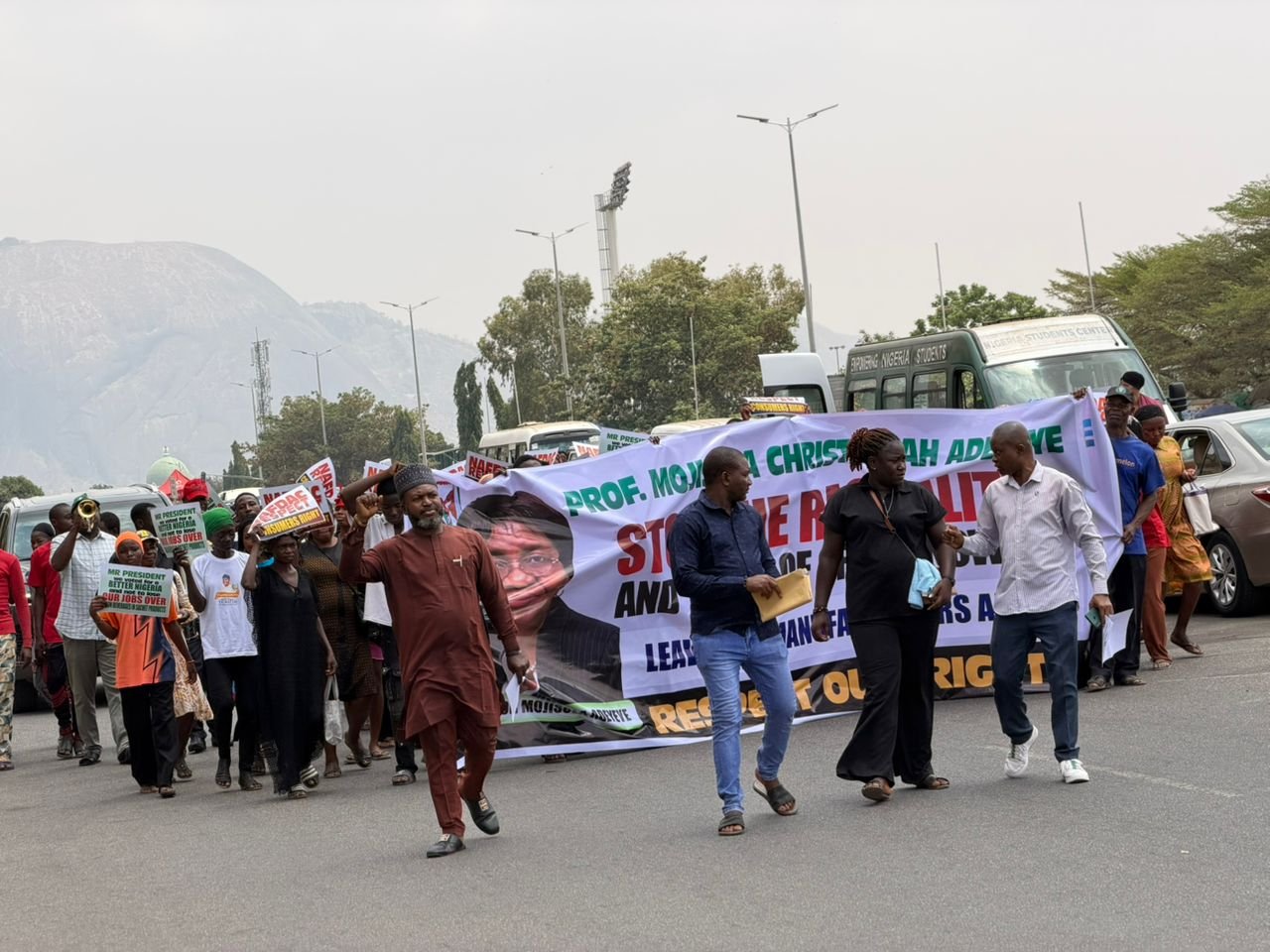
The Independent Public Service Accountability Watch (IPSAW) on Thursday staged a protest at the Federal Ministry of Health in Abuja, calling on President Bola Ahmed Tinubu to immediately dismiss the Director-General of the National Agency for Food and Drug Administration and Control (NAFDAC), Prof. Mojisola Christianah Adeyeye, over what it described as gross incompetence and abuse of public office.
The protest was led by the Executive Director of IPSAW, Ambassador Stephen Eriba, who accused the NAFDAC boss of unlawfully enforcing a ban on alcoholic beverages packaged in sachets and 200ml PET bottles.
Addressing journalists during the protest, Eriba said the agency’s action violated the provisions of the National Alcohol Policy already approved by the Federal Ministry of Health and currently in force.
He also alleged that the enforcement contradicted a presidential directive restraining NAFDAC from disrupting the operations of affected companies pending the outcome of a joint committee set up to review the matter.
According to him, the enforcement of the ban could trigger widespread economic and social consequences, including potential civil unrest and disruption of businesses involved in the production and distribution of the affected products.
He further argued that the decision ignored a resolution of the House of Representatives issued after a public hearing with key stakeholders on March 14, 2024, which urged NAFDAC to halt the ban and described the move as anti-people.
IPSAW maintained that the introduction of alcoholic beverages in sachets and small PET bottles was designed to cater to low-income adult consumers who prefer smaller and more affordable quantities, stressing that banning the products would deny such consumers the freedom of choice.
The group also disputed claims that sachet alcohol encourages abuse, insisting that smaller packaging may instead discourage excessive consumption typically associated with larger containers.
Eriba noted that local manufacturers produce sachet alcohol under hygienic conditions and with regulatory approval, including certification from NAFDAC itself.
He added that industry operators have invested heavily in public awareness campaigns promoting responsible alcohol consumption and discouraging underage drinking.
While expressing support for regulatory efforts aimed at removing unsafe products from the market, IPSAW said such decisions should be based on empirical evidence rather than what it called emotional or unverified claims.
The group warned that enforcing the ban could lead to job losses across the alcohol production value chain, encourage the proliferation of illicit and unregulated products, and result in revenue losses for the government.
IPSAW therefore urged President Tinubu to take decisive action by removing the NAFDAC Director-General from office, arguing that her continued stay in office was no longer in the public interest.


54 Garlands To A Performer: Happy Birthday To Governor Peter Mbah

Nigeria is a Country with Rule of Law Under Renewed Hope Agenda – Military Veterans Caution Nigerian Army Over Land Grabbing

New Petrol Import Permits May Reverse Nigeria’s Push for Domestic Refining and Increase Pressure on Foreign Reserve” — Energy Policy Group Tells President Tinubu
-

 Cover7 months ago
NRC to reposition train services nationwide.. Kayode Opeifa
-

 Fashion9 years ago
These ’90s fashion trends are making a comeback in 2017
-
Entertainment9 years ago
The final 6 ‘Game of Thrones’ episodes might feel like a full season
-
 Opinion1 year ago
Bureaucratic Soldier, Kana Ibrahim heads Ministry of Aviation and Aerospace After Transformative Tenure at Defence
-
 Opinion1 year ago
Hon. Daniel Amos Shatters Records, Surpasses Predecessor’s Achievements in Just Two Years
-

 Opinion4 months ago
Barrister Somayina Chigbue, Esq: A rising legal leader shaping institutioal excellence in Nigeria
-

 News8 months ago
Nigerian Nafisa defeats 69 Countries at UK Global Final English Competition
-
 Special Report1 year ago
Golden Jubilee: Celebrating Tein Jack-Rich’s Life of Purpose and Impact