
Cover
Call for sugar tax detrimental to manufacturing sector- CPPE


The Centre for the Promotion of Private Enterprise (CPPE) has expressed concern over renewed calls in some quarters for the imposition of additional taxes on sugar-sweetened non-alcoholic beverages in Nigeria.
CPPE Founder, Dr Muda Yusuf, made this known on Wednesday in Lagos via a statement.
Accorsing to Yusuf, while public health challenges such as diabetes and cardiovascular diseases warrant urgent attention, the proposition of a sugar-specific tax is misplaced and economically risky.
He said that the call was not adequately contextualised within Nigeria’s prevailing structural, social, and macroeconomic realities.
“Advocacy for sugar taxation in Nigeria is largely driven by externally derived policy templates, particularly those associated with global health institutions.
“However, global best practice does not support sugar taxation as a sustainable or standalone solution to non-communicable diseases, especially in economies characterised by high inflation, weak purchasing power, fragile industrial recovery, and widespread poverty, such as Nigeria,” he said.
Yusuf noted that the country’s food and beverage industry remained the largest and most dynamic segment of the manufacturing sector, with the non-alcoholic beverages sub-sector playing a particularly significant role.
He said data from the National Bureau of Statistics indicated that the food and beverage industry contributed approximately 40 per cent of total manufacturing output, making it a critical driver of industrial growth, employment and value creation.
He added that beyond factory-level operations, the sector sustained an extensive value chain that spans farmers, agro-input suppliers, processors, packaging companies, logistics providers, wholesalers, retailers, and the hospitality industry.
“Collectively, these activities support millions of livelihoods nationwide.
“Any policy that undermines this sector therefore carries wide-ranging economic consequences, including job losses, declining household incomes, reduced investment and setbacks to poverty-reduction efforts,” he said.
The CPPE boss added that manufacturers of non-alcoholic beverages were among the most heavily taxed and cost-pressured businesses in the Nigerian economy.
He listed existing fiscal obligations to include 30 per cent Company Income Tax, 7.5 per cent Value-Added Tax (VAT), N10 per litre excise duty, four per cent National Development Levy on assessable profits.
Others, he said, were four per cent Free on Board levy on imported inputs, import duties of five per cent to 15 per cent on intermediate raw materials, 0.5 per cent ECOWAS levy, property taxes at sub-national levels and multiple state and local government levies.
“These fiscal pressures are further compounded by Nigeria’s challenging operating environment, including high energy costs, prohibitive logistics expenses, exchange-rate volatility, and elevated interest rates.
“The cumulative effect has been rising production costs, shrinking margins, subdued investment appetite, and higher consumer prices,” he said.
Yusuf said available evidence suggested that sugar taxes delivered limited public health benefits unless embedded within broader, long-term lifestyle, behavioural, and structural interventions.
He added that in Nigeria, the rising incidence of diabetes and related non-communicable diseases was driven primarily by poor overall diet quality, particularly carbohydrate-heavy meals, physical inactivity and sedentary lifestyles.
Other causes, he observed, included urban design that discouraged walking and cycling, genetic and hereditary factors.
Yusuf said that while taxation may marginally influence consumption patterns, it does not address these root causes.
“Conversely, the economic costs of additional taxation, higher consumer prices, reduced demand, job losses, and weakened industrial investment are immediate, tangible, and potentially severe,” he said.
Yusuf said a more sustainable path to public health outcomes would be for policymakers to prioritise evidence-based, inclusive and development-friendly alternatives.
They include lifestyle and nutrition education, community-based health awareness programmes, promotion of physical activity and exercise, encouragement of fruit and vegetable consumption.
Others, he said, were healthy food subsidies rather than punitive taxation and urban planning that supports walking, cycling and active transportation.
“These measures directly address the underlying drivers of diabetes and cardiovascular diseases, deliver broader social benefits, and avoid undermining a critical pillar of Nigeria’s manufacturing and employment base.
“Nigeria’s economy remains in a delicate recovery phase.
“Introducing additional sugar-specific taxes at this time risks reversing recent industrial gains, weakening employment outcomes, and undermining the objectives of ongoing manufacturing-friendly fiscal reforms,” he said.

A civil society group, the Centre for Citizens Participation and Democratic Development, has urged President Bola Ahmed Tinubu to remain neutral in the ongoing crisis within the All Progressives Congress in Kwara State.
In a statement issued by its Executive Director, Prof. AbdulKareem Adedeji, the group warned against any action that could create the impression that the Presidency had taken sides in the dispute arising from the party’s recent primaries.
The group expressed concern over reports that a delegation aligned with Kwara State Governor, AbdulRahman AbdulRazaq, plans to visit Abuja to meet key political leaders and the President.
It alleged that the move could be interpreted as an attempt to project an image of unity despite lingering disagreements within the party.
According to the statement, the controversy surrounding the APC primaries, particularly the governorship primary, has continued to generate concerns among party elders, lawmakers, aspirants, youth groups, civil society organisations and other stakeholders.
It noted that the dispute has led to public advocacy campaigns, stakeholder engagements and legal actions.
The group cautioned that any perceived endorsement of one faction by the Presidency could deepen divisions within the party and undermine efforts toward reconciliation.
It also urged traditional rulers to avoid involvement in partisan political activities, stressing that royal fathers should remain neutral and serve as custodians of peace, unity and justice.
Adedeji maintained that President Tinubu, as leader of the nation, should act as a father to all stakeholders by promoting fairness, inclusion and dialogue rather than allowing the Presidency to be drawn into unresolved state-level political disputes.
He called for genuine reconciliation within the APC in Kwara State, insisting that concerns over the primaries should be addressed transparently to preserve public confidence, party unity and democratic credibility.

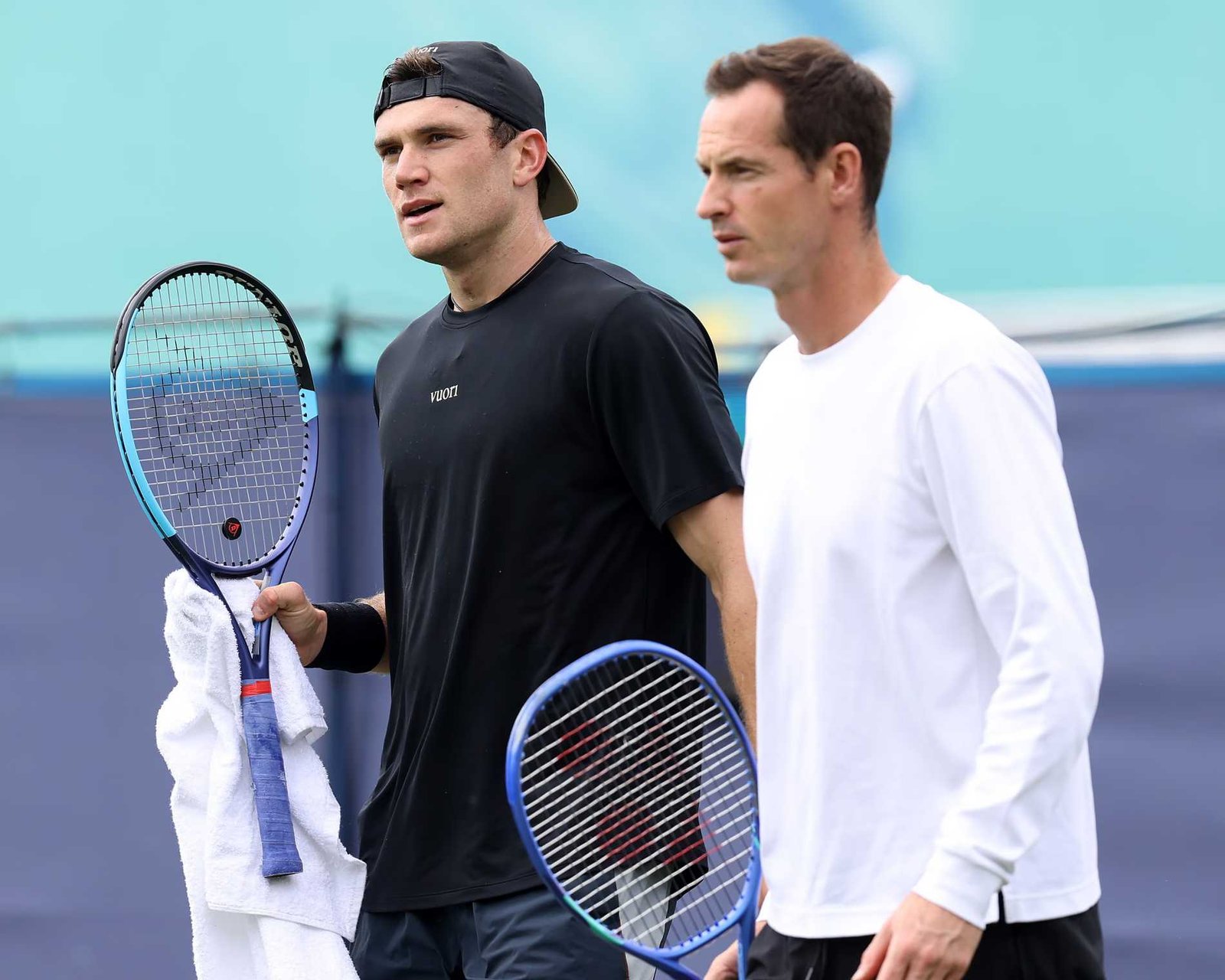
Draper is set to make his comeback at Eastbourne after a grueling 11-month spell plagued by injury, revitalized by his “very special” bond with coach Andy Murray and the Scot’s unwavering confidence in his abilities. Draper will be making his return to the court in more than two and a half months at the Eastbourne International on Monday. This will be his first competitive event since enlisting the help of his idol and childhood friend, Andy Murray, as his coach, and follows an almost year-long layoff due to a persistent arm and knee injuries.
He’ll be hoping to sharpen up in time for Wimbledon, which is now only a week and a bit away.
“His tennis knowledge is phenomenal,” said Draper about Murray. “My tennis is actually in a really, really good spot,” he added, referring to his physical condition, “I’ve lost a lot of confidence in my body over the last year that I’m rebuilding back again.”
He also stressed the impact of having Murray by his side, “Having someone who believes in you as a person, as a player who’s one of your biggest inspirations… I have a great relationship with him off the court – our relationship is very special – and that gives me a bit more energy, especially in a moment where I’m coming back and I need to have that good energy around me.” Just 12 months ago Draper was enjoying a stellar run of good form, achieving a career-high ranking of 4 in the world, but the last 11 months have been a miserable saga of injuries and pain.
Draper, 24, has not competed since the start of April after he withdrew from the Barcelona Open, suffering knee tendinitis.
The knee injury had itself come after seven months out with a bone bruise in his left arm sustained in a fall, causing him to slip to world No 113. (AP) Jack Draper at work under the watchful eye of Andy Murray in Eastbourne. Photograph: Charlie Crowhurst/Getty Images for LTA. Despite the setback, Draper always felt he would eventually make it back.
He did, however, concede, “I was absolutely not” psychologically sound over the past year. “It’s been an incredibly tough year,” Draper said. “I’m someone who’s all-in with my tennis.
I’m obsessed with improving and getting better and being the best in the world and doing all the right things.”
“Outside of tennis, there’s not a lot going on for me. So it’s obviously been very difficult, very isolated, a lot of tough days, a lot of training. As a competitor, all you want to do is feel the buzz of being out there competing. I’ve had to be incredibly patient with my body.”
Draper admits that he accepts that his arm may “never go away,” but has no doubts about achieving the career he feels he deserves.
“I was top 10 in the world, doing great things, and you’re losing your ranking every week,” he said. “It’s not like a football team where you can have a substitute come in and take your place. It’s like you’re watching your decline.
So it’s tough, but I think I’ve learned a massive amount about my body in the last year and my recovery.” As for the benefits that might come from such a troubled period, Draper believes they’ll provide an edge. “Before, in the position I was, I still felt like maybe there’s mental levels I needed to go to to get to where I wanted to be,” he said.
“And even though my ranking slipped and I haven’t played, when you go through a lot of struggles and a lot of setbacks, it definitely gives you the mental fortitude to think: ‘I’ve got something a little bit extra to these guys because of what I’ve gone through.’”
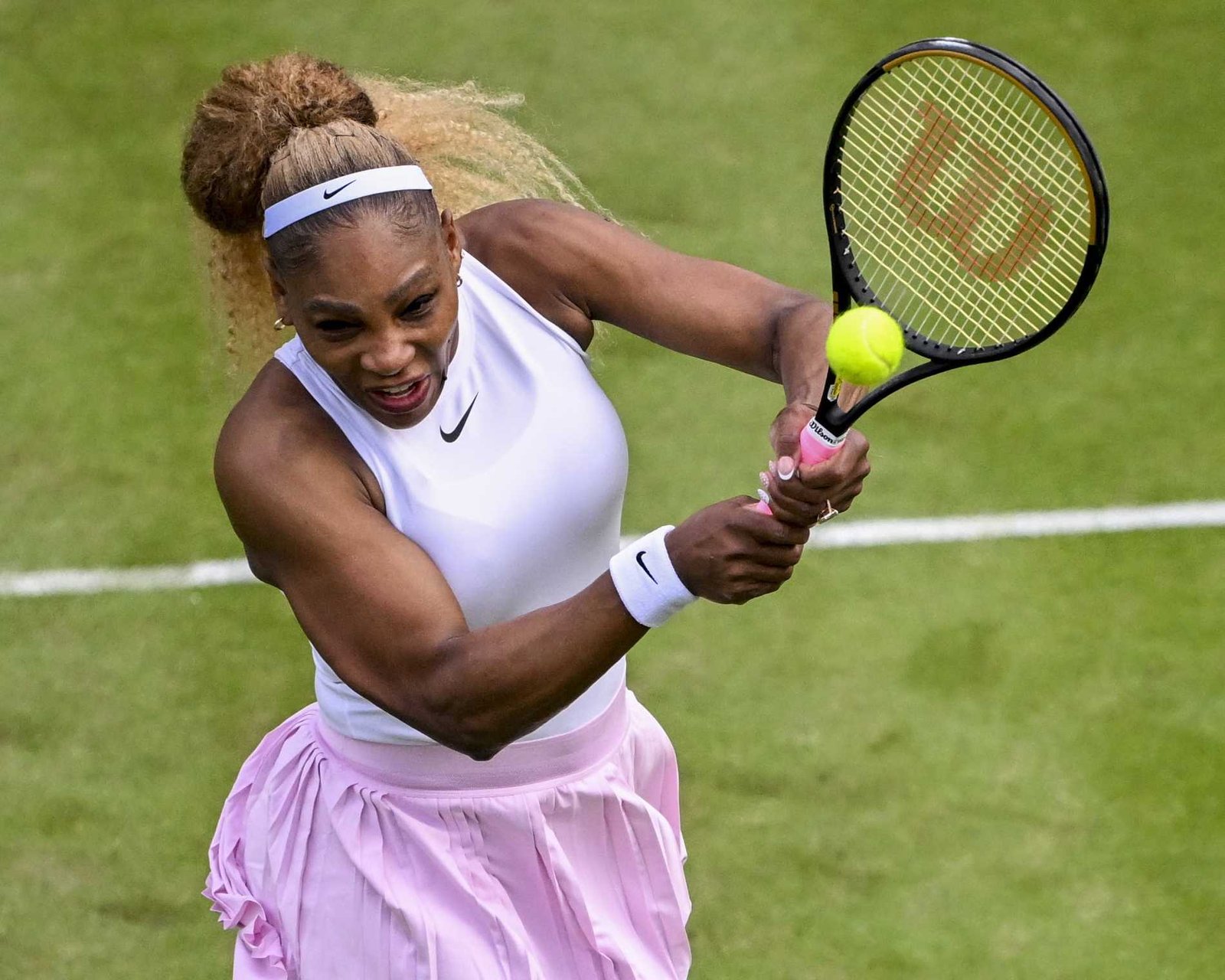
Serena Williams will step back onto Centre Court at Wimbledon this summer, returning to singles competition after being granted the final wildcard by the All England Club.
The announcement ends months of speculation about whether the 23-time Grand Slam champion would attempt a singles comeback. Williams, 44, retired from professional tennis at the 2022 U.S. Open, but her decision to resume doubles earlier this season hinted at unfinished business.
Her return to singles marks her first appearance in nearly four years, reigniting excitement among fans and raising questions about how competitive she can be at this stage of her career.
Williams is a seven-time Wimbledon singles champion, with her last triumph coming in 2016. However, her recent experiences at the tournament have been difficult. In 2021, she suffered a serious hamstring injury in the opening round. A year later, she lost to Harmony Tan in the first round, a defeat many believe influenced her determination to return.
She has not won a singles match at Wimbledon since 2019, making this comeback both a challenge and an opportunity to end her career at the All England Club on a stronger note.
Williams resumed competitive play in doubles earlier this month, partnering Victoria Mboko at Queen’s Club before Mboko withdrew due to injury. She later teamed up with Karolina Muchova in Berlin, losing in the opening round but expressing satisfaction with her performance.
Since then, she has been training on the grass courts at Wimbledon, preparing for the physical demands of singles competition. While doubles requires less movement, singles will test her endurance and agility.
The All England Club had only one singles wildcard left when the announcement was made. With the qualifying draw set to be published, officials confirmed Williams as the recipient, ensuring her place in the main draw.
Her inclusion adds star power to the tournament and offers fans the chance to witness one of the sport’s greatest champions compete again on the iconic grass courts.
Williams’s comeback is not just about results. At 44, she faces the reality that singles tennis demands far more physically than doubles. Yet her career has been defined by defying expectations.
Her victory over then-world No. 2 Anett Kontaveit at the 2022 U.S. Open showed she could still compete at the highest level. Whether she can replicate that form at Wimbledon remains uncertain, but her presence alone elevates the tournament.
The news has sparked excitement across the tennis world. Fans and analysts see her return as a chance to close her Wimbledon chapter differently. For many, it is less about titles and more about celebrating her enduring influence on the sport.
Serena Williams’s singles comeback at Wimbledon is both a sporting and symbolic moment. With a wildcard entry, she has the chance to rewrite her final chapter at the All England Club. Whether she advances deep into the draw or not, her return underscores her refusal to shy away from challenges and her lasting impact on tennis.


Kwara APC Crisis: Group Urges Tinubu to Remain Neutral in Party Dispute

Draper Energized For Eastbourne Return, Inspired By Murray

Serena Williams Returns To Wimbledon Singles With Wildcard
-
 Cover10 months ago
NRC to reposition train services nationwide.. Kayode Opeifa
-

 Fashion9 years ago
These ’90s fashion trends are making a comeback in 2017
-
Entertainment9 years ago
The final 6 ‘Game of Thrones’ episodes might feel like a full season
-
 Politics3 months ago
NNPP Diaspora Stakeholder and Key Kwankwaso Ally, Dr. Usman Tijjani Shehu, Rejoins APC
-
 Opinion2 years ago
Bureaucratic Soldier, Kana Ibrahim heads Ministry of Aviation and Aerospace After Transformative Tenure at Defence
-
 Opinion1 year ago
Hon. Daniel Amos Shatters Records, Surpasses Predecessor’s Achievements in Just Two Years
-
 Opinion7 months ago
Barrister Somayina Chigbue, Esq: A rising legal leader shaping institutioal excellence in Nigeria
-

 News11 months ago
Nigerian Nafisa defeats 69 Countries at UK Global Final English Competition