Connect with us

Cover

FIFA Confronts Ticketing Glitch, Fans Told to Pay or Lose Seats

Published

on

FIFA has admitted to a ticketing error that allowed dozens of fans to secure free seats for the 2026 World Cup. The governing body is now demanding payment from those affected, warning that failure to comply will result in forfeiture.

The Glitch

Around 60 supporters were mistakenly allocated tickets at “0 USD” due to a payment issue during checkout. FIFA confirmed the incident in a statement, noting that the tickets remain reserved but must be paid for within seven days.

The affected tickets were reportedly for group-stage matches in Toronto, Canada. Ticket Talk Network first revealed the glitch, sparking debate about FIFA’s ticketing system.

Rising Scrutiny

The error comes at a time when FIFA is already under pressure over its ticketing practices for the expanded 2026 World Cup, co-hosted by the United States, Canada, and Mexico.

Earlier in May, Football Supporters Europe (FSE) criticized ticket prices, calling them “extortionate” and a “monumental betrayal.” The group filed a lawsuit with the European Commission in March, accusing FIFA of excessive pricing.

Ticket Prices Under Fire

Controversy intensified when FIFA’s resale platform, FIFA Marketplace, listed four tickets for the July 19 final in New York at over $2 million each. FIFA President Gianni Infantino defended the pricing, citing U.S. laws that permit resale far above face value.

Investigations in the U.S.

Authorities in New York and New Jersey have launched an investigation into whether FIFA’s ticketing practices breach consumer protection laws. Officials are examining claims that ticket prices for 90 of the tournament’s 104 matches rose by an average of 34% during sales phases.

Investigators are also probing allegations that fans were misled about seat availability and location. Complaints include the introduction of more expensive “front” category tickets after initial sales had begun.

Questions for FIFA

Officials have asked FIFA to explain why ticket costs for the 2026 tournament exceed those of previous World Cups. The inquiry adds to mounting pressure on the organization to justify its pricing model and ensure transparency.

The 2026 World Cup kicks off on June 11 with matches in Mexico City and Guadalajara. The final will be staged at MetLife Stadium in New Jersey.

For now, FIFA insists that affected fans must pay the correct ticket price or lose their seats. The incident underscores broader concerns about fairness, affordability, and transparency in the world’s biggest sporting event.
Continue Reading
Click to comment

Leave a Reply

Your email address will not be published. Required fields are marked *

Cover

NDC Rejects Allegations Of Candidate Imposition, Defends Primaries

Published

on

The Nigeria Democratic Congress (NDC) has firmly denied claims that its recent primaries were manipulated or that candidates were imposed on members.

In a statement issued in Abuja, National Secretary Morgan Enekweizu stressed that the party’s internal processes were guided by its constitution and transparent structures. He described the criticisms as attempts to weaken the party’s rising influence.

Consensus Approach

Enekweizu explained that the NDC adopted a consensus-driven model to minimize disputes and strengthen unity. He emphasized that the party was built on consultation, inclusiveness, and consensus-building.

He pointed to the South-East region as an example of effective implementation. According to him, respected political leaders such as Chief Onyema Ugochukwu, Dr Sam Egwu, Dr Okwesilieze Nwodo, and Chief Achike Udenwa coordinated caucus activities alongside the presidential candidate, Peter Obi.

Role of Caucus Leaders

The caucus leaders were tasked with consulting stakeholders, building consensus, and recommending aspirants based on political realities in their states. Enekweizu clarified that aspirants who disagreed with recommendations were free to contest through primaries at the grassroots level.

He insisted that the national secretariat never imposed candidates. Instead, aspirants were directed to engage with caucus leaders and stakeholders in their states.

Grassroots Participation

The party secretary highlighted that grassroots leaders played a key role in consultations and recommendations. He said the process respected the rights of all aspirants and allowed them to test their popularity through democratic means.

Enekweizu added that the party’s affirmative action policy encouraged women’s participation while protecting serving lawmakers. He noted that all aspirants who purchased forms were included in the primaries.

Addressing Complaints

Acknowledging reports of premature declarations and grievances, Enekweizu said such issues were handled by the Appeal Panel and party leadership. He revealed that the National Executive Committee had resolved to begin a reconciliation process to strengthen unity.

He explained that aspirants and stakeholders with concerns were consistently referred to their state caucuses for resolution. The party’s role, he said, was to welcome members, assure fairness, and direct them to relevant structures.

Commitment to Democracy

Enekweizu maintained that the NDC’s approach reflected its commitment to consultation, respect for leadership structures, and internal democracy. He said the party remained focused on unity and progress.

Since receiving its registration certificate on February 5, 2026, the NDC has built structures nationwide, held two NEC meetings, and conducted primaries across all elective positions. The party claims it is now the second-largest in Nigeria based on its representation in the National Assembly.

SEO Elements


Continue Reading

Cover

Arteta Rebuilds Arsenal After Champions League Final Heartbreak

Published

on

Arteta-Rebuilds-Arsenal After-Champions-League-Final-Heartbreak

The trophy cabinet at the Emirates Stadium tells an incomplete story this summer.

Arsenal won the Premier League title for the first time in 22 years. They reached the Champions League final unbeaten through the league phase, winning every group stage match. They stood 90 minutes — and ultimately five penalty kicks — away from the greatest season in the club’s modern history.
Then Eberechi Eze and Gabriel missed their penalties in Budapest. PSG lifted the trophy. Arsenal flew home as champions of England and runners-up of Europe.
Mikel Arteta is not in the mood to accept that gap again.

4 Players Available: The Squad Clearout Begins
While players and fans dispersed for the World Cup and summer holidays, Arsenal’s hierarchy was already working. The message from within the club is clear: the squad that finished second in Budapest is not the squad that will compete next season.

According to reports from Metro UK, four players have been placed in the available category as Arteta and the board prepare to fund and create space for incoming signings.
Gabriel Martinelli heads the list — a decision that reflects not sentiment but statistics. The Brazilian winger is the longest-serving member of the current squad, a fan favourite, and the subject of considerable affection at the Emirates. He was also responsible for just one Premier League goal across 30 appearances in 2025-26. For a title-winning and European finalist squad, that return is insufficient. The club is prepared to listen to offers.

Leandro Trossard, versatile and reliable, is also available. At 30, he remains a quality operator — but Arsenal’s ambition requires upgrading rather than retaining cover players approaching the latter stages of their careers.

Gabriel Jesus faces a different kind of exit narrative. The Brazilian striker worked through an ACL recovery only to find the door firmly closed in front of him. Viktor Gyökeres and Kai Havertz occupy the attacking positions ahead of him, and with Arteta seeking a new striker in the transfer window, Jesus has no realistic pathway back into regular contention. A move would benefit all parties.
Ben White completes the four. The right-back has been a consistent presence but the club’s desire to recruit a new option in that position makes his continued participation increasingly uncertain.

Arteta’s Blueprint: What Arsenal Need
The manager was unusually candid in his post-final assessment of what Budapest revealed.
“What they are able to do with the ball, with individual actions, I haven’t seen it,” Arteta said of PSG. “It’s not the plan to play in certain areas when you don’t have the ball, but they force you to do that. So, even more credit to the players.”

That admission tells you exactly what Arsenal lack and what Arteta is targeting. PSG’s ability to create and convert through individual brilliance — through players who can unlock a game on their own — exposed the ceiling of Arsenal’s current squad construction.
Arteta wants four specific additions: a striker, a left-winger, a central midfielder, and a right-back. Each position maps directly onto a deficiency the final exposed.

The Transfer Targets: Álvarez and Rogers in the Frame
Arsenal have been linked with Julián Álvarez, the Argentine forward currently at Atlético Madrid. Álvarez has reportedly expressed a desire to move on from the Spanish capital — though his preference is said to be Barcelona rather than north London. Whether Arsenal can change that calculus with a more compelling project or a superior financial offer remains to be seen.

Morgan Rogers of Aston Villa has also attracted Arsenal’s attention. The 22-year-old England international can operate as a number ten and across the attacking midfield line — the kind of flexibility that fits Arteta’s systemic demands. Villa will not negotiate cheaply, but Rogers represents exactly the profile of young, high-ceiling player that Arsenal’s recruitment model has consistently targeted.
The left-wing and right-back positions have not yet produced the same level of publicly reported interest. Expect those links to emerge as the summer develops and the player sales create budget clarity.

The Financial Picture
Arsenal’s Champions League run was financially significant. Reaching the final unbeaten through the league phase and advancing through every knockout round generated substantial UEFA prize money — though the final’s penalty defeat meant the winner’s bonus was PSG’s rather than theirs.

The Premier League title adds its own commercial premium: broadcasting distributions, prize money, and the enhanced commercial appeal of being English champions heading into a new season. Arsenal are not operating under financial constraint. They are operating under ambition.

What This Season Ultimately Means
Losing a Champions League final on penalties is painful. It is also evidence that Arsenal belongs at that level — that the project Arteta began when he took over in December 2019 has now reached the point where the club is not simply competing but contending for the game’s ultimate prizes.

Three consecutive second-place Premier League finishes. A first title in 22 years. A Champions League final. The trajectory is real and it is steep.
For Nigerian Arsenal fans — and the club has one of the most passionate followings on the African continent — this summer represents the first time in a generation that the question is not whether Arsenal can reach the top, but what it will take to stay there.
The answer Arteta is constructing involves four exits and at least four arrivals. The Budapest final was not the end. It was the standard he now demands Arsenal exceed.


Continue Reading

Cover

The Coaches With Highest Paid In 2026 World Cup

Published

on

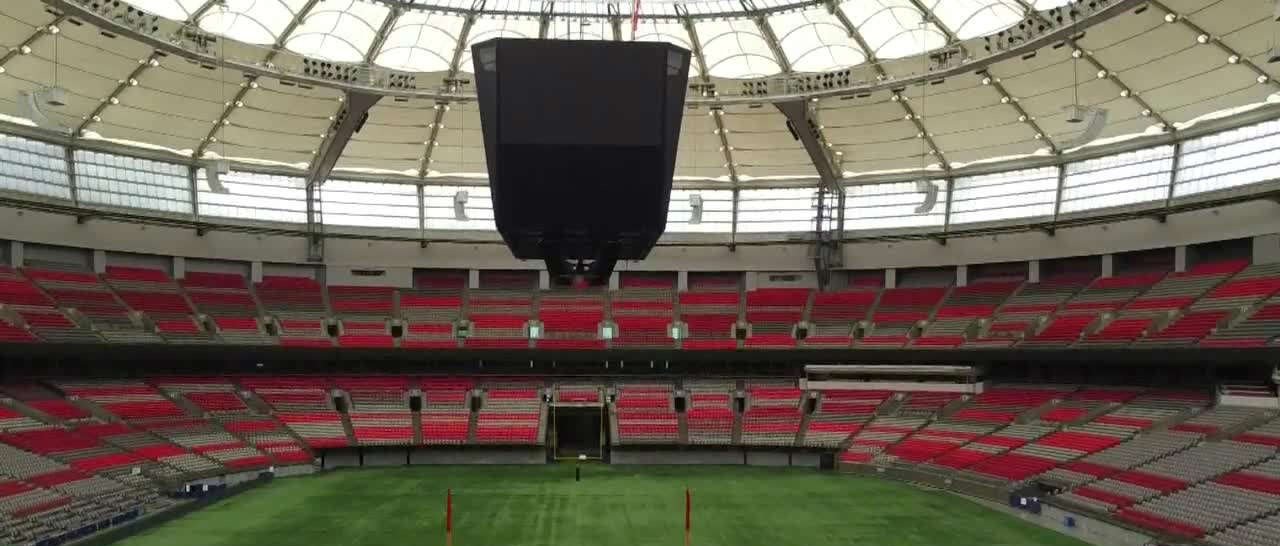
World-Cup-Stadiums

The 2026 FIFA World Cup is not only a showcase of footballing talent but also a reflection of the staggering financial commitments national federations are making to secure elite managers. Salary figures released ahead of the tournament reveal the top ten highest-paid coaches, underscoring the premium placed on leadership at the global stage.

Ancelotti Leads the Pack

Brazil’s Carlo Ancelotti sits comfortably at the top, earning £8.28 million annually. The former Real Madrid boss was appointed to guide the South American giants in their quest for a record sixth World Cup title. His salary reflects both his pedigree and Brazil’s determination to dominate once again.

England Bets Big on Tuchel

England follows with Thomas Tuchel, who earns £5.06 million per year. The German tactician was hired to end England’s long wait for international success after Gareth Southgate’s near misses. Tuchel’s appointment signals the Football Association’s willingness to invest heavily in proven managerial expertise.

Host Nation’s Gamble

The United States, one of the tournament’s co-hosts, ranks third with Mauricio Pochettino on £4.53 million annually. The Argentine coach, known for his stints at Tottenham Hotspur, Paris Saint-Germain, and Chelsea, is tasked with leading the American squad on home soil. His salary reflects the ambition of the U.S. federation to make a deep run in the competition.

European Heavyweights

Germany’s Julian Nagelsmann earns £4.2 million, placing him fourth. Portugal’s Roberto Martinez and Uzbekistan’s Fabio Cannavaro share fifth place at £3.5 million each. Cannavaro’s inclusion is particularly striking, given Uzbekistan’s status as a debutant at the World Cup. His appointment highlights the nation’s bold investment in global football credibility.

France’s Didier Deschamps, who guided Les Bleus to victory in 2018, earns £3.31 million, ranking seventh. Despite his proven track record, his salary is lower than several of his peers, reflecting perhaps the French federation’s confidence in his long-standing tenure.

South American Icons

Argentina’s Lionel Scaloni, Uruguay’s Marcelo Bielsa, and Netherlands coach Ronald Koeman complete the list, each earning £2.61 million annually. Scaloni, who led Argentina to World Cup glory in 2022, remains one of the most respected figures in international football despite a comparatively modest salary.

Financial Stakes in Global Football

The rankings reveal the growing financial stakes in international football. Federations are willing to spend millions to secure managers capable of delivering success. For smaller nations like Uzbekistan, investing in a high-profile coach like Cannavaro is both a statement of ambition and a bid to inspire confidence on the world stage.

As the 2026 FIFA World Cup approaches, the salaries of these top coaches highlight the immense value placed on tactical leadership. Whether these investments translate into trophies remains to be seen, but one thing is clear: the race for football glory is as much about financial muscle as it is about talent on the pitch.

Continue Reading

Trending

Copyright © 2023 - 2025 DailyMirror Nigeria. Design by AspireWeb.ng, powered by WordPress.