Headlines
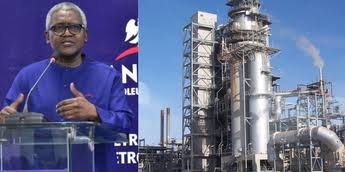
Forum Accuses DAPPMAN of Acting as Mouthpiece of Fuel Subsidy Cabal, Warns Against Sabotaging Dangote Refinery’s Gains
The Oduduwa Progressive Economic Forum (OPEF) has accused the Depot and Petroleum Products Marketers Association of Nigeria (DAPPMAN) of serving as “the official mouthpiece of an evil cabal” that for decades crippled Nigeria’s refining capacity, sustained the fraud-ridden subsidy regime, and left ordinary citizens and small industries in perpetual hardship.
In a strongly worded statement on Sunday by its Executive Director, Dr. Rotimi Adeyanju, OPEF said the latest interventions by DAPPMAN were nothing more than “the hand of Esau but the voice of Jacob,” describing the association’s commentary on the Dangote Refinery as a carefully dressed-up defence of vested interests that fear the disruption of their long-standing domination of the downstream oil sector.
DAPPMAN’s Executive Secretary, Olufemi Adewole, had issued a lengthy statement on Saturday portraying the Dangote Refinery as just one of several players in the downstream industry, warning against what it called “misleading narratives” that credit the facility alone for stabilising fuel supply. Adewole argued that Dangote currently supplies only 30 to 35 per cent of national demand, while DAPPMAN members continue to provide the balance through imports.
But OPEF dismissed the statement as “a desperate smokescreen,” insisting that the very marketers now eager to protect their turf were the ones who presided over the decay of Nigeria’s four state-owned refineries, pocketed subsidies through round-tripping, and condemned millions of citizens to darkness, unemployment, and poverty.
“For decades, these cabals controlled Nigeria’s energy destiny like feudal lords. They destroyed our refineries, forced the country into perpetual importation, and bled the treasury through subsidy scams. They are the same hands that kept our small industries in ruins, denying millions of Nigerians jobs and power. Now, they want to frustrate Dangote Refinery because it threatens their empire of rent-seeking. Nigerians will not allow it,” Adeyanju said.
OPEF emphasised that while DAPPMAN attempted to cast itself as a defender of fair competition, its record betrayed the opposite.
“There is no nobility in pretending to defend market stability when your past is defined by sabotage, hoarding, smuggling, and fraudulent importation of substandard products,” Adeyanju said.
Responding directly to DAPPMAN’s claims that Dangote’s periodic fuel price cuts destabilise competitors, OPEF countered that Nigerians have been the real beneficiaries.
“If a domestic refinery reduces pump prices, that is called relief for citizens. Only a cartel that has grown fat on monopoly would call cheaper fuel a destabilising act,” the forum noted.
OPEF also challenged DAPPMAN’s assertion that it supplies the bulk of Nigeria’s fuel, arguing that such imports were never a favour to the people but a lucrative racket.
“For decades, Nigerians paid with their sweat, blood, and taxes so that a handful of marketers could import fuel under a fraudulent subsidy regime. Today, the Dangote Refinery has broken that stranglehold. That is why they are angry,” Adeyanju said.
The forum further accused DAPPMAN of hypocrisy over its quality claims, noting that the same marketers often flooded the country with products rejected abroad.
“The irony of marketers accusing Dangote of product inconsistency is not lost on Nigerians. We still remember toxic petrol shipments, long queues, and endless scarcity. Let them not insult our memory,” OPEF added.
Warning that Nigerians were running out of patience, OPEF said DAPPMAN and its allies must “leave Dangote alone” and allow the refinery to consolidate gains for the economy.
“This refinery symbolises the rebirth of our industrial spirit. Any attack on it is an attack on the Nigerian people. The cartel should know that Nigerians are watching, and this time, the old tricks will not work.”
The forum called on President Bola Tinubu, regulators, and security agencies to resist attempts to destabilise the refinery through what it described as “sponsored propaganda and cartel manoeuvres,” urging instead for policies that protect domestic refining and ensure transparent competition.
“Nigerians are weary of gimmicks and games. The age of deceit by fuel cabals is over. Let DAPPMAN and its sponsors step aside. Dangote Refinery is not just a private enterprise — it is a symbol of national survival and the hope of millions,” the forum declared.
Headlines
FCT Security Failure: Byazhin Demands Action as Locals Forced to Fund Own Defence
In order to address the rising level of insecurity in their community, residents of Byazhin in the Federal Capital Territory’s (FCT) Bwari Area Council have demanded immediate government action.
During a visit to the village on Monday, they made the request in separate interviews with the News Agency of Nigeria (NAN).
According to NAN, some locals were observed removing overgrown plants from residential areas in an attempt to increase visibility and get rid of potential criminal hiding places.
They noted that the security situation had changed their daily routines, with their movement being restricted, especially at night, and that the exercise was intended to supplement current security efforts and make the community safer. Some locals have temporarily moved to safer areas with their family.
One of the impacted residents, Mrs. Christiana Ugo, claimed that she and her family were compelled to leave their house as they no longer felt safe.
“We fled our house because we were worried about what would occur. Until things get better, my kids and I are staying at my sister’s house.
“We hope we can go back home soon and live fearlessly,” she stated.
Ugo stated that while leaving their house was a tough choice, her family’s safety could not be compromised.
Another local, Stephen, also referred to as Papa Elijah, recalled a recent kidnapping and claimed that the victim was freed following the payment of a ransom.
In order to discourage criminal activity, Stephen further claimed that suspected kidnappers operate out of a big rock behind the neighbourhood and urged the authorities to set up a permanent security presence there.
He claims that by planning night patrols, the community has increased local security operations.
Speaking as well, resident Mr. Oluwa Deji stated that many homeowners had opted to stay in the neighbourhood despite security worries because it was not an option for them to forsake buildings they had spent years creating.
Deji observed that locals had decided to continue cooperating and supporting neighbourhood vigilante organisations in the hopes of long-term government action.
According to Mr. Adekunle Adewale, the community’s leader, there have been a few security-related events in the region, such as attempted invasions by suspected herders.
He said that residents had increased internal security by hiring security guards and setting up vigilante patrols three times a week. He also mentioned that monthly security meetings were held to discuss security tactics and examine developments.
When situations surpassed the capabilities of local volunteers, Adewale observed that the community continued to work closely with the police.
However, he voiced concerns about what he called an insufficient government presence, pointing out that the Byazhin Development Association was primarily responsible for funding security measures, infrastructure for energy, and other development projects.
He urged the government to bolster community security and upgrade access routes, arguing that improved infrastructure and ongoing security measures will further improve property and life safety.
The Federal Capital Territory Administration (FCTA) and pertinent security agencies were urged by the locals to improve surveillance, step up routine patrols, and take aggressive steps to safeguard people and property. (NAN)
Headlines
SSCE Fee Hike: Government Must Balance Cost Recovery with Access to Education
Headlines
Can Nigeria’s drone industry deliver Africa’s defence sovereignty
Military manufacturing may be growing, but defence sovereignty depends on far more than production.
Across Africa, the ability to defend borders, monitor territory and protect critical infrastructure remains heavily dependent on foreign suppliers. Turkish drones patrol borders, Chinese surveillance systems monitor cities and Russian fighter jets form the backbone of several air forces.
For decades, African militaries have turned abroad for critical defence technologies, leaving the continent largely positioned as a buyer rather than a producer.
An Abuja-based start-up is attempting to change that equation.
Terra Industries, founded in 2024 by Nathan Nwachuku and Maxwell Maduka, both in their early twenties, designs and manufactures drones, autonomous surveillance towers and unmanned ground vehicles from facilities in Abuja and Accra.
Unlike companies that primarily assemble imported components, Terra says it develops its own software, airframes, propellers and lithium-ion battery packs, with more than 70 percent of its inputs sourced locally.
The company says its systems are currently used to protect infrastructure valued at approximately $11bn, including power plants, lithium and gold mines, oil refineries and other strategic assets across eight African countries and Canada.
Building capability
The shift from importing security technology to producing it locally has become an increasingly important debate across Africa. Governments facing armed groups, porous borders, maritime insecurity and attacks on critical infrastructure are searching for faster and more adaptable solutions.
Terra’s move from private infrastructure security into engagements with Nigeria’s defence institutions reflects that changing environment. The company says its systems are designed to address challenges ranging from maritime surveillance and border monitoring to the protection of energy and mining assets.
![The Archer drone, developed by Terra Industries, is part of a new generation of locally manufactured military technology emerging across Africa [Terra Industries]](https://www.aljazeera.com/wp-content/uploads/2026/07/IMG_4128-1-1783618110.jpeg?w=770&resize=770%2C580&quality=80)
“Coastal states in West Africa are focused on maritime surveillance because of piracy and illegal fishing in the Gulf of Guinea,” chief executive Nathan Nwachuku told Al Jazeera. “States dealing with insurgency and porous borders want persistent aerial surveillance and a rapid-response capability. Others are looking at protection for pipelines, power and energy infrastructure, and mining assets, the same problems we started solving in Nigeria.”
The company is now preparing for a larger regional footprint. Nwachuku confirmed that Terra’s second production facility in Ghana will become Africa’s largest drone manufacturing hub, with an annual production capacity of 50,000 units by 2028.
“Our long-term ambition goes beyond the continent because the threats our systems are designed to address exist across the Global South,” he said. “Governments in South Asia and South America face them too, and they face the same dependency on foreign suppliers. We intend to serve them as we grow.”
Investor confidence
The scale of investment behind Terra reflects growing interest in Africa’s emerging defence technology sector. The company has raised $34m in seed funding, which it describes as one of the largest early-stage funding rounds in African technology.
The investment was led by 8VC, the venture capital firm founded by Palantir Technologies co-founder Joe Lonsdale, alongside Lux Capital and Valor Equity Partners, investors behind companies such as Anduril and SpaceX.
“The round closed in under two weeks, which is rare even by global standards,” Tage Kene-Okafor, Terra Industries’ director of communications, told Al Jazeera. “But what has been more exciting is our cap table, where we have the likes of 8VC, Lux Capital and Valor Equity Partners, investors that have backed companies shaping the future of defence and advanced manufacturing globally.”
Security imperative
The interest in companies like Terra comes as drones become increasingly central to conflicts across Africa. In the Sahel, inexpensive commercial drones have moved from surveillance tools to weapons used on the battlefield, creating new challenges for militaries that often lack effective counter-drone capabilities.
According to the Armed Conflict Location and Event Data (ACLED), Jama’at Nusrat al-Islam wal-Muslimin (JNIM), the al-Qaeda-linked coalition operating in Mali and Burkina Faso, has carried out more than 100 drone attacks since 2023, with 2025 recording the highest number to date.
Terra says its Kama interceptor drone was developed in response to this changing threat environment. The company says the system can reach speeds of up to 300kph and is designed to counter hostile drones in environments where traditional air defence systems may be unavailable or too expensive.
Building defence technology, however, is not the same as achieving defence sovereignty.
Sovereignty question
While a country can build manufacturing capacity through investment, engineering talent and industrial policy, defence sovereignty requires institutions capable of managing procurement, ensuring accountability and sustaining strategic industries over the long term.
Janice Greaver, director at the Pan African Sustainable, Innovation and Development Associates (PASIDA), argues that local production alone cannot answer those questions.
“Seventy percent local sourcing means little until we know who controls the intellectual property, who is employed and who is left out,” she told Al Jazeera. “And when private capital arms the state with no visible civil society oversight, we are simply trading one dependency (on foreign suppliers) for another (on unaccountable domestic capital).”
Terra Industries has demonstrated that sophisticated defence technologies can be designed and manufactured in Africa. Its rapid rise reflects both growing technical capability on the continent and the pressure created by worsening security challenges.
Whether that becomes genuine defence sovereignty will depend on what happens beyond the factory floor: how governments buy, regulate and oversee the technologies they increasingly seek to build themselves.
As Greaver cautions: “Its manufacturing capacity is being built, sovereignty requires the accountability structures that do not yet exist”.
Source: https://www.aljazeera.com/news/2026/7/13/can-nigerias-drone-industry-deliver-africas-defence-sovereignty
-
Branded Content3 weeks agoNow Hiring: Academic and Technical Staff at a Leading Private University in Gombe State
-
Headlines11 months agoNRC to reposition train services nationwide.. Kayode Opeifa
-
Entertainment9 years agoThe final 6 ‘Game of Thrones’ episodes might feel like a full season
-
Fashion9 years agoThese ’90s fashion trends are making a comeback in 2017
-
Politics3 months agoNNPP Diaspora Stakeholder and Key Kwankwaso Ally, Dr. Usman Tijjani Shehu, Rejoins APC
-
Opinion2 years agoBureaucratic Soldier, Kana Ibrahim heads Ministry of Aviation and Aerospace After Transformative Tenure at Defence
-
Opinion1 year agoHon. Daniel Amos Shatters Records, Surpasses Predecessor’s Achievements in Just Two Years
-
Opinion7 months agoBarrister Somayina Chigbue, Esq: A rising legal leader shaping institutioal excellence in Nigeria