Connect with us

Cover

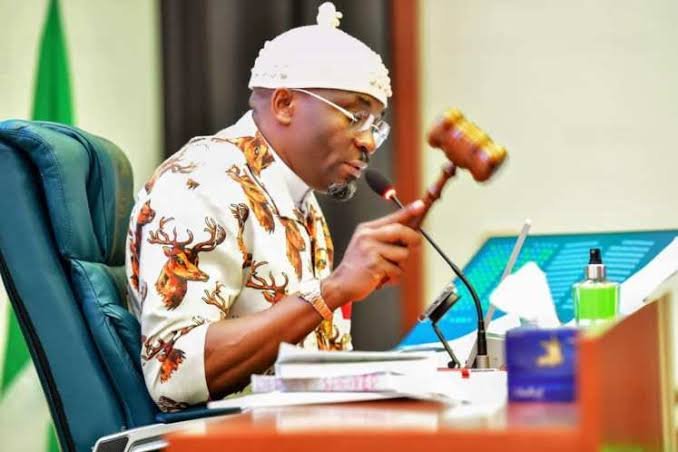
Group decries ‘Sustained political attacks’ on Deputy Speaker Kalu

Published

on

A civil society organisation, the Igbo Mandate Movement Group, has condemned a petition filed against the Deputy Speaker of the House of Representatives, Rt. Hon. Benjamin Kalu, describing it as “frivolous, mischievous and politically motivated.”

The group said the move represents the latest in a sustained campaign allegedly aimed at undermining the political career and public image of one of the South-East’s most prominent lawmakers.

The petition, authored by a former First Vice President of the Nigerian Bar Association, Mr. John Aikpokpo-Martins, was addressed to the Legal Practitioners’ Disciplinary Committee and the National Youth Service Corps, requesting a review of records relating to Kalu’s professional qualifications and national service history.

In a press statement signed by its National Coordinator, Igboeli Arinze Napoleon, the Igbo Mandate Movement Group said the petition follows a pattern of credential challenges that have trailed Kalu at every stage of his rise. When he was nominated as a Commissioner in Abia State, detractors alleged he had never graduated from the University of Calabar — a claim disproved when Kalu subsequently obtained an LL.M and a Ph.D from the same institution and delivered its 50th Anniversary Convocation Lecture. When he sought election to represent Bende Federal Constituency, it was first alleged he had dodged NYSC service entirely; when that was debunked, the allegation shifted to claims that his NYSC certificate was a forgery — a claim that required a formal letter from the then NYSC Director-General, Brigadier General Y.D. Ahmed, to finally extinguish. “The same forces of retrogression have returned with yet another iteration of the same discredited narrative,” the group said.

On the substance of the current petition, the group laid out the facts of Kalu’s 2010 service year. He graduated from the University of Calabar in 1998, but the Nigerian Law School — which then operated only two campuses in Lagos and Abuja — could not the volume of qualified graduates in promptly absorb. The resulting backlog left many law graduates waiting years for admission. Kalu travelled abroad during the wait to acquire further qualifications. Upon returning to Nigeria and being mobilised for NYSC in 2010, he was posted to the Enugu North Local Government Area and served in the office of the Chairman. He participated fully in camp activities, emerged as a Platoon Leader, and was decorated with the Citizenship and Leadership Award.

At the same time — by a remarkable coincidence — his long-awaited Law School admission arrived, placing him at the Enugu Campus in Agbani, just thirty minutes from his NYSC post. Faced with the choice of deferring admission and waiting another three to four years, or abandoning his NYSC service in breach of the NYSC Act, he chose to honour both obligations simultaneously. His primary assignment schedule was organised to allow him to discharge his LGA duties before attending Law School classes. He met all weekly and monthly NYSC clearance requirements, exceeded the mandatory 70% Law School attendance threshold, and was so distinguished academically that he was among only three students selected to serve on the research team of the then Director-General of the Nigerian Law School, the eminent Professor Ernest Ojukwu.

On the legal question, the group argued that any NYSC declarations critics seek to invoke are prospective in nature — they state what “shall not” be done going forward and cannot be applied retroactively to Kalu’s 2010 service. “Laws are not retroactive in nature,” the statement read.

“Such declarations do not carry the force of law and would not survive the scrutiny of an affidavit on oath.” The group added that a call to the Bar is a professional certification, and that corps members across Nigeria routinely acquire professional certifications — in management, cybersecurity, project management, and accountancy — during their service year, with full NYSC knowledge.

Beyond defending Kalu, the group used the statement to call for urgent policy reform. Thousands of Nigerian law graduates still face years-long waits between graduation and Law School admission. The group argued that Kalu’s ordeal — both in 2010 and now, as it is being weaponised against him — exposes a systemic failure that demands a legislative response, one that ensures law graduates can access the Law School in due time and that corps members in the legal profession are not punished for navigating a broken system with initiative and good faith.

“Rt. Hon. Benjamin Kalu deserves commendation — not condemnation,” the statement concluded.

The group called on the LPDC and NYSC to treat the petition with the contempt it deserves.

Continue Reading
Click to comment

Leave a Reply

Your email address will not be published. Required fields are marked *

Cover

World Cup Referees Earn Big As African Official Denied Entry

Published

on

The 2026 FIFA World Cup is set to be the biggest in history, with 48 teams competing across North America. But while referees are preparing for a record payday, controversy has already emerged after Somali referee Omar Artan was denied entry into the United States.

Artan, who travelled with a diplomatic passport, was stopped at Miami International Airport and forced to return to Istanbul. His exclusion has reduced FIFA’s pool of centre referees from 52 to 51, unless a replacement is named. The incident has raised questions about US immigration policies and their impact on international sporting events.

For referees who make it to the tournament, the financial rewards are substantial. Reports indicate that each referee will earn at least $100,000 for their involvement, with additional bonuses depending on the number of matches officiated. Those selected for the final in New Jersey on July 19 will receive the highest payout in World Cup history.

The expanded format of the tournament, spread across the United States, Mexico, and Canada, has increased the workload for officials. FIFA has selected 88 assistant referees and 30 Video Assistant Referees (VARs) to support the 51 centre referees. The list includes some of the most experienced names in world football.

Among them is Polish referee Szymon Marciniak, who officiated the dramatic 2022 final between Argentina and France. Premier League officials Michael Oliver and Anthony Taylor are also on the roster, alongside French referees François Letexier and Clément Turpin, and Slovenia’s Slavko Vincic.

Brazilian referee Wilton Sampaio will take charge of the opening match in Mexico City between the hosts and South Africa. His appointment reflects FIFA’s strategy of blending experienced officials with emerging talents to ensure consistency across the expanded competition.

African referees are represented by Tom Abongile of South Africa, Mustapha Ghorbal of Algeria, Amin Mohamed of Egypt, Pierre Atcho of Gabon, Dahane Beida of Mauritania, and Jalal Jayed of Morocco. However, Artan’s exclusion has cast a shadow over the continent’s representation.

No Kenyan referee was selected this time, a notable absence given the country’s growing football profile. The decision underscores FIFA’s emphasis on referees with consistent exposure to top-level international competitions.

The financial rewards for referees mirror FIFA’s broader investment in the tournament. Clubs will also benefit, with FIFA pledging to pay teams daily for each player involved. Payments will be backdated to qualifiers, ensuring clubs are compensated for releasing players to national duty.

For referees, the pay structure reflects both the demands of officiating at the highest level and FIFA’s ambition to attract the best officials. The final in New Jersey is expected to deliver a record-breaking payout, reinforcing the prestige of officiating the world’s most-watched football match.

Yet, Artan’s case highlights the challenges that can overshadow such opportunities. His denial of entry has sparked debate about fairness and inclusivity, particularly for officials from Africa and other regions facing stricter visa scrutiny.

As the tournament kicks off, the focus will be on the referees’ performance on the pitch. But off the pitch, questions remain about how immigration policies intersect with FIFA’s global ambitions. For now, referees who made the cut are preparing for both the responsibility and the rewards of officiating at football’s grandest stage.

Continue Reading

Cover

Matawalle Defends Tinubu’s, Dismisses Opposition Propaganda

Published

on

Minister of State for Defence, Dr. Bello Muhammad Matawalle, has dismissed claims of declining support for President Bola Ahmed Tinubu in the North-West, insisting that the region remains firmly behind the president as the 2027 elections approach.

Matawalle’s remarks came in response to recent surveys and opposition statements suggesting that economic hardship and insecurity were eroding Tinubu’s popularity. The minister argued that such narratives were driven by propaganda aimed at undermining the administration’s achievements.

He pointed to the NOI Polls survey, which gave Tinubu’s government a 30 per cent approval rating after three years in office. Opposition figures, including Mallam Bolaji Abdullahi, interpreted the result as evidence of widespread rejection. Abdullahi argued that the administration could no longer claim to have inherited Nigeria’s challenges.

Matawalle countered that critics were deliberately amplifying isolated incidents of insecurity to overshadow progress. He highlighted coordinated military operations in Sokoto, Zamfara, Katsina, Kaduna, and Kebbi states, which he said had eliminated notorious bandit leaders, dismantled criminal hideouts, and restored relative peace in affected communities.

“The opposition is uncomfortable with the visible progress being recorded in the fight against insecurity and the ongoing developmental strides across the country,” Matawalle stated.

He praised the Armed Forces and security agencies for their sacrifices, noting that many personnel had paid the ultimate price in the line of duty. He also cited improvements in the fight against insurgency in the North-East and efforts to reduce communal violence in the North-Central region.

Beyond security, Matawalle stressed that Tinubu’s Renewed Hope Agenda was delivering results in infrastructure, agriculture, social investment, and economic reforms. He listed federal interventions in Northern Nigeria, including road rehabilitation, agricultural value chain support, food security programmes, rail and energy projects, and empowerment initiatives for youth and women.

According to him, these policies are resonating with citizens and will translate into political support for Tinubu in 2027. “The people of the region understand the efforts being made to improve their security, livelihoods and overall well-being. They are witnessing the results firsthand,” he said.

Matawalle expressed confidence that no amount of political blackmail or misinformation would diminish the administration’s achievements. He insisted that Tinubu remained focused on governance, national development, and improving the welfare of Nigerians.

He urged political leaders to prioritise national interest over partisan rivalry, stressing that consolidating peace and development should be the collective goal. The minister concluded that the gains of the Renewed Hope Agenda would continue to strengthen Tinubu’s support base in the North-West and across Nigeria as the 2027 elections draw closer.

Continue Reading

Cover

US Denial Ivory Coast Fans Visa Ahead of 2026 World Cup

Published

on

The build-up to the 2026 FIFA World Cup has taken a controversial turn after the United States denied visas to hundreds of Ivory Coast supporters. The decision has forced many fans to abandon plans to travel for the tournament, raising questions about visa policies and their impact on global sporting events.

Julien Kouadio Adonis, president of the National Committee of Elephants Supporters (CNSE), confirmed the setback. He said the refusal had left fans disappointed and unable to fulfil their role of cheering the national team on the world stage.

“The supporters have cancelled the trip because the US government does not want to see supporters from certain countries, including the Ivory Coast, on its soil,” Kouadio explained. He described the situation as deeply painful, stressing that supporting the team is considered a “sacred duty” by many Ivorians.

The CNSE, operating under the Ministry of Sport, is responsible for organising travel for fans during international competitions. Earlier this year, Kouadio had expressed optimism that about 500 supporters would make the journey to North America. That hope has now been dashed, with only a handful of committee officials receiving clearance to travel.

Despite the restrictions, CNSE officials say they will focus on coordinating support from Ivorian fans already living in the United States. Kouadio noted that more than 1,000 diaspora supporters are expected to attend matches, ensuring the team will not be left without encouragement in the stands.

Ivory Coast will play two of their three group-stage matches in Philadelphia. They face Ecuador on June 15 and Curacao on June 25. Between those fixtures, the team will travel to Toronto for a clash against Germany. The absence of travelling supporters from Abidjan and other cities is expected to affect the atmosphere, but organisers hope diaspora fans will fill the gap.

The visa denials have not only affected Ivory Coast. Earlier this week, Somali referee Omar Artan was reportedly denied entry, while members of Iran’s support staff also faced rejections. These developments have sparked wider concerns about how US immigration policies intersect with international sporting events.

For Ivory Coast, the setback underscores the challenges African nations face in mobilising supporters for global tournaments. While the team prepares for tough matches against Ecuador, Germany, and Curacao, the absence of their traditional fan base could be felt both on and off the pitch.

Kouadio insisted that the CNSE remains committed to ensuring visible support for the Elephants. “A handful of our officials will be present to look after Ivorian supporters based in the United States,” he said. The committee hopes to coordinate chants, banners, and cultural displays to maintain the team’s spirit during the competition.

The issue highlights the broader tension between global sports and national immigration policies. As the World Cup expands to 48 teams for the first time, organisers face the challenge of balancing security concerns with the inclusive spirit of football.

For Ivorian fans, the disappointment is profound. Many had saved for months to make the trip, only to be stopped by visa restrictions. Yet, with diaspora supporters stepping in, the Elephants will still hear familiar voices as they chase success in the 2026 World Cup.

Continue Reading

Trending

Copyright © 2023 - 2025 DailyMirror Nigeria. Design by AspireWeb.ng, powered by WordPress.