Headlines
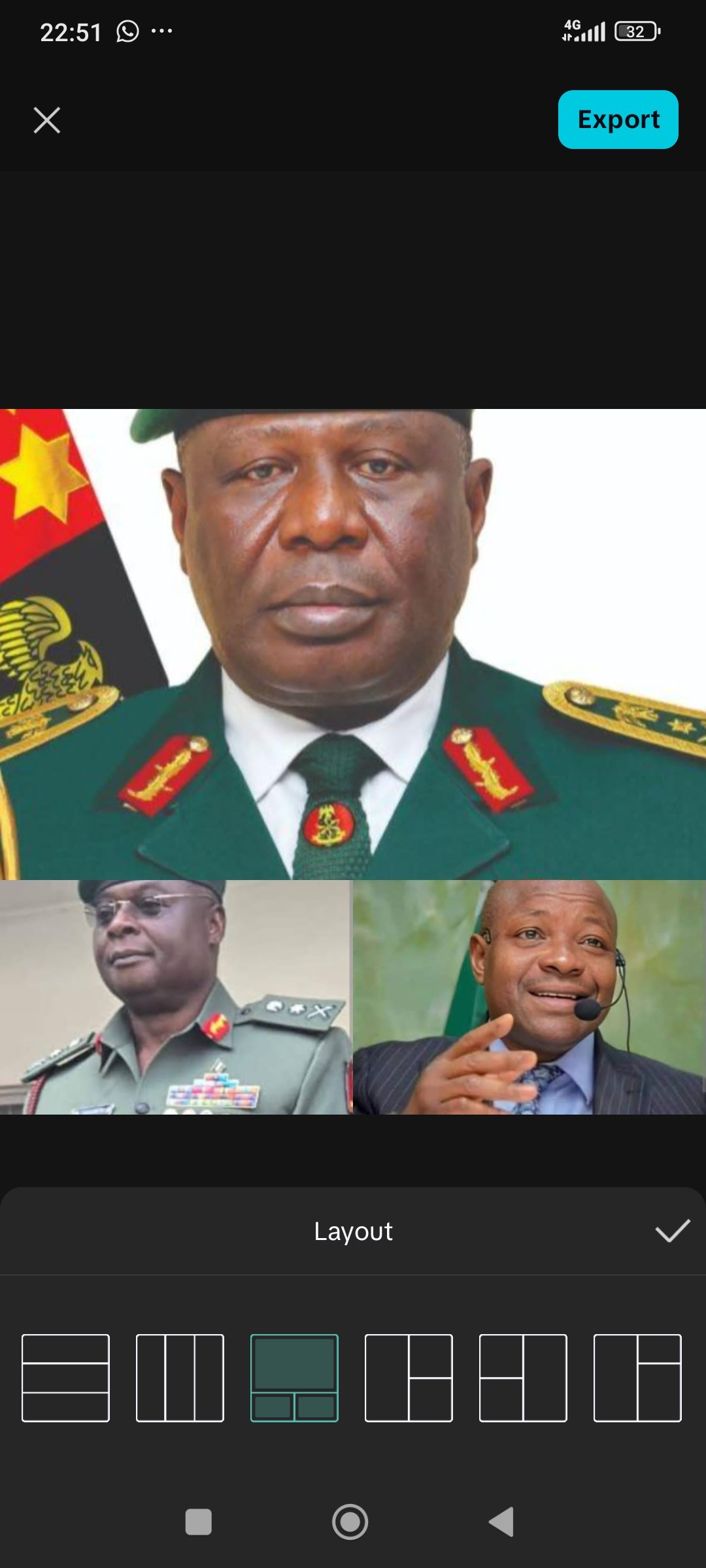
How Army, DSS, DIA foiled coup to topple, kill Tinubu
A covert intelligence operation coordinated by the Army Headquarters, the State Security Service (SSS), and the Defence Intelligence Agency (DIA), helped thwart a deadly plot to overthrow President Bola Tinubu’s government and assassinate key political figures, PREMIUM TIMES can authoritatively report.
Multiple senior administration insiders said the plot began to unravel in late September 2025 after an unnamed military officer with direct knowledge of the coup contacted the then Chief of Army Staff, Olufemi Oluyede. The officer reportedly disclosed the scheme, saying he feared being implicated as an accessory to treason if he failed to alert authorities.
Our sources said around the same time, the SSS independently gathered intelligence indicating that some serving army officers were plotting to “destabilise the government and undermine Nigeria’s democracy.” An official familiar with the matter said the Director-General of the SSS, Oluwatosin Ajayi, personally briefed Mr Oluyede on the findings.
Faced with converging intelligence from multiple sources, the two security chiefs agreed to act swiftly. A wide-ranging but discreet joint operation was launched by the army and the SSS, with coordinated arrests planned across different parts of the country to neutralise the coup’s masterminds and other collaborators.
On 30 September 2025, as President Tinubu travelled to Imo State for an official visit, unaware of the plot to depose and possibly assassinate him, the joint operation went into effect. The sweep led to the arrest of the alleged principal architects of the coup, alongside other military and civilian suspects.
The Chief of Defence Intelligence (CDI), Emmanuel Undiandeye, and the then Chief of Defence Staff, General Christopher Musa, were subsequently briefed. Mr Undiandeye was then requested to detain the suspects in the underground holding facility of the Defence Intelligence Agency.
Following the initial arrests, President Tinubu was formally informed of the foiled plot. A visibly shaken president immediately ordered the cancellation of the 1 October National Independence Day parade. He also approved the constitution of a special investigative panel, which later led to additional arrests. The investigative panel was led by General Undiandeye.
One of the detained soldiers later escaped custody but was rearrested by SSS operatives in Bauchi, a military insider said. Meanwhile, a retired officer identified as General Adamu and a former governor, Timipre Sylva, accused of bankrolling the coup plotters, remained at large.
Mr Tinubu later fired and retired the then Chief of Defence Staff, General Musa as well as the chiefs of the navy and airforce. Mr Oluyede was appointed CDS and promoted to the rank of General. Weeks later, Mr Musa returned to government as minister of defence.
In a statement issued on 4 October, the Defence Headquarters said the arrested officers were being investigate for “indiscipline and breach of service regulations.” It added that preliminary findings suggested the officers’ grievances were linked to “career stagnation and failure in promotion examinations.”
Despite mounting evidence and a series of detailed reports by PREMIUM TIMES and other media outlets, the military repeatedly denied that a coup plot existed.
In an 18 October statement the Defence Headquarters described the probe involving the 16 arrested officers as a routine internal investigation aimed at maintaining discipline and professionalism within the armed forces.
However, on 26 January, the military publicly acknowledged for the first time that officers had indeed plotted to illegally overthrow President Tinubu’s administration. It announced that those indicted would be arraigned before a military judicial panel.
According to the Defence Headquarters, the investigation was “comprehensive” and conducted in line with established procedures, examining “all circumstances surrounding the conduct of the affected personnel.”
It said the findings revealed “a number of officers with allegations of “plotting to overthrow the government,” describing such conduct as “inconsistent with the ethics, values and professional standards required of members of the Armed Forces of Nigeria.”
“Accordingly, those with cases to answer will be formally arraigned before an appropriate military judicial panel to face trial in accordance with the Armed Forces Act and other applicable service regulations,” the statement added.
The plot to oust, kill Tinubu and others
In an earlier report, PREMIUM TIMES quoted sources with direct knowledge of the investigation as identifying top officials allegedly marked for assassination. They include President Tinubu, Vice President Kashim Shettima, Senate President Godswill Akpabio, and Speaker of the House of Representatives, Tajudeen Abbas.
“There are other people targeted,” one source said. “But those are the key targets.”
The plotters also planned to detain senior military officers, including the service chiefs. “They did not want to kill them,” the source added.
According to the sources, the conspirators intended to assassinate the political leaders simultaneously. “They were waiting for a day when all of them would be in the country,” one official said. “Wherever they were, they would be assassinated.”
The sources said the plotters relied on informants within the Presidential Villa and around the officials slated for elimination.
“They have people inside the Villa who monitor the movements of these officials,” the source said. “The plan was to kill them at the same time and install a military government.”- PREMIUM TIMES

Headlines
FCT Security Failure: Byazhin Demands Action as Locals Forced to Fund Own Defence
In order to address the rising level of insecurity in their community, residents of Byazhin in the Federal Capital Territory’s (FCT) Bwari Area Council have demanded immediate government action.
During a visit to the village on Monday, they made the request in separate interviews with the News Agency of Nigeria (NAN).
According to NAN, some locals were observed removing overgrown plants from residential areas in an attempt to increase visibility and get rid of potential criminal hiding places.
They noted that the security situation had changed their daily routines, with their movement being restricted, especially at night, and that the exercise was intended to supplement current security efforts and make the community safer. Some locals have temporarily moved to safer areas with their family.
One of the impacted residents, Mrs. Christiana Ugo, claimed that she and her family were compelled to leave their house as they no longer felt safe.
“We fled our house because we were worried about what would occur. Until things get better, my kids and I are staying at my sister’s house.
“We hope we can go back home soon and live fearlessly,” she stated.
Ugo stated that while leaving their house was a tough choice, her family’s safety could not be compromised.
Another local, Stephen, also referred to as Papa Elijah, recalled a recent kidnapping and claimed that the victim was freed following the payment of a ransom.
In order to discourage criminal activity, Stephen further claimed that suspected kidnappers operate out of a big rock behind the neighbourhood and urged the authorities to set up a permanent security presence there.
He claims that by planning night patrols, the community has increased local security operations.
Speaking as well, resident Mr. Oluwa Deji stated that many homeowners had opted to stay in the neighbourhood despite security worries because it was not an option for them to forsake buildings they had spent years creating.
Deji observed that locals had decided to continue cooperating and supporting neighbourhood vigilante organisations in the hopes of long-term government action.
According to Mr. Adekunle Adewale, the community’s leader, there have been a few security-related events in the region, such as attempted invasions by suspected herders.
He said that residents had increased internal security by hiring security guards and setting up vigilante patrols three times a week. He also mentioned that monthly security meetings were held to discuss security tactics and examine developments.
When situations surpassed the capabilities of local volunteers, Adewale observed that the community continued to work closely with the police.
However, he voiced concerns about what he called an insufficient government presence, pointing out that the Byazhin Development Association was primarily responsible for funding security measures, infrastructure for energy, and other development projects.
He urged the government to bolster community security and upgrade access routes, arguing that improved infrastructure and ongoing security measures will further improve property and life safety.
The Federal Capital Territory Administration (FCTA) and pertinent security agencies were urged by the locals to improve surveillance, step up routine patrols, and take aggressive steps to safeguard people and property. (NAN)
Headlines
SSCE Fee Hike: Government Must Balance Cost Recovery with Access to Education
Headlines
Can Nigeria’s drone industry deliver Africa’s defence sovereignty
Military manufacturing may be growing, but defence sovereignty depends on far more than production.
Across Africa, the ability to defend borders, monitor territory and protect critical infrastructure remains heavily dependent on foreign suppliers. Turkish drones patrol borders, Chinese surveillance systems monitor cities and Russian fighter jets form the backbone of several air forces.
For decades, African militaries have turned abroad for critical defence technologies, leaving the continent largely positioned as a buyer rather than a producer.
An Abuja-based start-up is attempting to change that equation.
Terra Industries, founded in 2024 by Nathan Nwachuku and Maxwell Maduka, both in their early twenties, designs and manufactures drones, autonomous surveillance towers and unmanned ground vehicles from facilities in Abuja and Accra.
Unlike companies that primarily assemble imported components, Terra says it develops its own software, airframes, propellers and lithium-ion battery packs, with more than 70 percent of its inputs sourced locally.
The company says its systems are currently used to protect infrastructure valued at approximately $11bn, including power plants, lithium and gold mines, oil refineries and other strategic assets across eight African countries and Canada.
Building capability
The shift from importing security technology to producing it locally has become an increasingly important debate across Africa. Governments facing armed groups, porous borders, maritime insecurity and attacks on critical infrastructure are searching for faster and more adaptable solutions.
Terra’s move from private infrastructure security into engagements with Nigeria’s defence institutions reflects that changing environment. The company says its systems are designed to address challenges ranging from maritime surveillance and border monitoring to the protection of energy and mining assets.
![The Archer drone, developed by Terra Industries, is part of a new generation of locally manufactured military technology emerging across Africa [Terra Industries]](https://www.aljazeera.com/wp-content/uploads/2026/07/IMG_4128-1-1783618110.jpeg?w=770&resize=770%2C580&quality=80)
“Coastal states in West Africa are focused on maritime surveillance because of piracy and illegal fishing in the Gulf of Guinea,” chief executive Nathan Nwachuku told Al Jazeera. “States dealing with insurgency and porous borders want persistent aerial surveillance and a rapid-response capability. Others are looking at protection for pipelines, power and energy infrastructure, and mining assets, the same problems we started solving in Nigeria.”
The company is now preparing for a larger regional footprint. Nwachuku confirmed that Terra’s second production facility in Ghana will become Africa’s largest drone manufacturing hub, with an annual production capacity of 50,000 units by 2028.
“Our long-term ambition goes beyond the continent because the threats our systems are designed to address exist across the Global South,” he said. “Governments in South Asia and South America face them too, and they face the same dependency on foreign suppliers. We intend to serve them as we grow.”
Investor confidence
The scale of investment behind Terra reflects growing interest in Africa’s emerging defence technology sector. The company has raised $34m in seed funding, which it describes as one of the largest early-stage funding rounds in African technology.
The investment was led by 8VC, the venture capital firm founded by Palantir Technologies co-founder Joe Lonsdale, alongside Lux Capital and Valor Equity Partners, investors behind companies such as Anduril and SpaceX.
“The round closed in under two weeks, which is rare even by global standards,” Tage Kene-Okafor, Terra Industries’ director of communications, told Al Jazeera. “But what has been more exciting is our cap table, where we have the likes of 8VC, Lux Capital and Valor Equity Partners, investors that have backed companies shaping the future of defence and advanced manufacturing globally.”
Security imperative
The interest in companies like Terra comes as drones become increasingly central to conflicts across Africa. In the Sahel, inexpensive commercial drones have moved from surveillance tools to weapons used on the battlefield, creating new challenges for militaries that often lack effective counter-drone capabilities.
According to the Armed Conflict Location and Event Data (ACLED), Jama’at Nusrat al-Islam wal-Muslimin (JNIM), the al-Qaeda-linked coalition operating in Mali and Burkina Faso, has carried out more than 100 drone attacks since 2023, with 2025 recording the highest number to date.
Terra says its Kama interceptor drone was developed in response to this changing threat environment. The company says the system can reach speeds of up to 300kph and is designed to counter hostile drones in environments where traditional air defence systems may be unavailable or too expensive.
Building defence technology, however, is not the same as achieving defence sovereignty.
Sovereignty question
While a country can build manufacturing capacity through investment, engineering talent and industrial policy, defence sovereignty requires institutions capable of managing procurement, ensuring accountability and sustaining strategic industries over the long term.
Janice Greaver, director at the Pan African Sustainable, Innovation and Development Associates (PASIDA), argues that local production alone cannot answer those questions.
“Seventy percent local sourcing means little until we know who controls the intellectual property, who is employed and who is left out,” she told Al Jazeera. “And when private capital arms the state with no visible civil society oversight, we are simply trading one dependency (on foreign suppliers) for another (on unaccountable domestic capital).”
Terra Industries has demonstrated that sophisticated defence technologies can be designed and manufactured in Africa. Its rapid rise reflects both growing technical capability on the continent and the pressure created by worsening security challenges.
Whether that becomes genuine defence sovereignty will depend on what happens beyond the factory floor: how governments buy, regulate and oversee the technologies they increasingly seek to build themselves.
As Greaver cautions: “Its manufacturing capacity is being built, sovereignty requires the accountability structures that do not yet exist”.
Source: https://www.aljazeera.com/news/2026/7/13/can-nigerias-drone-industry-deliver-africas-defence-sovereignty
-
Branded Content3 weeks agoNow Hiring: Academic and Technical Staff at a Leading Private University in Gombe State
-
Headlines11 months agoNRC to reposition train services nationwide.. Kayode Opeifa
-
Entertainment9 years agoThe final 6 ‘Game of Thrones’ episodes might feel like a full season
-
Fashion9 years agoThese ’90s fashion trends are making a comeback in 2017
-
Politics3 months agoNNPP Diaspora Stakeholder and Key Kwankwaso Ally, Dr. Usman Tijjani Shehu, Rejoins APC
-
Opinion2 years agoBureaucratic Soldier, Kana Ibrahim heads Ministry of Aviation and Aerospace After Transformative Tenure at Defence
-
Opinion1 year agoHon. Daniel Amos Shatters Records, Surpasses Predecessor’s Achievements in Just Two Years
-
Opinion7 months agoBarrister Somayina Chigbue, Esq: A rising legal leader shaping institutioal excellence in Nigeria