World News
How Red Sea closure would cripple global economy and end Western sea hegemony
By Mohammad Molaei
The closure – or even any serious and persistent danger of closure – of the Red Sea and the Bab al-Mandab Strait in the event of the US escalation will have devastating and far-reaching consequences for the global geopolitical and economic affairs.
It could disable supply chains across the world in a short span of time, while permanently and irreversibly shifting the economic, logistical, and maritime power equations.
This small but crucial waterway – the direct entry point to the Indian Ocean, the Red Sea, the Suez Canal, and finally the Mediterranean Sea – has, under normal circumstances, been the epicenter of global commerce.
Through it, vast volumes of crude oil, liquefied natural gas, containerized freight, industrial raw materials, and consumer goods flow between Asia and Europe and back.
Any interruption of this route will force commercial ships to round the entire African continent via the Cape of Good Hope. This much longer, more costly, and dangerous alternative adds at least 10-14 days to voyage time, consumes up to 42 percent more fuel per container ship, and effectively reduces the capacity of the global shipping fleet by about 9 percent.
According to the latest reporting by the US Energy Information Administration (EIA) for the first half of 2025, an estimated 4.2 million barrels of crude oil and petroleum products passed through the Bab al-Mandab Strait each day.
That figure represents roughly 5 to 6 percent of the total seaborne oil trade worldwide. Although this marks a significant decline from the 2023 peak of 9.3 million barrels per day, the strait remains one of the world’s biggest energy bottlenecks.
Projections for this year paint a concerning picture. Global seaborne trade growth in 2025 was projected at only 0.5 percent, a slowdown attributed to persistent disruptions in the Red Sea.
These figures make it clear that a Red Sea shutdown is not a passing logistical crisis of a day or two. Rather, it represents a structural shock to the entire global economy, one that will bring chronic inflation, supply chain stagnation, rising production costs, and ultimately a fundamental redefinition of trade routes and geopolitical dynamics.
Under the simultaneous impact of military and economic pressures, this trajectory points toward a more multipolar and resilient global order.
Geographically and operationally, the most critical choke point is the Bab al-Mandab Strait, just 18 nautical miles (approximately 33 kilometers) wide. Before the recent crises, thousands of large commercial ships passed through it during a normal day, at a rate of up to 1,200 vessels per month, according to figures from Lloyd’s List and IMF PortWatch.
Sealing this strait, along with the Suez Canal, whose traffic according to the Suez Canal Authority had decreased by 2025 to about 12,758 vessels with a net tonnage of 522 million tons, would effectively force shipping onto a detour of an extra 5,500 to 11,000 kilometers.
This not only dramatically drives up fuel prices but also creates unprecedented congestion and delays in Mediterranean ports such as Barcelona, Tangier Med, and even Rotterdam.
Reports from the World Bank and UNCTAD indicate that even small disruptions between 2023 and 2025 caused reductions in Red Sea traffic of up to 70 percent and in Suez Canal traffic of up to 60 percent. The situation worsened further in 2025, with an additional 50 percent drop in container transportation through the Suez Canal – down to just 5.46 million TEU.
When this route is entirely closed under such conditions, the world economy – 85 percent of whose trade moves by sea – would find itself effectively at a deadlock.
Reliance on alternative routes like the Cape of Good Hope would become an irreparable and expensive habit, permanently fixing logistics expenses at a higher level and destroying the so-called “just-in-time” supply chains that form the very core of global industrial and commercial production.
Analytical reports by experts at Drewry and Xeneta further warn that even a potential re-emergence of the Red Sea route in 2026 – should it happen – will not be able to promptly compensate for lost capacity or stabilize freight rates at long-term average levels.
Instead, the average container freight rate on Asia-Europe routes is projected to remain 141 percent higher than it was before the crisis.
The economic aspects of a Red Sea shutdown are much more than the mere operational disruption and will have a systemic and multi-faceted effect on energy markets, container business, insurance is a vital component and inflation worldwide.
As crude oil and petroleum products surpassing 4.2 million barrels daily transit the Bab al-Mandab Strait, a permanent shutdown would push the prices of Brent crude to a point of 120-150+ per barrel or an all-out tsunami, which analysts at JPMorgan and other reputable companies have rated as one of the most likely scenarios.
This would instantly increase the transportation costs of fuel, energy, and petrochemical products across the globe.
Much of the world’s liquefied natural gas (LNG) exports – primarily from Qatar and other Persian Gulf countries – also pass through this route. Its closure would leave Europe, still grappling with past energy crises, facing dire shortages and intensified rivalry with Asian markets.
In the container trade industry – where data from UNCTAD estimated that approximately 12 to 15 percent of global trade, and up to 30 percent of container movements, passed through this route before the crisis – the price of shipping a typical 40-foot container on a run between Shanghai and Rotterdam or Genoa could increase by as much as nearly $2,000 to over $6,000 (a 200 percent rise).
According to the Drewry World Container Index, even with only minor disruptions, freight rates have not fallen below levels that are 141 percent higher than before the crisis. Meanwhile, war-risk insurance premiums have risen from 0.3 percent to between 0.7 and 1 percent of cargo value, imposing hundreds of thousands of dollars in additional costs per commercial voyage.
These costs are all passed on to the final consumer, sparking inflation in consumer goods, automotive parts, pharmaceuticals, industrial raw materials, and food products around the world.
Reports from the World Bank and the Suez Canal Authority also highlight that food and medicine supply chains have been disrupted, European factories have been shuttered by the crisis, and congestion at non-canal ports has made 10- to 14-day delays standard. Overall, global logistics costs are expected to remain at elevated levels for years to come.
The effects of such a shutdown on major economies in the world will also be multifaceted, deep-rooted and sudden, and they may destabilize the economies of most countries over a period of years.
Being the owner of the Suez Canal, Egypt will undoubtedly be among the largest direct losers, as canal revenues, which hit a historical record in the 2022-2023 fiscal year of $9.4 billion, will decrease significantly in the case of a total closure of the Bab al-Mandab.
Europe, where energy imports and Asian imports flow through this very important route, will be hit by energy, food, and inflation, slower rates of economic growth, and industries that must depend on streamlined supply chains like car, electronic and pharmaceutical manufacturers will run out of raw materials, and face increased costs of production.
Major Asian economies like China, India and countries in East Asia that have to incur increased shipping costs will still be more resilient as long as they have diversified themselves to overland routes, alternative routes and robust strategic links to the Axis of Resistance and could even leverage this crisis as an opportunity to reassert themselves in the global trade arena.
As major importers of energy and consumer goods, the United States and its Western allies would face significant inflationary shocks and widespread supply chain disruptions, adding an estimated 0.3 to 0.7 percent to core global inflation, while intensifying domestic political and economic pressures.
Such a situation is nothing less than an intelligent and asymmetric economic war. It elevates the cost of Western maritime and logistical supremacy to an unbearable level, proving how a small geographical bottleneck can become a significant threat to vast economic empires.
In the long term, a Red Sea closure would catalyze further deep-seated structural trends, resulting in a wholesale redrawing of global trade geopolitics.
There will be a sharp increase in investment in alternative corridors, including the Belt and Road Initiative, the North-South Corridor, and African port and overland routes. The multipolarity of currencies will accelerate, and the role of the US dollar in trade transactions will decline sharply as is already being witnessed in the wake of the partial closure of the Strait of Hormuz.
Western hegemony at sea will be severely undermined, while the position of countries struggling against military-economic pressure will be strengthened.
With 85 percent of global trade dependent on the sea, the world can no longer rely on single-chokepoint and vulnerable transportation routes. This moment presents a historic opportunity to rebrand the rules of the game in favor of independent countries and the Axis of Resistance.
Hence, the Red Sea closure represents not merely an event but a historical, game-changing milestone in global economic affairs. It will deliver a fatal blow to the current global economic system, dominated by the US, end the era of Western maritime dominance, and drive the world toward a more multipolar, resilient, and fairer order – one where geography and the will of nations, rather than naval forces and Western powers, will be the decisive factors.
Mohammad Molaei is a Tehran-based military and economic affairs analyst.
Cover
Trump Wanted A Peace Deal Before The World Cup Kickoff, Iran And Israel Have Other Plans.
Donald Trump had a timeline. Sign a Memorandum of Understanding with Iran before June 11. Welcome the world to a North American World Cup free from the shadow of active conflict. Arrive at the midterm elections in November with a foreign policy win to show an increasingly impatient electorate.
That timeline is now under serious pressure — and the men most responsible for disrupting it are not sitting at any negotiating table.
The Plan and the Problem
In a Fox News interview on June 7, Trump stated that negotiations with Iran were progressing toward an agreement that could be concluded between June 8 and 10 — the final days before the 2026 World Cup opens on June 11. The implication was unmistakable: Trump was pushing for a peace deal signed before the first ball was kicked.
The political logic is clean. Seventy-five per cent of all World Cup matches — including the final at MetLife Stadium in New Jersey — will be played on American soil. A concluded Iran agreement would allow Trump to host the tournament as a president who ended a war, not one still fighting it. With midterm elections arriving in November, the optics of global football arriving in an America at peace would be worth considerably more than any campaign advertisement.
Then came June 8.
Iran Strikes Israel. Israel Strikes Back.
On the 100th day of the war, Iran fired 11 ballistic missiles at northern Israel. The Israeli military activated its air defence systems and intercepted all of them. Iran described the attack as retaliation for Israel’s continued strikes against Hezbollah, the Iran-backed armed group operating in southern Lebanon. It was the first direct Iranian strike on Israeli territory since the ceasefire was announced on April 8.
The Houthis in Yemen compounded the picture. The Iran-aligned group claimed a simultaneous missile attack targeting the Tel Aviv area and declared a complete ban on Israeli maritime navigation in the Red Sea — framing every Israeli vessel in the waterway as a legitimate military target.
Israel did not absorb the attack silently. Within hours, Iranian state television reported explosions in Tehran, the northwestern city of Tabriz, and central Isfahan. An Israeli drone strike damaged a petrochemical plant in southwestern Iran. The Israeli military confirmed a “large-scale airstrike targeting Iran’s air defence systems,” stating that dozens of fighter jets had struck strategic defence infrastructure deep inside Iranian territory.
The ceasefire that had been officially in place since April 8 was, in practical terms, over.
Trump Intervenes — and Iran Pauses
Trump moved quickly. On June 8 he posted on social media demanding that “Israel and Iran must immediately stop ‘firing.'” A second post followed, striking a more optimistic tone: “Both Israel and Iran are seeking an immediate ceasefire. Final negotiations for peace will proceed as long as they are not hindered by ignorance and folly.”
Approximately one hour after Trump’s posts, Iran’s military issued a statement declaring it had “inflicted a painful response on the Zionist regime” and was announcing “the cessation of our military operations.” The caveat was pointed: “If the enemies’ aggression and atrocities continue, we will take much stronger and overwhelming measures.”
Trump also spoke by phone with Israeli Prime Minister Benjamin Netanyahu — a call widely interpreted as the president urging restraint and expressing concern about the pace of Israeli retaliation threatening his pre-World Cup diplomatic window.
The Nuclear Clause Trump Is Claiming
Despite the military exchanges, Trump insisted in an NBC interview that negotiations had reached their final stages. He revealed that the MOU currently under discussion contains a clause stating that Iran will not develop nuclear weapons — and that, at his personal request, a further clause prohibiting Iran from purchasing nuclear weapons had been added and accepted by Tehran.
If accurate, these are significant concessions from a country that has consistently framed its nuclear programme as a sovereign right beyond external negotiation. The question — as with every claim made in the middle of active conflict negotiations — is whether the language agreed in a draft document will survive contact with the political and military realities on the ground.
Iran’s Calculation: Why Rushing May Not Serve Tehran
From Iran’s perspective, Trump’s urgency is a negotiating asset, not an obligation.
Iran is not hosting the World Cup. Iran does not face midterm elections in November. Iran does not have 75 per cent of the world’s most watched sporting event unfolding on its territory in three days’ time.
What Iran does have is a conflict narrative that has strengthened domestic unity and projected an image of resistance to both its own population and the wider Muslim world. Supreme Leader Mojtaba Khamenei has publicly declared the American era in the Middle East over. Signing a deal on Washington’s timeline — before a sporting event that America is using as a diplomatic backdrop — risks undermining that narrative at the precise moment it carries the most domestic value.
There are also analysts who argue that maintaining the current state of managed conflict — active enough to preserve the resistance image, controlled enough to avoid catastrophic escalation — serves Iran’s strategic interests better than any agreement Trump is currently offering.
The World Cup Match That Could Define the Tournament
Amid the geopolitics, football’s own scheduling has produced a scenario that no tournament director could have invented.
Iran have arrived in Tijuana, Mexico, their designated base camp, to prepare for the 2026 World Cup. They are drawn in Group G alongside Belgium, Egypt, and New Zealand. The United States are in Group D.
If Iran finish second in Group G and the United States finish second in Group D, the two countries will meet in the Round of 32.
A football match between the United States and Iran — two nations technically still at war, connected by an unresolved conflict, a fragile ceasefire, and a peace deal hanging in the balance — would be the most politically charged sporting fixture since the Cold War era. The phrase already circulating is “a war without gunfire on the football field.”
The Iranian national team has arrived. The draw has been made. The bracket is set.
Whether Trump’s peace deal arrives before June 11 will determine the political context. The football fixture, if it happens, will exist regardless.
What This Means for Nigeria and the World
For Nigeria — participating in a World Cup while the host nation is simultaneously navigating an active military conflict — the tournament opens in circumstances unlike any in modern football history.
Nigerian fans travelling to or watching from home will experience a competition that blurs the boundary between sport and geopolitics in ways that no amount of FIFA ceremony can fully paper over. The Strait of Hormuz remains disrupted. Global energy prices remain elevated. And the ceasefire that was supposed to hold until a peace deal was signed is currently being tested by ballistic missiles and Israeli airstrikes.
Trump wanted a World Cup moment. He may still get one — either a signed agreement that transforms the tournament’s opening into a diplomatic triumph, or a United States vs Iran knockout fixture that makes every other match on the schedule feel secondary.
Either way, the 2026 World Cup is no longer just about football.
News
Pope Visits Equatorial Guinea On Last Stop Of Africa Tour
Pope Leo XIV begins the final leg of his African tour on Tuesday with a visit to Equatorial Guinea, where his increasingly vocal defences of human rights will be closely watched in one of the most closed-off states on the continent.
After three days in Angola, the US-born pontiff is due around noon (1100 GMT) in the Central African country, ruled since 1979 by Teodoro Obiang Nguema Mbasogo, 83, the world’s longest-serving head of state who is not a monarch.
Leo follows in the footsteps of John Paul II, who 40 years ago became the first pope to visit Equatorial Guinea, an oil-rich country of two million people, 80 percent of whom are Catholic, a legacy of Spanish colonisation.
Throughout his African tour, the pope has criticised tyranny and exploitation while promoting peace and social, swapping his previously reserved style for a tougher tone.
All eyes are whether that trend will continue in Equatorial Guinea, where he will be hosted by a government regularly accused of authoritarianism and human rights abuses.
Most of the country’s opposition figures and independent media, hounded by the authorities, are in exile in Spain.
The Equatorial Guinean authorities are regularly singled out by international NGOs for endemic corruption and repression of the opposition, marked by arbitrary detentions and curbs on public freedoms.
In the former capital Malabo, located on the island of Bioko in the Gulf of Guinea, giant portraits of the pope and welcome banners line the streets, alongside flags of the Vatican and Equatorial Guinea.
A hymn composed in his honour will be sung by church choirs across the country throughout his visit.
World News
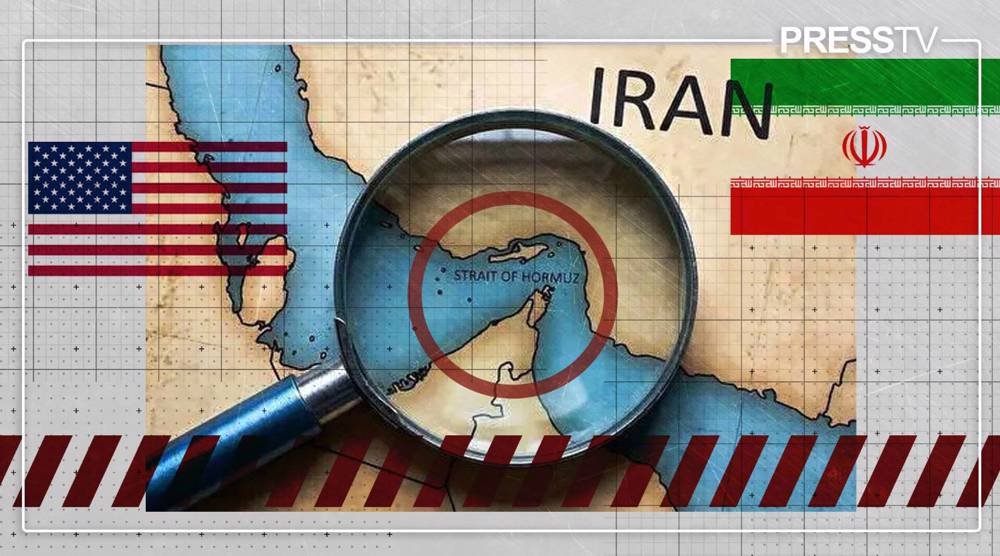
Iran’s legal command replaces US bluff in Strait of Hormuz
On Friday, following the announcement of a ceasefire in Lebanon, Iran declared that commercial vessels could once again transit the Strait of Hormuz.
The ceasefire in Lebanon had held and with it, the conditions Tehran had set from the beginning of the forty-day war that began on February 28 when the United States and Israel launched another unprovoked war of terrorism against Iran.
Within hours, President Donald Trump claimed credit for ending a naval blockade and declared the waterway fully accessible. But the data from Kpler, the maritime analytics firm, told a different story.
Vessel movements had not materially improved. The strait was open, yes, but on terms that bore the unmistakable signature of Iranian authority.
To understand what has changed in the Persian Gulf, one must first set aside the noise of American media warfare. The US has spent weeks describing a naval blockade that, by the evidence of Iranian oil tankers moving freely through the strait, never fully materialized.
Meanwhile, Iranian officials have urged the public to ignore Washington’s “contradictory positions”.
Foreign Minister Abbas Araghchi on Friday posted on social media that passage for all commercial vessels is declared “completely open” for the remaining period of the ceasefire between Tehran and Washington.
But he noted that transit must take place on a coordinated route designated by Iran’s Ports and Maritime Organization, reflecting a consolidation of Iranian authority over the waterway rather than a concession to outside pressure.
Within hours of Araghchi’s announcement, the Islamic Revolution Guards Corps Navy issued its own declaration, announcing that a “new order” is now in place over the strategic waterway.
Under this order, all commercial vessels will only be permitted to transit through routes designated by Iran, and all transits, commercial or otherwise, will only be allowed with the explicit authorization of the IRGC’s naval forces. The IRGC Navy further reaffirmed that military vessel transit through the strait remains strictly prohibited.
The distinction between the American and Iranian characterizations of the current situation is sharp. Trump announced a naval blockade on April 13 after peace talks in Islamabad collapsed, and US Central Command has stated that the blockade has been “fully implemented”.
Yet the same period saw Iranian vessels moving. Three Iranian oil tankers carrying a combined five million barrels of crude oil became the first loaded vessels to leave the Persian Gulf through the Strait of Hormuz since the US-imposed blockade came into effect.
The tankers—the Deep Sea, the Sonia I, and the Diona—all under US sanctions, successfully passed through the strait on Friday after departing from Iran’s Kharg Island. Kpler confirmed the crossings using satellite imagery and ship tracking data.
That is not the signature of a successful blockade. It is the signature of a maritime environment in which Iran’s authority has been asserted and, by most accounts, accepted.
The legal architecture underpinning Iran’s position predates the current war. Iran’s sovereignty over the Strait of Hormuz is rooted in the 1958 Geneva Convention on the Territorial Sea and the Contiguous Zone and the 1982 United Nations Convention on the Law of the Sea (UNCLOS).
Under these treaties, coastal states possess the right to regulate passage through their territorial waters. Iran’s territorial sea extends twelve nautical miles from its coast, and the strait at its narrowest point is only twenty-one nautical miles wide.
This means the entire waterway falls within overlapping territorial seas of Iran and Oman. For any vessel to transit, it necessarily passes through Iranian jurisdictional waters.
The right of transit passage under international law does not erase the coastal state’s authority to establish safety corridors, designate routes, and require coordination with competent authorities.
What Iran has done since the ceasefire—requiring all commercial vessels to use a predetermined route coordinated with the IRGC Navy—falls squarely within those legal parameters. The phrase “new order” is a description of a system that is now in force.
What is striking about the current arrangement is not that Iran has imposed conditions on transit that is its right under international law, but that the conditions are being enforced without objection from the global shipping industry.
The International Maritime Organization has not issued a statement challenging Iran’s routing requirements. The United States has not attempted to escort commercial vessels through non-approved channels.
The naval presence of the US Fifth Fleet, based in Bahrain, has not translated into a challenge to Iran’s designated corridor. This suggests that even Washington recognizes, implicitly, the legal legitimacy of Iran’s position.
Trump’s claim that “the naval blockade will remain in full force and effect as it pertains to Iran, only, until such time as our transaction with Iran is 100% complete” reads less as a statement of operational reality and more as a political posture.
A blockade that allows three sanctioned Iranian tankers to export five million barrels of crude oil on a single day is not a blockade by any plausible definition.
Iran’s Foreign Ministry spokesman Esmaeil Baghaei addressed this directly when asked about the US claims.
“Our hands are not tied,” he said. “If the other side acts in bad faith—and it appears they intend to act in bad faith—and if the naval blockade continues, the Islamic Republic of Iran will certainly take the necessary reciprocal actions. There is no doubt about this.”
He described the US naval blockade as a violation of the ceasefire itself, adding that “the other side has not been committed to its obligations.”
Iran is the guardian of the Strait of Hormuz, he said, adding that Tehran would not hesitate to implement measures necessary to protect its national interests.
On Saturday, Iran reasserted control over the Strait of Hormuz due to the United States’ acts of “piracy.”
Ebrahim Zolfaghari, the spokesman for the Khatam al-Anbiya Central Headquarters, said the Americans continue to engage in banditry and piracy under the guise of a so-called blockade.
“For this reason, control of the Strait of Hormuz has returned to its previous state, and this strategic strait is under the intense management and control of the armed forces,” he said.
-
Cover10 months agoNRC to reposition train services nationwide.. Kayode Opeifa
-
Fashion9 years agoThese ’90s fashion trends are making a comeback in 2017
-
Entertainment9 years agoThe final 6 ‘Game of Thrones’ episodes might feel like a full season
-
Politics2 months agoNNPP Diaspora Stakeholder and Key Kwankwaso Ally, Dr. Usman Tijjani Shehu, Rejoins APC
-
Opinion1 year agoBureaucratic Soldier, Kana Ibrahim heads Ministry of Aviation and Aerospace After Transformative Tenure at Defence
-
Opinion1 year agoHon. Daniel Amos Shatters Records, Surpasses Predecessor’s Achievements in Just Two Years
-
Opinion7 months agoBarrister Somayina Chigbue, Esq: A rising legal leader shaping institutioal excellence in Nigeria
-
News11 months agoNigerian Nafisa defeats 69 Countries at UK Global Final English Competition