Connect with us

Opinion

How Statistics Show This Year May Be Nigeria’s Worst Poverty Crisis Yet — And Why Leadership Matters

Published

on

By Suleiman Adamu

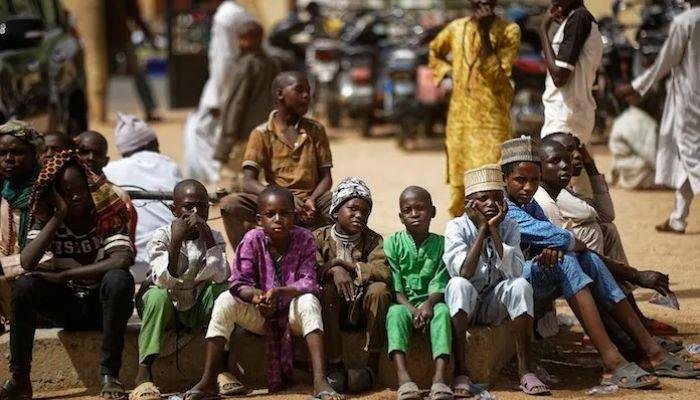
Nigeria is at a breaking point. For the first time in decades, the numbers are not just bad — they are historic. According to the World Bank’s latest Nigeria Development Update, poverty in the country rose to 63% in 2025, translating to about 140 million people living below the poverty line. Projections for 2026 are even starker: the poverty rate is expected to peak at 62% — about 141 million Nigerians.

That is not a marginal increase. It is a collapse.

The scale of the crisis

The trajectory tells the story.

  • 2018/19: Poverty stood at 40%, or 81 million people
  • 2022/23: It surged to 56%, or 113 million people
  • 2024: 61%
  • 2025: 63%, about 140 million people
  • 2026 projection: 62%, about 141 million people

Between 2019 and 2023 alone, average consumption per person fell by 6.7%, with urban households hit hardest.

Beyond the headline rate, the depth of deprivation is worsening. The share of “ultra-poor” Nigerians — those unable to afford basic calories even if they spend all their income on food — jumped from 14% in 2019 to 27% in 2023, about 70 million people. Food accounts for up to 70% of total consumption among poorer Nigerians, leaving them brutally exposed to price shocks.

PwC has warned that rising inflation, high interest rates, and naira depreciation could push an additional 13 million Nigerians below the national poverty line. Multidimensional poverty is even worse: the NBS MPI shows about two-thirds of Nigerians are deprived of health care, education, food security and decent employment. In Sokoto, 90.5% of the population is multidimensionally poor.

Put simply: the rate of poverty has never been rising to a magnitude one can never imagine due to bad and weak policies. We are not talking about a slow decline. We are talking about millions falling into poverty every year — about 14 million people fell into poverty between 2023 and 2024 alone.

Why this is happening now

The World Bank points to three drivers: still timid growth, remaining inflationary pressure, particularly from food prices, and weak social protection systems.

But data alone doesn’t explain the pain. Policy choices do.

Growth in Nigeria today is described as “imbalanced, uneven, exclusionary” — driven by services and capital-intensive industries while agriculture and the informal sector, where most Nigerians earn a living, lag behind. When growth bypasses the poor, it ceases to be development and becomes mere arithmetic.

Experts also cite structural neglect and a governance culture that prioritizes access to state resources over delivery of public goods. At the same time, public debt climbed to N159.28 trillion by December 31, 2025, with the IMF warning that fiscal adjustment could force cuts to health, education, and social protection — the very things that keep people from falling further.

A personal note

I need to be honest here: I participated in the emergence of this government with my resources, effort and influence thinking they were for real and will bring change to Nigeria.

Like many Nigerians, I believed. I believed that competence would matter more than connections. That policies would be built around data, not optics. That the economy would work for the market woman in Onitsha, the farmer in Kaduna, the graduate in Lagos — not just for a few.

The numbers today tell a different story. When 141 million people are projected to be poor next year, and when poverty is accelerating instead of stabilizing, hope is not enough. We must confront what went wrong.

What this means for all of us

Poverty at this scale is not just an economic problem. It is a security problem, a health problem, and a democracy problem. The World Bank notes that household incomes have not grown fast enough to offset still-elevated inflation, and poverty has yet to begin declining. A larger share of the population struggling to meet basic needs weakens domestic consumption, limits productivity, and strains public finances.

The political response so far has been dismissive. Officials have called credible data “unrealistic” and asked that it be “properly contextualised”. But denial will not erase hunger, nor will spin put food on the table.

The path forward

If there is any lesson in these statistics, it is this: bad leadership has a cost, and Nigerians are paying it. The precedents we tolerate today in economic management, in social protection, in accountability — become the standard we all live under tomorrow.

We need urgent, honest interventions:

1. Targeted social protection that actually reaches rural and northern communities where hardship is deepest
2. Policy coherence that links growth to jobs in agriculture and the informal economy
3. Fiscal responsibility that protects essential services instead of cutting them

Nigeria has survived hard times before. But we have never faced a moment where so many people were pushed to the edge, so quickly. The data is clear. The question now is whether leadership will match the scale of the crisis.

Continue Reading
Click to comment

Leave a Reply

Your email address will not be published. Required fields are marked *

Opinion

Nigeria’s Youth Cannot Build the Future on Sachet Alcohol

Published

on

By Comrade Yekini Lukmon (YKL)

The strength of every nation lies in the quality, productivity and wellbeing of its youth. They constitute the largest segment of the workforce, drive innovation, create wealth and sustain economic growth. Any government genuinely committed to national development must therefore place the welfare, empowerment and productivity of young people at the centre of its policies.

A nation cannot expect sustainable economic progress when millions of its young people are unemployed, underemployed or abandoned to social vices. Gainful employment, vocational training, entrepreneurship support and meaningful engagement are not merely social programmes; they are strategic investments in national security and economic prosperity. As the old saying goes, an idle mind is the devil’s workshop. Youths who are productively engaged are far less likely to become victims of crime, drug abuse or other destructive behaviours.

One of the gravest but often overlooked threats to Nigeria’s future is the widespread consumption of highly concentrated sachet alcohol. Across the country, these products are sold openly in motor parks, roadside stalls, neighbourhood shops and even by hawkers navigating traffic congestion, almost as commonly as sachet water. Their availability has become so normalised that many Nigerians scarcely question the danger they pose.

The affordability and portability of these alcoholic sachets make them especially attractive to young people and, disturbingly, to underage consumers. Because they are inexpensive and easy to conceal, many youths carry them in their pockets and consume them with little fear of detection. What should alarm policymakers is not merely the growing rate of alcohol consumption but the culture of dependence that is gradually taking root among the nation’s most productive population.


The consequences extend beyond individual health. Excessive alcohol consumption contributes to liver disease, mental health disorders, impaired judgment and reduced cognitive performance. These conditions diminish the capacity of young Nigerians to innovate, learn, compete and contribute meaningfully to national development. A country whose workforce is increasingly weakened by substance abuse cannot realistically aspire to economic transformation.

The economic implications are equally disturbing. Productivity declines when workers are physically and mentally impaired. Businesses suffer from absenteeism and reduced efficiency, while government bears an increasing healthcare burden. Resources that should be invested in education, infrastructure and industrial development are instead diverted to treating preventable illnesses associated with alcohol abuse. This is not merely a public health issue; it is an economic emergency.


It is therefore unsurprising that public health experts have consistently warned against the proliferation of these products. The Federal Government’s decision to ban the production and sale of alcoholic beverages packaged in sachets and bottles below 200 millilitres was a commendable step. However, the policy has achieved little because enforcement remains weak and inconsistent.


Manufacturers and labour unions have argued that a strict implementation of the ban could threaten investments and result in job losses. While those concerns deserve consideration, they cannot outweigh the long-term health and economic costs of exposing an entire generation to harmful alcohol consumption. Governments exist to protect lives and promote the public good, even when doing so requires difficult policy choices.


Nigeria must not sacrifice the future of its youth for short-term commercial interests. Stronger enforcement of existing regulations, stricter restrictions on alcohol advertising targeted at young people, sustained public awareness campaigns and expanded rehabilitation services should form part of a comprehensive national strategy to combat alcohol abuse.


The nation’s future depends on a healthy, educated and productive youth population. Allowing sachet alcohol to continue flooding the market without effective control is equivalent to weakening the very engine of Nigeria’s economic growth. The time for decisive action is now. Protecting Nigerian youths is not simply a health policy—it is an economic necessity and a patriotic duty. 

By Comrade Yekini Lukmon (YKL)

yklukmon@gmail.com

07065313924


Continue Reading

Headlines

Dodan Barracks, 35 Years After Power Left

Published

on

Dodan Barracks, 35 Years After Power Left

Key Takeaways

  1. Dodan Barracks was once a symbol of power and community life.
    Before the seat of power moved to Abuja, the barracks served as Nigeria’s political nerve centre while fostering close relationships between soldiers and civilians in neighbouring Obalende.
  2. Residents remember a safer, more vibrant era.
    Former residents recalled enjoying reliable electricity, water, recreational facilities, and the lively Mammy Market, with many describing the area as more secure and socially connected than it is today.
  3. Security has tightened as the barracks evolves.
    While the Nigerian Army says renovation and welfare improvements are ongoing, access to the barracks is now heavily restricted, reflecting changing security realities and marking a sharp contrast with its once open and welcoming atmosphere.

Dodan Barracks, located in Ikoyi, Lagos, played host to the former seat of power in Nigeria. But today, 35 years after, it seems to be something else entirely.

It was the residence of heads of state in Nigeria and headquarters of the defunct Supreme Military Council from 1966 until the nation’s capital was moved to Abuja in 1991.The name, “Dodan” originated from the site of a battle fought during World War II by the 82nd West African Division in Burma, which had a strong Nigerian contingent. Later on, and more famously, Dodan Barracks was one of the bases used by some military officers who attempted to overthrow Nigeria’s civilian government in January 1966 and it was also a key location seized in the April 1990 coup attempt by Major Gideon Orkar. One can imagine the grandeur and fortification of the once-powerful palace of the most powerful man in the land, but 35 years after the transfer of the seat of power, this seems to be waning.

Lasisi Sule, 60, who was born in Odo Street, Obalende, told Daily Trust that growing up in the area was a privilege for him and his siblings because of the exposure to certain things teenagers in other parts of Lagos lacked. He recalled how he related to the children of military personnel at the barracks and how those relationships grew into trust and harmony, even later in life. He added that the barracks was his second home, with frequent visits to play football, fetch water, pluck fruits and relax.

Sule said the mutual love played out during the 1990 Gideon Orkar coup when  soldiers loyal to the government spared the lives of civilians living in Obalende when fleeing dissident soldiers were trailed to the neighbourhood. No civilian, he added, was hurt by the soldiers during their search for the dissidents who took refuge  in the houses there in order to escape after the coup failed.

Dodan Barracks, 35 Years After Power Left


Sule also recalled how comfortable life was in the military base, compared to the surroundings. To him, the Mammy Market in those days was the centre of social life for soldiers and their civilian friends. He added that the nature of food and drinks served at the market made it unavoidable for both civilians and soldiers. “There was good food and drinks at the Mammy Market in those days which made the place lively and created an avenue for civilians and soldiers to deepen interaction,” he said.

Sule said the old Dodan Barracks gradually lost its originality while the free, convivial atmosphere has dwindled, apparently due to the increasing insecurity in the country, just as he added that the market is no longer as lively.

Abass, 50, lives at Ajeniya Street in Obalende. He said he once had what he called a  ‘privileged’ handshake with the then Head of State, General  Ibrahim Babangida after Juma’at prayers at the Dodan  Barracks Central mosque on a Friday. He said it is something he would forever remember as one of the privileges of residing at Obalende.

Abass said that singular act not only endeared him to the former military ruler, but also prepared him to look forward to occupying a position of authority in the country. He recalled how availability of water, electricity and recreational facilities at the barracks made him ‘abandon’ his residence to have a good feel of life in the military base.

“In those days, I had many friends who were children of soldiers. It enabled me to freely enter the barracks. Because there was no regular electricity and water in Obalende, I chose to frequent the barracks to fetch water and iron my clothes and even eat what I liked there. I also played football and enjoyed other recreational facilities at the barracks,” he added.

Abass said Dodan Barracks made Obalende very secure in those days and people about moved freely, even at night without fear of violence or armed robbery. He recalled that soldiers too went outside the barracks to have a ‘taste’ of Obalende and interacted with civilians, adding, “There was no dull moment in those days as civilians in Obalende and soldiers at the barracks cohabited without any rancour.’

Augustina Gambo, who sells alcoholic drinks at Ajeniya Street in Obalende, recalled how the business boomed before the relocation of the seat of power to the Federal Capital Territory, Abuja. “My beer business boomed in those days because of increased patronage from soldiers who frequented here. There was no dull moment between civilians in Obalende and the soldiers who patronised me,” she added.

According to her, it was easy for her to enter the barracks to fetch water and see some of her friends there, unlike now that access is highly restricted.

To her, the sweet memories of the barracks are gradually fading as her beer business is no longer yielding the expected results. She, however, maintained that the proximity of the barracks to Obalende still shields the area from crime, as entering the barracks now subjects one to thorough search and interrogation. “One would be asked by soldiers to call one’s host before being allowed in,” she said, adding that soldiers at the barracks then were friendlier than those there now.

Anani Christopher, 45, who lives on Obalende Road, shares a similar experience with other residents, stating that it was a place where many youngsters had friends. He also told Daily Trust that he frequently visited the barracks to play football, eat at the Mammy Market, and so on.

The then spokesman of 81 Division of the Nigerian Army, Lt. Col. Olaolu Daudu, said there is an ongoing renovation of buildings at the barracks, in line with the welfare programme of the Chief of Army Staff. “Dodan Barracks is among the units and formations under the direct supervision of 81 Div. The barracks’ buildings, though not recent, are among the best in the Lagos area. The Division is responsible for both Ogun and Lagos states. Lifestyle in Dodan Barracks, like the one at any other barracks, is still what it was,” he said.


Continue Reading

Headlines

SSCE Fee Hike: Government Must Balance Cost Recovery with Access to Education

Published

on

SSCE Fee Hike: Government Must Balance Cost Recovery with Access to Education By Comrade Yekini Lukmon R. Afolabi  Telephone: 07065313924 Email: yklukmon@gmail.com 
The decision by the Federal Government to approve an 82 per cent increase in the registration fees for the West African Senior School Certificate Examination (WAEC) and the National Examinations Council (NECO), raising the uniform fee from ₦27,500 to ₦50,000 with effect from March 2027, deserves careful reconsideration. While the rationale behind the adjustment may be understandable, its economic and social implications cannot be ignored.
No one disputes the need for periodic reviews of examination fees. The cost of conducting credible public examinations has risen significantly due to inflation, higher logistics expenses, enhanced security requirements, technological innovations, the rising cost of printing materials, and improved remuneration for permanent and ad hoc personnel. These realities are genuine and cannot simply be wished away.
However, public policy should not be formulated in isolation from the prevailing realities confronting citizens. Today, millions of Nigerian households are battling severe economic hardship. Food inflation remains high, transportation costs continue to rise, and the purchasing power of the average family has been severely eroded. For many parents, providing three meals a day has become a struggle. Introducing an 82 per cent increase in examination fees under these circumstances risks placing an unbearable burden on families already stretched beyond their limits.
Nigeria is home to far more struggling parents than affluent ones. A visit to public secondary schools across the country is enough to appreciate the financial realities confronting ordinary families. For many students, the inability to pay examination fees could mean delayed graduation or outright withdrawal from school. Such an outcome would be a setback for a nation that urgently needs an educated and skilled workforce to drive economic growth.
This issue should not be reduced to partisan politics or sensational criticism. Rather, it calls for constructive engagement between government, education stakeholders, parents, and the examination bodies. While the reasons advanced for the increase are legitimate, there is still room for a balanced solution that protects the financial sustainability of WAEC and NECO without denying deserving students access to education.
Education remains one of the strongest instruments for national development. It builds human capital, reduces poverty, promotes social mobility, and strengthens national productivity. Any policy that inadvertently erects financial barriers to secondary education ultimately undermines the country’s long-term development objectives. Equal educational opportunities should not become the exclusive preserve of children from wealthy homes.
Lagos State offers a practical example worthy of consideration. Since 1999, successive administrations have sustained a policy of paying WAEC registration fees for eligible public secondary school students. Initiated during the administration of President Bola Ahmed Tinubu as Governor of Lagos State, the programme has eased the financial burden on parents and enabled thousands of students to complete their secondary education. Many beneficiaries of that intervention are Today making meaningful contributions to Nigeria’s economy and society. I proudly count myself among them.
This is not necessarily an argument that every state government should assume responsibility for paying SSCE examination fees. Rather, it is an appeal to the Federal Ministry of Education and the relevant examination bodies to review the proposed increase with greater sensitivity to the prevailing economic realities. Alternative funding mechanisms, phased adjustments, targeted subsidies for indigent students, or other creative solutions should be explored before imposing such a steep increase.
Education should never become a privilege reserved for those who can afford it. As Nigeria grapples with the challenge of building a prosperous and inclusive society, policies that expand access to education must take precedence over those that inadvertently shut the door on the children of ordinary citizens. Government must therefore strike a careful balance between recovering operational costs and preserving every Nigerian child’s right to quality education.
Let’s leave no child behind.
By Comrade Yekini Lukmon R. Afolabi
Telephone: 07065313924
Continue Reading

Trending

Copyright © 2023 - 2026 DailyMirror Nigeria. Design by AspireWeb.ng, powered by WordPress.