
Politics
Malami Cannot Wash Off His Legacy of Impunity with ADC Defection — Citizens Alliance

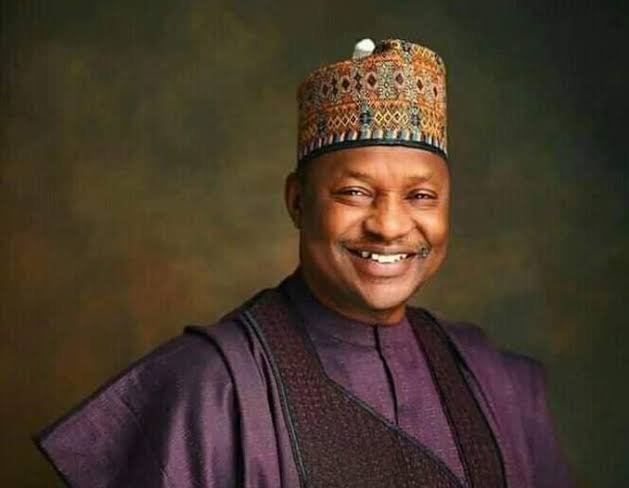
A civic watchdog group, the Citizens Alliance for Rule of Law and Justice (CARoLJ), has condemned former Attorney-General of the Federation and Minister of Justice, Abubakar Malami (SAN), over his recent criticism of the Bola Tinubu administration, describing his defection from the All Progressives Congress (APC) to the African Democratic Congress (ADC) as an act of “political desperation dressed in borrowed morality”.
In a statement issued in Kaduna on Sunday and signed by the group’s president, Aminu Jallo, CARoLJ said Malami’s remarks accusing the current government of neglecting security and plunging Nigerians into poverty are not only ironic but deeply insulting to the intelligence of Nigerians who lived through “his era of constitutional vandalism and legal impunity”.
“Abubakar Malami presided over one of the darkest periods in Nigeria’s legal history. To hear him now speak of justice, equity, and national renewal is to witness a man attempting to whitewash a legacy drenched in disobedience of court orders, protection of corrupt political elites, and flagrant misuse of the instruments of state power,” Jallo said.
Malami, who served as Minister of Justice from 2015 to 2023, formally announced his defection to the ADC on Wednesday, stating that the party offers a coalition to “rescue Nigeria from collapse”. He decried insecurity and economic hardship, particularly in northern Nigeria, and accused the APC-led government of prioritising propaganda over governance.
But CARoLJ said Malami’s sudden concern for national suffering was “both cynical and dishonest,” pointing to a long record of policy failures, compromised prosecutions, and judicial sabotage while he was in office. The group questioned Malami’s moral standing to speak about national decline, given what it described as his direct role in dismantling the very institutions Nigerians now struggle to rebuild.
“Under Malami, the Federal Ministry of Justice became a political safe haven for the corrupt and a weapon against the vulnerable. He consistently ignored valid court rulings, frustrated landmark anti-corruption trials, and presided over a justice system that increasingly served the powerful at the expense of the people,” Jallo said.
The group cited the controversial 2017 reinstatement of Abdulrasheed Maina, the former chairman of the Pension Reform Task Team, as one of several cases where Malami allegedly enabled impunity. Despite being on trial for massive pension fraud, Maina was smuggled back into the civil service, reportedly with Malami’s knowledge and backing.
“Malami owes Nigerians an explanation for how a fugitive facing corruption charges was not only reinstated but promoted. That scandal alone should permanently disqualify him from any public office,” Jallo said.
CARoLJ also condemned the role Malami played in the 2022 presidential pardon granted to two convicted ex-governors — Joshua Dariye of Plateau State and Jolly Nyame of Taraba State — who were both jailed for stealing public funds. The controversial pardon was processed through Malami’s ministry and widely condemned by civil society groups.
“While honest Nigerians were imprisoned for petty theft, Malami helped secure clemency for men convicted of looting billions. He cannot now pretend to be a champion of the poor,” Jallo stated.
Beyond high-level corruption, the group alleged that Malami allowed the Economic and Financial Crimes Commission (EFCC) to become a political tool, selectively targeting opponents of the government while shielding allies and loyalists.
Under his supervision, the commission was, according to CARoLJ, “reduced to a shadow of itself — compromised, erratic, and often weaponised for vendettas”.
The group pointed to the irony of Malami’s selective justice, noting that while his ministry turned a blind eye to dubious transactions involving his allies and family, it aggressively pursued whistleblowers and activists.
“It was during Malami’s tenure that the EFCC lost its moral compass. Investigations were stalled, evidence disappeared, and known associates of the former minister were immune from scrutiny,” Jallo said.
“Malami failed to act on reports indicting senior government figures — and yet, he never hesitated to file charges against voices critical of his actions. He made a mockery of justice.”
CARoLJ further criticised the asset recovery regime under Malami’s watch, describing it as a “spectacle without substance” and alleging that billions in recovered funds were either mismanaged or mysteriously unaccounted for.
“The so-called asset recovery framework championed by Malami was a farce. Nigerians were shown figures but never the trail. There was no transparency. The process became an avenue for self-enrichment and patronage. His office operated more like a political vault than a justice ministry,” Jallo alleged.
According to the group, public suspicion around Malami’s stewardship of recovered assets only deepened when reports surfaced suggesting a sudden accumulation of unexplained wealth among his close associates — including members of his immediate family.
The group described as “morally offensive” the public displays of opulence by members of Malami’s family while the country grappled with deepening poverty.
“It is not lost on Nigerians that during Malami’s time in office, his children lived lavishly, displaying wealth that bore no proportion to any legitimate income. From luxury cars to extravagant weddings, the evidence was not just visible — it was flaunted,” Jallo said.
“One of Malami’s sons reportedly owns a multi-billion-naira event centre in Kebbi. At the height of public anger over poverty and inflation, the family flew in private jets for wedding ceremonies and flaunted exotic vehicles in Abuja. These are not just optics — they are symbols of unchecked abuse of office and unexplained wealth.
“One cannot preach reform while living off the ruins of abuse. Malami’s household became a symbol of reckless entitlement. His defection to ADC is not about rescuing Nigeria — it is about rescuing his ambitions.”
CARoLJ also recalled that several major corruption cases were either inexplicably withdrawn or bungled under Malami’s leadership, including the high-profile case involving former Minister of Petroleum, Diezani Alison-Madueke, and the controversial handling of oil contracts involving foreign interests, which led to legal defeats and settlements that cost Nigeria billions.
“Several landmark corruption cases collapsed under Malami’s watch — not for lack of evidence, but because of compromised prosecution and political interference. It was under Malami’s supervision that the government suffered repeated legal setbacks abroad, including in the P&ID arbitration case. His poor legal strategy and politicisation of sensitive files cost this country dearly,” Jallo said.
The group described Malami’s defection to the ADC as “a soft launch of his long-suspected ambition to contest the 2027 governorship election in Kebbi State,” and warned voters not to fall for what it called his “reinvention strategy”.
“Abubakar Malami’s defection to the ADC is not a patriotic move — it’s a calculated rebranding effort by a man desperate to escape the shadow of his own legacy. Nigerians must not be deceived. You cannot preside over years of constitutional sabotage, ignore court orders, protect looters, and then suddenly claim to be the face of national rescue. Malami is not joining the ADC to save Nigeria — he’s joining to save himself,” Jallo said.
Reacting directly to Malami’s call for Nigerians to “reclaim the nation” through the ADC, CARoLJ dismissed it as hypocritical.
“The Nigeria Malami claims to be rescuing is the same Nigeria he helped bleed for nearly a decade. He now talks about banditry and hardship in the North — but was silent when communities were razed in Zamfara, Kebbi, and Borno under Buhari, while he remained fixated on political consolidation,” Jallo noted.
“To the people of Kebbi: Malami heard your cries during years of banditry and silence was his only response. He cannot now claim to be your liberator.
“Nigerians must resist the ongoing attempt by disgraced political actors to hide behind new parties and forgotten slogans. True reform begins with accountability — not defection.”
Malami Cannot Wash Off His Legacy of Impunity with ADC Defection — Citizens Alliance
A civic watchdog group, the Citizens Alliance for Rule of Law and Justice (CARoLJ), has condemned former Attorney-General of the Federation and Minister of Justice, Abubakar Malami (SAN), over his recent criticism of the Bola Tinubu administration, describing his defection from the All Progressives Congress (APC) to the African Democratic Congress (ADC) as an act of “political desperation dressed in borrowed morality”.
In a statement issued in Abuja on Sunday, and signed by the group’s president, Dr. Hamzat Tunde Ayoola, CARoLJ said Malami’s remarks accusing the current government of neglecting security and plunging Nigerians into poverty are not only ironic but deeply insulting to the intelligence of Nigerians who lived through his tenure of constitutional vandalism and legal impunity.
“Abubakar Malami presided over one of the darkest periods in Nigeria’s legal history. To hear him now speak of justice, equity, and national renewal is to witness a man attempting to whitewash a legacy drenched in disobedience of court orders, protection of corrupt political elites, and flagrant misuse of the instruments of state power,” Dr Ayoola said.
Malami, who served as Minister of Justice from 2015 to 2023, formally announced his defection to the ADC on Wednesday, stating that the party offers a coalition to “rescue Nigeria from collapse.” He decried the insecurity and economic hardship, particularly in northern Nigeria, and accused the APC-led government of prioritising propaganda over governance.
But CARoLJ said Malami’s sudden concern for national suffering was “both cynical and dishonest,” pointing to a long record of policy failures, compromised prosecutions, and judicial sabotage while he was in office.
“Under Malami, the Federal Ministry of Justice became a political safe haven for the corrupt and a weapon against the vulnerable. He consistently ignored valid court rulings, frustrated landmark anti-corruption trials, and presided over a justice system that increasingly served the powerful at the expense of the people,” he said.
The group cited the controversial 2017 reinstatement of Abdulrasheed Maina, the former chairman of the Pension Reform Task Team, as one of several cases where Malami allegedly enabled impunity. Despite being on trial for massive pension fraud, Maina was smuggled back into the civil service, reportedly with Malami’s knowledge and backing.
“Malami owes Nigerians an explanation for how a fugitive facing corruption charges was not only reinstated but promoted. That scandal alone should permanently disqualify him from any public office,” he said.
The group also criticised Malami’s role in the controversial presidential pardon granted to two convicted ex-governors — Joshua Dariye of Plateau State and Jolly Nyame of Taraba State — who were both jailed for stealing public funds. The pardon, granted in 2022 under President Muhammadu Buhari, was processed through Malami’s ministry and widely condemned by civil society groups.
“While honest Nigerians were imprisoned for petty theft, Malami helped secure clemency for men convicted of looting billions. He cannot now pretend to be a champion of the poor.”
CARoLJ further accused Malami of weakening Nigeria’s anti-corruption efforts through reckless legal advice, premature withdrawal of cases, and persistent interference in the operations of agencies like the EFCC and ICPC.
The civic group further listed several major corruption cases that were either inexplicably withdrawn or bungled under Malami’s leadership, including the high-profile case involving former Minister of Petroleum, Diezani Alison-Madueke, and the controversial handling of oil contracts involving foreign interests, which led to legal defeats and settlements that cost Nigeria billions.
“Several landmark corruption cases collapsed under Malami’s watch — not for lack of evidence, but because of compromised prosecution and political interference. It was under Malami’s supervision that the government suffered repeated legal setbacks abroad, including in the P&ID arbitration case. His poor legal strategy and politicisation of sensitive files cost this country dearly. Let’s not forget Diezani’s case,” Ayoola said.
The group described Malami’s defection to the ADC as “a soft launch of his long-suspected ambition to contest the 2027 governorship election in Kebbi State,” and warned voters not to fall for what it called his “reinvention strategy”.
“Abubakar Malami’s defection to the ADC is not a patriotic move — it’s a calculated rebranding effort by a man desperate to escape the shadow of his own legacy. Nigerians must not be deceived. You cannot preside over years of constitutional sabotage, ignore court orders, protect looters, and then suddenly claim to be the face of national rescue. Malami is not joining the ADC to save Nigeria — he’s joining to save himself,” Ayoola said.
Reacting directly to Malami’s call for Nigerians to “reclaim the nation” through the ADC, CARoLJ dismissed it as hypocritical.
“The Nigeria Malami claims to be rescuing is the same Nigeria he helped bleed for nearly a decade. He now talks about banditry and hardship in the North — but was silent when communities were razed in Zamfara, Kebbi, and Borno under Buhari, while he remained fixated on political consolidation,” Ayoola noted.
“To the people of Kebbi: Malami heard your cries during years of banditry and silence was his only response. He cannot now claim to be your liberator now.
“Nigerians must resist the ongoing attempt by disgraced political actors to hide behind new parties and forgotten slogans. True reform begins with accountability — not defection.”


2026 Ballon D’Or: Raphinha Names Player Who Should Win It “By A Mile”

EPL: Why I Played 3 Teenagers Against Brentford – Chelsea Coach, Alonso

World Cup 2026: Yamal Disagrees With FIFA, Names Best Player At Tournament

Now Hiring: Academic and Technical Staff at a Leading Private University in Gombe State

LAUTECH 18th Convocation: EEE Class ’05 Alumni Celebrate as Electronic and Electrical Engineering Department Produced the School’s Overall Best Graduating Student


