Uncategorized
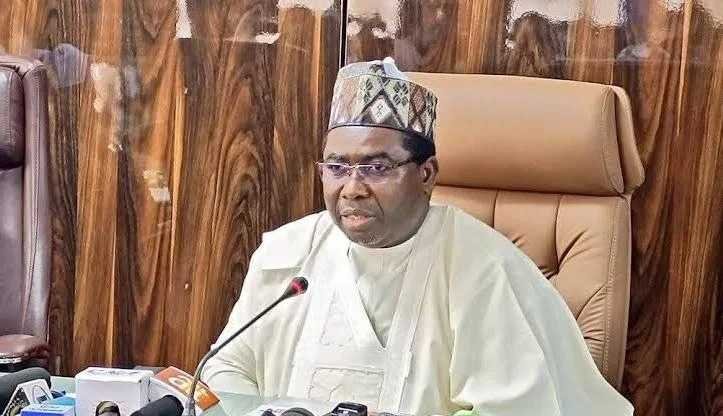
Northern Governors align on urgency of investing in first 2,000 days of lives

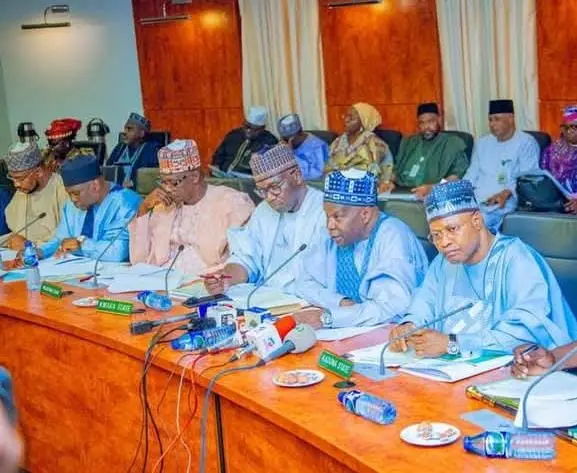
The Northern Governors Forum (NGF), has aligned on the urgency of investing in the first 2,000 days of lives.
The “First 2,000 Days” refers to the period from conception to approximately age five, which is critically important for a child’s long-term development
During this phase, a child’s brain and body undergo rapid development, making adequate nutrition, healthcare, stimulation and foundational learning interventions crucial for lifelong health, learning, and productivity.
The News Agency of Nigeria (NAN), reports that the NGF members were in Kaduna on Monday and Tuesday for a joint emergency meeting.
NAN also reports that the NGF on Tuesday, hosted the World Bank.
The Team Lead for Stunting and Early Years at the World Bank, Dr Ritgak Tilley-Gyado, outlined the demographic, economic and service-delivery imperatives for strengthening the first 2,000 days of infants lives.
Tilley-Gyado said they were at the forum as part of the ongoing national consultations on strengthening Nigeria’s human capital, which focused on the country’s early years priorities, with emphasis on nutrition, early learning and child development in the first 2,000 days of life.
She explained that the World Bank support is channeled through the Human Capital Development Core Working Group (HCD-CWG), which is a committee of the National Economic Council coordinated by the Office of the Vice President.
The CWG supports and Analytical Advisory Group, forms part of a broader sequence of engagements with federal ministries, development partners and state governments aimed at aligning evidence, policy options and delivery pathways for a future early years programme.
In her presentation to the forum, Tilley-Gyado, highlighted the importance of preventing stunting, supporting early stimulation and foundational learning, and strengthening family systems to empower women and ensure responsive caregiving and positive parenting.
She described building strong early years outcomes as a people, economic and a social stability strategy, particularly for regions experiencing demographic pressures.
Also, Dr Mathew Verghis, World Bank Country Director for Nigeria, said that states hold the largest delivery responsibility and are therefore central to shaping a nationally coherent, yet locally grounded approach that can deliver results at scale.
Verghis emphasised that the conversations, reflect an emerging recognition that Early Years outcomes depend on multisectoral action, requiring strong collaboration and convergence across health and nutrition, education, WASH, women’s empowerment, food and diets, agriculture and social protection.
He, therefore, said the consultations were part of a deliberate, evidence-first process to build a nationally coherent and state-responsive Early Years platform grounded in local realities and multisectoral priorities.
“Nigeria’s Early Years agenda is expected to form a core component of broader human capital efforts being advanced under the National Economic Council’s Human Capital Development framework,”he said.
Responding, Gov. Umar Namadi of Jigawa, opened the interventions by highlighting the strong links between poverty and poor early childhood development outcomes.
He commended the World Bank’s results based instruments and offered constructive suggestions for strengthening them.
Also, Gov. Umaru Bago of Niger, underscored the importance of micronutrients, including fortified and biofortified foods already being produced locally.
Gov. Caleb Mutfwang of Plateau, acknowledged the complexity of multisectoral initiatives, affirming his commitment to strengthening evidence delivery arrangements.
Gov. Dauda Lawal of Zamfara, emphasised that while many challenges were legacy issues, the region now has a real opportunity to turn the tide through decisive early years investments.
Gov. Inuwa Yahaya of Gombe State, expressed satisfaction with the state’s strong partnership with the World Bank.
Other Governors welcomed the analysis and affirmed their readiness to engage further.
Their consensus was that investing in the 2,000 early days of children is the most important investment they can make if they want peace, productivity and a stronger northern economy.
The governors stated that the region cannot afford to miss another generation.
“The Early Years agenda must reflect our realities and support our frontline workers.
“We are ready to take the leadership to shape what this becomes,”they said.
Uncategorized
I Don’t Love Yvonne Jegede Anymore, But I’ll Kill For Her – Nollywood Actor, Kunle Fawole


Nollywood actor Kunle Abounce Fawole has revealed that he no longer has romantic feelings for his ex-wife, actress Yvonne Jegede. However, he said he would do everything possible to protect her if she was ever in danger.
Fawole made the statement during an interview with media personality Chude Jideonwu, where he reflected on their failed relationship and how he now relates to his ex-wife.
Speaking about the breakup, he said, “I had a girlfriend once, but it didn’t work.”
When asked why the relationship ended, he replied, “I think we’re just, on different planes. I’d rather just be the one to say, ‘Oh, everything was my fault,’ so to speak, I don’t like the enmity of things.”
The actor explained that he does not believe in holding grudges or avoiding people he once loved. According to him, he would gladly greet his ex-wife if they met because he has no reason to be hostile toward her.
He said, “I don’t want to see somebody that I used to be with down the street, and I turn my face away.”
When asked if he still loves Yvonne Jegede, Fawole simply responded, “No.”
Despite saying he no longer loves her romantically, the actor stressed that his respect and sense of responsibility toward her remain the same because she is the mother of his son.
He added, “Yes, she’s the mother of my son. I’m somewhere, and she’s in trouble, somebody is doing something, I’ll try my best to kill the person.”

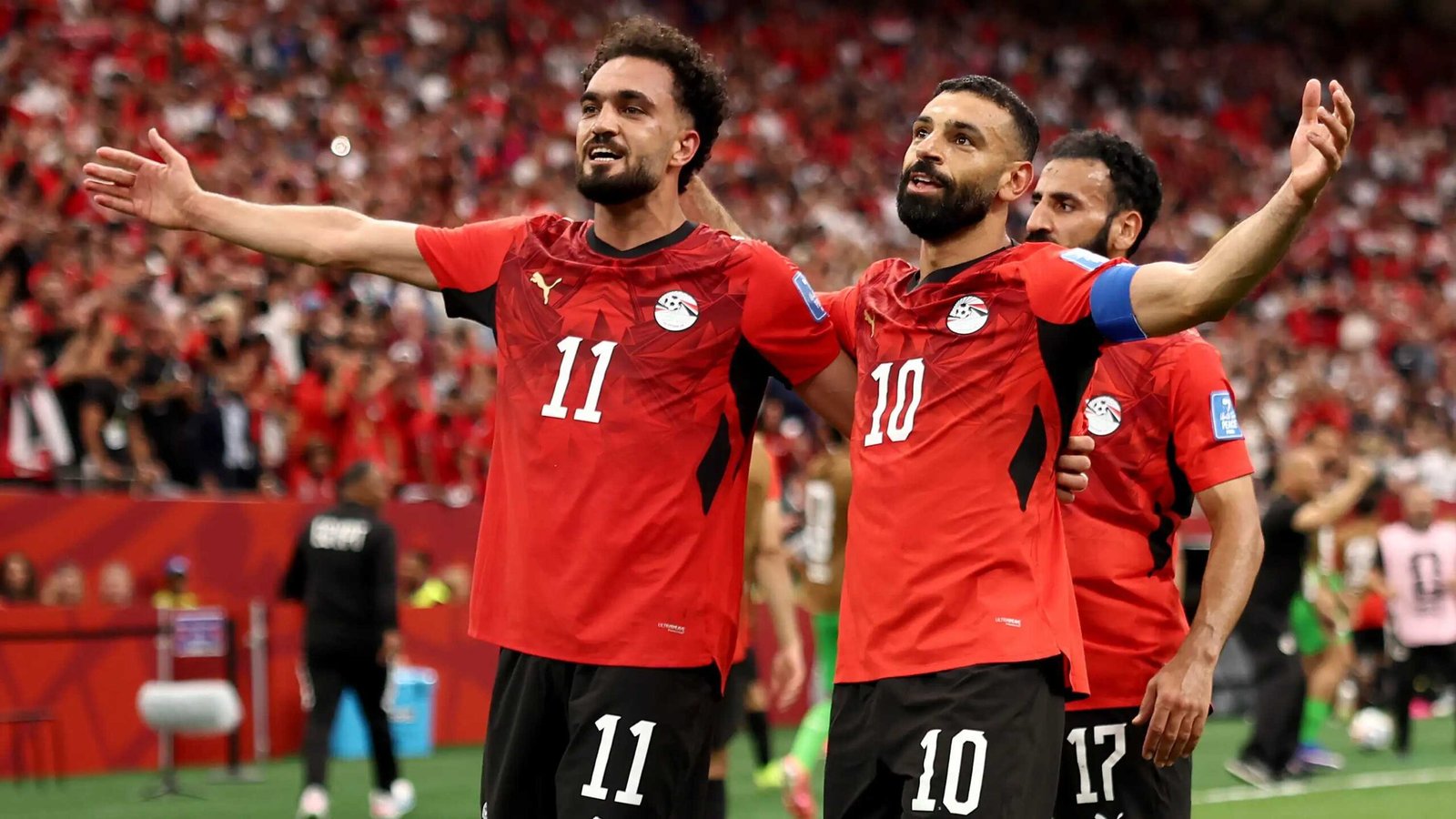
Egypt made history on Sunday night in Vancouver, defeating New Zealand 3-1 to record their first-ever FIFA World Cup win. The result lifted the Pharaohs to the top of Group G with four points, while New Zealand remained bottom with just one.
The match began with New Zealand showing early intent. Defender Finn Surman rose highest to head home in the 15th minute, giving the Oceania side a shock lead. Egypt struggled to find rhythm in the first half, with misplaced passes and a lack of penetration in attack.
Coach Hossam Hassan’s halftime talk proved decisive. Egypt returned with renewed energy, pressing higher and moving the ball faster. Their persistence paid off in the 58th minute when Mostafa Zico equalised with a composed finish inside the box.
Ten minutes later, Mohamed Salah, Egypt’s talisman, put his side ahead. The captain latched onto a through ball and calmly slotted past the New Zealand goalkeeper. His influence was undeniable, combining leadership with technical brilliance.
ALSO READ
Draper Energized For Eastbourne Return, Inspired By Murray
Serena Williams Returns To Wimbledon Singles With Wildcard
Mahmoud Trezeguet sealed the victory in the 82nd minute, finishing off a swift counterattack that left New Zealand’s defence exposed. The third goal ended any hopes of a comeback for the Kiwis.
Salah’s performance stood out. Beyond his goal, he provided an assist and constantly troubled New Zealand’s backline. His display earned him the Man of the Match award, underlining his importance to Egypt’s campaign.
For Egypt, the win was more than three points. It marked a historic milestone, ending a 92-year wait since their World Cup debut in 1934. The victory also boosted morale ahead of their next group fixture.
New Zealand, despite their bright start, failed to sustain pressure. Their midfield struggled to cope with Egypt’s intensity after the break, and defensive lapses proved costly. With only one point from two matches, their chances of progressing now hang by a thread.
Coach Darren Bazeley admitted his side lost focus after halftime. “We started well but could not maintain control. Egypt punished our mistakes,” he said.
The result reshaped Group G standings. Egypt now leads with four points, ahead of their next opponents. New Zealand sits bottom, needing a win in their final group match to keep slim hopes alive.
For Egyptian fans, the night in Vancouver will be remembered as a turning point. The Pharaohs not only secured a historic win but also announced themselves as serious contenders in the tournament.
The Independent National Electoral Commission (INEC) has confirmed that preparations for the Enugu North Senatorial District by-election are nearly complete, with the commission recording 87 percent readiness.
Dr. Chukwuemeka Chukwu, the Resident Electoral Commissioner (REC) in Enugu State, disclosed the update during an interview in Enugu. He explained that the commission had already sorted and dispatched non-sensitive materials to its six local government area offices within the senatorial district.
According to Chukwu, the materials will be moved from the council offices to Registration Area Centres (RACs) to ensure smooth distribution ahead of the June 20 poll. He stressed that the commission’s logistics plan was on track and designed to avoid last-minute challenges.
The REC also confirmed that all Bimodal Voter Accreditation System (BVAS) devices had been fully configured and charged. These devices, introduced to enhance transparency and reduce electoral malpractice, will be deployed across polling units in the district.
Chukwu noted that INEC had concluded engagements with critical stakeholders at the state, senatorial, and local government levels. He said the meetings recorded strong participation, with stakeholders raising questions about the process and receiving clarifications from senior officials.
He revealed that four political parties would field candidates in the by-election. While he declined to name them, he explained that INEC had monitored their primaries and submitted reports to the commission’s headquarters for approval.
Training for election officials is scheduled to begin on Friday, covering ad-hoc staff and permanent INEC workers. The training will focus on electoral procedures, use of BVAS devices, and compliance with guidelines.
Security arrangements are also being finalised. Chukwu said INEC would meet with the police and other security agencies to ensure the safety of officials, materials, and voters during the exercise. He emphasised that security presence would be critical to maintaining order and protecting the integrity of the process.
The by-election was scheduled after INEC published the official timetable on May 21. It is expected to fill the vacant seat in the Enugu North Senatorial District, a contest that will test the strength of political parties in the state ahead of the 2027 general elections.
Chukwu assured residents that INEC was committed to conducting a credible poll. He urged voters to participate actively and expressed confidence that the commission’s preparations would guarantee a transparent outcome.


Prince Adeyemi: Ogbomoso elders disown culprit in fake agency scandal

‘No Pretence, I’m Nepo Baby’ – Temi Otedola Openly Admits Family Privileges, Nepotism

Not One Actor Stood By Me – Jaiye Kuti Laments Lack Of Support In Nollywood


-

 Branded Content2 weeks ago
Now Hiring: Academic and Technical Staff at a Leading Private University in Gombe State
-
Cover10 months ago
NRC to reposition train services nationwide.. Kayode Opeifa
-
Entertainment9 years ago
The final 6 ‘Game of Thrones’ episodes might feel like a full season
-
Fashion9 years ago
These ’90s fashion trends are making a comeback in 2017
-
Politics3 months ago
NNPP Diaspora Stakeholder and Key Kwankwaso Ally, Dr. Usman Tijjani Shehu, Rejoins APC
-
 Opinion2 years ago
Bureaucratic Soldier, Kana Ibrahim heads Ministry of Aviation and Aerospace After Transformative Tenure at Defence
-
 Opinion1 year ago
Hon. Daniel Amos Shatters Records, Surpasses Predecessor’s Achievements in Just Two Years
-
Opinion7 months ago
Barrister Somayina Chigbue, Esq: A rising legal leader shaping institutioal excellence in Nigeria