Connect with us

Branded Content

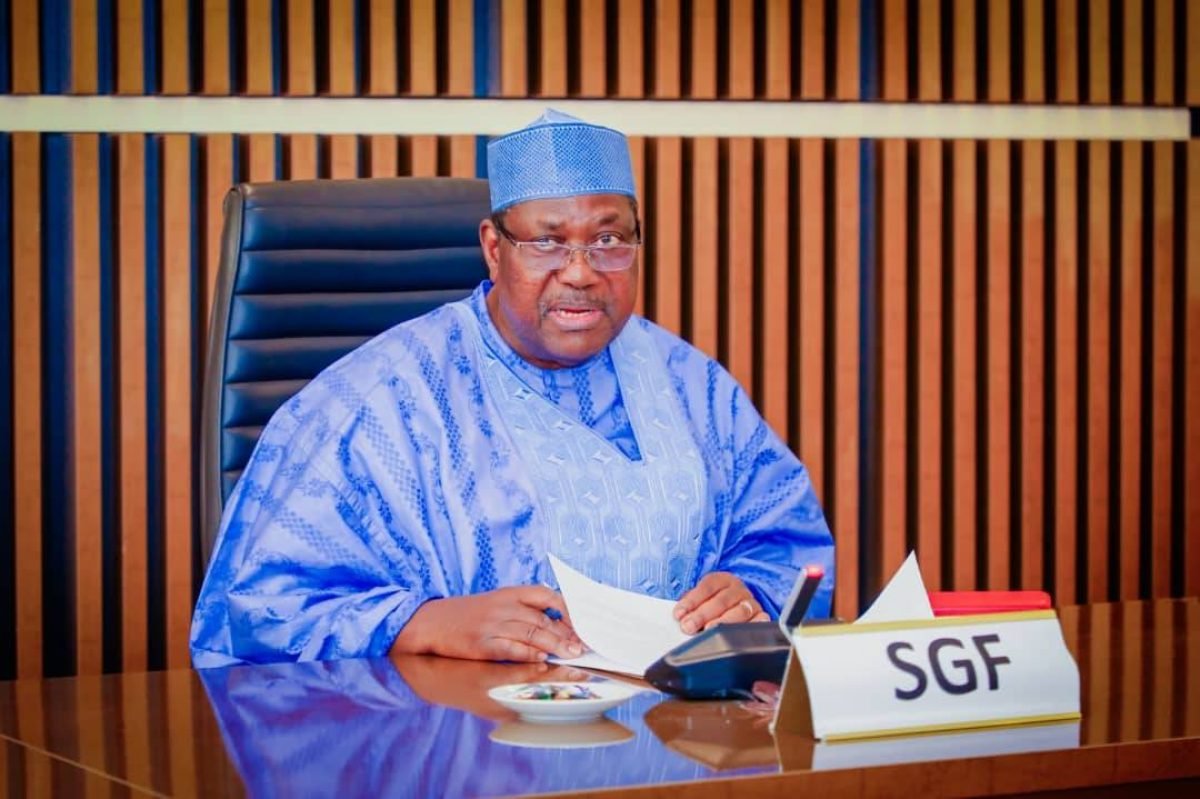
Senator George Akume and the Test of Party Democracy in Benue

Published

on

Senator George Akume, CON, represents a rare breed of Nigerian politician. In a political culture often characterised by impatience, self-interest, and inconsistency, he has distinguished himself through patience, loyalty, and an enduring commitment to teamwork.

I have worked closely with him and witnessed his steady rise since 1999, when he became Governor of Benue State. From there, he went on to serve as Senator, Minister of the Federal Republic, and now Secretary to the Government of the Federation (SGF). His trajectory has been defined not by haste, but by discipline and a remarkable ability to work within the system.

These qualities have been severely tested in recent times, particularly in his relationship with Governor Hyacinth Alia. Governor Alia entered the political arena with significant backing despite having limited political experience, modest resources, and no established structure to contend with seasoned figures such as Barnabas Gemade and Steven Lawani. Against these odds, he emerged victorious.

However, from the moment he assumed office, his relationship with Senator Akume deteriorated without any clear provocation. What began as a strained engagement has since evolved into a persistent political rift.

When discussions later emerged about a potential second term for the governor, many of us close to Senator Akume were understandably concerned by what appeared to be the position of the party’s national leadership. Yet, true to his nature, Akume remained calm and aligned himself with the party, even where the circumstances were personally unfavourable.

This included accepting the controversial dissolution of the duly elected state party leadership and the installation of a caretaker committee—decisions he embraced in the interest of party unity. More notably, when he conveyed the directive that political office holders, including the governor, should be returned unopposed, he did so with restraint, placing party cohesion above personal considerations.

At a gathering in Makurdi, he stated:

“All those elected on the platform of the APC, from the State Assembly to the National Assembly, are expected to return automatically… and of course, the Governor is also expected to be returned.

That position, however, was publicly rejected by Governor Alia, who insisted there would be no automatic tickets, citing the stance of the President and the party’s national leadership. In effect, this signalled a willingness to proceed without regard for the political structure that facilitated his emergence.

For many of us, that moment was decisive.

Senator Akume, despite what can only be described as sustained political provocation, has remained composed—much like the biblical Job—accepting both favourable and difficult circumstances within the party framework.

But this is no longer about personalities.

It is about the survival of political order and internal democracy within the All Progressives Congress (APC) in Benue State.

There is a dangerous assumption at play—that power can be consolidated through imposition, that party structures can be ignored, and that those who built the system can be sidelined without consequence. That assumption is fundamentally flawed.

Those of us who have stood with Senator Akume have exercised restraint out of respect for his disposition. But restraint must not be mistaken for weakness.

The time has come for a necessary shift.

Our leader, Senator George Akume, must now allow his supporters—and indeed all party members—to fully exercise their political rights. Let there be open contest. Let aspirants emerge freely, without intimidation or artificial barriers. Let the people of Benue State decide.

Anything short of this will not only fracture the party; it will erode its credibility beyond repair.

And let no one be under any illusion: if the process is manipulated, if candidates are imposed, if the will of the people is subverted, it will mark the beginning of the end for the APC in Benue State.

As one who has followed Nigerian politics since the 1970s, I say this without hesitation: no political party survives sustained injustice against its own members.

The warning signs are already clear. What happens next will determine whether the party corrects itself—or collapses under the weight of its own contradictions.

A Benue APC chosen by the people, not imposed from above, will not only survive—it will endure and dominate.

Continue Reading
Click to comment

Leave a Reply

Your email address will not be published. Required fields are marked *

Branded Content

June , 12 and the Reconfiguration of the Nigerian state : Rentierism, Political Settlements and the Political Economy of the 2027 Presidential Contest

Published

on

Introduction: June 12 as a Critical Juncture in the Political Economy of State Formation

Within dominant public discourse, June 12 is conventionally memorialized as a symbol of interrupted democratization and the annulment of Nigeria’s most credible presidential election. Such interpretations, while historically significant, remain analytically incomplete. A more theoretically grounded reading situates June 12 as a critical juncture through which the underlying architecture of state power, elite reproduction, and distributive politics in Nigeria becomes visible.

The annulment of the June 12, 1993 presidential election was not merely an authoritarian repudiation of electoral sovereignty. Rather, it represented a profound crisis within the prevailing political settlement governing the allocation of state-mediated rents, the organization of elite coalitions, and the distribution of economic privileges embedded within Nigeria’s petroleum-dependent political economy. At stake was not simply electoral victory but the reconfiguration of access to the institutional mechanisms through which political authority and economic accumulation were reproduced.

More than three decades later, the structural contradictions exposed by June 12 remain unresolved. Nigeria approaches the 2027 presidential election amidst a conjuncture characterized by fiscal restructuring, macroeconomic liberalization, elite realignment, declining distributive rents, increasing social precarity, and intensified inter-elite competition. The removal of fuel subsidies, exchange-rate unification, tax-system rationalization, and the emergence of alternative opposition coalitions have collectively altered the material foundations upon which political authority has historically been organized.

This paper advances the argument that contemporary Nigerian politics is best understood through the combined analytical lenses of Rentier State Theory and Political Settlements Theory. Together, these frameworks illuminate the enduring relationship between resource dependence, elite bargaining, institutional stability, and democratic governance. The central thesis is that the 2027 presidential election represents not merely an electoral contest but a struggle over the reconstruction of the political settlement that governs access to state resources during a period of transition from classical rentier distributive mechanisms toward a potentially more fiscally embedded state.

Rentier State Theory and the Structural Crisis of Democratic Accountability

Rentier State Theory remains one of the most influential explanatory frameworks for understanding the political consequences of resource dependence in postcolonial states. Associated with scholars such as Hazem Beblawi, Giacomo Luciani, Terry Lynn Karl, and Michael Ross, the theory posits that states deriving a substantial proportion of public revenue from externally generated rents develop institutional configurations distinct from those characteristic of productive capitalist economies.

The defining attribute of rentierism is the relative fiscal autonomy of the state from society. In tax-dependent political systems, state capacity and political legitimacy emerge through reciprocal bargaining relationships between rulers and citizens. Taxation generates demands for representation, accountability, and institutional constraints on executive authority. Conversely, rent-financed states are insulated from these pressures because public expenditure is financed through externally derived revenues rather than domestic productive activity.

Nigeria’s incorporation into the global petroleum economy fundamentally transformed the fiscal foundations of state-society relations. Oil rents enabled successive governments to finance state operations without cultivating broad-based productive taxation. Consequently, political authority became increasingly detached from societal consent and increasingly dependent upon control over strategic rent-generating institutions.

The result was the consolidation of a rentier political order characterized by extreme fiscal centralization, patron-client networks, neopatrimonial modes of governance, weak mechanisms of democratic accountability, and persistent elite competition over access to state-controlled resources. Under such conditions, the state became the primary site of accumulation, transforming political office into a critical instrument of wealth generation and elite reproduction.

From this perspective, the June 12 crisis can be understood as a manifestation of tensions within the rentier order itself. The electoral process threatened to redistribute access to strategic rent circuits and alter existing configurations of elite power. Its annulment therefore reflected not merely authoritarian resistance to democratization but the defensive reaction of actors whose material interests were embedded within the existing distributive regime.

The transition to civilian rule in 1999 altered the institutional modalities through which power was contested without fundamentally transforming the political economy underpinning state authority. Electoral competition became institutionalized, yet the state remained the principal arena of accumulation. What emerged was not the displacement of rentier governance but its democratized adaptation. Military rent management evolved into electoral rent management, while patronage politics became embedded within formally democratic institutions.

Fiscal Restructuring and the Emergence of a Post-Rentier Political Environment

The contemporary political economy of Nigeria differs significantly from previous electoral cycles because the material foundations of distributive politics are undergoing substantial transformation.

The removal of fuel subsidies in 2023 constituted perhaps the most significant restructuring of Nigeria’s distributive political economy since the era of structural adjustment. Fuel subsidies functioned not merely as economic instruments but as mechanisms of political incorporation through which petroleum rents were indirectly redistributed to citizens. They served as a compensatory device that mitigated the social contradictions generated by resource dependence.

Their removal fundamentally altered the implicit social contract linking state and society. Simultaneously, exchange-rate liberalization and comprehensive tax reforms signaled a broader attempt to reconstruct the fiscal foundations of governance. The implementation of extensive tax reforms from 2026 reflects a gradual movement away from exclusive dependence on hydrocarbon rents toward expanded domestic revenue mobilization.

This transition carries significant political implications. Historically, taxation has generated stronger demands for representation, transparency, and accountability because citizens acquire a more direct stake in public expenditure. As the state becomes increasingly dependent upon internally generated revenue, pressures for institutional responsiveness are likely to intensify.

Consequently, Nigeria may be entering a phase of partial post-rentier transition in which governments can no longer rely exclusively on distributive patronage to secure legitimacy. Political performance increasingly becomes evaluated through indicators such as inflation management, employment generation, public service delivery, macroeconomic stability, and institutional effectiveness.

The significance of the 2027 election therefore lies in its potential emergence as Nigeria’s first major presidential contest conducted under conditions where traditional rent-distribution mechanisms have been substantially weakened.

Political Settlements Theory and the Recomposition of Elite Coalitions

While Rentier State Theory illuminates the economic foundations of state power, Political Settlements Theory provides a framework for understanding the organization of power among competing elite actors.

Associated with the work of Mushtaq Khan, Tim Kelsall, Brian Levy, and David Booth, Political Settlements Theory argues that institutional stability depends less upon formal constitutional arrangements than upon the underlying distribution of power among politically relevant actors. A political settlement exists when influential groups accept a common set of arrangements governing access to resources, authority, and opportunities for accumulation.

Institutional crises emerge when existing settlements lose legitimacy or become incapable of accommodating shifting configurations of power.

Viewed through this lens, the June 12 crisis represented a breakdown in the prevailing settlement governing elite accommodation within the late military era. Similarly, contemporary Nigerian politics exhibits features consistent with a period of settlement renegotiation.

The approach to 2027 has been characterized by intensified coalition formation, strategic defections, regional bargaining, succession negotiations, and attempts to reconstruct alternative governing alliances. Across partisan boundaries, political actors are engaged in a complex process of elite recomposition aimed at redefining future access to executive authority, bureaucratic influence, and fiscal resources.

Political Settlements Theory suggests that these developments should not be interpreted merely as routine electoral maneuvering. Rather, they represent struggles among competing elite blocs to establish a new equilibrium governing the distribution of power within an evolving political economy.

The central question confronting Nigerian elites is therefore not simply who wins the next election but which coalition acquires the capacity to institutionalize a new settlement capable of maintaining political order under conditions of declining distributive rents.

The 2027 Presidential Election as a Contest Over State Reconfiguration

When examined through the combined analytical framework of rentierism and political settlements, the 2027 presidential election assumes a significance that transcends conventional electoral competition.

At stake is a multidimensional struggle over the future configuration of the Nigerian state.

First is the struggle over fiscal authority. The gradual transition toward greater tax dependence raises fundamental questions concerning revenue allocation, fiscal federalism, intergovernmental relations, and the territorial distribution of state resources.

Second is the struggle over elite incorporation. Ongoing coalition restructuring reflects broader negotiations concerning regional representation, generational succession, elite circulation, and access to executive power.

Third is the struggle over reform trajectories. Competing political coalitions are likely to advance divergent positions regarding the continuity, modification, or reversal of ongoing economic reforms.

Fourth is the struggle over political legitimacy. As traditional patronage mechanisms weaken, governing coalitions must increasingly derive legitimacy from policy performance and developmental outcomes rather than distributive rent allocation.

These interconnected dynamics render the 2027 election one of the most consequential moments in Nigeria’s post-1999 political development.

Beyond Electoralism: The Developmental State Imperative

The deeper lesson of June 12 is that democratic consolidation cannot be reduced to procedural electoralism. Sustainable political stability ultimately requires transformation of the economic foundations upon which state authority rests.

The central challenge confronting Nigeria is therefore not merely democratic transition but developmental state formation.

A developmental state differs fundamentally from a rentier state in both its economic logic and institutional orientation. Whereas rentier systems generate wealth through extraction and distribution, developmental states generate wealth through production, industrial transformation, technological upgrading, and productivity enhancement.

For Nigeria, such a transition requires four interconnected transformations.

First, economic diversification capable of reducing hydrocarbon dependence while expanding manufacturing, agro-industrial production, technological innovation, and export competitiveness.

Second, deeper fiscal federalization aimed at strengthening subnational accountability and reducing structural dependence on centrally distributed revenues.

Third, institutional insulation that protects electoral commissions, judicial institutions, regulatory agencies, and anti-corruption bodies from partisan capture.

Fourth, the cultivation of democratic citizenship through the replacement of patron-client relations with programmatic politics centered upon policy performance, social rights, and public accountability.

Only through these transformations can political competition become linked to developmental outcomes rather than contests over rent redistribution.

Conclusion: June 12 and the Future Political Settlement of Nigeria

Thirty-three years after the annulment of the June 12 election, the structural questions that generated that crisis remain embedded within the political economy of the Nigerian state. The transition from military authoritarianism to electoral democracy transformed the institutional form of politics but left many of the underlying logics of rentier governance intact.

Yet Nigeria now appears to be entering a potentially transformative phase. The contraction of traditional distributive mechanisms, the expansion of fiscal reforms, and the reconfiguration of elite coalitions suggest increasing strain within the existing political settlement.

The 2027 presidential election should therefore be understood as more than a competition for executive office. It represents a struggle over the future architecture of state power, the organization of elite authority, and the institutional foundations of governance in a post-rentier context.

The enduring significance of June 12 lies precisely in this insight: democracy is inseparable from the political economy within which it is embedded. The central question confronting Nigeria is not merely who governs after 2027 but whether the Nigerian state can successfully transition from a rent-dependent distributive order toward a developmental, fiscally accountable, and institutionally resilient democratic state capable of translating political competition into broad-based socioeconomic transformation and substantive democratic citizenship.

Continue Reading

Branded Content

KfW Development Bank becomes an ATIDI Shareholder, Enhances German Investment Opportunities in Africa

Published

on

KfW Development Bank becomes an ATIDI Shareholder, Enhances German Investment Opportunities in Africa

The German development bank KfW acting on behalf of and for the account of the Federal Republic of Germany has become the latest shareholder in the African Trade & Investment Development Insurance (ATIDI). KfW becomes the 13th Institutional shareholder in Africa’s premier development insurer, further strengthening the organization’s capital base and its capacity to support trade and investment across the continent.

The official signing of the subscription agreement between the two organizations is being marked on the occasion of a meeting held today in Nairobi between ATIDI’s CEO and the German Federal Minister for Economic Cooperation and Development, Reem Alabali Radovan. The new shareholding underscores Germany’s commitment to strengthening its economic partnership with Africa and to supporting African institutions that facilitate trade and investment across the continent.

Speaking at the signing ceremony, ATIDI CEO Manuel Moses said, “This milestone is iconic in many ways. First, it elevates our already dynamic bond with KfW and creates more opportunities for German investors looking to engage in Africa. It is also a recognition of ATIDI’s earned status as Africa’s top development insurer and the acknowledgement of the soundness of our business. Last, it underscores the power of partnerships in a global context increasingly marked by volatility and uncertainty. ATIDI will spare no effort to make this partnership a successful one.”

KfW Development Bank becomes an ATIDI Shareholder, Enhances German Investment Opportunities in Africa

KfW invested USD 32 million to become a D2-class shareholder of ATIDI, a status dedicated to Export Credit Agencies and Non-African Public Entities. Of this amount, USD 18.4 million are funded from BMZ budget resources, with the remaining USD 13.6 million coming from KfW’s own resources. As such, it will assume the obligations and benefits related to its new shareholding status, including representation in ATIDI Governance and decision-making structures and equally participating towards improving German trade and investments in Africa in alignment with the G20 Compact with Africa (CwA 2.0).

KfW’s subscription in ATIDI is the culmination of a dynamic partnership between the two organizations. On behalf of the German Federal Ministry of Economic Cooperation and Development (BMZ), KfW has supported several countries’ membership in ATIDI with over USD100 million financing, thus strengthening the organization’s capital base and expanding its ability to mitigate risk and mobilize private investment across African markets. The new equity participation adds a direct shareholding to this long‑standing cooperation.

“Today we reconfirm our long-standing strategic partnership with ATIDI. Together, we intend to further enhance business opportunities for European and German investors in Africa to create prosperity and development for mutual benefit. Our membership is executed on behalf of the Federal Republic of Germany. It is only the latest culmination of a successful cooperation that has enabled the ATIDI membership of several African states and has created innovative insurance solutions to attract foreign investment on the continent.” Said Christiane Laibach, Member of the Executive Board, KfW.

Established in 1948, KfW is Germany’s state-owned promotional and development bank and a key implementing partner of BMZ in international financial cooperation. It provides financing for projects in critical sectors including sustainability, infrastructure, renewable energy and small business growth in developing countries. Its shareholding in ATIDI is expected to stimulate up to $500 million in trade and investment between German companies and African markets.

Over the past 25 years, ATIDI has grown to become Africa’s premier provider of development insurance and one of its highest rated financial organizations. It leverages its partnerships with leading multilaterals and regional bodies – including the African Union, the World Bank Group, COMESA, the European Investment Bank (EIB), the Norwegian Agency for Development Cooperation (NORAD) – to offer innovative credit and investment insurance products that foster sustainable and transformational growth across the continent.

Beyond capital, this partnership represents a powerful bridge between European financial expertise and Africa’s rapidly expanding investment landscape. By combining KfW’s global development finance experience with ATIDI’s deep regional risk intelligence and market presence, the collaboration will help unlock new pathways for investment in strategic sectors thus supporting sustainable growth, strengthening trade corridors and enabling investors to participate more confidently in Africa’s long-term economic transformation.

Note to editors: 

About ATIDI

ATIDI was founded in 2001 by African States to cover trade and investment risks of companies doing business in Africa. The organization notably provides Political Risk, Credit Insurance and Surety Insurance. Since inception, ATIDI has supported USD93 billion worth of investments and cross border trade into Africa. It is rated A/Stable by Standard & Poor’s and A2/Stable by Moody’s, which reflects the organization’s robust financial position and strong risk management practices. In recognition of its growing impact, ATIDI was named the Development Finance Institution (DFI) of the Year at the 2025 African Banker Awards.

www.atidi.africa

About Kfw

KfW Group, founded in 1948, is the German promotional bank and one of the world’s leading promotional banks. It is 80% owned by the Federal Government and 20% by the federal states.

KfW Development Bank carries out Financial Cooperation (FC) projects with developing countries and emerging economies on behalf of the German Federal Government, especially the Federal Ministry for Economic Cooperation and Development (BMZ). The experts at KfW’s head office in Frankfurt am Main and more than 60 international offices cooperate with partners all over the world. The promotional financing strengthens economic perspectives, improves the infrastructure, combats poverty and hunger and protects the climate and the environment as well as peace and security – in a common interest. KfW Development Bank is a competent and strategic adviser for current development policy issues.

For further information, please contact:

Mike Omuodo | Media Fast PR| Tel: +254 736 014 596| Email: mike.omuodo@mediafast.co.ke |

Continue Reading

Branded Content

Kenya launches World Agriculture Forum Country Council for next-gen agriculture growth

Published

on

Members of the World Agriculture Forum (WAF) Kenya Country Council during the official launch at the International Livestock Research Institute (ILRI) campus in Nairobi.

Kenya has launched the World Agriculture Forum (WAF) Country Council to accelerate the transformation of its agriculture sector, aiming to boost productivity, strengthen climate resilience, and connect global innovation with local farming systems.

Nairobi, Kenya, 30 April 2026:  Kenya has officially launched the World Agriculture Forum (WAF) Country Council, marking a significant step in positioning the Country as a continental leader in agricultural innovation powered by artificial intelligence (AI) and bioengineering.

Under the theme “The Convergence of Intelligence: Strategic Investments in AI and Bioengineering for a Resilient Agricultural Future,” the launch, held at the International Livestock Research Institute (ILRI) Auditorium in Nairobi, brought together senior government officials, global agriculture leaders, researchers, investors and agribusiness executives to explore how converging technologies can unlock productivity, resilience, and inclusive growth across Kenya’s food systems.

Delegates pose for a group photo during the launch of the World Agriculture Forum Kenya Country Council.

Delegates pose for a group photo during the launch of the World Agriculture Forum Kenya Country Council.

With climate change disrupting planting seasons, trade barriers constricting supply chains, and a rapidly growing population demanding more food, Kenya faces an urgent need to scale both the quality and quantity of agricultural production. The WAF Kenya Country Council has been launched to bridge the gap between policy ambition and on-farm reality, creating integrated investment pipelines that pair digital intelligence with biological innovation.

Driving a New Era of Agricultural Growth

Speaking during the launch on behalf of the Prime Cabinet Secretary, Professor Shaukat Principal Secretary State Department for Science, Research and Innovation in the Prime Cabinet Secretary’s Office, underscored the strategic importance of the initiative, stating:

Prof. Shaukat Abdulrazak, Principal Secretary State Department for Science, Research and Innovation in the office of the Prime Cabinet Secretary, delivering the keynote address on behalf of Prime Cabinet Secretary Hon. Musalia Mudavadi during the launch of the World Agriculture Forum Kenya Country Council.

Prof. Shaukat Abdulrazak, Principal Secretary State Department for Science, Research and Innovation in the office of the Prime Cabinet Secretary, delivering the keynote address on behalf of Prime Cabinet Secretary Hon. Musalia Mudavadi during the launch of the World Agriculture Forum Kenya Country Council.

“As we formally launch the Kenya Country Council of the World Agriculture Forum, we are doing more than inaugurating another institution. We are declaring that Kenya is ready to lead the ‘Convergence Decade’. The future lies in the synergy between Digital Intelligence and Biological Intelligence. AI can tell a farmer when to plant, but bioengineering gives that farmer the seed that will survive regardless of the season.”

He added that the initiative aligns with Kenya’s Bottom-Up Economic Transformation Agenda (BETA), the AI Strategy 2025–2030, and Continental frameworks such as CAADP and Agenda 2063, with a clear focus on delivering measurable outcomes including increased yields, improved farmer incomes, and socio-economic transformation.

A Platform for Action, Not Just Dialogue

WAF Global Executive Director Dr. M.J. Khan emphasized that the Forum will serve as a catalyst for shaping the future of global food systems.

“WAF is committed to providing thought leadership and setting the agenda for food systems growth in the face of global challenges such as trade barriers, climate change, and population pressures. Data is the new fertilizer, and through our global councils, we aim to harness it to drive smarter, more resilient agricultural systems,” said Dr. Khan.

The WAF platform will operationalize its mission through flagship initiatives including the Global Soil Health Coalition, Global Digital Agriculture Council, Global Sustainability Council, and the Trade and Food Security Council.

ILRI Director General Prof. Appolinaire Djikeng addresses delegates attending the launch of the World Agriculture Forum Kenya Country Council.

ILRI Director General Prof. Appolinaire Djikeng addresses delegates attending the launch of the World Agriculture Forum Kenya Country Council.

Strengthening Research and Local Innovation

Welcoming delegates to ILRI, Director General Prof. Appolinaire Djikeng highlighted the importance of sustained collaboration in transforming agriculture.

“This partnership reflects over a year of collaboration between WAF and ILRI focused on advancing food security, improving agricultural practices, and reducing poverty. The launch of the Kenya Country Council strengthens our shared commitment to translating science and innovation into real impact for farmers,” he said.

Unlocking Value for Farmers Through Technology

Dr Oscar EV Magenya, the WAF Kenya Country Director, added: “The launch of the WAF Kenya Country Council marks a shift from conversation to implementation—bringing together government, investors and researchers to deliver real solutions for farmers. This is not just another council, but a mechanism to turn global best practices into local impact, driving higher productivity, improving farmer incomes and building a more resilient, technology-powered food system.”

The launch also featured insights from industry leaders on how digital tools and innovation are already transforming farming on the ground.

Timothy Wanjohi, CEO of Market Farm Ltd, emphasized the role of technology in improving farmer outcomes:

“We are seeing first-hand how digital platforms, AI-driven advisories, and solar-powered solutions can reduce post-harvest losses, improve market access, and increase profitability for farmers. The opportunity now is to scale these solutions and ensure they reach every farmer who needs them.”

A Clear Roadmap for Impact

The WAF Kenya Country Council will focus on building integrated pipelines for agricultural innovation, fostering public-private partnerships and engaging county governments as key drivers of implementation.

By 2028, the Council aims to establish a proven, scalable model that connects global investors to local agricultural innovation, accelerates adoption of AI and bioengineering solutions, and strengthens Kenya’s position as a hub for agri-tech convergence.

The first County Council meeting will be held within 30 days to set up technical working groups, focusing on aligning regulations, developing financing models, and creating safeguards to protect farmers while making AI easier to understand and use.

Continue Reading

Trending

Copyright © 2023 - 2025 DailyMirror Nigeria. Design by AspireWeb.ng, powered by WordPress.